The customer service industry finds itself at a pivotal juncture, experiencing a profound transformation driven by advancements in artificial intelligence. While traditional Business Process Outsourcing (BPO) firms face increasing scrutiny and warnings from prominent investors and corporate leaders regarding the existential threat posed by AI, a new wave of AI-powered customer support startups is attracting significant venture capital. Among these emerging disruptors, 14.ai, a Y Combinator-backed enterprise, has successfully closed a $3 million seed funding round, positioning itself at the forefront of an innovative approach: the AI-native agency. This funding, led by Y Combinator with participation from General Catalyst, Base Case Capital, SV Angel, and an impressive roster of founders from tech giants like Dropbox, Slack, Replit, and Vercel, underscores a growing belief in a hybrid model that marries cutting-edge AI software with outsourced operational expertise.
The Shifting Sands of Customer Service: A Sector in Flux
For decades, the BPO industry has been a cornerstone of global commerce, offering companies cost-effective solutions for customer support, technical assistance, and back-office functions. Regions such as the Philippines and India have become global hubs, employing millions and contributing significantly to their respective economies. The global BPO market was valued at an estimated $262 billion in 2023 and projected to grow, yet beneath this surface, tectonic shifts are underway. The advent of sophisticated AI, particularly large language models (LLMs), has introduced unprecedented capabilities for automating routine tasks, understanding complex queries, and even generating human-like responses.
This technological leap has not gone unnoticed by industry titans. Vinod Khosla, a renowned tech billionaire and co-founder of Sun Microsystems, has famously warned that a significant portion of technology, IT, and BPO services could disappear within the next five years due to AI’s rapid ascent. Similarly, K. Krithivasan, CEO of Tata Consultancy Services (TCS), one of the world’s largest IT services and consulting companies, has publicly stated that the BPO sector is "ripe for AI disruption." These pronouncements are not mere speculation but reflect an acute awareness of AI’s potential to dramatically reduce the need for human intervention in tasks traditionally handled by BPO agents. The implications are vast, ranging from potential job displacement in labor-intensive BPO markets to a complete reimagining of how companies interact with their customers.
In parallel to these warnings, a robust ecosystem of AI-powered customer support startups has emerged, attracting substantial investment. Companies like Decagon, which focuses on AI agents for customer service, Parloa, specializing in AI-powered voice bots, and Sierra, which builds conversational AI, have collectively raised millions of dollars. These ventures signify a collective pivot by venture capitalists towards solutions that leverage AI to enhance, or even replace, conventional customer support mechanisms. They promise not just efficiency and cost savings but also scalability and round-the-clock availability, features that traditional BPO models struggle to match without significant overheads.
14.ai’s Distinctive AI-Native Agency Model
Against this backdrop of disruption and innovation, 14.ai distinguishes itself with an "AI-native agency" approach. Unlike pure-play Software-as-a-Service (SaaS) companies that develop AI tools for clients to integrate and operate themselves, 14.ai assumes the entire customer service operation. This strategic decision addresses a critical pain point for many businesses: the complexity of implementing, managing, and optimizing sophisticated AI software. As Michael Fester, co-founder of 14.ai, articulated, "We’re not building software for customers. 14.ai is an AI-native customer service agency. We combine software and services in one package. For customers, operating software is hard, especially for customer service. We take over their entire operation, and we use our own purpose-built stack for customer service." This model positions 14.ai as a comprehensive solution provider, effectively becoming the client’s outsourced customer service department, powered by proprietary AI.
The company’s promise is compelling: rapid integration and immediate impact. 14.ai claims it can integrate with an existing support system within a single day, quickly moving to clear backlogs of support tickets. This agility is a stark contrast to the often lengthy onboarding and training processes associated with traditional BPO providers. Furthermore, its AI-driven platform is designed to monitor and manage customer interactions across a wide array of communication channels, encompassing conventional methods like email and phone calls, as well as modern digital platforms such as chat, TikTok, Facebook, Telegram, and WhatsApp. This multi-channel capability ensures that no customer query goes unaddressed, regardless of where it originates.
The Genesis of an AI Vision: The Founders’ Journey
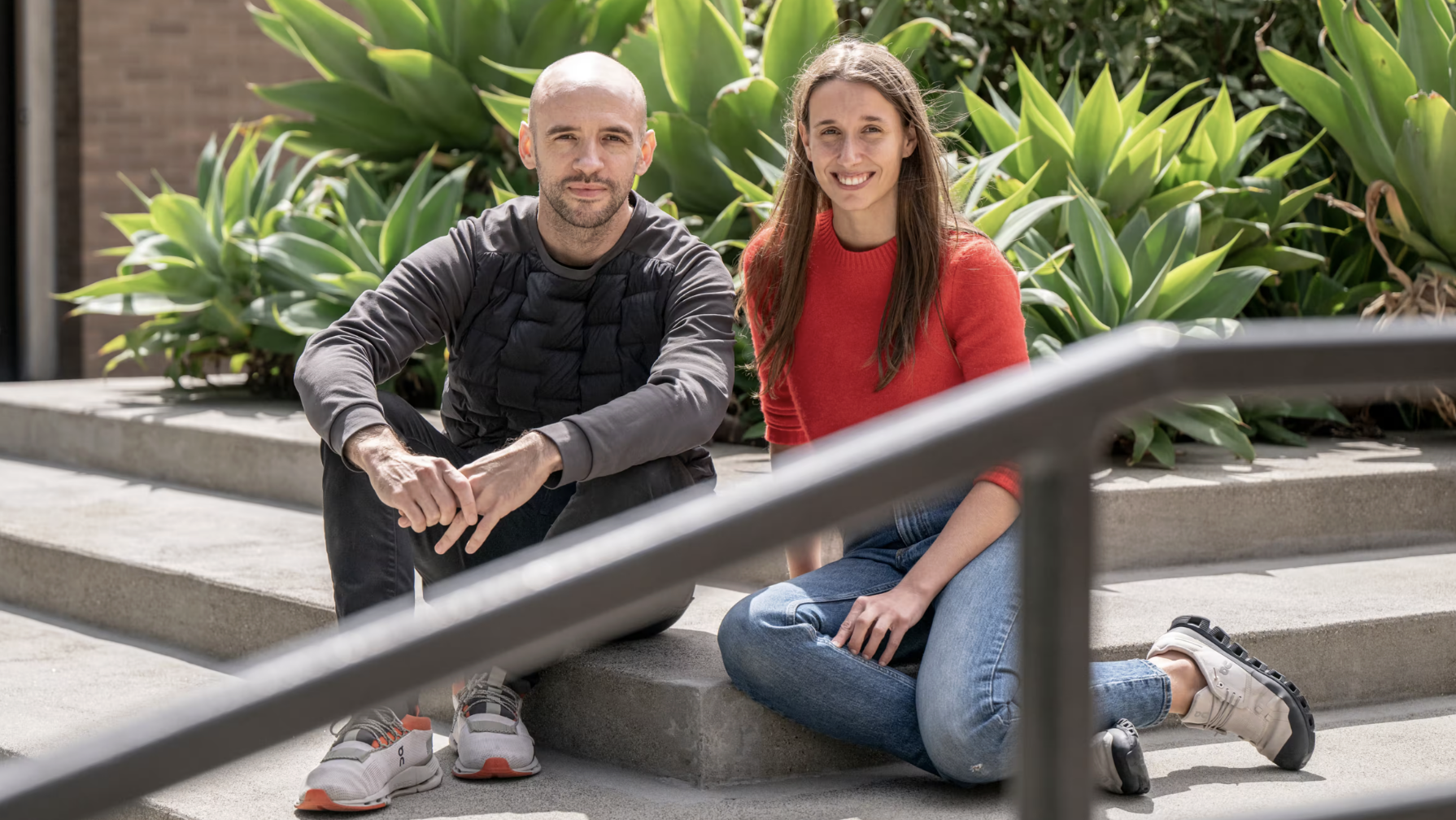
The entrepreneurial spirit behind 14.ai is embodied by its married co-founders, Marie Schneegans and Michael Fester. Their journey began over a decade ago when they met in Paris, subsequently embarking on individual ventures before uniting their expertise for 14.ai. Marie Schneegans is recognized for her role as a co-founder of Workwell, a corporate intranet company aimed at improving internal communications and employee experience. Her experience in streamlining internal operations and understanding organizational communication flows likely informed 14.ai’s focus on efficient, integrated service delivery.
Michael Fester, on the other hand, brought a deep technical background in AI and voice technology. He previously founded Snips, a company that specialized in local-first assistants for smart devices, emphasizing privacy and on-device processing. Snips achieved a significant milestone when it was acquired by Sonos in 2019, a move that hinted at Sonos’s ambition to develop its own on-device voice control capabilities. This acquisition not only validated Fester’s technological vision but also provided him with invaluable experience in scaling and exiting a tech venture.
After their respective successes, the duo harbored a desire to build a company together, leading them to relocate to the United States. They identified customer service as a ripe area for disruption, not merely by building another SaaS product, but by creating a novel operational model. Their combined experience in B2B software, AI, and operational efficiency converged to form the foundational philosophy of 14.ai: to deliver customer service as a fully managed, AI-powered agency.
Early Successes and Tangible Impact
14.ai’s approach has already demonstrated tangible results in real-world scenarios. Marie Schneegans recounted an early engagement with a men’s health supplement company named "Sperm Worms," founded by a former Y Combinator alumnus. This client faced a significant backlog of support tickets, overwhelming their existing customer service team based in the Philippines, who struggled with efficiency. "We took over on Thursday morning, and by Thursday afternoon, we had cleared tickets from all channels like social media, SMS, email, chat, and voice," Schneegans stated, highlighting the dramatic speed and effectiveness of their AI-native system compared to traditional human-led operations. This anecdote powerfully illustrates 14.ai’s ability to quickly resolve inherited issues and establish efficient support pipelines.
Beyond merely clearing backlogs, 14.ai positions itself as more than just a support agency; it aims to be a "revenue growth engine." Michael Fester elaborated on this dual function, explaining that by capturing and analyzing all customer conversations early on, the platform can derive valuable insights. This data can inform sales strategies, identify product improvement opportunities, and ultimately contribute to a client’s bottom line. For instance, AI can detect purchasing intent, flag potential churn risks, or even upsell related products based on conversation context, transforming customer service from a cost center into a strategic asset.
The company currently operates with a lean team of six individuals, who collectively ensure around-the-clock availability for their clients. The recent seed funding is earmarked for expanding this headcount over the next six months, with a strong emphasis on hiring more AI engineers. This strategic focus underscores 14.ai’s commitment to continuous technological advancement, ensuring its software remains at the cutting edge of AI capabilities. The startup is dedicated to learning and automating complex customer support workflows, along with other functions like sales and revenue growth, thereby minimizing the need for human intervention in routine tasks and allowing human agents to focus on more complex, empathetic, or strategic interactions.
14.ai’s client portfolio already spans diverse sectors, showcasing the versatility of its AI-driven solutions. Its clients include Yon-KA, a luxury skincare brand, Brilliant Labs, an innovator in smart glasses technology, and Creative Lighting, a company specializing in lighting solutions. This breadth of clients demonstrates the platform’s adaptability to different industries, product complexities, and customer demographics, further validating its universal appeal.
Pioneering Autonomous Operations and Strategic Validation
In a testament to its commitment to continuous improvement and pushing the boundaries of AI autonomy, 14.ai also operates GloGlo, a glucose gummies brand for Type 1 diabetics. This venture serves as an internal "proving ground" where 14.ai experiments with operating a business almost entirely autonomously through AI. By running a real-world product with minimal human oversight, 14.ai can refine its AI systems, identify limitations, and develop more robust, self-sufficient operational capabilities. This hands-on approach ensures that their client-facing solutions are thoroughly tested and optimized for maximum effectiveness.
The strategic importance of 14.ai’s model has been recognized by its lead investor, Y Combinator. Tom Blomfield, a partner at Y Combinator, articulated the critical balance 14.ai strikes between AI and human involvement in customer service. He envisions an initial split where AI can autonomously resolve approximately 60% of customer tasks, leaving the remaining 40% for human agents. This dynamic equilibrium is expected to evolve as AI technology matures, with AI progressively assuming a larger share of the workload.
Blomfield drew a sharp contrast between 14.ai’s model and the challenges faced by companies relying on existing platforms, which often lead to "round after round of painful headcount reductions" when AI is introduced. He explained, "In contrast, 14.ai becomes the customer service department, both AI and human. They can reassign customer support agents between customers who are at different stages of the AI adoption journey, and carry out that load balancing much more effectively." This highlights a key advantage: flexibility and efficiency in managing human resources across multiple clients, optimizing agent utilization, and mitigating the harsh impact of direct job cuts within a single company. This approach offers a more humane and economically sustainable transition into an AI-powered future.
Significantly, Y Combinator’s validation extends beyond mere investment. The renowned accelerator program explicitly included "AI-powered agencies" in its "requests for startups in 2026," a public declaration of the types of innovative companies they believe will shape the future. This inclusion firmly positions 14.ai’s model as a forward-thinking, high-potential area within the broader tech landscape, indicating a strong belief in its long-term viability and disruptive potential.
Broader Implications and The Future of Work
The rise of companies like 14.ai carries profound implications for various stakeholders. For the traditional BPO industry, it signals an urgent need for adaptation. BPO firms that fail to integrate advanced AI into their offerings risk becoming obsolete. The future of BPO may involve a transformation into "AI-assisted BPO," where human agents work alongside sophisticated AI, focusing on complex problem-solving, empathy-driven interactions, and AI training and supervision, rather than repetitive tasks. This shift will necessitate significant reskilling and upskilling of the existing workforce, presenting both a challenge and an opportunity for growth in new areas.
Economically, the impact on countries heavily reliant on BPO exports could be substantial. While job displacement is a concern, new roles requiring different skill sets—such as AI trainers, data annotators, prompt engineers, and AI ethicists—are likely to emerge. Governments and educational institutions in these regions will need to proactively invest in digital literacy and advanced AI training programs to prepare their populations for the evolving job market.
For businesses adopting 14.ai’s services, the benefits are clear: significant cost savings through reduced human labor, enhanced customer experience through faster and more accurate responses, unparalleled scalability to handle fluctuating demand, and access to data-driven insights for strategic decision-making. This democratization of advanced customer service capabilities can particularly empower startups and small to medium-sized enterprises (SMEs) that previously lacked the resources to build or outsource such sophisticated operations.
However, the rapid embrace of AI in customer service is not without its challenges and ethical considerations. Maintaining human empathy and nuanced understanding in highly sensitive or complex customer interactions remains a critical hurdle for AI. Issues of data privacy and security become paramount when AI systems handle vast amounts of customer information, requiring robust safeguards and transparent policies. Furthermore, potential biases embedded in AI models, derived from the data they are trained on, could lead to discriminatory or unfair outcomes, necessitating continuous monitoring and ethical review. The "black box" problem, where AI decisions are difficult to interpret, also poses challenges for accountability and trust.
In conclusion, 14.ai’s successful funding round and its innovative AI-native agency model mark a significant moment in the evolution of customer service. By seamlessly integrating proprietary AI software with a comprehensive service offering, 14.ai is not just optimizing customer support; it is fundamentally redefining it. As the company expands its team of AI engineers and continues to push the boundaries of autonomous operations through ventures like GloGlo, it stands poised to lead a new era where intelligent automation and human expertise converge, reshaping not only how businesses interact with their customers but also the very fabric of the global workforce. The warnings from industry leaders about AI disruption are now translating into concrete solutions that promise efficiency, scalability, and a new paradigm for operational excellence.
About the Author