The global marketing landscape is currently undergoing a fundamental transformation as artificial intelligence (AI) shifts from an experimental novelty to a core operational necessity. Recent industry data indicates that 61% of marketing professionals now identify AI software as the most critical component of their data strategy, reflecting a broader trend toward automation and hyper-personalization. As the volume of consumer data grows beyond human processing capabilities, AI tools have emerged as the primary solution for brands seeking to execute smarter, more efficient campaigns. This shift is not merely about saving time; it is about leveraging predictive analytics and generative capabilities to meet the increasingly sophisticated demands of the modern consumer.
The Evolution of AI in the Marketing Sector
The integration of AI into marketing did not happen overnight. The chronology of this technological adoption can be traced back to the early 2010s, when basic machine learning algorithms began assisting with programmatic advertising and simple A/B testing. By 2015, tools like Seventh Sense and Albert AI began introducing predictive modeling to determine the optimal timing for consumer engagement. However, the true "inflection point" occurred between 2020 and 2023, with the rise of Large Language Models (LLMs) and Generative AI.
During this period, the industry moved from "Predictive AI"—which forecasts what a customer might do—to "Generative AI," which creates the actual content used to engage them. Today, the market for AI in marketing is projected to grow from $15.84 billion in 2023 to over $107 billion by 2028, according to Statista. This rapid growth is driven by the necessity for real-time responsiveness and the decline of traditional tracking methods, such as third-party cookies, which has forced marketers to rely more heavily on AI-driven first-party data analysis.
Primary AI Marketing Solutions for 2024
To remain competitive, marketing departments are currently focusing on a suite of 11 essential tools that address various aspects of the digital ecosystem, from content creation to technical SEO and autonomous media buying.
1. Jasper AI: Advanced Generative Content Creation
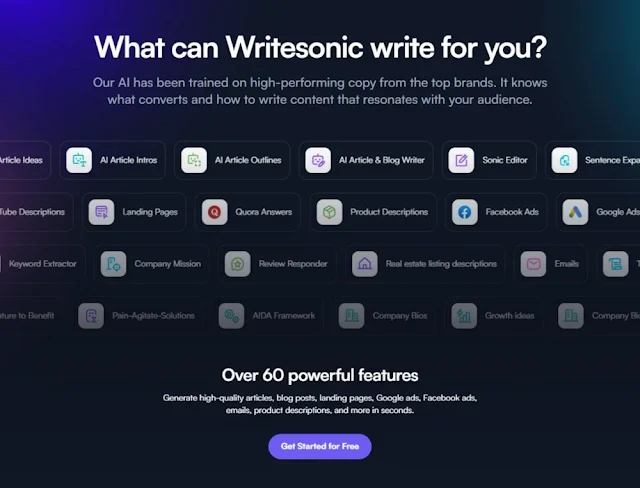
Jasper AI, formerly known as Jarvis, represents the vanguard of generative text tools tailored specifically for enterprise needs. Unlike general-purpose chatbots, Jasper is engineered to identify and replicate a brand’s specific tone of voice across various mediums, including blog posts, social media updates, and email newsletters. By utilizing multiple LLMs, Jasper allows marketers to generate high-quality drafts in seconds, significantly reducing the "blank page" syndrome that often slows down content production cycles.
2. Personalize: Behavioral Interest Tracking
In an era where consumers expect relevance, Personalize provides an AI-driven approach to identifying individual preferences. The platform operates on a proprietary algorithm that tracks site activity to determine a contact’s top three interests in real-time. This allows sales and marketing teams to move away from broad-spectrum messaging and toward highly targeted campaigns based on what a user is actually browsing, rather than what they looked at months ago.
3. Seventh Sense: Optimizing Email Delivery
Email fatigue is a significant barrier to conversion, with the average professional receiving over 120 emails daily. Seventh Sense addresses this by using behavioral analytics to break through the "inbox noise." Specifically designed for HubSpot and Marketo users, the tool analyzes individual engagement patterns to determine the exact time and day each specific contact is most likely to open an email. This personalized delivery schedule has been shown to increase open rates and decrease unsubscribe numbers by ensuring content arrives when the user is most receptive.
4. Phrasee: AI-Powered Natural Language Generation
While Jasper handles long-form content, Phrasee specializes in the "micro-copy" that drives clicks: subject lines, push notifications, and social media headlines. Using a sophisticated Natural Language Generation (NLG) system, Phrasee generates millions of variants of a single message, testing them against historical brand data to predict which version will perform best. The system is "end-to-end," meaning it learns from every campaign, continuously refining its understanding of what resonates with a specific audience.
5. HubSpot SEO: Machine Learning for Content Authority
HubSpot’s SEO tools have evolved beyond simple keyword tracking. The platform now utilizes machine learning to help brands build "topic clusters"—a strategy that search engines like Google use to determine a site’s authority on a subject. By identifying core subjects and suggesting related sub-topics, HubSpot SEO helps marketers organize their content in a way that aligns with modern search engine algorithms, ensuring higher rankings and better visibility against competitors.
6. Evolv AI: Autonomous Experience Optimization
Traditional A/B testing is often limited by human capacity, allowing for only one or two variables to be tested at a time. Evolv AI removes this bottleneck by using genetic algorithms to test thousands of variables simultaneously across a website or mobile app. The system identifies top-performing concepts, combines them, and iterates in real-time, effectively automating the process of conversion rate optimization (CRO) and ensuring the best possible user experience.
7. Acrolinx: Content Governance and Quality at Scale
For global enterprises like Google and Amazon, maintaining brand consistency across thousands of writers is a logistical challenge. Acrolinx acts as an AI-powered "content governor." It scores content based on style, grammar, tone, and company-specific terminology. This ensures that every piece of content, regardless of who wrote it or where it is published, aligns with the corporate identity and meets high-quality standards before it ever reaches the consumer.
8. MarketMuse: AI-Driven Content Strategy and Gap Analysis
MarketMuse serves as a strategic advisor for content marketers. Its algorithm compares a brand’s existing content against thousands of top-ranking articles on the same topic. It then identifies "content gaps"—information that competitors have covered but the brand has not. By providing a "Content Score" and specific keyword recommendations, it allows marketers to build more comprehensive, authoritative pages that are more likely to achieve top-tier search engine rankings.
9. Copilot: Real-Time Conversational Commerce
Copilot is a specialized tool for the eCommerce sector, focusing on the bottom of the sales funnel. It utilizes AI to maintain 24/7 communication with customers via platforms like Facebook Messenger. Beyond simple customer service, Copilot is designed to recover abandoned shopping carts, promote new products, and send personalized shipping updates, ensuring that the brand remains in constant, helpful contact with the consumer throughout the purchasing journey.
10. Yotpo: Deep Learning for Social Proof
User-generated content (UGC) is a powerful driver of sales, but managing it at scale is difficult. Yotpo uses deep learning to analyze customer reviews, extracting the most relevant sentiments and topics. The AI can automatically flag negative reviews for manual intervention while highlighting the most persuasive positive reviews in smart displays. This automated moderation allows brands to focus on high-level quality control rather than manual review sorting.
11. Albert AI: The Autonomous Marketing Assistant
Albert AI represents the pinnacle of marketing automation. It is a self-learning software that plugs into a brand’s existing tech stack to manage cross-channel campaigns autonomously. Albert analyzes vast datasets to identify potential customers, runs small-scale trial campaigns, and then scales the most successful versions across social media and search platforms. It removes the guesswork from media buying, allowing human marketers to focus on creative strategy rather than data entry.
Supporting Industry Data and Economic Impact
The adoption of these tools is supported by significant economic data. A 2023 report by McKinsey & Company estimated that generative AI could add the equivalent of $2.6 trillion to $4.4 trillion annually across various industries, with marketing and sales being one of the top four sectors to benefit. Furthermore, a survey by the Content Marketing Institute found that 72% of marketers who use AI tools report a significant increase in their team’s productivity.
The shift toward AI is also reflected in corporate budgeting. Gartner’s 2023 CMO Spend and Strategy Survey revealed that 75% of CMOs are under pressure to cut "wasteful" spending, leading many to reallocate funds from traditional agency fees toward AI-driven in-house technologies.
Industry Reactions and Expert Analysis
The reaction from the marketing community has been a mix of enthusiasm and cautious adaptation. "We are moving out of the era of ‘guesswork marketing’ and into the era of ‘precision marketing,’" says Sarah Jenkins, a senior digital strategist. "The tools we are seeing today, like MarketMuse and Albert, allow us to act on data that was previously invisible to us."
However, analysts also warn of the "AI Echo Chamber." If every brand uses the same AI tools to generate content, there is a risk of brand homogenization. The consensus among industry leaders is that AI should be used to handle the "heavy lifting" of data analysis and initial drafting, while humans must remain in the loop to provide the final creative spark and ethical oversight.
Broader Implications: Ethics and the Future of Labor
The rise of AI in marketing carries significant implications for the future of the workforce and consumer privacy. As AI tools become more adept at predicting consumer behavior, concerns regarding data ethics and "manipulative" marketing have moved to the forefront of legislative discussions. The European Union’s AI Act and various state-level privacy laws in the U.S. are beginning to set boundaries on how AI can be used to profile consumers.
From a labor perspective, the role of the marketer is shifting from "creator" to "editor" and "strategist." While entry-level copywriting and data entry roles face displacement, there is an increasing demand for "AI Orchestrators"—professionals who understand how to integrate these 11 tools into a cohesive, ethical, and effective brand strategy.
Conclusion: The Path Forward
The integration of artificial intelligence into the marketing mix is no longer a choice for brands that wish to remain relevant in a data-saturated world. Tools like Jasper, HubSpot SEO, and Albert AI provide the scalability and precision required to meet modern consumer expectations. As the technology continues to evolve, the most successful marketers will be those who view AI not as a replacement for human creativity, but as a powerful engine to amplify it. The current list of tools provides a robust starting point for any organization looking to modernize its digital strategy and secure a competitive advantage in the 2024 marketplace.
About the Author