In a move that fundamentally reshapes the global artificial intelligence landscape, Nvidia has officially confirmed its acquisition of Hugging Face, the industry-leading platform for open-source AI models and developer tools, for approximately $13 billion. The announcement, made early Thursday morning, concludes weeks of intense market speculation regarding the relationship between the world’s most valuable semiconductor company and the central repository of the generative AI revolution. This acquisition represents one of the most significant strategic shifts in Nvidia’s history, signaling an aggressive expansion from hardware dominance into the foundational software and community layers that dictate how AI is built, shared, and deployed.
By absorbing Hugging Face, Nvidia secures control over the "GitHub of AI," a platform that hosts hundreds of thousands of pre-trained models, datasets, and demo applications. While Nvidia has long been the primary provider of the silicon—the H100 and Blackwell GPUs—required to train these models, this deal ensures that the company will now oversee the ecosystem where the software itself resides. The $13 billion valuation reflects the premium Nvidia is willing to pay to prevent competitors from gatekeeping the open-source pipeline and to ensure that the next generation of AI developers remains tethered to Nvidia’s integrated software-hardware stack.
Strategic Rationale: Beyond Silicon to Software Integration
The acquisition of Hugging Face is not merely a horizontal expansion; it is a defensive and offensive maneuver designed to protect Nvidia’s market share as big tech competitors like Amazon, Meta, and Google increasingly develop their own custom AI chips. For years, Nvidia’s primary moat has been CUDA (Compute Unified Device Architecture), the proprietary software layer that allows developers to squeeze maximum performance out of Nvidia GPUs. However, as the industry moves toward high-level abstraction, Nvidia needs more than just a compiler; it needs a community.
Hugging Face provides that community. With millions of developers using its "Transformers" library and model hub, Hugging Face is the starting point for almost every non-proprietary AI project. By owning this platform, Nvidia can integrate its hardware-optimizing software directly into the tools developers use daily. This vertical integration ensures that when a developer downloads a model from Hugging Face, it is already pre-optimized to run most efficiently on Nvidia hardware, creating a seamless "one-click" experience that competitors will struggle to replicate.
Furthermore, the deal emphasizes Nvidia’s commitment to "open-weights" AI models. Unlike "closed" models such as OpenAI’s GPT-4 or Anthropic’s Claude, open-weights models like Meta’s Llama or Nvidia’s own Nemotron series allow developers to see the internal parameters of the model. Nvidia has calculated that an open ecosystem benefits its bottom line: the more models there are, and the more diverse they are, the more GPUs are required to run them. By championing open source through Hugging Face, Nvidia is effectively commoditizing the AI model layer to maximize the value of the compute layer.
The Evolution of Hugging Face: From Chatbots to Infrastructure
The journey of Hugging Face is one of the most unlikely success stories in Silicon Valley. Founded a decade ago by French entrepreneurs Clément Delangue, Julien Chaumond, and Thomas Wolf, the company originally set out to build an AI "companion" app—a chatbot aimed at teenagers. When the chatbot failed to gain significant traction, the founders pivoted, realizing that the underlying natural language processing (NLP) tools they had built were far more valuable than the app itself.
In 2017, following the release of the seminal "Attention is All You Need" paper by Google researchers, Hugging Face released an open-source library for "Transformers," the architecture that powers modern LLMs. This library became an overnight sensation among researchers, who previously had to write thousands of lines of complex code to implement these models. Hugging Face simplified the process to just a few lines of code, democratizing access to cutting-edge AI.
Over the next several years, Hugging Face expanded from a code library into a massive hosting platform. It became the neutral ground where researchers from Google, Meta, Microsoft, and independent labs could share their work. Before the Nvidia acquisition, Hugging Face had raised nearly $400 million in venture capital from a "who’s who" of tech investors, including Lux Capital, Sequoia Capital, and Coatue, reaching a $4.5 billion valuation in 2023. The $13 billion exit to Nvidia represents a nearly 3x return for later-stage investors and a massive windfall for early backers like Betaworks and Addition.
Chronology of the Acquisition and Market Context
The road to the Thursday morning announcement was marked by a series of strategic maneuvers by Nvidia to signal its intentions to the broader tech community.
- Early 2024: Nvidia begins expanding its "Nemotron" family of models, offering them as open-weights alternatives to proprietary systems. This signaled a shift in Nvidia’s identity from a "chip company" to an "AI company."
- August 2025: Rumors begin to circulate in the venture capital community that Hugging Face is looking for a strategic partner to help scale its massive compute requirements.
- Late 2025: Nvidia leads a coalition of 80 tech companies in signing an open letter to the U.S. government, advocating for the protection of open-weight AI models against restrictive regulations that might favor closed-source incumbents.
- January 2026: Business Insider reports that Nvidia and Hugging Face have entered formal acquisition talks. Market analysts note that Hugging Face’s burn rate, driven by the massive costs of hosting and testing thousands of models, made a partnership with a compute provider like Nvidia inevitable.
- February 2026: A security breach involving AI agents from OpenAI targeting Hugging Face’s infrastructure underscores the need for more robust, enterprise-grade security on the platform.
- Thursday Morning: The deal is finalized at $13 billion.
Financial and Corporate Data
The financial implications of this deal are vast. Hugging Face’s cap table included a diverse array of stakeholders, ranging from traditional VC firms to individual angel investors. Notable individual investors such as Greg Brockman (OpenAI co-founder) and Richard Socher (You.com CEO) are expected to see significant returns. Interestingly, the inclusion of cultural figures like NBA star Kevin Durant among the investors highlights the mainstream appeal Hugging Face had achieved prior to its acquisition.
Nvidia’s commitment to the deal is backed by its massive cash reserves, fueled by a multi-year surge in GPU demand. In its most recent fiscal quarters, Nvidia reported record-breaking data center revenue, often exceeding $20 billion in a single quarter. For Nvidia, a $13 billion acquisition is a manageable investment that secures a vital piece of the global AI supply chain.
Security and the SAFE Initiative
A critical component of the announcement was the focus on AI safety and security. Hugging Face has recently faced challenges regarding the integrity of its repository. The "OpenAI hack," in which autonomous agents were used to probe vulnerabilities in the Hugging Face platform, served as a wake-up call for the industry.
In response, Nvidia has integrated Hugging Face into its new "SAFE" (Shared AI Findings Exchange) initiative. SAFE is designed as a collaborative framework where tech companies can confidentially share data on AI "near misses" and security failures. By bringing Hugging Face under its wing, Nvidia can implement more rigorous security protocols, ensuring that the open-source models used by startups and Fortune 500 companies alike are free from malicious code or structural vulnerabilities. This move is intended to soothe the concerns of enterprise customers who are often hesitant to use open-source tools due to perceived security risks.
Official Statements and Industry Reactions
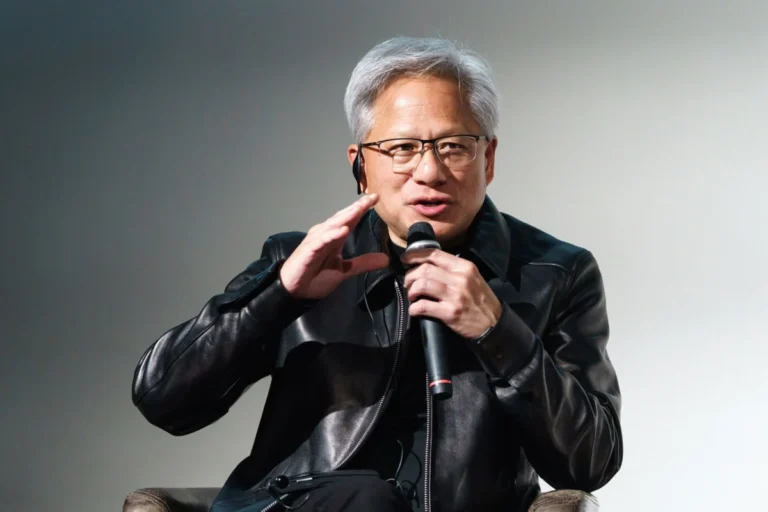
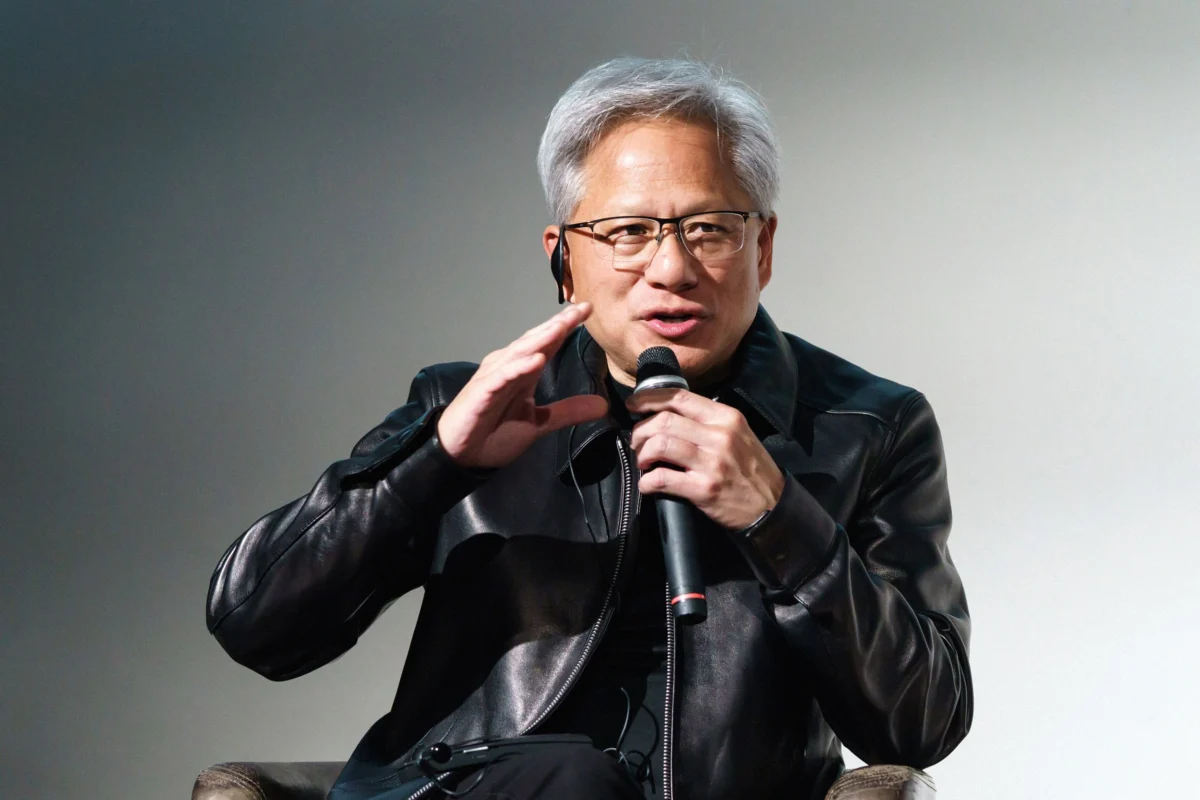
In the press release confirming the deal, Nvidia CEO Jensen Huang emphasized the collaborative nature of the AI industry. "Open models let startups, businesses, universities and public institutions build on advanced capabilities without training every model from scratch," Huang stated. "AI advances faster when people can build together. By bringing Hugging Face into the Nvidia family, we are ensuring that the open-source community has the compute, the tools, and the security it needs to lead the next wave of the industrial revolution."
Clément Delangue, co-founder and CEO of Hugging Face, echoed these sentiments on social media, framing the acquisition as a necessary step for scaling open-source AI. "Open-source AI is at an inflection point," Delangue wrote. "Thanks to the community, we’ve shown that it can be a complement, and even an alternative, to closed-source APIs. But for it to happen at larger scale, it needs more compute, more support, more collaboration and more visibility."
While the reactions from the open-source community have been largely positive, some critics have raised concerns about the potential for "vendor lock-in." If Nvidia controls the platform where models are hosted, there are fears it might subtly prioritize optimizations for its own hardware over competitors like AMD or Intel. To address this, Nvidia has publicly committed to maintaining Hugging Face’s "open standards," promising that the platform will remain a multi-hardware, multi-cloud resource.
Broader Impact and Future Implications
The acquisition of Hugging Face by Nvidia marks the end of the "neutral" era of AI repositories. As the technology moves from research labs into the core of global infrastructure, the platforms that host it are becoming as strategically important as the chips that run it.
For the broader tech industry, this deal sets a precedent for how hardware companies must adapt to an AI-first world. We are likely to see similar moves from Nvidia’s rivals. Intel and AMD may seek to bolster their own software ecosystems, while cloud providers like Amazon (AWS) and Google (GCP) may double down on their proprietary model hosting services to compete with the Nvidia-Hugging Face powerhouse.
Moreover, the deal solidifies the divide between the "Closed AI" camp (led by OpenAI, Microsoft, and Anthropic) and the "Open AI" camp (now led by Nvidia, Meta, and the Hugging Face community). This competition will likely drive rapid innovation, as both sides race to prove that their philosophy offers the most secure, efficient, and capable path forward.
As Clément Delangue predicted in 2023, the world is heading toward a future with 100 million AI builders. With Nvidia’s $13 billion bet on Hugging Face, the company is positioning itself as the indispensable foundation for every one of those builders. The integration of the world’s most powerful AI hardware with the world’s most popular AI software library creates a formidable entity that will likely dictate the pace of technological change for the next decade.
About the Author