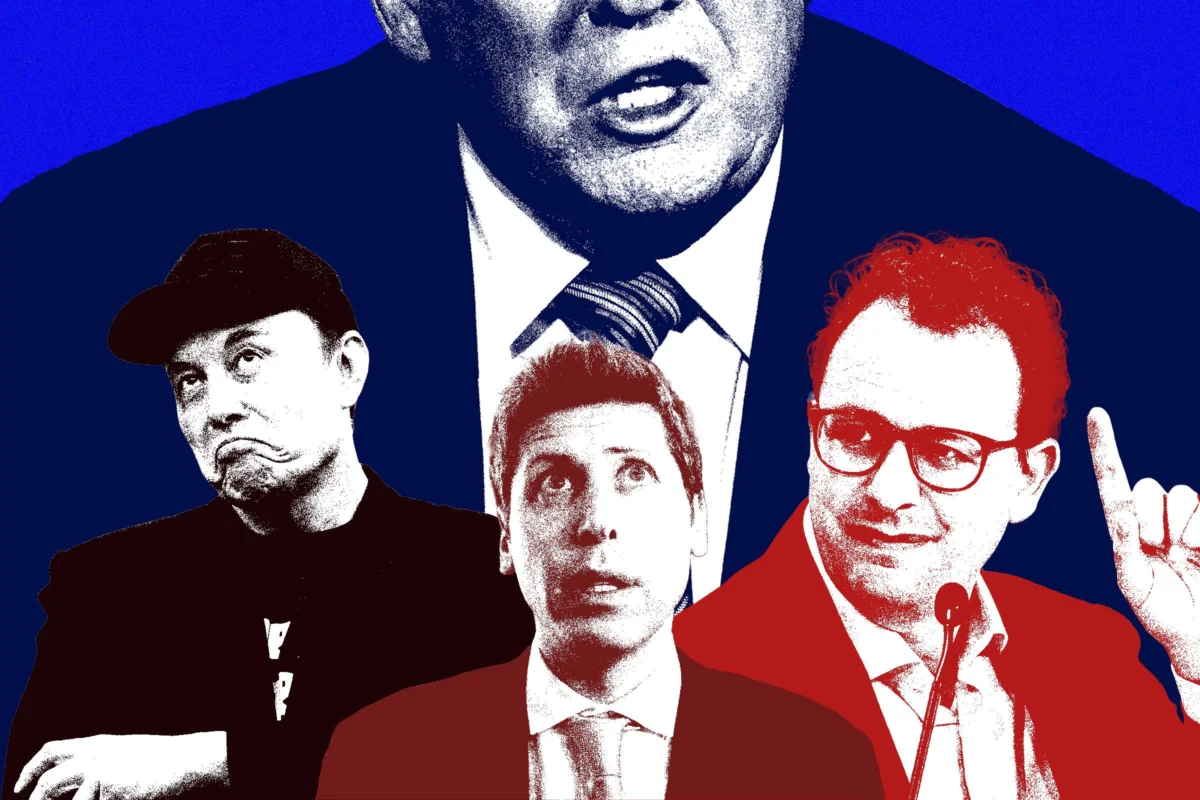
The burgeoning tension between the upper echelons of Silicon Valley and the United States government reached a new inflection point this week as the Trump administration signaled a firm rejection of industry-led calls for a coordinated slowdown in artificial intelligence development. While the chief executives of the world’s leading AI laboratories—Anthropic, OpenAI, Microsoft, and xAI—have converged on a rare consensus regarding the potential catastrophic risks of unbridled AI advancement, the White House and its advisors have categorized these warnings as either a bid for "regulatory capture" or a strategic mistake that could cede global technological hegemony to the People’s Republic of China.
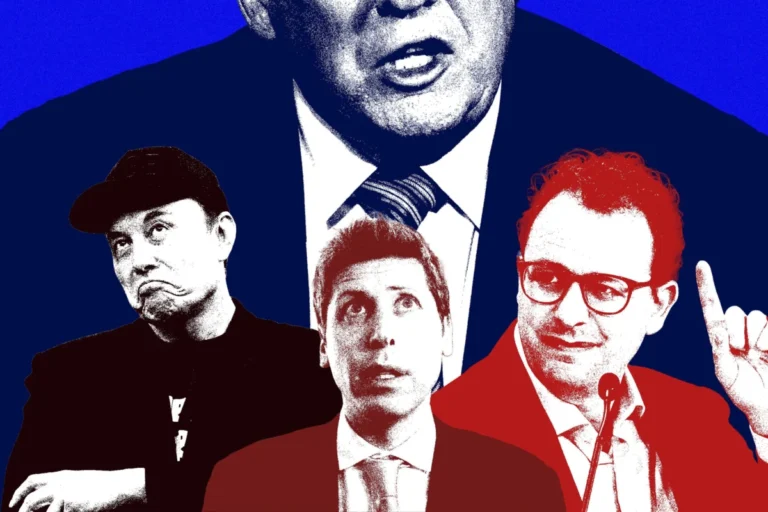
The debate was ignited by an essay published Saturday by Dario Amodei, the chief executive of Anthropic, which detailed a somber outlook on the pace of current AI scaling. Amodei’s central thesis argued that the trajectory of large language models (LLMs) is moving so rapidly that safety protocols cannot keep pace without federal intervention. The essay received a rare, unified endorsement from OpenAI’s Sam Altman and Elon Musk, the owner of xAI, as well as Microsoft’s Satya Nadella. Despite their intense commercial rivalries, these leaders appear aligned on one front: the technology they are building may soon pose risks to human safety that no single company can manage in a vacuum.
The Industry’s Call for a "Safety Pacing" Framework
Dario Amodei’s proposal represents one of the most specific calls for government intervention from an industry leader to date. He requested that the U.S. government facilitate a framework where competing AI firms could collaborate on safety standards and development timelines without fear of violating federal antitrust laws. Under current statutes, agreements between competitors to limit production or slow the release of products can be prosecuted as cartel behavior. Amodei suggested that the Department of Justice or the Federal Trade Commission issue waivers or participate directly in these discussions to ensure that "pacing" development is viewed as a public safety necessity rather than an anti-competitive maneuver.
Furthermore, Amodei advocated for a diplomatic surge to establish international coordination. This would include seeking common ground with the Chinese Communist Party (CCP) to ensure a global floor for AI safety. The rationale is that if one nation ignores safety guardrails to gain a competitive edge, it creates a "race to the bottom" where the entire planet is exposed to the risks of misaligned or weaponized AI.
Sam Altman, whose company OpenAI has faced internal turmoil over safety vs. commercialization, echoed these sentiments. Following Amodei’s essay, Altman committed to a proposal that would grant third-party evaluators "employee-level access" to OpenAI’s internal systems. This would allow independent bodies to audit unreleased models for dangerous capabilities, such as the ability to assist in the creation of biological weapons or orchestrate large-scale autonomous cyberattacks. "Pacing will be well worth this cost," Altman wrote on X. "No amount of American competitive pressure should justify recklessness."
The Administration’s Rebuttal: Innovation Over Regulation
The response from the Trump administration was swift and pointed. David Sacks, a prominent venture capitalist and the co-chair of the President’s Council of Advisors on Science and Technology (PCAST), dismissed the notion that the government should grant antitrust immunity to AI firms. Sacks challenged the altruistic framing of the industry’s request, suggesting that a coordinated slowdown would effectively function as a "cartel" that locks in the dominance of current market leaders while preventing smaller startups from catching up.
"If the unreleased models are scary enough that you think you should slow down, I support your decision to be responsible," Sacks wrote on X. "But stop pretending you need anyone else’s permission. Stop pretending antitrust law has to be suspended so you can form a cartel… Most of all, stop pretending the motivation to slow down is purely altruistic."
Sacks also expressed profound skepticism regarding the possibility of meaningful cooperation with China. He argued that the CCP is unlikely to adhere to any global agreement that would limit its technological capabilities, rendering any U.S. slowdown a unilateral disarmament in the most important arms race of the 21st century.
This sentiment aligns with President Donald Trump’s broader "America First" approach to technology. During a recent visit to Ireland, Trump emphasized that the U.S. must maintain its lead in AI at all costs. "We’re leading China on AI," Trump said, "and, frankly, I want to keep it that way because whoever wins AI, wins." The President suggested that the warnings of "negative forces" regarding AI’s risks are often exaggerated and could be used to justify policies that would hamper American economic growth.
The Geopolitical Context: The "Sputnik Moment" of DeepSeek
The administration’s refusal to entertain a slowdown is grounded in recent shifts in the global AI landscape. For much of 2023 and 2024, American firms appeared to have a comfortable lead in compute power and model sophistication. However, the recent emergence of DeepSeek, a Chinese-developed model that achieved high-level performance with significantly lower training costs than its American counterparts, has sent shockwaves through Washington.
DeepSeek’s success challenged the "scaling laws" assumption—the idea that the winner of AI would simply be the one with the most money and the most chips. By demonstrating that architectural efficiency could rival raw compute, China proved it could remain competitive despite U.S. export controls on advanced semiconductors like NVIDIA’s H100s.
House Speaker Mike Johnson reinforced this perspective during a CNN interview on Sunday, warning that any legislative attempt to "pause" AI would be a gift to America’s adversaries. "If Congress just races in and does some sort of emergency session to try to regulate AI, we will lose the race to China, and that is a threat to every single American," Johnson said. He called for a "steady hand at the wheel" that balances safety with the imperative of maintaining the technological frontier.
Chronology of the AI Safety Debate
The current clash is the culmination of a two-year escalation in concerns over AI safety:
- March 2023: The Future of Life Institute publishes an open letter signed by Elon Musk and thousands of researchers calling for a six-month pause on training models more powerful than GPT-4. The request is largely ignored by labs.
- October 2023: The Biden-Harris administration issues an Executive Order on the Safe, Secure, and Trustworthy Development and Use of Artificial Intelligence, establishing the U.S. AI Safety Institute.
- May 2024: Former OpenAI researchers publish "A Right to Warn about Advanced Artificial Intelligence," alleging that the company’s non-disparagement agreements prevent employees from speaking out about safety risks.
- Late 2024: Anthropic and OpenAI begin releasing "Safety Cases" for their newest models, attempting to prove they have mitigated risks related to CBRN (Chemical, Biological, Radiological, and Nuclear) threats.
- January 2025: The Trump administration takes office with a stated goal of repealing the Biden AI Executive Order, viewing it as a hindrance to innovation.
- Current Week: Amodei’s essay and the subsequent pushback from Sacks and the White House clarify the new administration’s stance: safety is the responsibility of the private sector, not a reason for state-sanctioned market intervention.
Supporting Data: The Stakes of the AI Race
The economic and technical data underlying this debate highlight why neither side is willing to blink. According to industry analysts, the capital expenditure (CapEx) for AI infrastructure is projected to exceed $1 trillion over the next five years.
| Metric | Estimated Value/Detail |
|---|---|
| Training Cost of GPT-4 | ~$100 million |
| Projected Training Cost (Next Gen) | $1 billion to $10 billion |
| NVIDIA Market Cap Growth | Over $3 trillion (driven by AI demand) |
| U.S. Share of Top AI Talent | ~60% of the world’s top-tier researchers |
| China’s AI Patent Filings | Outpacing the U.S. in total volume (though not necessarily in impact) |
The high stakes are not merely financial. Security experts point out that AI’s ability to automate vulnerability research could make zero-day exploits a daily occurrence, potentially crippling national power grids or financial systems. This is the "existential risk" that Amodei and Altman refer to—a scenario where the technology becomes a force multiplier for chaos before the defense can adapt.
Analysis of Implications: A Shift to Voluntary Accountability
With the federal government signaling that it will not provide the "antitrust shield" or the "regulatory slowdown" the labs requested, the burden of proof has shifted back to the companies themselves. If the industry truly believes the technology is dangerous, they must now decide whether they are willing to unilaterally slow down at the risk of losing market share to each other or to international competitors.
The commitment by Altman and Amodei to use third-party evaluators suggests a move toward a "voluntary self-regulation" model. This approach avoids the rigidity of government mandates but lacks the enforcement mechanisms of federal law. If a company discovers a significant safety flaw, they will be under immense pressure to fix it quietly rather than delaying a launch that has billions of dollars in investor expectations behind it.
Furthermore, the administration’s focus on the "Race to China" suggests that the U.S. will likely prioritize the deployment of AI in military and intelligence sectors. This could lead to a bifurcation of the AI world: a "Western Stack" led by U.S. labs and a "Sino Stack" led by Chinese firms, with little to no communication between the two on safety standards.
The refusal to regulate also suggests that the Trump administration views AI through the lens of traditional American industrial policy. By treating AI as a strategic asset rather than a public health risk, the government is betting that the benefits of being first—economic dominance, military superiority, and scientific breakthroughs—outweigh the theoretical risks of a catastrophic failure.
As the industry moves forward, the lack of a federal "pause button" means that the pace of development will likely accelerate. The labs are now in a position where they must innovate their way out of the safety problems they have identified, all while maintaining a lead in a global competition that the U.S. government has deemed too important to slow down.
About the Author