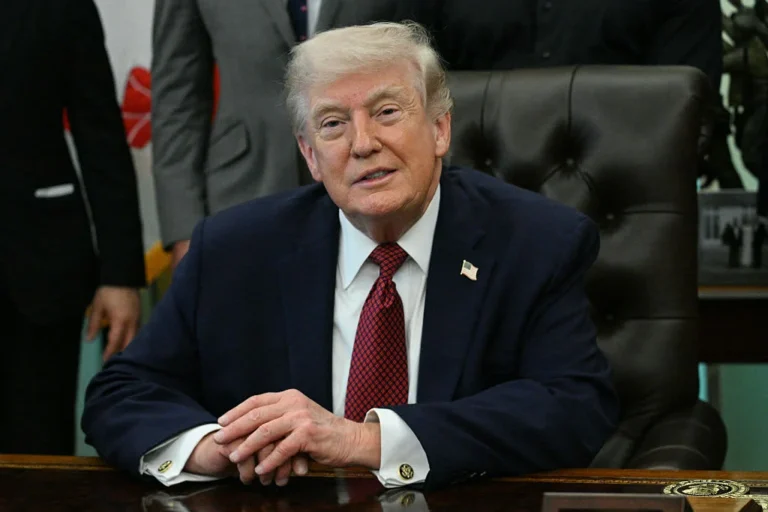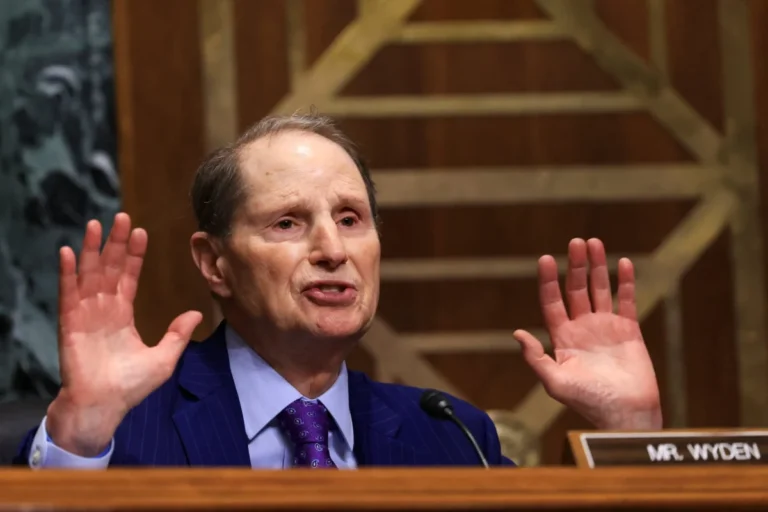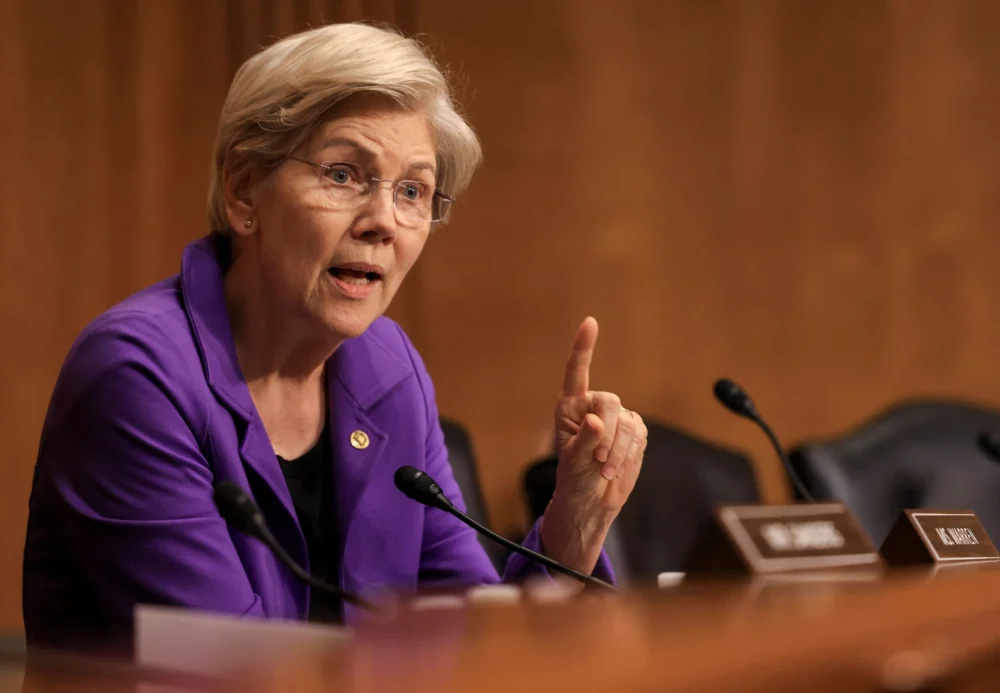
A significant ethical cloud has gathered over the U.S. Commerce Department following a formal inquiry by leading Democratic senators into a multi-billion dollar funding deal for critical minerals startup USA Rare Earth. At the heart of the controversy are allegations of potential conflicts of interest surrounding Commerce Secretary Howard Lutnick, whose former firm, Cantor Fitzgerald – now led by his sons – served as the "lead placement agent" for a substantial private fundraising round critical to the deal. The senators’ concerns are further amplified by the involvement of prominent donors to former President Donald Trump’s campaigns in the private investment, raising questions about political influence and the integrity of federal investments in strategic industries.
The Genesis of Concern: A Letter to Commerce
On February 25, a pointed letter was dispatched to Commerce Secretary Lutnick by Senators Elizabeth Warren (D-MA), Chris Van Hollen (D-MD), and Ron Wyden (D-OR), the top Democrat on the powerful Senate Finance Committee. The senators expressed "serious concerns" that the Commerce Department’s decision to provide a Letter of Intent (LOI) for $1.6 billion in funding to USA Rare Earth could financially benefit Lutnick’s immediate family, given Cantor Fitzgerald’s central role in securing matching private capital. The letter underscored the imperative that "federal investments in critical industries be made free from conflicts of interest and on the merits," demanding a comprehensive explanation of Lutnick’s involvement in the transaction.
This inquiry comes at a sensitive time, as the United States intensifies its efforts to de-risk and re-shore critical supply chains, particularly for rare earth elements. These minerals are indispensable for a vast array of modern technologies, from electric vehicles and wind turbines to advanced military systems and consumer electronics. The U.S. has long been heavily reliant on China for the processing and supply of these vital materials, a vulnerability that successive administrations have sought to address through strategic investments and policy initiatives, often leveraging tools like the Defense Production Act (DPA).
The Critical Role of Rare Earths and U.S. Strategic Imperatives
Rare earth elements are a group of 17 chemically similar metallic elements crucial for their unique magnetic, phosphorescent, and electrochemical properties. They are not necessarily "rare" in terms of geological abundance, but they are difficult and environmentally intensive to mine and process economically. The global supply chain for these elements is dominated by China, which controls over 80% of the world’s refined rare earth output. This near-monopoly presents a significant national security and economic vulnerability for the U.S. and its allies.
To counter this, the U.S. government has prioritized the development of domestic rare earth mining, processing, and magnet manufacturing capabilities. Initiatives under the DPA allow the Department of Defense and the Department of Commerce to provide funding, grants, and loan guarantees to companies involved in critical supply chains. USA Rare Earth, with its plans for a rare earth mining and magnet manufacturing business, positioned itself as a key player in this strategic effort, making the Commerce Department’s $1.6 billion LOI a potentially transformative investment for the company and for U.S. industrial policy. Such a substantial commitment from the government signals a strong intent to bolster domestic capabilities and reduce foreign dependence.
A Detailed Timeline of Interconnected Events
The controversy hinges on a series of events spanning Lutnick’s transition from the private sector to public service, and the subsequent financial arrangements of USA Rare Earth:
- "Last Year" (Implicitly 2025): Howard Lutnick, a long-time fixture on Wall Street, stepped down as CEO and chairman of Cantor Fitzgerald L.P. to assume the role of the 41st United States Secretary of Commerce. Simultaneously, he initiated a transfer of his significant stake in Cantor to his sons and other adult children through trusts controlled by his son Brandon.
- Contemporaneous with Lutnick’s Departure: His son, Brandon Lutnick, took the reins as chairman of Cantor Fitzgerald, while another son, Kyle Lutnick, was named executive vice chairman. This solidified the family’s continued control and leadership of the influential financial services firm.
- "Last Month" (Implicitly January 2026): The Commerce Department, under Secretary Lutnick’s leadership, issued a Letter of Intent to USA Rare Earth. This non-binding agreement outlined the government’s intention to provide $1.6 billion in funding, contingent upon USA Rare Earth securing at least $500 million in private funding to match the federal investment. This funding was earmarked to help the company scale up its ambitious rare earth mining and magnet manufacturing operations.
- Coinciding with the LOI: USA Rare Earth engaged Cantor Fitzgerald as the "lead placement agent" for a private fundraising round. This round, a Private Investment in Public Equity (PIPE) transaction, ultimately totaled an impressive $1.5 billion, significantly exceeding the $500 million private funding requirement. Details of this arrangement were disclosed in a financial filing with the Securities and Exchange Commission (SEC) dated February 2026.
- February 25, 2026: Senators Warren, Van Hollen, and Wyden formally penned and dispatched their letter to Secretary Lutnick, outlining their conflict of interest concerns and requesting detailed information regarding his involvement and the Commerce Department’s decision-making process.
This sequence of events presents a tightly interwoven narrative where a significant federal investment, critical to national strategic goals, appears to be directly linked to a private fundraising effort orchestrated by a firm now managed by the Commerce Secretary’s immediate family.
The Financial Entanglement: Cantor Fitzgerald’s Role and the PIPE Deal
The core of the senators’ ethical inquiry revolves around the nature of the Private Investment in Public Equity (PIPE) transaction and Cantor Fitzgerald’s compensation. In a PIPE deal, a company raises capital by selling shares, often at a discount, to a select group of private investors. The placement agent, in this case, Cantor Fitzgerald, facilitates this process, connecting the company with investors and earning a fee for its services, typically a percentage of the funds raised. This fee can amount to tens of millions of dollars for a $1.5 billion raise, representing a substantial financial benefit to the placement agent.
The senators’ letter explicitly highlights this mechanism: "If the PIPE funds were raised under these circumstances, then it appears that, in order to secure public funds from the government agency you lead, USAR paid your family’s company to raise matching private funds." This statement cuts to the heart of the alleged conflict, suggesting a direct financial pathway from a federal investment decision to the coffers of a firm controlled by the Secretary’s sons. While Secretary Lutnick legally transferred his personal stake in Cantor Fitzgerald, the ethical framework for public service often extends beyond strict legal divestment to include the "appearance of impropriety," especially when immediate family members stand to gain.

Government ethics experts generally emphasize that senior officials must not only avoid actual conflicts of interest but also the perception of such conflicts, to maintain public trust in government decision-making. The close timing of the Commerce Department’s LOI and Cantor Fitzgerald’s successful fundraising efforts, coupled with the family ties, inevitably fuels questions about whether the federal commitment influenced the private investment, or vice versa.
The Donor Connection: Political Influence and High-Profile Investors
Adding another layer of scrutiny to the deal is the involvement of several high-profile financial figures known for their substantial donations to former President Donald Trump’s political campaigns and inaugural committees. The SEC filing for USA Rare Earth’s PIPE transaction reportedly lists investors including:
- Stephen Schwarzman: CEO and co-founder of Blackstone, a major global investment firm. Schwarzman is a well-known Republican donor who contributed to Trump’s super PAC.
- Ken Griffin: Founder of Citadel, a prominent hedge fund. Griffin was a significant donor to Trump’s 2025 inaugural committee, though a Citadel spokesperson noted that he has also donated to multiple presidents across administrations and that the USA Rare Earth investment was made by a Citadel-managed fund, not by Griffin personally.
- Steven Cohen: Founder of Point72 Asset Management. Cohen also donated to Trump’s first term inauguration committee.
The senators explicitly questioned the rationale behind these individuals’ participation, stating: "It is unclear how or why these supporters of the Trump administration became involved in the USAR PIPE, or the extent to which they were aware of the Commerce Department’s direct investment in USAR." This line of inquiry raises concerns about whether political affiliations played any role in facilitating the private funding round, or if these investments were purely commercial decisions. The involvement of such influential figures, particularly those with a history of significant political contributions, inevitably invites scrutiny regarding the potential for political access or quid pro quo, even if unproven.
Official Silence and Anticipated Responses
As of the latest reports, the Commerce Department has not publicly commented on the senators’ letter or the allegations. CNBC, which broke the story, noted that it had reached out to the department for comment but received no immediate response. Similarly, Blackstone and Point72 Asset Management have not provided public statements regarding their involvement, beyond Citadel’s clarification.
Should the Commerce Department respond, it is expected to emphasize its adherence to strict ethics rules, Secretary Lutnick’s compliance with divestment requirements, and the robust due diligence process undertaken for all federal investments. They might assert that the decision to issue the LOI was based purely on the merits of USA Rare Earth’s project and its strategic importance to national security, independent of any private fundraising efforts or the Secretary’s past affiliations.
USA Rare Earth, for its part, would likely underscore the critical nature of its project, its commitment to developing a domestic rare earth supply chain, and the competitive process through which it sought both public and private funding. They would likely maintain that all transactions were conducted legally and ethically.
Cantor Fitzgerald would likely state that it acted as a professional financial services firm in a standard capacity, earning customary fees for its services, and that its operations are independent of Secretary Lutnick’s public office.
Broader Implications: Ethics, Oversight, and Critical Supply Chains
This brewing controversy has significant implications beyond the immediate deal. It reignites long-standing debates about ethics in government, particularly concerning the revolving door between powerful private sector roles and high-level public service. The case of Secretary Lutnick highlights the complexities of divesting assets while ensuring that immediate family members do not benefit from actions taken in public office. The "appearance of impropriety" can be as damaging to public trust as an actual conflict, potentially eroding confidence in the integrity of federal programs and investments.
For the U.S. critical minerals strategy, these allegations could lead to increased scrutiny of future government funding decisions and potentially slow down the pace of investment in vital sectors. Congress is likely to pursue further oversight, possibly including public hearings, to demand greater transparency from the Commerce Department and other agencies involved in strategic investments. Lawmakers may also consider strengthening ethics regulations to address such scenarios more comprehensively.
The involvement of high-profile political donors also underscores the persistent challenge of separating commercial interests from political influence. While legal, such connections can raise questions about fairness and equal access, particularly when government funds are involved. This aspect of the controversy could fuel broader discussions about campaign finance reform and the role of money in politics.
Ultimately, the senators’ letter serves as a crucial demand for transparency and accountability in a deal that intertwines national security interests, significant federal funding, and the financial interests of a high-ranking official’s family. The responses from Secretary Lutnick and the Commerce Department will be closely watched, as they will not only address the specifics of this transaction but also set a precedent for ethical governance in strategic industries moving forward. The integrity of the U.S. effort to secure its critical mineral supply chains hinges on ensuring that such vital investments are perceived as, and are, truly free from undue influence and conflicts of interest.
About the Author