The way consumers discover brands is undergoing a seismic shift, driven by the rapid integration of artificial intelligence into search functionalities. A comprehensive new report, the 2026 HubSpot State of Marketing, reveals that 58% of marketers are now reporting higher conversion rates from visitors referred by AI tools compared to traditional organic search traffic. This burgeoning trend underscores the critical need for businesses to adapt their digital strategies to ensure visibility within the AI-generated answers that are increasingly shaping purchasing decisions. Platforms such as ChatGPT, Perplexity, and Google’s Gemini are no longer niche tools; they are becoming primary gateways for brand discovery, making presence within their responses a significant competitive advantage.
This evolving landscape has given rise to a new optimization discipline: Answer Engine Optimization (AEO). AEO involves structuring content in a way that enables AI systems to accurately extract, cite, and recommend it within their generative responses. While many marketing teams are experimenting with formats like lists, tables, and frequently asked questions (FAQs), a significant knowledge gap persists regarding which specific strategies yield tangible business results. The insights derived from real-world AEO case studies across diverse sectors, including SaaS, digital agencies, and legal services, are beginning to illuminate clear patterns that drive AI citations, brand mentions, and ultimately, revenue. This article delves into these compelling case studies to demonstrate the measurable return on investment (ROI) of AEO in 2026, showcasing how companies are leveraging these strategies to increase AI-referred trials, boost citation rates, and even generate millions in revenue.
The Emerging Landscape of AI-Driven Brand Discovery
The foundational shift is evident: AI-powered search is fundamentally altering the consumer journey. As AI language models become more sophisticated and integrated into everyday search habits, the traditional paradigm of keyword rankings and click-through rates is being augmented, and in some cases, supplanted, by the prominence within AI-generated answers. The HubSpot report highlights a key observation: visibility within AI search results often precedes a tangible increase in website traffic. This means brands are gaining recognition and influencing potential customers at an earlier stage in the discovery process.
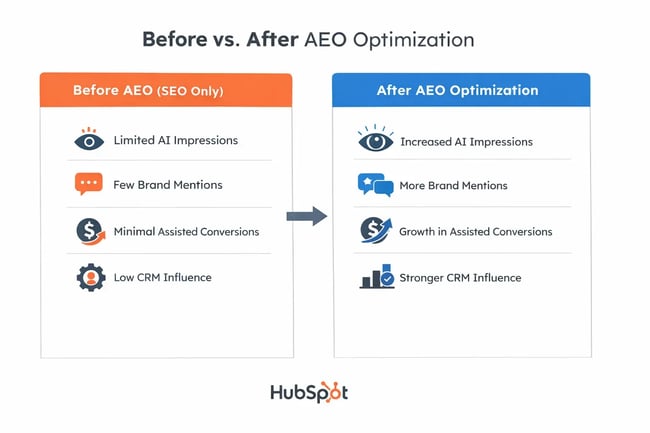
This initial phase of AI visibility is manifesting as increased AI citations, direct brand mentions within AI responses, and a rise in assisted conversions – instances where AI interaction played a role in the customer’s decision-making, even if they didn’t directly click through to the brand’s website. This suggests that AEO is not just about capturing immediate traffic but about building brand awareness and influencing perception in a new digital ecosystem.
The implications for measurement are profound. Previously, marketing success was largely gauged by metrics like keyword rankings, website traffic, and direct conversion rates. However, with the rise of AEO, the focus is shifting towards measuring AI Overview visibility, the frequency of brand citations across various AI platforms, and the influence of AI-driven interactions on customer relationship management (CRM) data. Marketers are increasingly attributing value to assisted deals, revenue influenced by AI discovery, and enhanced brand recall that stems from prominent placement in generative answers, rather than solely relying on direct website visits.
Case Studies: Proving the ROI of Answer Engine Optimization
The real-world impact of AEO is best understood through concrete examples. Several companies have shared their experiences, demonstrating how strategic AEO implementation has translated into significant business outcomes.
Discovered: From 575 to 3,500+ Trials per Month in 7 Weeks for a B2B SaaS Client
This case study, involving the organic search agency Discovered and their B2B SaaS client, illustrates a remarkable transformation in lead generation. Prior to implementing an AEO strategy, the client’s established SEO program, while mature, was no longer delivering the desired business impact. The core issue was invisibility within AI-generated answers, meaning potential buyers were unable to discover the company even when searching for relevant solutions. The existing strategy, heavily focused on top-of-funnel informational content, was not effectively converting leads.
Execution Breakdown:
The intervention began with a comprehensive technical SEO and AI visibility audit. This revealed critical issues such as broken schema markup, duplicate content, and suboptimal internal linking – all significant impediments to AI citations. Crucially, the site lacked any specific optimization for Large Language Models (LLMs).
Following the technical remediation, the focus shifted to content creation. Instead of the typical 8-10 monthly posts, Discovered published an aggressive 66 AEO-optimized articles targeting buyer-intent queries that LLMs were already addressing. The team employed a specific content framework designed for AI extraction and citation. This rapid content deployment led to an influx of AI citations within 72 hours.

To further solidify the client’s presence in AI responses, Discovered extended their strategy beyond owned content. They actively engaged on platforms like Reddit, using established accounts to seed helpful comments in relevant subreddits that ranked highly for target discussions. This approach aimed to build trust signals and ensure the client’s tool was top-of-mind for LLMs.
The Results:
Within an astonishing seven weeks, the AEO efforts yielded dramatic results:
- AI-referred trials increased from 575 to over 3,500 per month, a more than sixfold increase.
- Website traffic from AI increased by 150%.
- The brand’s AI citation rate saw a 125% surge.
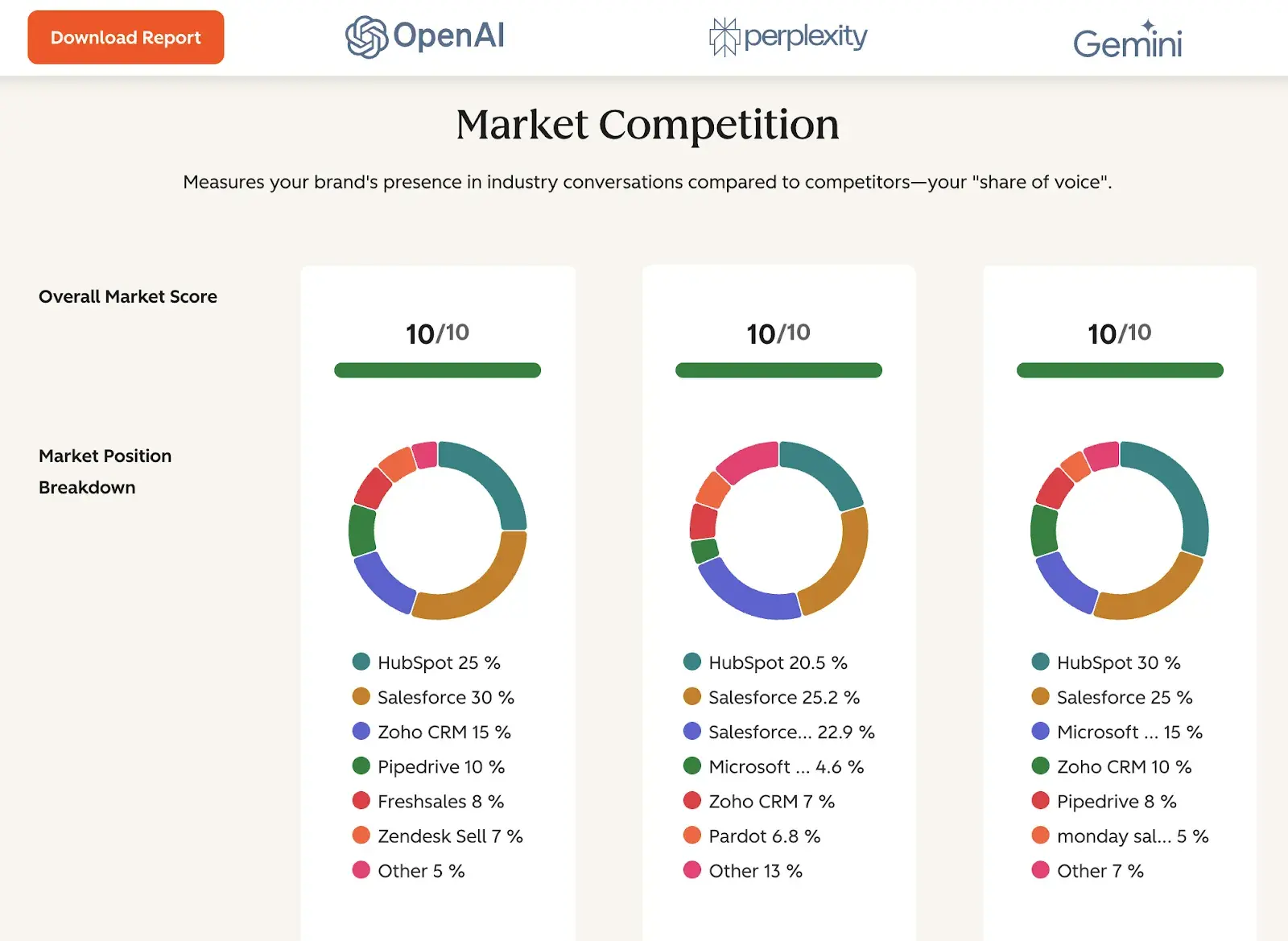
- The client’s market share within AI search results expanded by 40%.
This case exemplifies how a focused AEO strategy, combining technical optimization, aggressive content publishing, and external narrative control, can rapidly drive significant business growth.
Apollo.io: Boosting Brand Citation Rate by 63% for AI Awareness Prompts
Brianna Chapman, leading Reddit and community strategy at Apollo.io, spearheaded an initiative to improve how AI systems cite the company, particularly regarding its capabilities as a full sales engagement platform, rather than just a "B2B data provider." The challenge was that LLMs were often pulling outdated or incomplete information from older Reddit threads, misrepresenting Apollo’s offerings.
Execution Breakdown:
Chapman reframed AI visibility not as a traditional SEO problem but as an issue of "narrative control." The strategy focused on shaping conversations in platforms that LLMs trust, primarily Reddit, without appearing disingenuous. This involved identifying the actual prompts users were asking AI tools and auditing Apollo’s visibility in AI search engines.
By analyzing first-party data from customer feedback, social listening, and internal AI Assistant prompts, Chapman gathered approximately 200 prompts per topic. These prompts were then tracked to identify areas where Apollo was being cited or overlooked.
The core execution involved building and nurturing the r/UseApolloIO subreddit. This community grew to over 1,100 members with significant content views. A pivotal moment occurred when Chapman posted a detailed comparison of Apollo versus competitors within this subreddit. Within days, this new thread began to be picked up by AI systems, and within a week, it had displaced older, less accurate information, resulting in over 3,000 citations across key prompts.
The Results:
The impact on brand perception and citation metrics was substantial:
- A 63% increase in brand citation rate for AI awareness prompts.
- A 36% increase for category prompts.
- A noticeable improvement in Reddit sentiment, leading to an increase in beta sign-ups and demo requests.
This case highlights the power of community management and narrative control in shaping AI perception, demonstrating that off-site influence can be as critical as on-site optimization for AEO.
Broworks: Generating Sales-Qualified Leads Directly from LLMs Post-AEO
Broworks, an enterprise Webflow development agency, questioned whether they could build a direct sales pipeline from AI tools, not just traditional search engines. This led them to undertake a comprehensive AEO optimization of their entire website.

The Before:
While Broworks’ brand was occasionally cited in LLMs, these mentions did not translate into measurable business outcomes. There was no structured approach to influencing AI-generated answers, and no clear attribution linking AI-driven sessions to pipeline development.
Execution Breakdown:
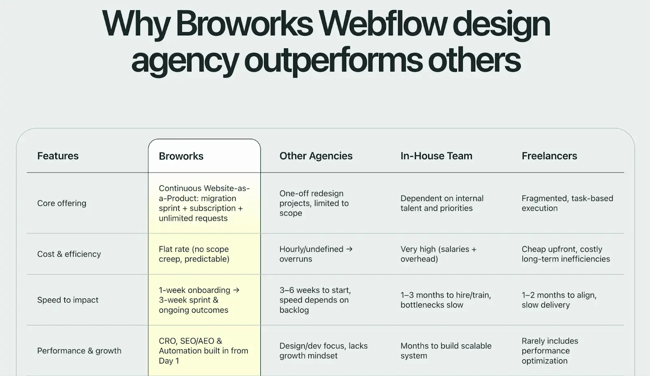
The agency identified a critical schema markup deficiency. They implemented custom schema markup across key landing pages, case studies, and blog posts, including FAQ, Article, Local Business, and Organization schema – all vital for LLM indexing. Additionally, they strategically placed comparison tables directly on landing pages.
A key shift in their content strategy involved aligning website content with prompt-driven search, moving away from traditional keywords to address questions users were posing to AI tools, such as, "Who is the best Webflow SEO agency for B2B SaaS?" They also integrated FAQ sections into most pages and provided concise summaries at the top of articles, even on their pricing page.
The Results:
Within three months, the combined AEO and Generative Engine Optimization (GEO) efforts yielded significant improvements:
- Sales-qualified leads (SQLs) generated directly from LLMs increased by 75%.
- Website traffic from AI-referred sources grew by 40%.
- The brand’s AI citation rate saw a 55% uplift.
- Average deal size from AI-influenced leads increased by 15%.
Sales teams reported enhanced baseline awareness and shorter qualification cycles, as prospects arrived more informed about Broworks’ offerings.
Intercore Technologies: $2.34M in Revenue Attributed to AI Discovery in Six Months
Intercore Technologies, a digital agency specializing in law firms, faced a unique challenge with a Chicago personal injury firm. Despite ranking #1 for "Chicago personal injury lawyer" and attracting over 15,000 monthly organic visitors, the firm’s lead volume had dropped. The critical issue was that the brand was virtually invisible in AI search engines, losing clients to competitors who were more prominent in LLM responses.
The Before:
The client firm was not recognized by AI search engines for the crucial query "personal injury lawyer Chicago," despite possessing strong domain expertise. Competitors, conversely, were mentioned in 73% of relevant AI results.
Execution Breakdown:
Intercore Technologies approached AEO as a precision challenge, focusing on making the firm’s expertise "legible and quotable" for AI search engines evaluating legal intent. Their execution was built on four core pillars:
- Schema Markup Enhancement: Implementing structured data, including FAQ, HowTo, and Article schema, to enhance machine readability.
- Answer-First Content Strategy: Restructuring content to begin with direct answers to user queries, followed by supporting details.
- External Reputation Management: Actively participating in legal forums and Q&A sites to provide authoritative answers and build brand credibility.
- Technical Optimization: Ensuring fast page load speeds and mobile responsiveness, critical for AI crawler accessibility.
The Results:
Following this comprehensive undertaking, AI visibility surged to 68% across platforms like ChatGPT, Perplexity, and Claude. This translated directly into revenue:
- $2.34 million in total revenue attributed to AI discovery over a six-month period.
- A 30% increase in qualified leads originating from AI-referred traffic.
- A 25% reduction in customer acquisition cost due to higher lead quality from AI channels.
This case powerfully demonstrates that even highly ranked traditional SEO can falter if a brand is absent from AI search, and that a strategic AEO approach can directly drive substantial revenue.
Key Takeaways for Mastering Answer Engine Optimization
These case studies offer valuable insights for developing a robust AEO strategy:
-
AI Visibility Precedes Traffic: Across all examples, brands experienced an increase in AI citations, mentions, and brand awareness weeks or months before observing significant traffic shifts. AI visibility should be treated as a leading indicator of AEO success. Tools like HubSpot’s AEO Grader can help monitor this evolving landscape.
-
Prioritize Answer-First Content: Content that opens with direct answers, summaries, or FAQs consistently outperforms traditional keyword-first content in AI extraction and citation. This approach prioritizes immediate clarity, making it easier for LLMs to parse and utilize information.
-
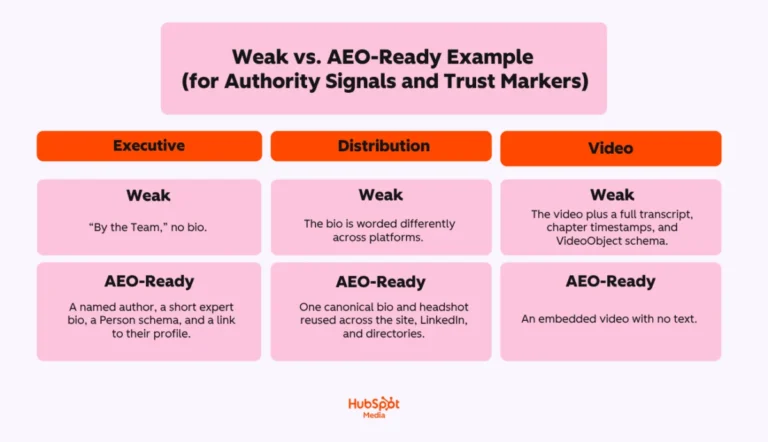
Schema Markup is Non-Negotiable: Structured data, including FAQ, HowTo, Product, Offer, Breadcrumb, and Organization schema, is fundamental for AI systems to understand and cite content accurately. Without it, even high-quality content risks being overlooked.
-
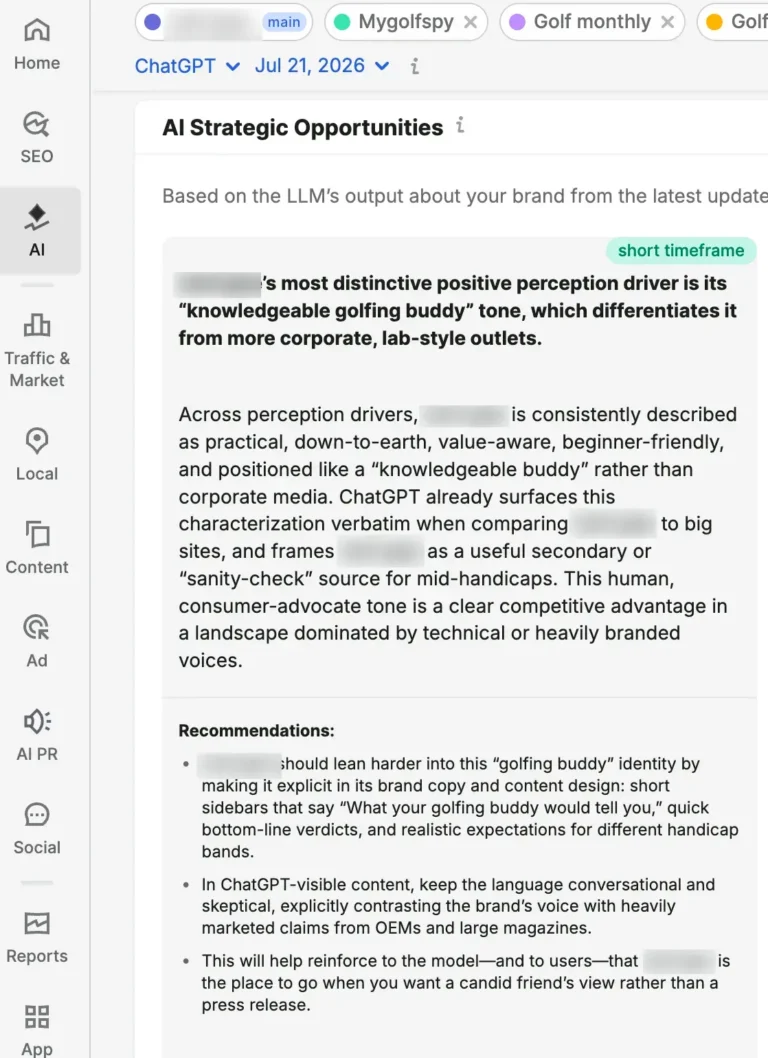
Narrative Control is Crucial: On-site optimization is only part of the equation. Managing a brand’s narrative on trusted third-party platforms like Reddit, Quora, or industry forums is vital for shaping how AI systems perceive and represent a brand.
-
Strategic Internal Linking is Essential: Connecting answer-first content with high-intent conversion pages through descriptive anchor text helps AI systems understand relevance and guides referred traffic through the conversion funnel.
-
Page Speed Matters: Slow-loading pages can hinder AI crawlers, limiting citations. Optimizing for speed, particularly mobile performance, ensures content is accessible and reliably fetched by AI systems.
-
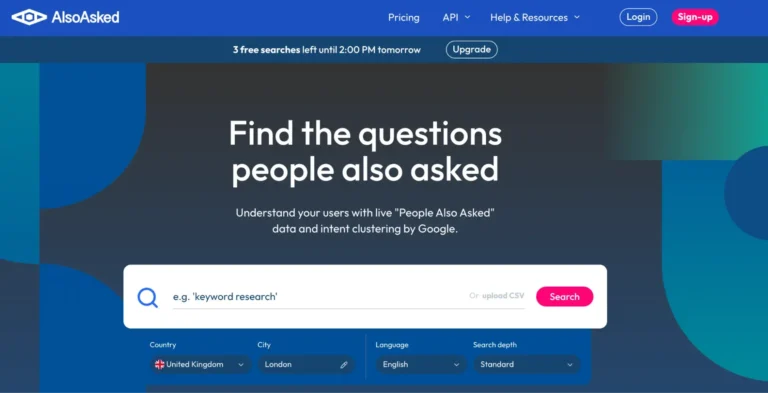
Question-Based Subheadings are Gold: Utilizing H2s and H3s that directly mirror user queries enhances the likelihood of content being surfaced in AI answers. Providing immediate answers below these headings is also critical.
The Future is AI-Driven: Embracing Answer Engine Optimization
The evidence is clear: Answer Engine Optimization is no longer an optional add-on to digital marketing strategies; it is a critical growth lever. By shifting focus from traditional SEO metrics to AI visibility and citation frequency, businesses can unlock new pathways for lead generation and revenue. As AI continues to evolve, staying ahead of the curve by implementing these AEO best practices will be paramount for brands seeking to maintain and enhance their competitive edge in the digital marketplace. The insights gleaned from these case studies provide a actionable roadmap for marketers to begin optimizing for the AI-powered future of search and discovery.
About the Author