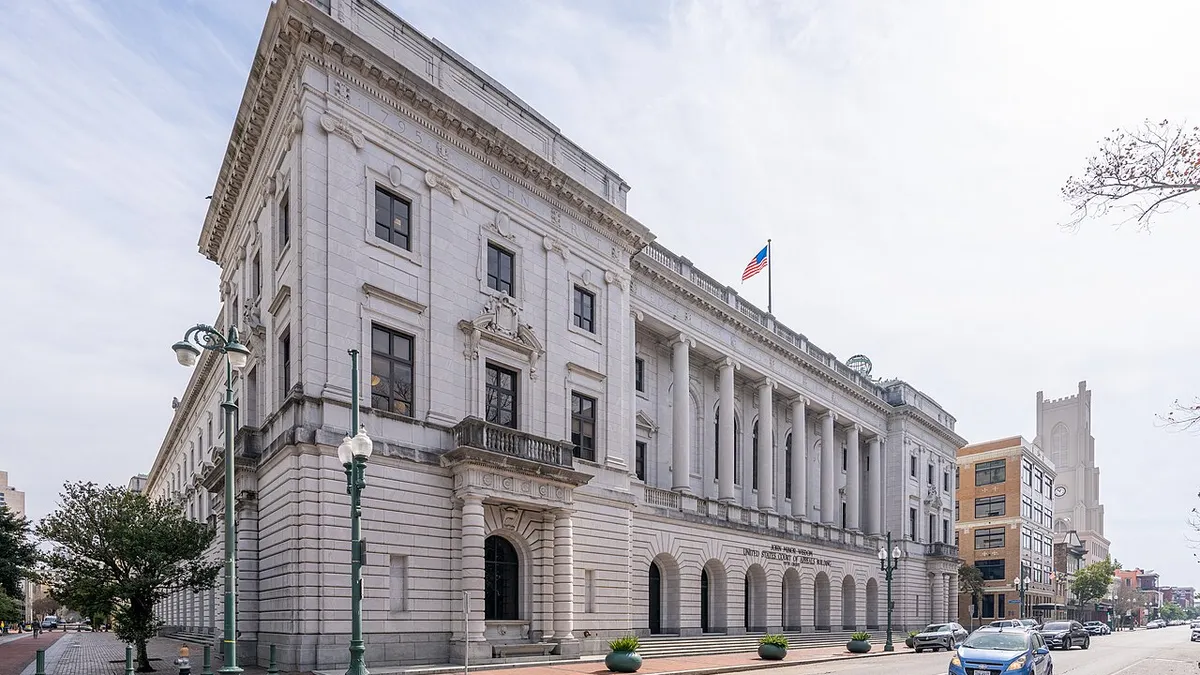
New Orleans, LA – July 17, 2026 – The U.S. Court of Appeals for the 5th Circuit has overturned a lower court’s decision, allowing a former employee’s hostile work environment claims to proceed. The appellate court found that the plaintiff presented sufficient evidence to suggest that her employer’s investigation into her allegations was neither prompt nor thorough enough to absolve it of liability under federal workplace civil rights laws. This ruling is a significant development for employees alleging workplace discrimination and highlights the critical importance of robust and timely employer responses to such claims.
The case, brought by a former employee against Corpus Christi Medical Center (CCMC) and its parent entity, Bay Area Healthcare Group, centers on allegations of a pervasive and abusive work environment. The plaintiff, whose identity has not been widely publicized, detailed a series of incidents that she contended created a hostile atmosphere, making it difficult for her to perform her duties and causing significant emotional distress.
A Pattern of Alleged Harassment
Central to the plaintiff’s claims are documented instances of what she describes as harassing behavior. Her testimony, supported by that of a Black co-worker, paints a picture of a workplace where offensive conduct was not only tolerated but, according to her account, perpetuated by a lack of effective intervention from management. The plaintiff provided emails and other documentary evidence that she asserts corroborate the harassing incidents she experienced.
These alleged experiences had a profound impact on the plaintiff’s well-being. In her deposition, she stated that the environment led her to "question how she could function in such an environment and made her feel ‘less than human.’" Further supporting her claims, she submitted counseling records indicating that she suffered distress, trauma, and fear of harm as a direct consequence of the alleged conduct. The plaintiff also contended that her work performance deteriorated due to these conditions.
A key aspect of the 5th Circuit’s decision hinges on the concept of "secondhand harassment." The plaintiff’s allegations included witnessing her co-worker endure similar discriminatory treatment. The appellate court, referencing its own prior rulings, acknowledged that such secondhand harassment can indeed weigh in favor of an employee when assessing the totality of circumstances in a hostile work environment claim. This principle underscores that the impact of a hostile environment extends beyond direct targets, encompassing those who witness and are affected by the pervasive mistreatment of others.
Employer’s Responsibility Under Title VII
Federal laws, including Title VII of the Civil Rights Act of 1964, establish clear obligations for employers regarding workplace harassment. Under these statutes, employers can be held liable if they knew or should have known about harassment and subsequently failed to implement prompt and effective corrective actions. This "knew or should have known" standard places a significant burden on employers to be vigilant and responsive to any signs of a hostile work environment.
In this particular case, CCMC and Bay Area Healthcare Group attempted to demonstrate that they had met their legal obligations. Their defense centered on actions taken following the plaintiff’s complaints. Specifically, the employer stated that it conducted interviews with relevant parties and provided coaching to nurses who were allegedly involved in the offensive conduct. Furthermore, the company offered to transfer the plaintiff to a different position, an action they argued constituted a corrective measure.
Scrutiny of the Employer’s Investigation
However, the 5th Circuit found these assertions insufficient to warrant summary judgment in favor of the employer. The appellate court raised significant concerns about the adequacy and timeliness of CCMC’s internal investigation. The court noted discrepancies in the testimony provided by CCMC staff regarding the investigation process and interview records. Compounding these issues, the employer failed to produce a comprehensive investigation file or detailed notes during the discovery phase of the legal proceedings, which raised further questions about the thoroughness of their inquiry.
Crucially, the plaintiff presented evidence suggesting that the managers who conducted the investigation made dismissive remarks, such as telling her that "the cliques were not going anywhere." This alleged statement implies a lack of commitment to addressing the root causes of the harassment. Moreover, the plaintiff claimed that the harassing behavior continued even after the investigation had concluded, indicating that the employer’s actions were not effective in rectifying the situation.

"The plaintiff has pointed to evidence that CCMC’s investigation was insufficiently prompt and thorough," the 5th Circuit stated in its decision. This finding directly contradicts the district court’s initial assessment and paves the way for the case to proceed to trial, where a jury will have the opportunity to weigh the evidence presented by both sides.
Precedents in Hostile Work Environment Litigation
This ruling from the 5th Circuit aligns with a broader trend in federal courts to scrutinize employer responses to harassment allegations. Previous cases have established that the use of repeated epithets or slurs can be strong evidence supporting a plaintiff’s hostile work environment claim.
For example, in a 2019 decision, the 9th U.S. Circuit Court of Appeals held that a manager’s use of four racial slurs over a single year was sufficient to demonstrate that the plaintiff had been subjected to an abusive work environment. This ruling underscored that even a seemingly limited number of severe incidents, when combined with other factors, can create a legally actionable hostile environment.
More recently, in a decision issued just days prior to the 5th Circuit’s ruling, the 10th U.S. Circuit Court of Appeals revived a hostile work environment lawsuit against Walmart. In that case, the court determined that a plaintiff who faced multiple discriminatory acts had plausibly alleged the existence of such an environment, allowing the case to move forward. These precedents collectively emphasize that courts will look beyond superficial investigations and require employers to demonstrate a genuine and effective commitment to eradicating harassment from the workplace.
Implications for Employers and Employees
The 5th Circuit’s decision serves as a critical reminder to employers nationwide about the multifaceted nature of their obligations in preventing and addressing workplace harassment. It underscores that merely conducting an investigation or offering a transfer may not be enough to avoid liability, particularly if the investigation is perceived as perfunctory or if the harassment persists.

Key takeaways for employers include:
- Promptness is Paramount: Investigations must be initiated immediately upon receiving a complaint. Delays can be interpreted as a failure to take the matter seriously.
- Thoroughness is Essential: Investigations must be comprehensive, involving interviews with all relevant parties, review of all available evidence (including electronic communications and documents), and detailed record-keeping.
- Impartiality and Objectivity: Investigators should be trained and unbiased to ensure a fair and accurate assessment of the allegations.
- Effective Corrective Action: If harassment is substantiated, employers must implement remedies that effectively stop the behavior and prevent its recurrence. This may involve disciplinary action, training, policy reinforcement, and, if necessary, changes in reporting structures or work assignments.
- Documentation is Crucial: Maintaining meticulous records of complaints, investigations, and actions taken is vital for demonstrating compliance and defending against potential litigation.
For employees, this ruling reinforces their right to a workplace free from harassment and discrimination. It validates the importance of reporting such behavior and underscores that the legal system provides avenues for recourse when employers fail to uphold their responsibilities. The decision empowers employees to challenge inadequate investigations and seek justice when their fundamental right to a safe and respectful work environment is violated.
The case is expected to proceed to further litigation, potentially including discovery and a trial, where the plaintiff will have the opportunity to present her full case and the employer will have to defend its actions and policies. The outcome of this trial could further shape the legal landscape surrounding employer liability for hostile work environments. The broader implications of this ruling are significant, encouraging a more proactive and diligent approach from businesses in fostering inclusive and respectful workplaces.
About the Author