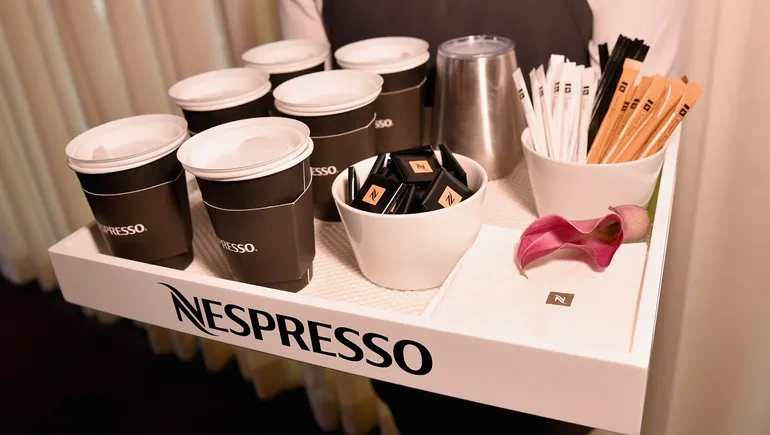
A federal district court in Illinois has ruled that a former Nespresso employee can move forward with her lawsuit alleging race discrimination and a hostile work environment. The ruling, issued on July 13 in the case of Belzone v. Nespresso USA, allows the plaintiff, Jacqueline Belzone, to pursue claims that she was denied promotions and subjected to demeaning comments based on her race as an African American. The court found that Belzone’s initial complaint provided sufficient grounds to avoid dismissal, a standard that plaintiffs in employment discrimination cases often find to be "relatively low" for surviving an initial legal challenge.
Allegations of Systemic Discrimination and Hostile Environment
According to the complaint filed by Belzone, she served as a Nespresso boutique coffee specialist for over a decade, consistently performing her duties to a satisfactory level. Despite her tenure and performance, Belzone alleges she was repeatedly passed over for three promotions. Crucially, she asserts that she was already performing the responsibilities associated with these higher roles without the corresponding title or compensation. In each instance, these positions were allegedly filled by White individuals who were described as less qualified and possessing less experience than Belzone.
The complaint further details a specific promotion where Belzone claims the selection process was tainted by bias. She alleges that the retail director and district manager conducted a "sham" interview with her, aware that the job had already been earmarked for a White candidate who had only two years of experience in the retail sector. This suggests a predetermined outcome, undermining the integrity of the promotion process and indicating potential discriminatory intent.
Beyond the denial of promotions, Belzone also claims that Nespresso leadership made several remarks that contributed to a hostile work environment, characterized by negative racial stereotypes. These alleged comments included telling her she wasn’t "polished enough to be a manager," questioning why she was "always [the] loudest voice in the room," and expressing fear by stating, "I’m scared of you." Such statements, if proven, could support claims of racial harassment and a work environment that was intimidating, hostile, or offensive.
Legal Framework and Court’s Decision
Belzone resigned from her position and subsequently filed a lawsuit against Nespresso USA. Her legal action is primarily grounded in Title VII of the Civil Rights Act of 1964, which prohibits employment discrimination based on race, color, religion, sex, or national origin, and 42 U.S.C. § 1981, which provides for equal rights under the law and prohibits racial discrimination in contractual relationships, including employment.
In addition to her race discrimination claims, Belzone has also brought a case under the Americans with Disabilities Act (ADA). She alleges that Nespresso discriminated against her and failed to provide reasonable accommodations for her severely impaired eyesight. This dual claim highlights a multifaceted alleged pattern of mistreatment by the company.
The federal district court’s decision to allow the lawsuit to proceed means that the case will move beyond the initial pleading stage and enter the discovery phase. During discovery, both sides will have the opportunity to gather evidence, depose witnesses, and build their respective cases. Nespresso has not yet formally responded to requests for comment regarding the court’s ruling.
The "Low Bar" for Pleading Employment Discrimination
The court’s decision in Belzone v. Nespresso USA underscores a fundamental aspect of federal pleading standards, particularly in employment discrimination cases. The court explicitly noted that the bar for plaintiffs to survive a motion to dismiss is "relatively low." This standard is rooted in the Federal Rules of Civil Procedure, which are designed to allow plaintiffs to present their claims and access discovery, even if the ultimate success of the claim is uncertain.
The court quoted a 2026 U.S. Supreme Court ruling on medical malpractice to illustrate this point: "By design, [the Federal Rules of Procedure’s] system of pleading makes it relatively easy for plaintiffs to subject defendants to discovery—even for claims that are likely to fail." This indicates that at the initial stage, courts are focused on whether the complaint alleges sufficient facts to state a plausible claim, rather than weighing the evidence or determining the likelihood of success.
Nespresso had argued that Belzone’s ADA claim was insufficiently pleaded, pointing out that she did not specify her exact condition, its duration, severity, or the effect of any mitigating measures. The company also contended that her failure-to-accommodate claim was weak, suggesting that a leave of absence, which Belzone alleged she was forced to take without proper interactive process, could itself be a reasonable accommodation.
However, the court disagreed that these arguments were sufficient to warrant dismissal at this early stage. While acknowledging that Belzone’s allegations were "quite thin" and that she would need to "marshal enough evidence" to proceed to trial, the court maintained that "details and proofs come later." This sentiment emphasizes the procedural posture of the case, where the initial focus is on the adequacy of the allegations themselves.
Broader Implications: Evolving Standards in Discrimination Law
The Belzone decision arrives at a time of significant legal developments concerning employment discrimination. The court’s reference to a "low bar" for plaintiffs is consistent with recent pronouncements from higher courts that aim to ensure equitable access to justice for all individuals alleging discrimination.
A key development was the U.S. Supreme Court’s unanimous decision in Ames v. Ohio Department of Youth Services earlier this year. In Ames, the Court clarified that Title VII does not require plaintiffs from majority groups to meet a higher standard of proof when alleging intentional discrimination. This ruling reinforced the principle that the burden of proof for establishing discrimination is the same for all individuals, regardless of their race or other protected characteristics. This means that claims of "reverse discrimination" are not subject to a more stringent evidentiary threshold.
The impact of Ames is already being felt in lower courts. For instance, in March, the 3rd U.S. Circuit Court of Appeals, citing the Ames decision, revived a discrimination lawsuit filed by a White police officer in New Jersey. This officer had been passed over for a promotion in favor of an Arab Muslim candidate and was allowed to proceed with his claims of discrimination. These cases collectively suggest a legal landscape that is increasingly vigilant about ensuring that all individuals have a fair opportunity to have their discrimination claims heard and adjudicated.
The Path Forward for Belzone and Nespresso
For Jacqueline Belzone, the court’s ruling is a significant victory, granting her the opportunity to pursue justice for the alleged discrimination she experienced. The discovery process will now be critical. Belzone’s legal team will aim to uncover evidence that substantiates her claims of race discrimination, denial of promotions, and a hostile work environment. This could involve internal company documents, emails, witness testimony from colleagues, and comparative data on promotions and hiring decisions.
For Nespresso, the lawsuit represents a substantial legal challenge. The company will need to prepare a robust defense, potentially arguing that its promotion decisions were based on legitimate, non-discriminatory factors and that any alleged comments were not severe or pervasive enough to constitute a hostile work environment. The ADA claim will require them to address the specifics of Belzone’s visual impairment and their accommodation policies.
The Belzone case serves as a reminder to employers about the critical importance of implementing fair and transparent hiring and promotion practices, fostering inclusive workplace cultures, and providing reasonable accommodations for employees with disabilities. Allegations of discrimination, even at the pleading stage, can lead to lengthy and costly legal battles, reputational damage, and potentially significant financial penalties if the claims are substantiated. The legal process ahead will likely involve extensive evidence gathering and potentially settlement negotiations or a full trial, where the details of Belzone’s experience at Nespresso will be scrutinized. The ultimate outcome will depend on the evidence presented and the court’s interpretation of the law.
About the Author