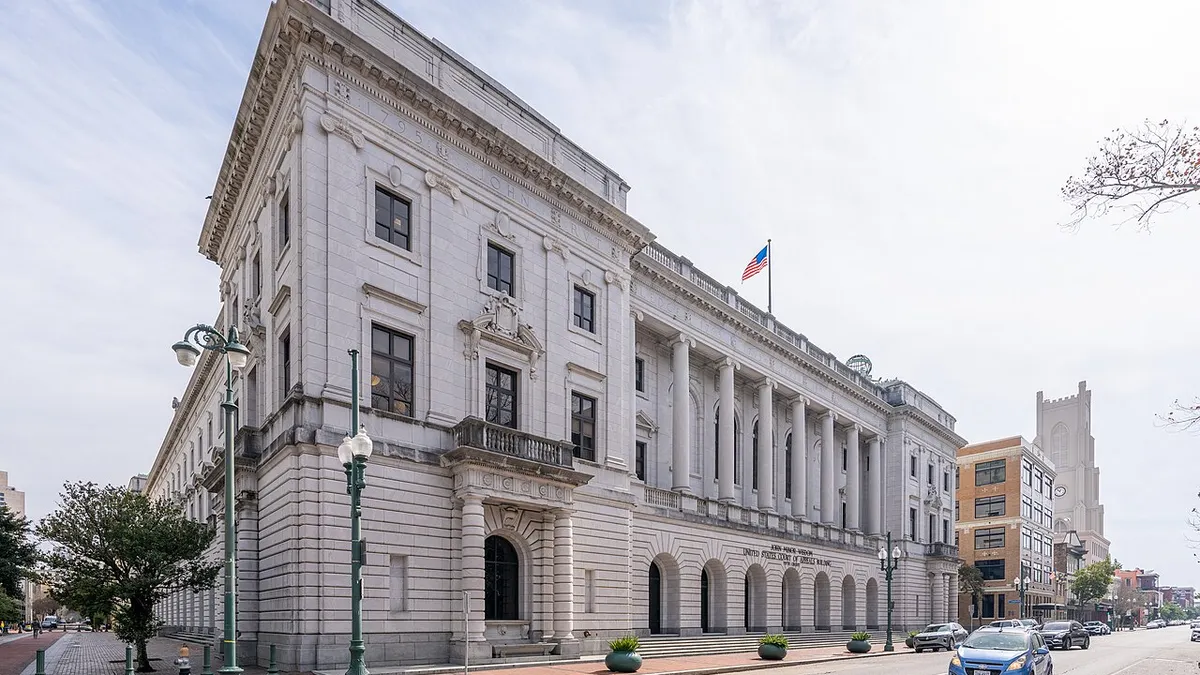
The U.S. Court of Appeals for the 5th Circuit has overturned a district court’s decision to grant summary judgment to an employer, ruling that the plaintiff presented sufficient evidence to proceed with her hostile work environment claims. The appellate court found that the employer’s investigation into the plaintiff’s allegations was not "insufficiently prompt and thorough," a critical factor in determining employer liability under federal workplace civil rights laws. The ruling, published on July 17, 2026, highlights the stringent standards courts apply when evaluating an employer’s response to harassment complaints.
Key Evidence Presented by the Plaintiff
The plaintiff’s case was built upon a multifaceted collection of evidence designed to demonstrate the pervasive nature of the harassment she experienced and its detrimental impact on her well-being and work performance. Central to her claims was her own deposition testimony, which detailed specific incidents and the emotional toll they took. This testimony was corroborated by that of a Black co-worker, who also reported witnessing or experiencing similar discriminatory conduct.
Crucially, the plaintiff submitted emails that served as documented evidence of harassing incidents. These communications, along with firsthand accounts, painted a picture of a workplace where offensive behavior was not an isolated event but a recurring problem. The plaintiff alleged that these experiences caused her to "question how she could function in such an environment and made her feel ‘less than human.’" This subjective distress was further substantiated by counseling records, which indicated that the plaintiff was experiencing significant distress, trauma, and fear of harm as a direct consequence of the workplace conduct. She further contended that her work performance demonstrably suffered as a result of this environment.
Adding another layer to the plaintiff’s case was the concept of "secondhand harassment." The 5th Circuit acknowledged that the plaintiff’s alleged observation of her co-worker enduring similar treatment "weighs in [her] favor when assessing the totality of the circumstances." This inclusion of secondhand harassment underscores the court’s recognition that a hostile work environment can be created not only by direct mistreatment but also by witnessing egregious conduct directed at others, particularly those in protected classes. The court’s reference to its prior precedent in this regard suggests a consistent judicial approach to this aspect of harassment claims.
Legal Framework for Employer Liability
Federal workplace civil rights laws, most notably Title VII of the 1964 Civil Rights Act, establish a framework for holding employers liable for harassment that creates a hostile work environment. Under these statutes, an employer can be held responsible if it "knew or should have known about the harassment and failed to take prompt corrective action." This legal standard places a significant onus on employers to not only prevent harassment but also to respond effectively and swiftly when complaints arise.
The "knew or should have known" prong is typically met when an employee reports the harassment to a supervisor or manager. The "failed to take prompt corrective action" prong is where the employer’s investigation and subsequent remedial measures are scrutinized. The 5th Circuit’s decision emphasizes that the quality of this action, not just its mere existence, is paramount.
The Employer’s Defense and the 5th Circuit’s Rebuttal
The employer in this case, operating under the names Corpus Christi Medical Center (CCMC) and Bay Area Healthcare Group, contended that it had indeed taken appropriate corrective action. Their defense involved conducting interviews with alleged perpetrators and providing coaching to nurses implicated in the offensive conduct. Furthermore, CCMC reportedly offered to transfer the plaintiff to a different role, an action they presented as a measure to mitigate the impact of the harassment.
However, the 5th Circuit found these actions insufficient to warrant summary judgment. The court specifically took issue with the employer’s investigative process. It highlighted discrepancies in the testimony of CCMC staff regarding the investigation and interview records. Compounding these issues, the employer failed to produce an investigation file or notes during the discovery phase of the litigation. This lack of documentation raised significant questions about the thoroughness and integrity of the employer’s internal review.
The plaintiff provided counter-evidence that further undermined the employer’s defense. She presented testimony indicating that managers involved in the investigation had made dismissive remarks, such as telling her that "the cliques were not going anywhere." This suggests a potential lack of commitment to resolving the underlying issues. Moreover, the plaintiff alleged that the harassment continued even after the employer’s investigation had concluded, indicating that the corrective measures, if any, were ineffective.

Ultimately, the appellate court concluded that the plaintiff had presented substantial evidence demonstrating that CCMC’s investigation was "insufficiently prompt and thorough." This finding was critical in reversing the district court’s decision. The court implied that simply conducting interviews and offering coaching might not be enough if the investigation itself is flawed or if the subsequent actions fail to effectively halt the harassing behavior.
Broader Implications and Precedent
The 5th Circuit’s ruling aligns with a broader judicial trend of holding employers accountable for their responses to harassment claims. Courts consistently examine the promptness and efficacy of an employer’s investigation. The use of repeated epithets or slurs has been a recurring factor in favor of plaintiffs in hostile work environment claims.
For instance, a 2019 decision by the 9th U.S. Circuit Court of Appeals held that a manager’s use of four racial slurs over a single year was sufficient evidence to establish an abusive work environment for the plaintiff. This case underscored that even a limited number of severe incidents, particularly those involving racial epithets, can contribute to a hostile atmosphere.
More recently, the 10th U.S. Circuit Court of Appeals, in a decision issued shortly before this HR Dive report, revived a hostile work environment case against Walmart. In that instance, the court found that a plaintiff who faced multiple discriminatory acts had plausibly alleged the existence of such an environment, emphasizing that a pattern of various discriminatory behaviors can collectively create a hostile workplace.
These precedents, including the 5th Circuit’s current decision, serve as a crucial reminder to employers that a perfunctory investigation or superficial corrective actions are unlikely to shield them from liability. Employers must demonstrate a genuine commitment to addressing harassment through comprehensive, timely, and effective measures. This includes conducting thorough investigations, taking appropriate disciplinary or remedial actions, and ensuring that such actions effectively stop the harassing behavior and prevent its recurrence.

Chronology of Events (Inferred and Based on Case Dynamics)
While specific dates for the alleged harassment and investigation are not provided in the excerpt, a typical timeline for such a case would involve:
- Period of Alleged Harassment: The plaintiff experiences ongoing unwelcome conduct and discriminatory remarks in the workplace over an unspecified duration.
- Plaintiff’s Complaint: The plaintiff formally or informally reports the harassment to her supervisors or the HR department at CCMC.
- Employer’s Investigation: CCMC initiates an investigation, which may involve interviews with the plaintiff, witnesses, and the alleged perpetrators. This phase is where the alleged "insufficiently prompt and thorough" nature of the investigation becomes critical.
- Employer’s Corrective Actions: Based on the investigation, CCMC implements measures such as coaching, disciplinary actions, or offering a transfer to the plaintiff.
- Continued Harassment Alleged: The plaintiff claims the harassment persisted despite the employer’s actions.
- District Court Proceedings: The plaintiff files a lawsuit. The employer seeks summary judgment, arguing that no genuine issue of material fact exists and they are entitled to judgment as a matter of law. The district court grants this motion.
- Appeal to the 5th Circuit: The plaintiff appeals the district court’s decision.
- 5th Circuit Ruling (July 17, 2026): The 5th Circuit reverses the grant of summary judgment, finding that the plaintiff has presented sufficient evidence to proceed to trial on her hostile work environment claims.
Analysis of Implications
The 5th Circuit’s decision has significant implications for employers, particularly those operating within its jurisdiction. It reinforces the notion that a robust and well-documented investigation is not merely a procedural step but a substantive defense against hostile work environment claims. Employers are urged to:
- Develop and Adhere to Clear Policies: Implement comprehensive anti-harassment policies that clearly define prohibited conduct, outline reporting procedures, and assure employees that complaints will be taken seriously and investigated promptly and thoroughly.
- Train Managers and Supervisors: Ensure that all personnel with supervisory responsibilities are adequately trained on how to receive and report harassment complaints, and on the importance of prompt and impartial investigations.
- Conduct Impartial Investigations: Investigations must be conducted by neutral parties, gather all relevant evidence (including documents, emails, and witness accounts), and be thoroughly documented. Discrepancies in testimony and a failure to produce evidence during discovery can severely weaken an employer’s defense.
- Take Effective Remedial Actions: If harassment is substantiated, employers must take prompt and effective action to stop the conduct and prevent its recurrence. This may include disciplinary action against the harasser, training, or other measures tailored to the specific situation. Offering a transfer to the victim may be a component of a broader remedial strategy but is unlikely to be sufficient on its own if the underlying issues are not addressed.
- Follow Up: Employers should follow up after corrective actions are taken to ensure that the harassment has ceased and that the employee feels safe and is able to perform their job duties without further incident.
The ruling also serves as a vital reminder to employees of their rights and the importance of documenting their experiences and reporting them through appropriate channels. The inclusion of evidence such as deposition testimony, co-worker accounts, emails, and counseling records demonstrates the diverse types of evidence that can be instrumental in proving a hostile work environment claim. The recognition of secondhand harassment as a contributing factor further broadens the scope of what courts will consider when evaluating the totality of the circumstances in such cases. This decision ultimately underscores the ongoing commitment of the judiciary to ensuring that workplaces are free from discrimination and harassment.
About the Author