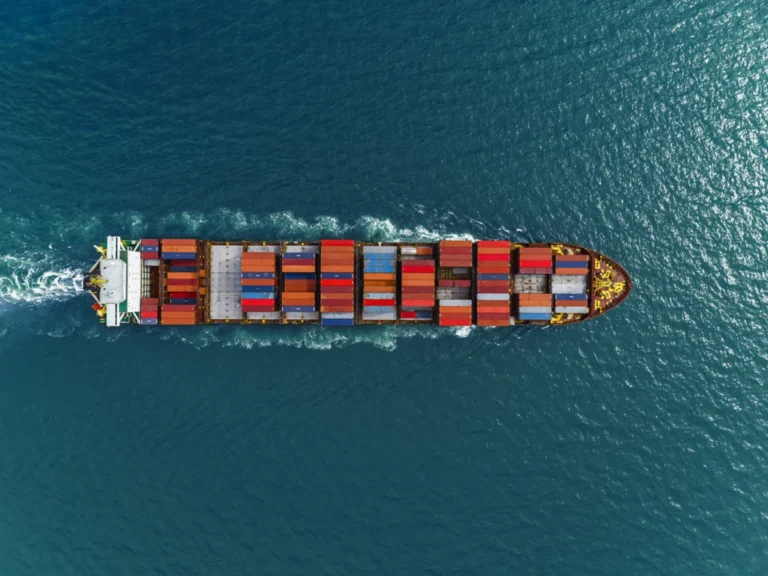
Historically, periods of geopolitical tension have shaped the trajectory of global commerce, but in today’s deeply interconnected economy, the impact of conflict on cross-border disputes is more immediate, complex, and far-reaching than at any previous point in modern history. As regional instabilities—most notably the current tensions in the Middle East and the ongoing conflict in Eastern Europe—continue to ripple through global markets, the traditional frameworks for resolving international business disagreements are being tested. These conflicts have moved beyond regional stability concerns to actively disrupt supply chains, alter the flow of foreign direct investment (FDI), and introduce unprecedented layers of legal and regulatory risk for multinational corporations. In this volatile environment, international arbitration has transitioned from being a standard dispute resolution mechanism into a critical strategic tool for managing uncertainty, preserving long-term commercial relationships, and safeguarding corporate value against a backdrop of global fragmentation.
The Intersection of Geopolitical Conflict and Commercial Risk
Geopolitical instability rarely manifests as an isolated diplomatic issue; instead, it triggers a cascade of commercial and legal challenges that can paralyze operations. When a conflict breaks out, the immediate effects are often physical—the closure of ports, the destruction of infrastructure, or the displacement of labor. However, the legal "aftershocks" are often more enduring. Businesses operating in or with ties to affected regions find themselves navigating a minefield of shifting allegiances and regulatory requirements.
According to data from the International Chamber of Commerce (ICC), the number of new arbitration cases filed often spikes following periods of significant geopolitical volatility. For example, the 2022 invasion of Ukraine led to a surge in disputes related to the energy sector, as long-term supply contracts were suddenly rendered impossible to fulfill due to infrastructure damage or government-mandated embargoes. These claims are becoming increasingly complex, frequently involving overlapping legal regimes where a company might be caught between the laws of its home country, the laws of the host country, and international sanctions regimes.
The nature of these disputes is also evolving. While traditional commercial disputes often centered on simple breaches of contract or payment failures, modern conflict-driven disputes involve broader geopolitical considerations. These include the seizure of assets by sovereign states, the sudden revocation of operating licenses, and the inability to transfer currency out of a conflict zone. For businesses, these are not merely legal hurdles but existential threats to their international portfolios.
A Chronology of Conflict-Driven Legal Shifts
To understand the current landscape, one must look at the timeline of how geopolitical events have forced the evolution of international legal strategies over the last decade.
- 2014 – The Crimea Crisis: The imposition of initial sanctions against Russian entities served as a wake-up call for many Western firms regarding "sanctioned performance." It highlighted the risks of long-term investments in jurisdictions subject to sudden diplomatic shifts.
- 2018–2019 – US-China Trade Tensions: The rise of "decoupling" and the aggressive use of tariffs and export controls forced companies to rethink their supply chain contracts, leading to a rise in arbitration cases concerning the interpretation of "change in law" clauses.
- 2022 – The Russia-Ukraine War: This event triggered the most comprehensive sanctions regime in history. It led to the mass exit of Western firms from Russia, resulting in hundreds of billions of dollars in potential claims and a flurry of force majeure declarations in the energy and agriculture sectors.
- 2023–2024 – Middle East Instability: Tensions in the Red Sea and surrounding regions have disrupted maritime trade routes. This has led to a surge in insurance-related disputes and shipping arbitrations as companies grapple with skyrocketing costs and delayed deliveries.
Each of these milestones has contributed to a more defensive and legally cautious approach to international business, where arbitration clauses are now scrutinized with the same intensity as financial terms.
Arbitration as a Neutral and Resilient Framework
In times of intense nationalistic sentiment or open conflict, domestic courts can often be perceived—rightly or wrongly—as biased toward their own government’s interests. This is where the neutrality and flexibility of international arbitration become indispensable. Unlike domestic litigation, arbitration allows parties to select a neutral forum (such as Singapore, London, Paris, or Geneva) and a panel of arbitrators with specific technical expertise in the industry at hand.
The resilience of arbitration is further bolstered by the 1958 New York Convention on the Recognition and Enforcement of Foreign Arbitral Awards. With over 170 contracting states, this treaty ensures that an arbitral award issued in one country is generally enforceable in others. In a fragmented world where diplomatic ties may be severed, the New York Convention provides a legal "bridge" that allows commercial entities to seek justice and recover assets across borders.
Furthermore, arbitration offers a level of confidentiality that domestic courts do not. For many corporations, resolving a dispute quietly is essential to maintaining their market reputation and preventing a temporary geopolitical setback from becoming a permanent public relations crisis.
The Legal Battlefield: Force Majeure and Hardship
The most immediate legal consequence of a geopolitical conflict is the invocation of force majeure (superior force) or hardship clauses. These provisions are designed to excuse a party from performing its contractual obligations when an unforeseen, extraordinary event makes performance impossible or excessively burdensome.
However, the application of these clauses in the context of geopolitical conflict is rarely straightforward. Arbitral tribunals typically apply a high degree of scrutiny, requiring the party seeking relief to prove:
- Causation: That the conflict was the direct cause of the failure to perform.
- Unforeseeability: That the event could not have been reasonably anticipated at the time the contract was signed.
- Mitigation: That the party took all reasonable steps to overcome the obstacle or find alternative means of performance.
For instance, a mere increase in the cost of raw materials due to a distant war may not qualify as force majeure in many jurisdictions, whereas a government-imposed export ban directly targeting the contracted goods almost certainly would. The outcome of these disputes often hinges on the specific wording of the contract—whether it includes "acts of war," "government interference," or "sanctions" within its definition of force majeure.
Sanctions, Compliance, and Procedural Complexity
The expansion of global sanctions regimes has introduced a new layer of "procedural paralysis" in international arbitration. When a party to a dispute becomes a sanctioned entity, the entire legal process is impacted. Law firms may be prohibited from representing the client without a specific license; banks may refuse to process payments for administrative fees or arbitrator’s remunerations; and witnesses may be unable to travel for hearings.
Furthermore, arbitrators must navigate the risk of their awards being set aside if they are seen to violate the "public policy" of the seat of arbitration, which increasingly includes compliance with international sanctions. This creates a complex environment where the merits of a commercial dispute are often overshadowed by the technicalities of regulatory compliance.
Enforcement in a Fragmented Global Environment
In a stable world, obtaining an arbitral award is usually the end of the journey. In a world defined by geopolitical conflict, it is often just the beginning. Enforcement has become increasingly challenging as courts in certain jurisdictions adopt more protectionist or politically motivated stances.
Parties seeking to enforce an award must now engage in "enforcement-led thinking" from the very start of a dispute. This involves:
- Asset Tracing: Identifying where a counterparty holds assets in "friendly" or neutral jurisdictions where the New York Convention is strictly upheld.
- Sovereign Immunity Analysis: When dealing with state-owned enterprises, parties must determine if the assets are commercial in nature or protected by sovereign immunity.
- Political Risk Insurance: An increasing number of companies are utilizing insurance products to protect against the non-payment of arbitral awards due to political interference.
Strategic Responses and Emerging Trends
Leading global organizations are no longer viewing disputes as reactive events. Instead, they are adopting integrated, forward-looking strategies to navigate the current landscape. One major trend is the rise of Investor-State Dispute Settlement (ISDS) claims. When a government’s actions—such as nationalizing an industry during wartime or changing regulations in a way that destroys the value of an investment—harm a foreign company, the company may sue the state directly under a Bilateral Investment Treaty (BIT).
Another trend is the emergence of new arbitration hubs. While London and Paris remain dominant, cities like Singapore and Dubai are seeing a massive influx of cases because of their perceived neutrality in the "East-West" or "North-South" geopolitical divides. These hubs provide a middle ground for parties who wish to avoid the political baggage associated with traditional Western legal centers.
Additionally, companies are investing heavily in Scenario Planning. Rather than waiting for a conflict to erupt, legal departments are stress-testing their contracts against potential geopolitical "shocks." This includes drafting "sanctions-proof" payment clauses and ensuring that clear documentation of all transactions is maintained in secure, off-site digital environments to serve as evidence in future proceedings.
Conclusion: Preservation of Stability in Uncertainty
Geopolitical tensions are fundamentally reshaping the landscape of cross-border disputes, introducing risks that were once considered "tail-end" possibilities into the daily reality of international trade. In this environment, arbitration remains one of the few frameworks capable of providing a predictable path through the chaos.
However, the effectiveness of arbitration is not automatic. It requires businesses to be proactive, legally sophisticated, and strategically flexible. Success in the modern era of global commerce requires a deep understanding of the intersection between law, politics, and economics. In times of conflict, arbitration is not simply about winning a legal argument; it is about preserving the stability of the global trading system, protecting corporate value, and enabling commercial continuity in an increasingly fractured world. As the global order continues to shift, those who master the nuances of conflict-driven arbitration will be best positioned to weather the storms of the 21st century.
About the Author