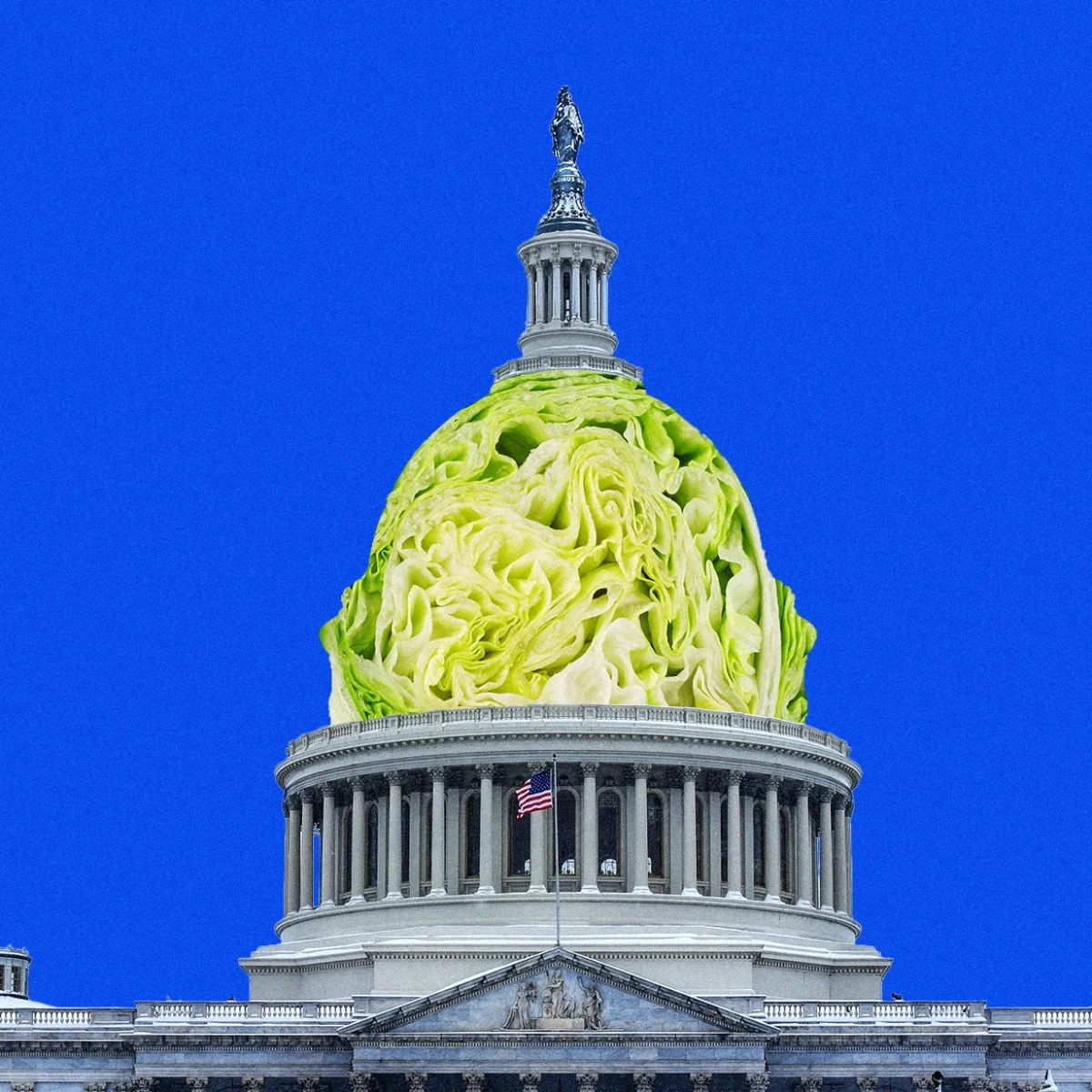
The intersection of corporate interests and public health has come under intense scrutiny as Taylor Farms, a dominant force in the American produce industry, faces questions regarding its extensive political spending amidst a major foodborne illness outbreak. According to public filings and federal disclosure documents, the California-based lettuce supplier has funneled millions of dollars into conservative political groups and lobbying efforts aimed at shaping food safety regulations. These financial maneuvers have coincided with a significant Cyclospora outbreak—frequently referred to in public discourse as the "turbo diarrhea" outbreak—which has sickened thousands of consumers across multiple states.
Data from the Federal Election Commission (FEC) reveals that Taylor Farms donated more than $2 million to conservative political organizations in 2025 alone. This includes a $1 million contribution to MAGA Inc., the primary super PAC supporting Donald Trump, and an additional $1.1 million distributed among other super PACs dedicated to Republican electoral victories. The scale of this spending highlights the company’s aggressive strategy to align itself with political factions that traditionally favor deregulation and reduced federal oversight.
A Pattern of Political Patronage and Regulatory Influence
The 2025 surge in political spending is not an isolated event but rather the continuation of a long-term strategy. From 2020 through the conclusion of 2024, Taylor Farms contributed more than $1.6 million to conservative PACs. A significant portion of this funding, approximately $850,000, was directed to AFP Action. AFP Action is an anti-regulation super PAC with deep ties to the Koch network, an influential group known for its advocacy of free-market policies and the dismantling of federal administrative powers.
Bruce Taylor, the Chairman and CEO of Taylor Farms, has personally mirrored the company’s corporate giving. Since 2020, Taylor has donated more than $900,000 to various Republican candidates and committees. His beneficiaries include high-profile figures such as Texas Senator John Cornyn and Tennessee Senator Marsha Blackburn. These contributions place the leadership of one of the world’s largest fresh-cut vegetable processors at the heart of Republican fundraising circles, raising questions about the potential for industry-friendly policy shifts.
Beyond direct campaign contributions, Taylor Farms has invested heavily in traditional lobbying. In early 2025, the company engaged the services of Sidley Austin, a prominent global law firm, to represent its interests before federal agencies. Disclosure documents indicate that these lobbyists were hired specifically to advocate on "regulation of food safety." Since the start of this engagement, Taylor Farms has spent $810,000 on federal lobbying, seeking to influence the very standards that govern its production facilities.
The Cyclospora Outbreak and Agency Friction
The timing of these financial outlays is particularly notable given the current public health crisis involving Cyclospora cayetanensis. Cyclospora is a microscopic parasite that, when ingested through contaminated food or water, causes cyclosporiasis—an intestinal illness characterized by severe, prolonged diarrhea, abdominal cramping, and fatigue. The current outbreak has proven difficult to contain, spreading through several states and placing a significant burden on the healthcare system.
The relationship between Taylor Farms and federal health regulators has become increasingly strained during the investigation into this outbreak. The company has publicly criticized the Centers for Disease Control and Prevention (CDC) and the Food and Drug Administration (FDA), alleging "shortfalls" in their investigative processes. In a highly publicized dispute, Taylor Farms claimed that the FDA had issued an "apology" after a sample of its lettuce initially tested as a false positive for the parasite. However, the FDA later refuted this claim, stating to reporters that no such official apology was ever issued.
This friction escalated when it was revealed that Taylor Farms executives held private meetings with White House and FDA officials. These meetings occurred shortly after the company hired Trent Morse, a former high-ranking official in the Trump administration. Morse previously served as the deputy director of the White House Presidential Personnel Office before launching a government relations firm. This "revolving door" hire has drawn criticism from transparency advocates who suggest that former administration officials are being used to bypass standard regulatory channels.
Official Responses and Denials of Collusion
The Department of Health and Human Services (HHS) has moved to distance the administration from any suggestion that political donations have influenced the federal response to the outbreak. In a statement posted to the social media platform X, the HHS account characterized reports of potential influence as "fake news." The department asserted that "nothing influences our decisions except science and the safety of the American people," emphasizing that the investigation remains objective and evidence-based.
Despite these assurances, food policy experts remain skeptical. Marion Nestle, a professor emerita of nutrition and food studies, noted that the financial resources of multibillion-dollar companies like Taylor Farms are often used to shield industry players from accountability. "The FDA has regulations in place for what food producers are supposed to be doing, but nobody wants to do it—because it’s expensive and difficult," Nestle observed. She argued that the current system allows large corporations to push for policies that reduce the frequency of inspections and the severity of penalties when safety failures occur.
A History of Safety Breaches and Recalls
Taylor Farms, which generates approximately $7 billion in annual revenue, has a documented history of regulatory challenges and foodborne illness links. The current Cyclospora crisis is not the first time the company has been identified as a source of infection.
In 2013, the FDA officially named Taylor Farms as the source of a Cyclospora outbreak that sickened hundreds of people in Iowa and Nebraska. Following that incident, the company faced numerous lawsuits and increased scrutiny over its sanitation protocols. In 2015, the company was forced to issue a voluntary recall for multiple products containing celery after potential E. coli contamination was detected.
More recently, in 2024, Taylor Farms was linked to a high-profile E. coli O157:H7 outbreak associated with McDonald’s Quarter Pounder hamburgers. The company recalled certain yellow onions produced at its Colorado facility after they were identified as the likely vehicle for the pathogen. Subsequent FDA inspections of that facility uncovered dozens of violations, including inadequate handwashing stations and the use of dirty equipment. Despite these findings, the company continues to be a primary supplier for major fast-food chains and grocery retailers nationwide.
Labor Safety and the Human Cost of Production
The company’s regulatory issues extend beyond food safety to the welfare of its employees. Since the beginning of 2025, the Occupational Safety and Health Administration (OSHA) has cited Taylor Farms facilities for at least 21 safety violations across the United States. While some of these violations were deemed minor, others have been catastrophic.
In May 2025, a tragic incident occurred at a Taylor Farms facility in New Jersey, where an employee died after sustaining injuries while cleaning an industrial blancher. The Department of Labor’s subsequent investigation resulted in a $1.1 million fine—one of the largest penalties issued by OSHA in recent years. The inspection revealed that the company had failed to implement proper lockout/tagout procedures, which are designed to prevent machinery from accidentally starting during maintenance.
Furthermore, FDA records show that since 2025, the agency has inspected 18 American plants affiliated with Taylor Farms. While the majority of these inspections did not result in mandatory enforcement, three were classified as "voluntary action indicated" (VAI). This designation means that while investigators found specific violations of the Federal Food, Drug, and Cosmetic Act, the agency chose to allow the company to correct the issues voluntarily rather than pursuing immediate legal or administrative sanctions.
Broader Implications for the American Food Supply
The scale of Taylor Farms’ political influence, combined with its history of safety violations, presents a complex challenge for the future of food regulation in the United States. As the company continues to expand its market share, its ability to shape the legislative and regulatory landscape grows. Analysts suggest that if the company succeeds in its lobbying efforts to reduce federal oversight, the burden of ensuring food safety may shift increasingly to the consumer and the private sector, potentially leading to more frequent and widespread outbreaks.
The current Cyclospora outbreak serves as a case study in the difficulties of regulating a globalized food supply. With thousands of people affected and the source of contamination often difficult to trace with precision, the reliance on corporate self-regulation is being tested. The significant financial contributions to political groups dedicated to "reforming" (or reducing) the power of agencies like the FDA and CDC suggest a future where the balance between corporate profit and public safety may become even more precarious.
As the 2025 political cycle progresses, the influence of Taylor Farms and its leadership will likely remain a focal point for those advocating for more robust food safety laws. For now, the thousands of Americans suffering from the effects of the current outbreak remain a stark reminder of the consequences when the systems designed to protect the food supply are challenged by both pathogens and political maneuvering.
About the Author