Nvidia has intensified its campaign to dominate the next generation of artificial intelligence hardware by releasing new performance benchmarks for its Vera Rubin chip system, a strategic move designed to overshadow rival AMD’s annual product showcase in San Francisco. During a series of technical briefings held at the company’s Santa Clara headquarters, Nvidia executives presented the Vera Rubin GPU and CPU combination as the definitive solution for the emerging era of "agentic AI." This latest push signals a significant evolution in Nvidia’s business model: while the company rose to prominence as the world’s leading provider of Graphics Processing Units (GPUs), it is now positioning itself as a primary supplier of Central Processing Units (CPUs) and integrated full-stack AI systems.
The Vera Rubin architecture, named after the pioneering astronomer who provided evidence for the existence of dark matter, is the successor to the Grace Blackwell platform. As the industry shifts from simple large language models toward autonomous AI agents capable of complex reasoning and multi-step task execution, the demand for sophisticated orchestration has skyrocketed. This orchestration—managing data flows, networking protocols, and software task scheduling—falls heavily on the CPU. By integrating its own ARM-based Vera CPUs with Rubin GPUs, Nvidia aims to capture a larger share of the data center market traditionally held by Intel and AMD.
The Evolution of Agentic AI Infrastructure
The pivot toward agentic AI represents a fundamental change in how data centers are constructed. In traditional AI training, the GPU performs the bulk of the heavy lifting, processing massive datasets in parallel. However, "agentic" systems require a higher degree of logic and coordination. Nvidia’s leadership argues that a GPU-centric approach is no longer sufficient. Ian Buck, Nvidia’s Vice President of Accelerated Computing and the visionary behind the CUDA software platform, emphasized that the company’s roadmap now treats CPU development with the same urgency as GPU innovation.
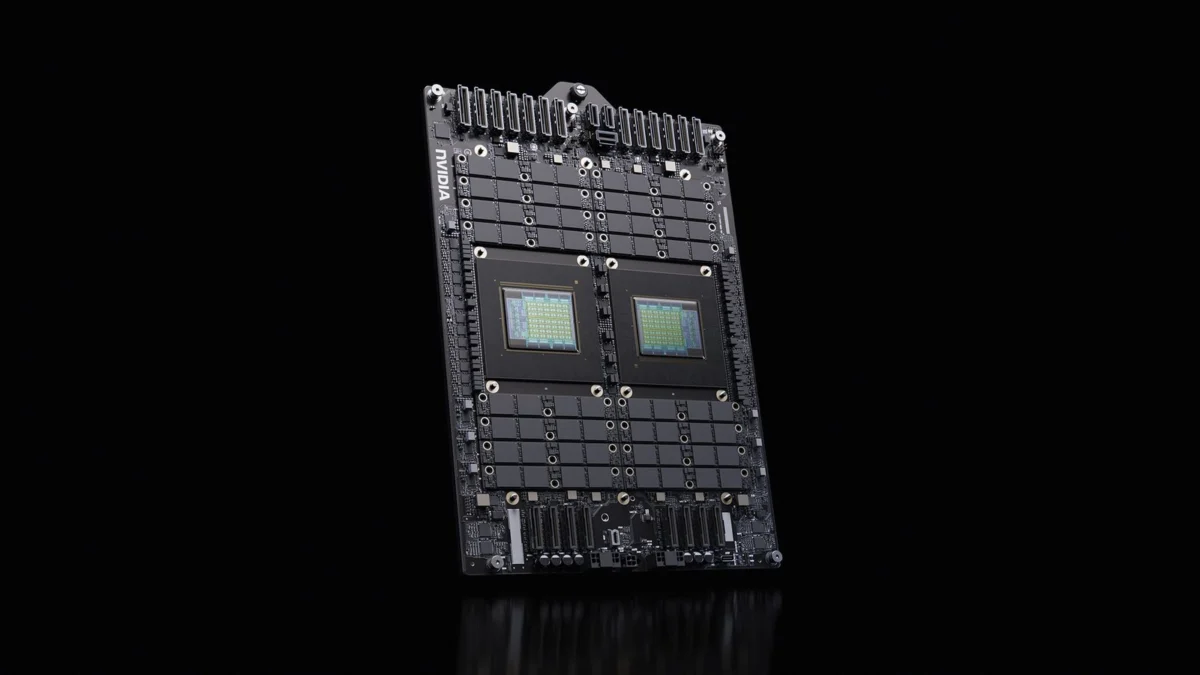
According to Buck, the "do or die" environment of Silicon Valley necessitates a constant cycle of architectural breakthroughs. The Vera Rubin system is designed to meet these needs through a specific ratio of hardware: for every two Rubin GPUs, the system utilizes one Vera CPU. In the flagship Vera Rubin NVL72 superchip configuration, a single liquid-cooled rack contains 72 Rubin GPUs paired with 36 Vera CPUs. This high-density integration is intended to eliminate bottlenecks that occur when data travels between disparate components, providing a seamless environment for AI agents to operate.
Benchmarking Performance and Technical Specifications
The performance data released by Nvidia highlights significant gains in efficiency and throughput. The Vera Rubin NVL72 system reportedly processes 10 times as many tokens per watt as the previous Grace Blackwell generation. This metric is particularly critical as global energy consumption by data centers becomes a primary concern for hyperscalers like Microsoft, Google, and Amazon. By improving the "tokens per watt" ratio, Nvidia offers a path for these companies to scale their AI capabilities without a linear increase in their electricity bills.
Memory bandwidth, another perennial bottleneck in AI computing, has also seen a substantial upgrade. The localized memory subsystems on the Vera Rubin chips offer nearly three times the bandwidth of the Blackwell architecture. This improvement is a direct response to the ongoing global shortage of high-bandwidth memory (HBM). By optimizing how memory is accessed and shared within the chip system, Nvidia aims to provide high performance even when external components are in short supply.
.jpg)
Furthermore, Nvidia is challenging the industry standard regarding CPU tasks. In internal benchmarks, the company claimed that the Vera CPU outperforms current offerings from AMD and Intel in processing agentic AI tasks. While critics note that Nvidia’s comparisons utilized slightly older generations of competitor chips, the company maintains that the architectural synergy between its own CPUs and GPUs provides an inherent advantage that third-party combinations cannot match.
Monolithic Design vs. Chiplet Architecture
A key point of technical contention raised during the Santa Clara workshops involves the physical construction of the chips. For several years, the semiconductor industry—led by AMD—has moved toward a "chiplet" architecture. This involves stitching together several smaller, specialized chips onto a single package, which can improve manufacturing yields and reduce costs.
However, Nvidia is bucking this trend with the Vera Rubin system, opting for a monolithic design. Hannah Coutand, Nvidia’s head of CPU product marketing, argued that the chiplet approach imposes a "heavy tax" on memory bandwidth and data movement. By building the Vera CPU as a single, massive integrated circuit, Nvidia claims it can move data more quickly and with lower latency than systems that rely on interconnects between multiple chiplets. This design choice highlights Nvidia’s focus on raw performance and efficiency over the potential cost-savings of modular manufacturing.
Addressing Past Challenges and Production Timelines
The aggressive marketing of Vera Rubin is partly a response to the challenges Nvidia faced with its Blackwell chips. Reports of Blackwell systems overheating when integrated into high-density server racks led to design modifications and subsequent shipping delays. To reassure investors and customers, CEO Jensen Huang has been vocal about the production status of the Vera Rubin line. Huang has confirmed that the system is currently "ramping to full production" and is on track to ship in the second half of 2026.
Early adopters of the Vera Rubin technology already include the industry’s most influential players. OpenAI, the creator of ChatGPT, has reportedly already taken delivery of at least one Vera Rubin rack for testing in its Silicon Valley laboratory. Other confirmed early customers include Microsoft and Oracle, both of which are racing to build out the massive "AI factories" required to support the next wave of generative AI services.
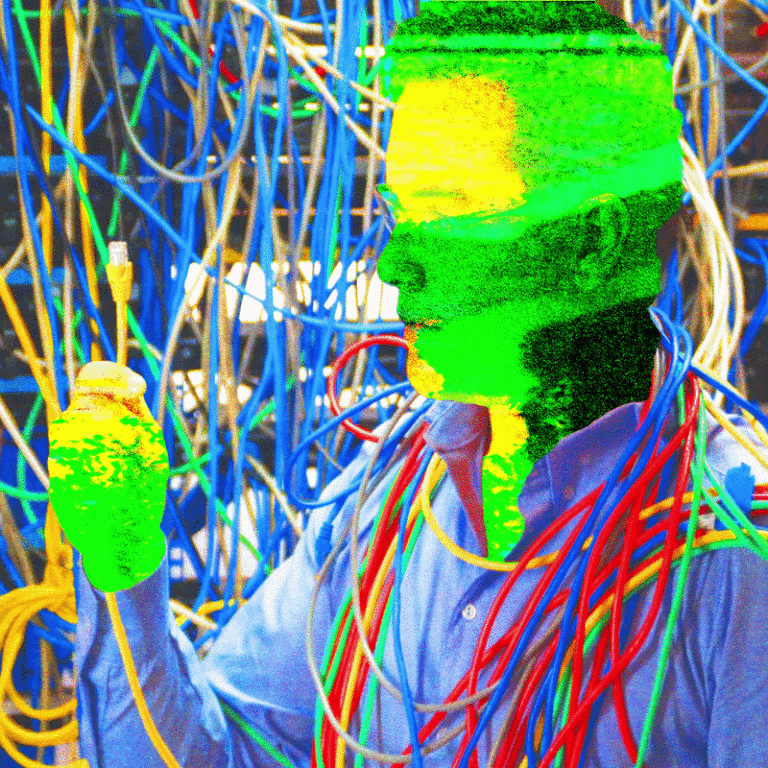
To further simplify the deployment of these massive systems, Nvidia has introduced "cable-free compute." By drastically reducing the number of physical cables required to connect chips within a rack, Nvidia has made the Vera Rubin NVL72 "hot-swappable." Andrew Bell, Senior Vice President of Hardware Engineering, noted that this allows data center technicians to install or replace a rack in minutes rather than hours, significantly reducing downtime and operational costs.
The Competitive Battlefield: AMD, Intel, and the ARM Transition
Nvidia’s strategy places it in direct competition with AMD, which has successfully grown its share of the data center CPU market over the last two years. AMD’s EPYC processors, based on the x86 architecture, are the current standard for many enterprise servers. Nvidia, however, is betting on ARM architecture for its data center CPUs. ARM is widely recognized for its superior power efficiency, a trait that is becoming the top priority for AI infrastructure.
.jpg)
The timing of Nvidia’s announcement—just days before AMD’s annual conference—underscores the intensity of this rivalry. AMD recently revealed details about its "Helios" AI chip rack, a direct competitor to Nvidia’s NVL72. As both companies vie for multi-billion dollar contracts with hyperscalers and specialized AI labs like Anthropic and SpaceXAI, the battle is no longer just about who has the fastest GPU, but who can provide the most efficient and manageable entire data center rack.
Global Partnerships and the Robotics Frontier
While Nvidia’s technical teams were briefing journalists in California, CEO Jensen Huang was in Japan, expanding the company’s footprint in the robotics sector. Nvidia has announced new partnerships with several Japanese firms to develop "Physical AI"—AI systems that can interact with the physical world through robotics. This aligns with the "agentic" capabilities of the Vera Rubin system; robots require the same high-level orchestration and real-time reasoning that the new CPU-GPU combo is designed to provide.
Nvidia is also navigating complex geopolitical waters by tailoring its sales strategy for the Chinese market. Reports indicate that Nvidia has begun pitching the Vera CPU as a stand-alone product to Chinese clients, with potential availability as early as August 2026. This move allows Nvidia to maintain a presence in a vital market while adhering to U.S. export restrictions that often target its most powerful GPU products.
Economic and Operational Implications for Data Centers
The shift to 100 percent liquid cooling in the Vera Rubin system marks a turning point for data center design. Traditional air-cooling is increasingly insufficient for the heat densities generated by modern AI chips. Liquid cooling is not only more efficient at heat dissipation but also reduces the total energy footprint of the facility. As Nvidia pushes these liquid-cooled, "plug-and-play" racks, it is essentially setting a new standard for how data centers must be built from the ground up.
The broader implication of Nvidia’s Vera Rubin launch is the consolidation of the AI supply chain. By providing the GPU, the CPU, the networking interconnects, and the cooling infrastructure, Nvidia is moving toward a "walled garden" ecosystem for AI hardware. For customers, this offers the promise of optimized performance and simplified deployment. For the industry, it represents a bold attempt by a single company to define the architecture of the intelligence age.
As the second half of 2026 approaches, the success of Vera Rubin will be measured not just by its benchmarks, but by its ability to power the autonomous agents that many believe will be the next great leap in computing. With AMD and Intel preparing their own counters, the semiconductor industry is entering its most competitive and consequential period in decades. For Nvidia, the message from the executive briefing center was clear: innovation is the only path to survival, and the transition from a chip maker to a system provider is now complete.
About the Author