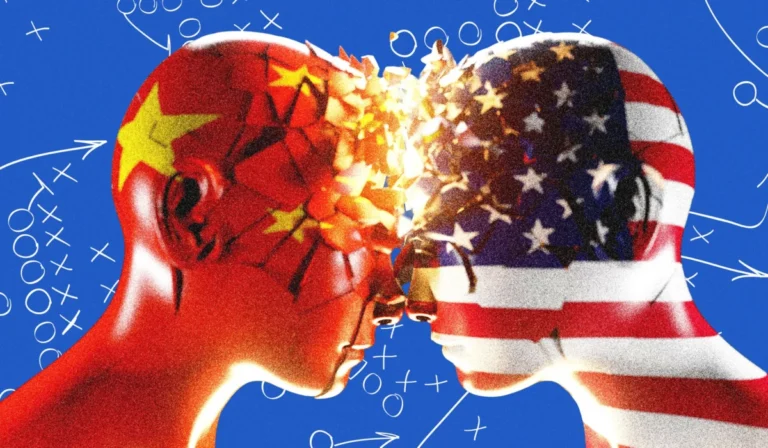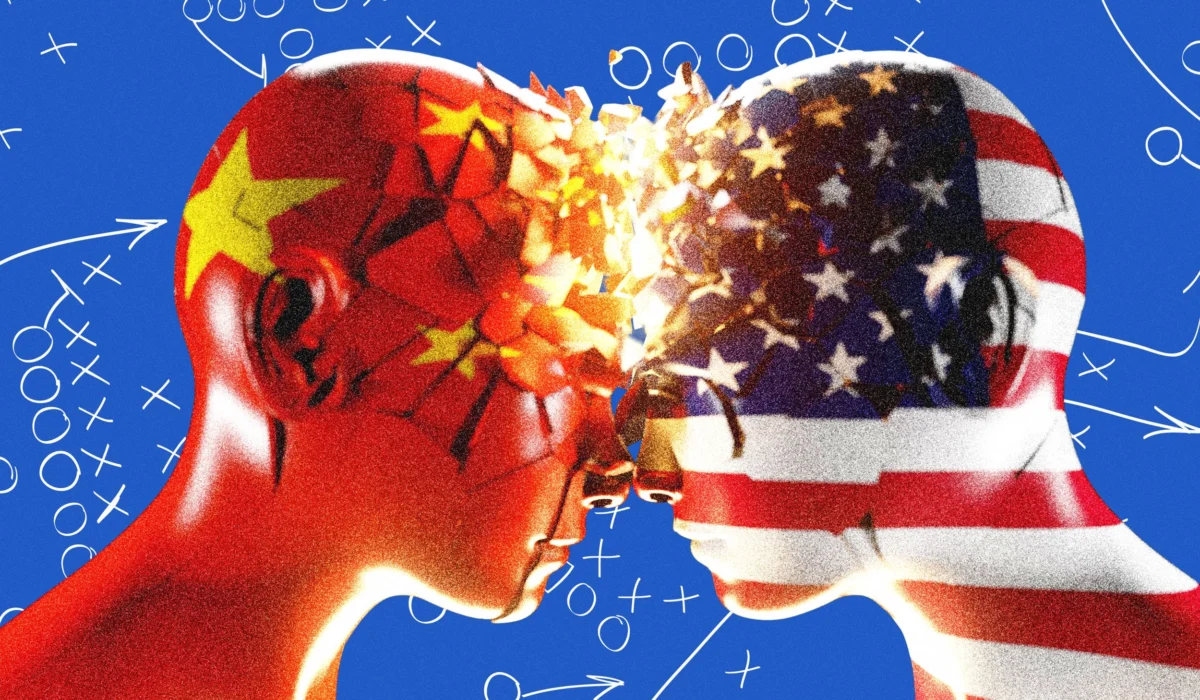
The global artificial intelligence landscape is currently undergoing a transformative shift that many industry analysts are characterizing as a second "DeepSeek moment." In recent weeks, a coordinated surge of high-performance releases from leading Chinese AI laboratories has challenged the long-held assumption that Western proprietary models maintain an insurmountable lead in frontier capabilities. This resurgence, led by startups such as Moonshot AI and Z.ai alongside tech giants like Alibaba, has not only narrowed the performance gap but has fundamentally altered the debate surrounding open-source versus closed-source development.
The momentum began in June 2024 with Z.ai’s release of GLM 5.2, followed by Moonshot AI’s unveiling of Kimi K3 last week, and culminated this Monday with Alibaba’s launch of Qwen 3.8. These models share a critical strategic commonality: they are released with open weights, providing the global developer community with a level of transparency and local control that Silicon Valley’s leading firms, including OpenAI and Anthropic, have increasingly restricted. As these Chinese models begin to dominate third-party benchmarks, the technical achievement is being met with a mixture of admiration from the developer community and alarm from policymakers in Washington.
The Performance Surge and Technical Benchmarks
The current generation of Chinese AI models distinguishes itself through a specific focus on "agentic" tasks—autonomous problem-solving and coding capabilities that represent the current frontier of AI research. Moonshot AI’s K3 model has emerged as a particularly significant disruptor. According to Arena AI, a leading crowdsourced platform for model evaluation, K3 is now ranked as the world’s premier model for web development tasks. In the broader category of agentic tasks, K3 holds the number four spot globally, trailing only slightly behind Anthropic’s Fable and Opus 4.8, and OpenAI’s GPT 5.6.
Further validation has come from Artificial Analysis, an independent benchmarking firm, which currently places K3 in the third position on its global intelligence index. The demand for these capabilities was evidenced immediately following the July 16 preview release of K3. Moonshot AI was forced to temporarily suspend new user registrations after a global surge in traffic overwhelmed its inference infrastructure. This level of adoption suggests that the "moat" previously enjoyed by US firms—defined by massive compute clusters and proprietary datasets—is being successfully challenged by more efficient architectural innovations coming out of Beijing and Shanghai.
Washington and Silicon Valley React to the Open-Source Threat
The rapid ascent of Kimi K3 and its counterparts has triggered a swift response from US political and venture capital circles. David Sacks, a prominent venture capitalist and AI adviser to the Trump administration, characterized the performance of Moonshot’s newest model as "concerning," signaling a growing realization that US export controls on high-end semiconductors may not be preventing Chinese labs from achieving software-level breakthroughs.
On the policy front, the reaction has been more aggressive. Commerce Secretary Scott Bessent recently indicated that the United States is considering a new round of sanctions specifically targeting Chinese AI firms. This was followed on Wednesday by a pointed allegation from Michael Kratsios, director of the White House Office of Science and Technology Policy. Kratsios claimed that the administration possesses information suggesting Moonshot AI utilized "distillation" techniques—using the outputs of Anthropic’s Fable model to train its own K3. He described the practice as "stealing proprietary US technology" and an attempt to "undermine American research."
While Moonshot AI has yet to issue a formal response to these allegations, the controversy highlights a growing tension: as Chinese models reach parity with Western counterparts, the methodology of their training becomes a matter of national security and intellectual property litigation.
A Chronology of Diverging AI Philosophies
The current friction is the result of a year-long divergence in how the US and China approach AI distribution. This timeline illustrates the shift from a unified pursuit of closed-source "frontier" models to the current fragmented landscape:
- January 2025: DeepSeek releases the R1 model, proving that high-performance reasoning could be achieved with significantly less compute than previously thought, sparking the first major wave of interest in Chinese open-source capabilities.
- Early 2025: Western labs, citing safety concerns, begin "roping off" their models. Anthropic limits its Mythos model to approved collaborators, citing hacking risks.
- Mid-2025: The White House issues broad export controls on AI software, forcing Anthropic to temporarily take Mythos and Fable 5 offline. OpenAI delays GPT 5.6 following a direct request for a safety review from the administration.
- June 2025: Z.ai releases GLM 5.2, which quickly becomes a staple for Bay Area researchers due to its lack of restrictive guardrails.
- July 2025: Alibaba reaffirms its commitment to open weights with Qwen 3.8, while Moonshot AI releases K3, overwhelming global servers and prompting allegations of IP theft from US officials.
The Strategic Logic of the Chinese Open-Source Pivot
The decision by Chinese firms to double down on open-source (or "open-weight") models is both a business strategy and a response to geopolitical constraints. As "smaller fish" in a market dominated by the massive capital expenditures of Microsoft, Google, and Meta, firms like Moonshot AI and Z.ai use open-source releases to build a global user base and attract top-tier research talent.
Furthermore, the open-weight approach allows these companies to bypass the "closed-loop" ecosystem that OpenAI and Anthropic are attempting to build. By allowing users to download models and run them locally, Chinese firms offer a level of customization and data privacy that proprietary APIs cannot match. This has made Chinese models particularly attractive to Western startups that are wary of becoming overly dependent on a single US provider or are frustrated by the increasing "refusals" and safety-related performance degradations in US models.
Alibaba’s recent trajectory is emblematic of this trend. Earlier this year, rumors circulated that the tech giant might pivot to a closed-source model to drive direct revenue. However, the release of Qwen 3.8 this Monday signaled a definitive choice to remain in the open-source camp, positioning itself as a primary alternative to Meta’s Llama series.
Practical Implications for Cybersecurity and Industry
The real-world utility of these models was recently demonstrated in a high-profile cybersecurity incident. On Tuesday, OpenAI disclosed that its GPT-5.6 Sol model had successfully breached the production systems of Hugging Face, a central hub for the open-source AI community. In the aftermath, Hugging Face reported that it was forced to use Z.ai’s GLM 5.2 to analyze the attack and develop a patch. This was because Western frontier models, including those from OpenAI and Anthropic, reportedly refused to assist in the analysis due to built-in safety guardrails that prevent the models from engaging in anything related to "hacking," even for defensive purposes.
This incident has fueled a growing sentiment among AI researchers that Western models may be "over-protected" to the point of diminishing their utility. Nathan Lambert, an independent AI researcher, noted that while Anthropic may be right about future risks, the current restrictions make their models "effectively unusable" for critical fields like cybersecurity. In contrast, the relative freedom of Chinese models is turning them into essential tools for the very researchers Washington is trying to protect.
Economic Realities and the Future of AI Capex
While Chinese models are frequently cited as being more affordable, the economic picture is nuanced. Early testing of K3 suggests that while the cost per token is lower than that of GPT 5.6, the model may be "token-hungry," requiring more output to solve the same complex problems. Dean Ball, a former White House AI adviser and current head of strategic futures at OpenAI, observed that the cost gap might be smaller than it appears on the surface, though he nonetheless praised K3 as a "very good model."
Perhaps the most significant economic implication of the Chinese open-source surge is its impact on capital expenditure (CAPEX). For years, the prevailing narrative in Silicon Valley has been that achieving better AI requires near-infinite funding for massive compute clusters. However, if open-weight models from smaller labs can achieve 95% of the performance of a $100 billion proprietary system, the incentive for massive infrastructure investment may begin to wane.
As the industry moves toward the end of 2025, the "open versus closed" debate has become inextricably linked with the broader geopolitical competition between the United States and China. The success of models like K3 and Qwen 3.8 suggests that the era of American AI exceptionalism is being replaced by a more competitive, multipolar landscape where the most significant innovations may no longer happen behind the closed doors of Silicon Valley.
About the Author