The increasing prevalence of remote work and distributed teams has brought the intricate tapestry of U.S. time zones into sharp focus for businesses. What might have once been a minor logistical consideration is now a critical factor in operational efficiency, employee collaboration, and client communication. Understanding and effectively managing these temporal differences is no longer a luxury but a necessity for businesses seeking to thrive in a globally interconnected landscape. This article delves into the nuances of U.S. time zones, their impact on business operations, the complexities introduced by Daylight Saving Time, and provides practical strategies for navigating these challenges.
The Pervasive Influence of Time Zones on Business Operations
In today’s interconnected business environment, the ability to communicate and coordinate effectively across different geographical locations is paramount. With a significant portion of the workforce now operating remotely, the geographical distribution of employees, vendors, and clients necessitates a deep understanding of time zone differentials. Misunderstandings or miscalculations regarding time can lead to a cascade of negative consequences, including missed meetings, delayed project starts, unfulfilled orders, and ultimately, a decline in productivity and client satisfaction.
Consider a scenario where a critical client call is scheduled for 2:00 PM Eastern Standard Time (EST). For a team member in Los Angeles, operating on Pacific Standard Time (PST), this translates to 11:00 AM PST. However, if the meeting organizer fails to specify the time zone, or if the recipient overlooks this detail, the client might perceive a lack of professionalism or attention to detail. Similarly, when sourcing materials from a supplier in a different time zone, knowing their operating hours is crucial to avoid delays in placing orders or receiving shipments. This is especially pertinent for businesses that rely on just-in-time inventory management or time-sensitive deliveries.
The implications extend to internal team dynamics as well. For companies with employees spread across the country, coordinating team meetings, project deadlines, and even casual check-ins requires careful consideration of everyone’s local time. A team member in Maine, observing EST, might be starting their workday as a colleague in California, observing PST, is heading home. This disparity can impact the availability of team members for synchronous collaboration and can lead to feelings of exclusion or being out of sync if not managed proactively. Data from the U.S. Bureau of Labor Statistics indicates a steady increase in remote work arrangements over the past decade, further amplifying the importance of time zone awareness. A 2023 report highlighted that approximately 28% of full-time employees worked remotely at least part of the time, a figure that has remained significantly elevated since the widespread adoption of remote work during the COVID-19 pandemic. This sustained trend underscores the ongoing relevance of time zone management in the modern workplace.
Understanding the Temporal Landscape: U.S. Time Zones
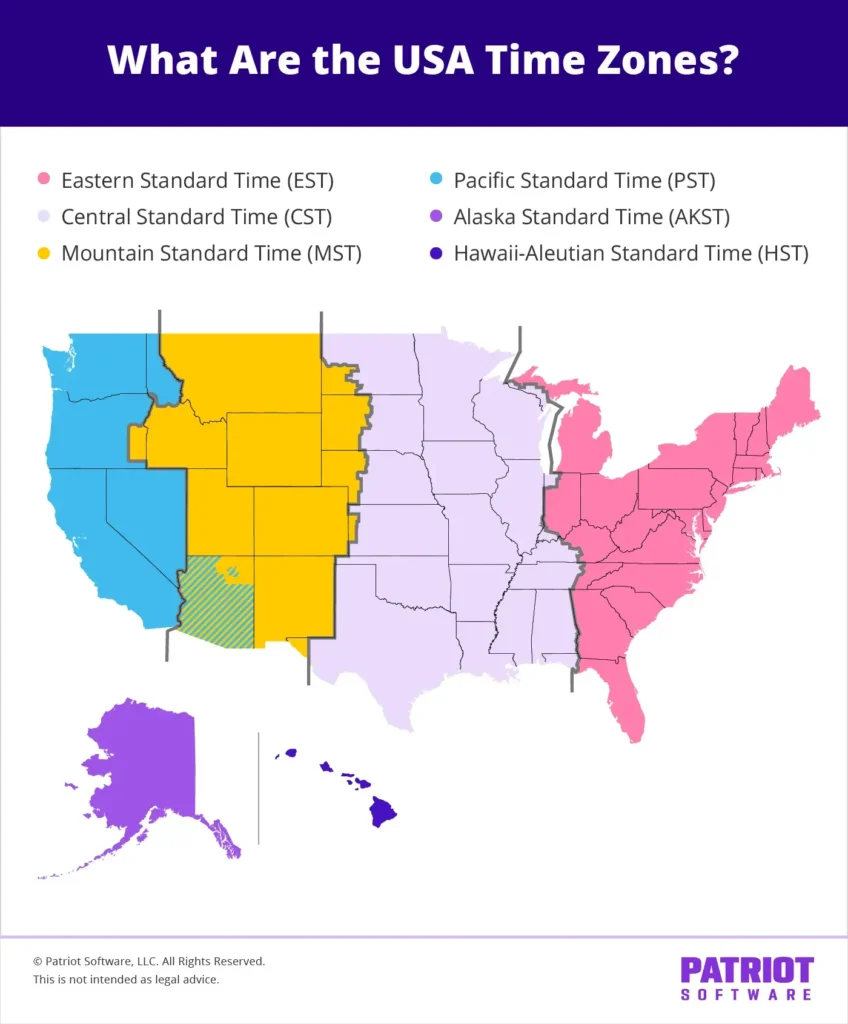
The United States, spanning a vast continental expanse, is divided into several primary time zones, each reflecting a specific segment of the day relative to Coordinated Universal Time (UTC). These zones are designed to align civil twilight and solar noon more closely with the clock time in each region, thereby optimizing the use of daylight.
The six principal time zones in the U.S., encompassing all 50 states and the District of Columbia, are:
- Eastern Standard Time (EST): UTC-5. This zone covers the easternmost portion of the United States, including major population centers like New York City, Washington D.C., and Miami.
- Central Standard Time (CST): UTC-6. Situated west of the Eastern Time Zone, CST encompasses states like Chicago, Dallas, and New Orleans.
- Mountain Standard Time (MST): UTC-7. This zone generally covers the Rocky Mountain region, including Denver, Phoenix (though Arizona largely does not observe DST), and Salt Lake City.
- Pacific Standard Time (PST): UTC-8. The westernmost contiguous time zone, PST includes major cities such as Los Angeles, San Francisco, and Seattle.
- Alaska Standard Time (AKST): UTC-9. This zone covers the majority of Alaska.
- Hawaii-Aleutian Standard Time (HST): UTC-10. This zone encompasses Hawaii and the western Aleutian Islands of Alaska.
It is important to note that some states, due to their geographical size or historical administrative decisions, are divided between two time zones. For instance, parts of Florida, Indiana, Kansas, Michigan, Nebraska, North Dakota, Oregon, South Dakota, Tennessee, and Texas observe more than one time zone. This adds another layer of complexity for businesses operating within these states or interacting with entities located in different parts of them.
The Complicating Factor: Daylight Saving Time
Adding a layer of complexity to the already intricate U.S. time zone map is Daylight Saving Time (DST). DST is the practice of advancing clocks by one hour during warmer months, typically from the second Sunday in March to the first Sunday in November. The purported goal of DST is to make better use of daylight and reduce energy consumption, although its effectiveness and necessity have been subjects of ongoing debate.
During DST, clocks "spring forward" in March, meaning that 2:00 AM becomes 3:00 AM. In November, they "fall back," with 2:00 AM reverting to 1:00 AM. This biannual shift can temporarily alter the time differences between regions, particularly between those that observe DST and those that do not.
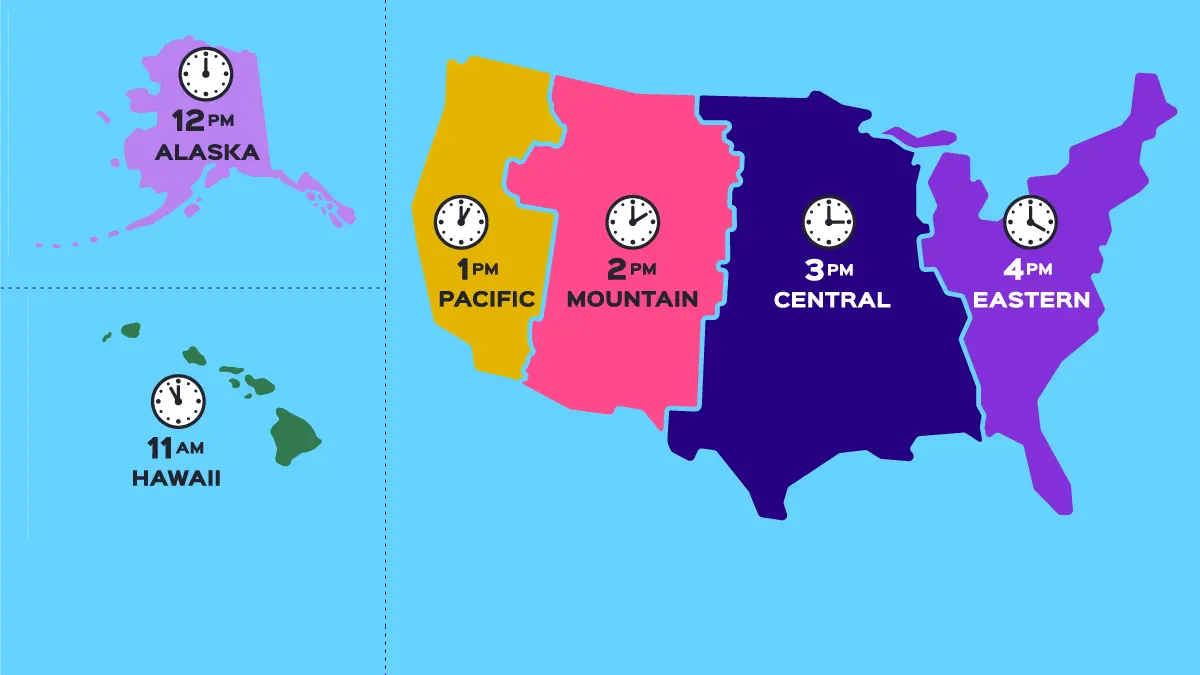
A notable exception to DST observance in the U.S. includes Hawaii and most of Arizona. While the Navajo Nation in Arizona does observe DST, the majority of the state remains on Mountain Standard Time year-round. This divergence means that during DST, the time difference between an EST state like Ohio and Arizona can be three hours, but after Arizona reverts to its standard time in the fall, the difference shrinks to two hours. This fluctuation requires businesses to be vigilant and adapt their scheduling and communication strategies accordingly.
The future of DST in the U.S. remains uncertain. Several legislative proposals have been introduced in Congress to make DST permanent, a move that would eliminate the biannual clock-changing ritual. However, as of early 2026, these proposals have not been enacted into law. If made permanent, these measures would also allow states like Arizona and Hawaii to remain on their standard times without further temporal shifts. The ongoing discussion around DST highlights the public’s engagement with and the potential impact of these temporal adjustments on daily life and business operations.
Charting the Course: State-by-State Time Zone Breakdown
To facilitate clarity and operational efficiency, a comprehensive understanding of which states fall within which time zones is essential. The following charts provide a detailed overview, categorized first by time zone and then alphabetically by state for ease of reference.
Chart 1: States by Time Zone
This chart categorizes states according to the primary time zone they observe. States marked with an asterisk (*) have counties or specific regions that fall into a different time zone.
| Eastern Standard Time | Central Standard Time | Mountain Standard Time | Pacific Standard Time | Alaska Standard Time | Hawaii-Aleutian Standard Time |
|---|---|---|---|---|---|
| Connecticut | Alabama | Arizona | California | Alaska | Hawaii |
| Delaware | Arkansas | Colorado | Idaho* | ||
| D.C. | Florida* | Idaho* | Nevada* | ||
| Florida* | Illinois | Kansas* | Oregon* | ||
| Georgia | Indiana* | Montana | Washington | ||
| Indiana* | Iowa | Nebraska* | |||
| Kentucky* | Kansas* | Nevada* | |||
| Maine | Kentucky* | New Mexico | |||
| Maryland | Louisiana | North Dakota* | |||
| Massachusetts | Michigan* | Oregon* | |||
| Michigan* | Minnesota | South Dakota* | |||
| New Hampshire | Mississippi | Texas* | |||
| New Jersey | Missouri | Utah | |||
| New York | Nebraska* | Wyoming | |||
| North Carolina | North Dakota* | ||||
| Ohio | Oklahoma | ||||
| Pennsylvania | South Dakota* | ||||
| South Carolina | Tennessee* | ||||
| Tennessee* | Texas* | ||||
| Vermont | Wisconsin | ||||
| Virginia | |||||
| West Virginia |
Chart 2: States Alphabetically by Time Zone
This chart provides an alphabetical listing of states, detailing the time zone(s) they observe. As noted previously, some states span multiple time zones.
| State | Time Zone(s) |
|---|---|
| Alabama | Central Standard Time |
| Alaska | Alaska Standard Time |
| Arizona | Mountain Standard Time (excluding Navajo Nation) |
| Arkansas | Central Standard Time |
| California | Pacific Standard Time |
| Colorado | Mountain Standard Time |
| Connecticut | Eastern Standard Time |
| Delaware | Eastern Standard Time |
| D.C. | Eastern Standard Time |
| Florida | Eastern Standard Time, Central Standard Time |
| Georgia | Eastern Standard Time |
| Hawaii | Hawaii-Aleutian Standard Time |
| Idaho | Mountain Standard Time, Pacific Standard Time |
| Illinois | Central Standard Time |
| Indiana | Eastern Standard Time, Central Standard Time |
| Iowa | Central Standard Time |
| Kansas | Central Standard Time, Mountain Standard Time |
| Kentucky | Central Standard Time, Eastern Standard Time |
| Louisiana | Central Standard Time |
| Maine | Eastern Standard Time |
| Maryland | Eastern Standard Time |
| Massachusetts | Eastern Standard Time |
| Michigan | Eastern Standard Time, Central Standard Time |
| Minnesota | Central Standard Time |
| Mississippi | Central Standard Time |
| Missouri | Central Standard Time |
| Montana | Mountain Standard Time |
| Nebraska | Central Standard Time, Mountain Standard Time |
| Nevada | Pacific Standard Time, Mountain Standard Time |
| New Hampshire | Eastern Standard Time |
| New Jersey | Eastern Standard Time |
| New Mexico | Mountain Standard Time |
| New York | Eastern Standard Time |
| North Carolina | Eastern Standard Time |
| North Dakota | Central Standard Time, Mountain Standard Time |
| Ohio | Eastern Standard Time |
| Oklahoma | Central Standard Time |
| Oregon | Pacific Standard Time, Mountain Standard Time |
| Pennsylvania | Eastern Standard Time |
| Rhode Island | Eastern Standard Time |
| South Carolina | Eastern Standard Time |
| South Dakota | Central Standard Time, Mountain Standard Time |
| Tennessee | Central Standard Time, Eastern Standard Time |
| Texas | Central Standard Time, Mountain Standard Time |
| Utah | Mountain Standard Time |
| Vermont | Eastern Standard Time |
| Virginia | Eastern Standard Time |
| Washington | Pacific Standard Time |
| West Virginia | Eastern Standard Time |
| Wisconsin | Central Standard Time |
| Wyoming | Mountain Standard Time |
Strategies for Seamless Time Zone Management
Effectively managing operations across different time zones requires a proactive and strategic approach. The goal is to minimize confusion and ensure smooth communication and collaboration, preventing issues such as missed deadlines or client dissatisfaction.
One of the most common challenges arises when dealing with a distributed workforce. With 45% of full-time U.S. employees working from home as of recent Gallup polls, the likelihood of having team members in different time zones is substantial. To mitigate this, businesses can implement several key strategies:
- Clear Communication Protocols: When scheduling meetings, communicating deadlines, or assigning tasks, always specify the time zone. For example, instead of "meeting at 3 PM," use "meeting at 3 PM EST." This eliminates ambiguity and ensures everyone is on the same page.
- Time Zone Converters and Calendars: Utilize digital calendars that automatically display events in the user’s local time zone or provide easy conversion tools. Many project management and collaboration platforms offer built-in features that show team members’ current times, simplifying scheduling.
- Establish Core Collaboration Hours: Identify a few hours each day when all team members, regardless of their location, are expected to be available for synchronous communication or collaborative work. This requires careful negotiation and flexibility, especially with teams spanning multiple significant time differences.
- Document Everything: Maintain clear documentation of project timelines, meeting minutes, and important decisions, always noting the time zone in which actions were agreed upon or deadlines were set.
- Leverage Asynchronous Communication: Encourage the use of tools and methods that do not require real-time interaction, such as email, shared documents, and internal messaging platforms. This allows team members to contribute and stay informed at times that are convenient for them.
- Educate Your Team: Conduct training sessions or provide resources that explain the different time zones and the importance of time zone awareness. Foster a culture where team members feel comfortable asking for clarification on times.
- Client and Vendor Awareness: When interacting with external parties, make an effort to ascertain their time zone and adjust communication accordingly. This demonstrates professionalism and respect for their working hours.
Looking Ahead: The Evolving Landscape of Time Management
The increasing prevalence of remote and hybrid work models, coupled with ongoing discussions about Daylight Saving Time, suggests that time zone management will continue to be a critical consideration for businesses. By implementing robust strategies, fostering clear communication, and leveraging available technology, organizations can navigate the complexities of U.S. time zones effectively. This proactive approach not only enhances operational efficiency but also contributes to a more inclusive and productive work environment for all employees, regardless of their geographical location.
Frequently Asked Questions About U.S. Time Zones:
- What are the main time zones in the United States? The primary time zones in the United States are Eastern, Central, Mountain, and Pacific. Additionally, Alaska Standard Time and Hawaii-Aleutian Standard Time are observed in their respective regions.
- Why were different time zones established? Time zones were created to standardize time across large geographical areas, aligning clock times more closely with daylight hours and facilitating transportation and communication.
- How many distinct time zones are there in the United States? Including its territories, the U.S. has eleven time zones. Within the 50 states and D.C., there are six primary time zones.
- How can businesses effectively manage employees working across different time zones? Businesses can manage time zone differences by implementing clear communication protocols that specify time zones, utilizing scheduling tools that account for multiple time zones, establishing core collaboration hours, and encouraging asynchronous communication methods.
- What is Daylight Saving Time (DST)? DST is the practice of advancing clocks by one hour during warmer months to extend daylight into the evening, and then reverting them in the fall.
- Do all U.S. states observe Daylight Saving Time? No. Hawaii and most of Arizona (excluding the Navajo Nation) do not observe DST.
- What tools can assist teams in working across time zones? Various tools can aid in managing time zone differences, including time and attendance software, project management platforms (like Asana, Trello, or Monday.com), and communication applications (such as Slack or Microsoft Teams) that often display team members’ local times.
About the Author