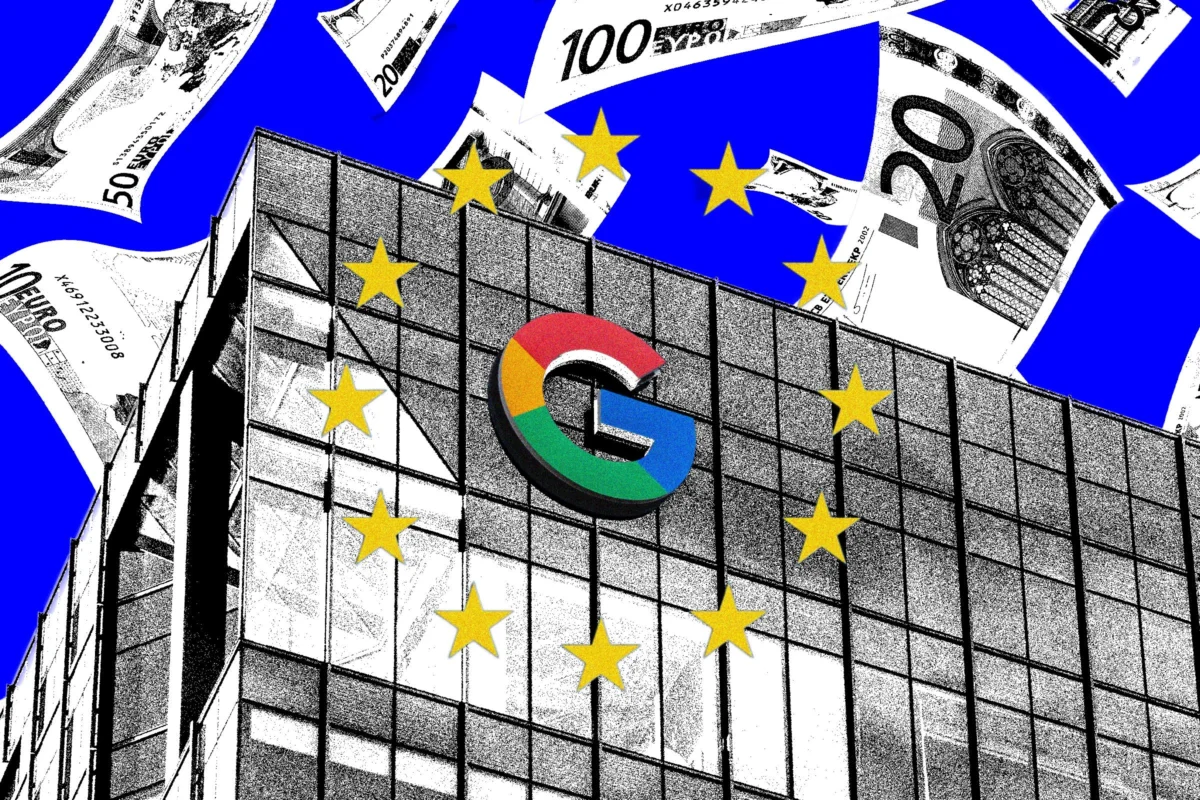
The European Commission has officially levied a $1 billion penalty against Google following an extensive investigation into the company’s alleged violations of competition law within the European Union. The regulatory body determined that the technology giant exploited its dominant market position in both the search engine and mobile application sectors to unfairly prioritize its own proprietary services over those of independent competitors. This landmark ruling marks one of the first major enforcement actions under the European Union’s Digital Markets Act (DMA), a sweeping piece of legislation designed to curb the influence of "gatekeeper" technology firms and ensure a level playing field for digital commerce.
According to the European Commission (EC), Google’s conduct systematically funneled users toward its own ecosystem of apps and services, effectively stifling competition in various niche markets. The investigation focused heavily on how Google’s search algorithms and the Android Play Store were utilized to maintain a "walled garden" that disadvantaged third-party developers and service providers. As part of the ruling, the EC has issued a cease-and-desist order, requiring Google to refrain from giving preferential treatment to its own services—including Google Shopping, Google Flights, and Google Hotels—within its search results. Furthermore, the company must dismantle restrictive policies that prevent app developers from communicating directly with their customers regarding lower-cost payment options outside of the official Play Store environment.
The Mechanics of the Violation: Self-Preferencing and Steering
The core of the European Commission’s case rests on two primary behaviors: self-preferencing in search results and "anti-steering" provisions in the mobile app market. For years, critics have argued that when a user searches for a flight or a product on Google, the search engine displays its own comparison tools at the top of the page, often pushing organic results from competitors like Expedia, Yelp, or TripAdvisor further down. The EC’s investigation confirmed that these practices were not merely incidental but were a core part of Google’s strategy to leverage its search monopoly to capture market share in secondary industries.
In the mobile sector, the EC focused on the Google Play Store’s commission structure. Currently, Google takes a cut—often between 15% and 30%—of most digital sales and subscriptions made through apps downloaded from its store. Under the Digital Markets Act, such "gatekeepers" are prohibited from preventing developers from "steering" consumers to offers available outside the gatekeeper’s platform. The Commission found that Google’s restrictions made it difficult for developers to inform users that they could sign up for services on a website for a lower price, thereby protecting Google’s commission revenue at the expense of consumer choice.
Teresa Ribera, an executive vice president at the European Commission, emphasized the principle of meritocracy in the digital economy. "The best products should succeed because they’re better, not because they’re owned by the company running the search engine," Ribera stated. She added that European consumers possess an inherent right to be informed by developers about the most competitive offers available, regardless of whether the platform owner receives a financial cut of the transaction.
A Chronology of Conflict: Google’s Legal History in Europe
This $1 billion fine is the latest chapter in a long-standing legal battle between the European Union and Google. Over the last decade, the EU has emerged as the world’s most aggressive regulator of Big Tech, consistently challenging Google’s business model.
- 2010–2017: The Google Shopping Case: Following years of complaints from competitors, the EC fined Google €2.42 billion ($2.7 billion) in 2017 for manipulating search results to favor its own comparison-shopping service.
- 2018: The Android Operating System Fine: The Commission issued a record-breaking €4.34 billion ($4.8 billion) fine against Google for using the Android mobile operating system to cement its search engine’s dominance. This included requirements for phone manufacturers to pre-install Google Search and the Chrome browser.
- 2019: The AdSense Investigation: A €1.49 billion ($1.6 billion) fine was levied against Google for "abusive" practices in online advertising, specifically regarding contracts that prevented rivals from placing ads on third-party websites.
- July 2026: Recent Judicial Affirmation: In a significant blow to the company, a European court recently upheld the $4.1 billion fine from the 2018 Android case, dismissing Google’s appeals and validating the EC’s long-term regulatory strategy.
The cumulative total of these fines now exceeds $10 billion, signaling a determined effort by European regulators to force structural changes in how Google operates within the single market.
Market Data and the Economic Impact of Gatekeeper Dominance
To understand the scale of the EC’s intervention, one must look at Google’s market penetration within the European Union. In many EU member states, Google maintains a search market share of over 90%. This near-total dominance gives the company unprecedented power over which businesses succeed or fail online. For a travel startup or a small e-commerce platform, a drop in Google search ranking can lead to a catastrophic loss of traffic and revenue.
Data from industry analysts suggest that "self-preferencing" can reduce the click-through rate for independent competitors by as much as 50% when a Google-owned service is placed in a prominent "box" at the top of the search page. Furthermore, the 30% commission taken by the Play Store has been a point of contention for "app-based" economies. For example, music streaming services and digital publishers have long argued that this "Google tax" forces them to either raise prices for consumers or operate on razor-thin margins.
Kathryn McMahon, an associate professor of law at the University of Warwick, noted that the stakes are exceptionally high for the broader business community. "How companies are ranked affects their businesses a great deal," McMahon explained. "The way EU competition law looks at it, firms in a dominant position—like Google—have a special responsibility not to distort competition. This fine is a reminder that being a gatekeeper comes with legal obligations that supersede a company’s own profit motives."
Official Responses and the Argument for "Product Degradation"
Google has reacted to the penalty with sharp criticism, suggesting that the European Commission’s enforcement of the DMA will ultimately harm the end-user experience. Kent Walker, Google’s president of global affairs, characterized the fine as a result of lobbying by "self-serving complainants" rather than a genuine effort to help consumers.
"This isn’t fair competition; it’s product degradation driven by a small group of self-serving complainants, with European businesses and consumers taking the hit," Walker said in a statement. Google’s primary argument is that the integration of services—such as seeing a map directly in a search for a restaurant or a flight schedule in a search for travel—is a feature that users value. By forcing the company to "unbundle" these services, Google argues the EU is making the internet less efficient for Europeans.
This sentiment was echoed by Daniel Friedlaender, senior vice president at CCIA Europe, a trade organization that represents several major tech firms. Friedlaender told WIRED that heavy-handed enforcement could lead to a "fragmented" internet. "Reducing the quality of what Europeans have access to is not a positive outcome," he remarked, suggesting that the DMA might inadvertently stifle innovation by making it too legally risky for companies to improve their products through integration.
Transatlantic Tensions and the Role of US Policy
The fine arrives at a moment of heightened geopolitical tension regarding technology regulation. While the EU views the DMA as a necessary tool for digital sovereignty and fair competition, many in the United States see it as a targeted attack on American economic interests.
Recently, US President Donald Trump signaled a potential shift in trade policy, vowing to impose steep new tariffs on European countries that seek to restrict or heavily fine American technology companies. The White House’s stance suggests that tech regulation could become a central pillar of a broader trade war between the US and the EU. This political backdrop complicates the enforcement of the DMA, as the EC must balance its regulatory duties with the risk of triggering retaliatory economic measures from Washington.
According to Professor McMahon, the $1 billion fine is a "quite a strong response" in the context of these transatlantic complaints. "It shows the Commission is willing to be tough," she said, regardless of the potential for political leverage or tariff threats from the US administration.
Future Implications: Compliance or Structural Separation?
To mitigate further penalties, Google has already begun proposing alterations to its search results and Play Store operations. The European Commission has described these proposals as "progress towards compliance," though it remains to be seen if they will satisfy the rigorous requirements of the DMA.
The changes likely involve "choice screens" that allow users to select their preferred search engine or browser upon setting up a device, as well as more transparent modules in search results that give equal visual weight to competitors. However, some advocates for fair competition argue that as long as Google remains both the "umpire" (the search engine) and a "player" (the service provider), the conflict of interest will persist. This has led to fringe discussions about "structural separation"—essentially breaking Google up so that its search engine and its auxiliary services are owned by different entities.
For now, the $1 billion penalty serves as a stern warning to other "gatekeepers" designated under the DMA, including Apple, Amazon, Meta, and Microsoft. The European Commission has signaled that it will not hesitate to use its new powers to reshape the digital landscape. As Google considers an appeal, the global tech industry will be watching closely to see if the EU can successfully transition from a regime of reactive fines to a regime of proactive, structural market fairness. If the DMA succeeds, it could serve as a blueprint for regulators worldwide; if it fails, it may exacerbate the growing digital divide between Europe and the United States.
About the Author