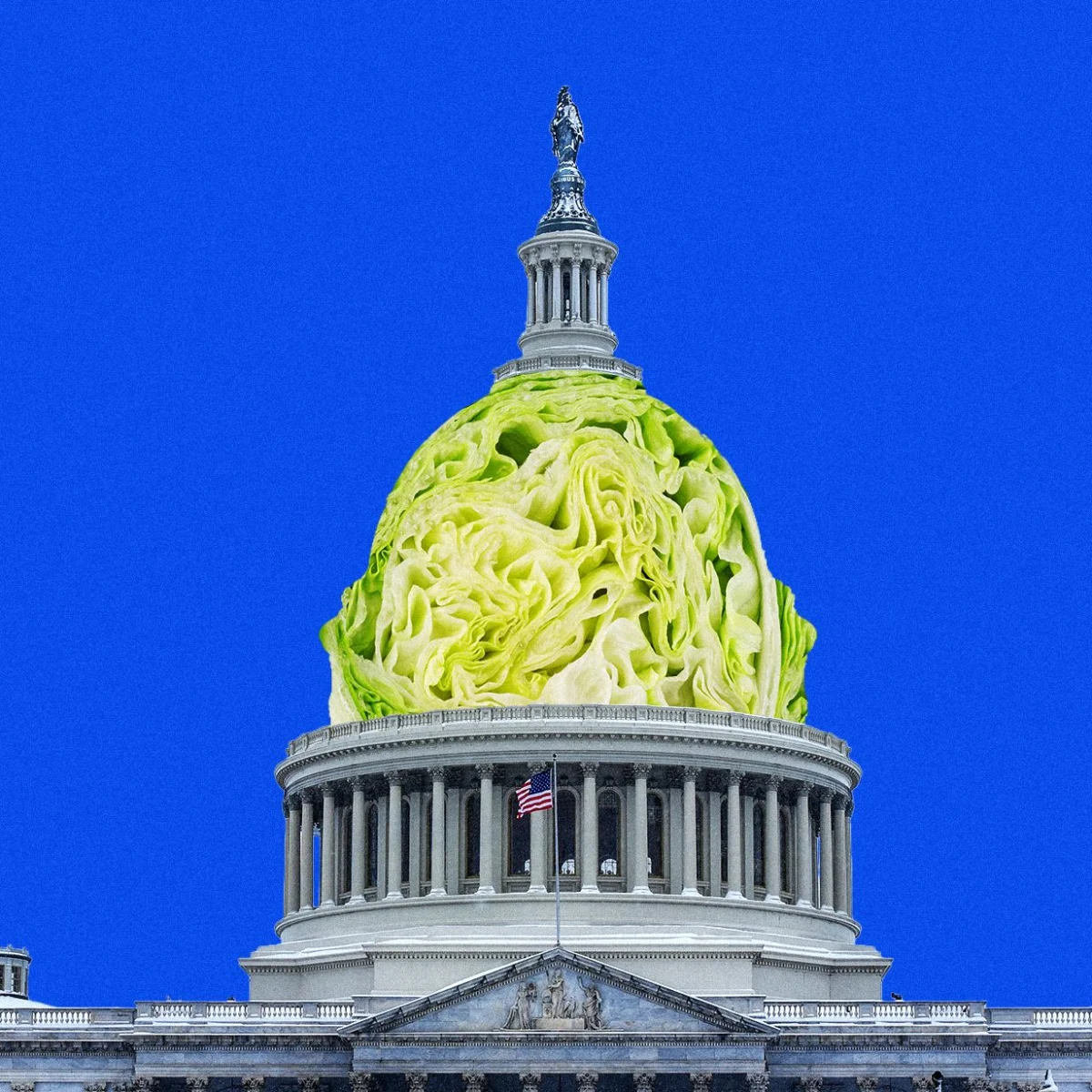
Recent public filings have revealed that Taylor Farms, a major supplier of leafy greens and vegetables currently associated with a significant multi-state cyclospora outbreak, has channeled millions of dollars into political contributions and lobbying efforts aimed at influencing federal food safety regulations. As the company faces scrutiny over an outbreak that has sickened thousands of individuals across the United States, Federal Election Commission (FEC) documents show a strategic surge in financial support for conservative political action committees (PACs) and high-profile Republican candidates, including those closely aligned with former President Donald Trump.
The intersection of large-scale corporate donations and the oversight of public health has sparked a debate among policy experts regarding the potential for financial influence to undermine regulatory rigor. Taylor Farms, which reports approximately $7 billion in annual revenue, has established itself as a formidable political donor, particularly during the 2024 and 2025 election cycles. According to FEC filings, the company donated more than $2 million to conservative political groups in 2025 alone. This figure includes a substantial $1 million contribution to MAGA Inc., a prominent super PAC dedicated to the re-election of Donald Trump, and an additional $1.1 million distributed among various other super PACs focused on securing Republican victories in Congress.
A Sustained Pattern of Political Investment
The 2025 surge in spending is not an isolated event but rather an escalation of a long-term financial strategy. From the beginning of 2020 through the end of 2024, Taylor Farms contributed more than $1.6 million to conservative PACs. A significant portion of this funding—approximately $850,000—was directed toward AFP Action, an anti-regulation super PAC with deep ties to the Koch network. AFP Action has historically advocated for a reduction in federal oversight, arguing that many government mandates impose unnecessary costs on American businesses.
The company’s leadership has also engaged in personal political philanthropy. Bruce Taylor, the chairman and CEO of Taylor Farms, has maintained a consistent presence as a high-value donor to Republican causes. Since 2020, Taylor has personally contributed more than $900,000 to various Republican PACs and individual candidates. His list of beneficiaries includes high-ranking legislators such as Senator John Cornyn of Texas and Senator Marsha Blackburn of Tennessee, both of whom serve on committees that influence agricultural and business policy.
Strategic Lobbying and Regulatory Advocacy
Beyond direct campaign contributions, Taylor Farms has invested heavily in traditional lobbying. In early 2025, as federal investigators began probing the origins of a massive cyclospora outbreak linked to lettuce products, the company retained the services of Sidley Austin, a prestigious law and lobbying firm. Disclosure documents indicate that these lobbyists were tasked with advocating on behalf of the company regarding the "regulation of food safety." Since the start of this engagement, Taylor Farms has spent an estimated $810,000 on lobbying efforts, focusing specifically on the legislative and executive branches’ approach to industry-wide safety standards.
The timing of these expenditures has raised questions about the "revolving door" between government service and corporate advocacy. Recently, Taylor Farms hired Trent Morse, the former deputy director of the White House Presidential Personnel Office. Morse left the Trump administration in September to establish a government relations firm and was quickly brought on by the lettuce giant. Reports indicate that shortly after Morse was hired, Taylor Farms executives secured high-level meetings with White House and Food and Drug Administration (FDA) officials to discuss what the company described as "shortfalls" in the government’s handling of foodborne illness investigations.
The Cyclospora Crisis and Public Health Implications
The backdrop for this political activity is a public health crisis involving Cyclospora cayetanensis, a microscopic parasite that causes severe gastrointestinal distress, often referred to in public discourse as "turbo diarrhea." The current outbreak has proven to be one of the most widespread in recent years, affecting thousands of consumers across multiple states. The Centers for Disease Control and Prevention (CDC) and the FDA have been working to trace the contamination back to specific farms and processing facilities.
The relationship between Taylor Farms and federal regulators has grown increasingly adversarial during this investigation. The company recently publicly claimed that the FDA "apologized" to them following a reported false-positive test on a sample of Taylor Farms lettuce. However, the FDA took the unusual step of issuing a public rebuttal, stating that no such official apology occurred and that the investigation into the company’s supply chain remained active and science-based.
Marion Nestle, a renowned food policy expert and professor emerita at New York University, suggests that these financial maneuvers are part of a broader, systemic issue within the American food industry. According to Nestle, multibillion-dollar corporations frequently leverage their financial power to push for policies that reduce both regulatory oversight and the legal accountability of producers when outbreaks occur.
"The FDA has regulations in place for what food producers are supposed to be doing, but nobody wants to do it—because it’s expensive and difficult," Nestle noted. She argued that the cost of implementing rigorous testing and sanitation protocols often leads companies to prioritize political influence as a means of mitigating the impact of federal safety mandates.
A History of Regulatory Violations and Safety Concerns
The current cyclospora outbreak is the latest in a series of food safety incidents involving Taylor Farms over the past decade. The company’s history with federal regulators provides a context for its current push against stringent oversight:
- 2013: The FDA officially named Taylor Farms as the source of a cyclospora outbreak that sickened hundreds of people in Iowa and Nebraska.
- 2015: The company initiated a voluntary recall of multiple products containing celery after they were linked to potential E. coli contamination.
- 2024: Taylor Farms recalled yellow onions following an E. coli outbreak associated with McDonald’s Quarter Pounders. Subsequent FDA inspections at a Colorado facility linked to this outbreak revealed dozens of safety violations, including inadequate handwashing stations and the use of dirty equipment.
Since the beginning of 2025, the FDA has conducted inspections at 18 American plants affiliated with Taylor Farms. While the majority of these inspections did not result in mandatory enforcement actions, three facilities were flagged for "voluntary action indicated." This designation suggests that while inspectors found specific violations of food safety protocols, the issues were not deemed severe enough at the time to require a forced shutdown or immediate legal intervention.
Workplace Safety and the New Jersey Fatality
The company’s challenges extend beyond food safety to include significant workplace safety violations. Since the start of 2025, the Occupational Safety and Health Administration (OSHA) has cited Taylor Farms facilities for at least 21 violations across the United States.
The most severe incident occurred at a New Jersey processing plant in May 2025. Following an investigation into the death of an employee who sustained fatal injuries while cleaning an industrial blancher, the Department of Labor fined the facility $1.1 million. OSHA investigators determined that the facility had failed to implement necessary safety protocols that could have prevented the tragedy. This fine represents one of the largest penalties levied against a food processing company in recent years, highlighting systemic concerns regarding the company’s internal safety culture.
Official Responses and the "Fake News" Defense
In response to reports linking its political donations to its regulatory standing, the Trump administration and the Department of Health and Human Services (HHS) have issued vigorous denials. In a statement posted to the social media platform X, the HHS account characterized the scrutiny as an attempt by the media to imply collusion without factual basis.
"This is how the FAKE NEWS works: imply collusion, ignore the facts," the HHS post stated. "Nothing influences our decisions except science and the safety of the American people."
Despite these assurances, the optics of million-dollar donations coinciding with high-level meetings and ongoing investigations continue to fuel a national conversation about the role of money in the food system. Critics argue that even if no direct "quid pro quo" exists, the sheer volume of financial contributions ensures that corporate interests have a louder voice in the halls of power than the consumers who are sickened by contaminated products.
Analysis of Broader Implications
The Taylor Farms case serves as a significant case study in the tension between industrial-scale food production and public health protection. As the United States continues to grapple with large-scale foodborne illness outbreaks, the strategies employed by industry leaders to navigate regulatory environments are coming under increased transparency.
For Taylor Farms, the dual strategy of aggressive political spending and public challenges to federal agencies reflects a company under pressure. For the public, the situation raises critical questions about the adequacy of current food safety laws and the independence of the agencies tasked with enforcing them. As the cyclospora investigation continues, the focus remains on whether the current regulatory framework can withstand the pressure of high-stakes corporate lobbying or if the system requires fundamental reform to prioritize consumer safety over political and economic interests.
The outcome of the current outbreak investigation and the subsequent legal or regulatory actions taken against Taylor Farms will likely set a precedent for how the federal government manages large-scale agricultural entities in an era of intense political polarization and significant corporate campaign investment. For now, thousands of Americans remain affected by a preventable illness, while the company at the center of the storm continues to exert its influence at the highest levels of government.
About the Author