
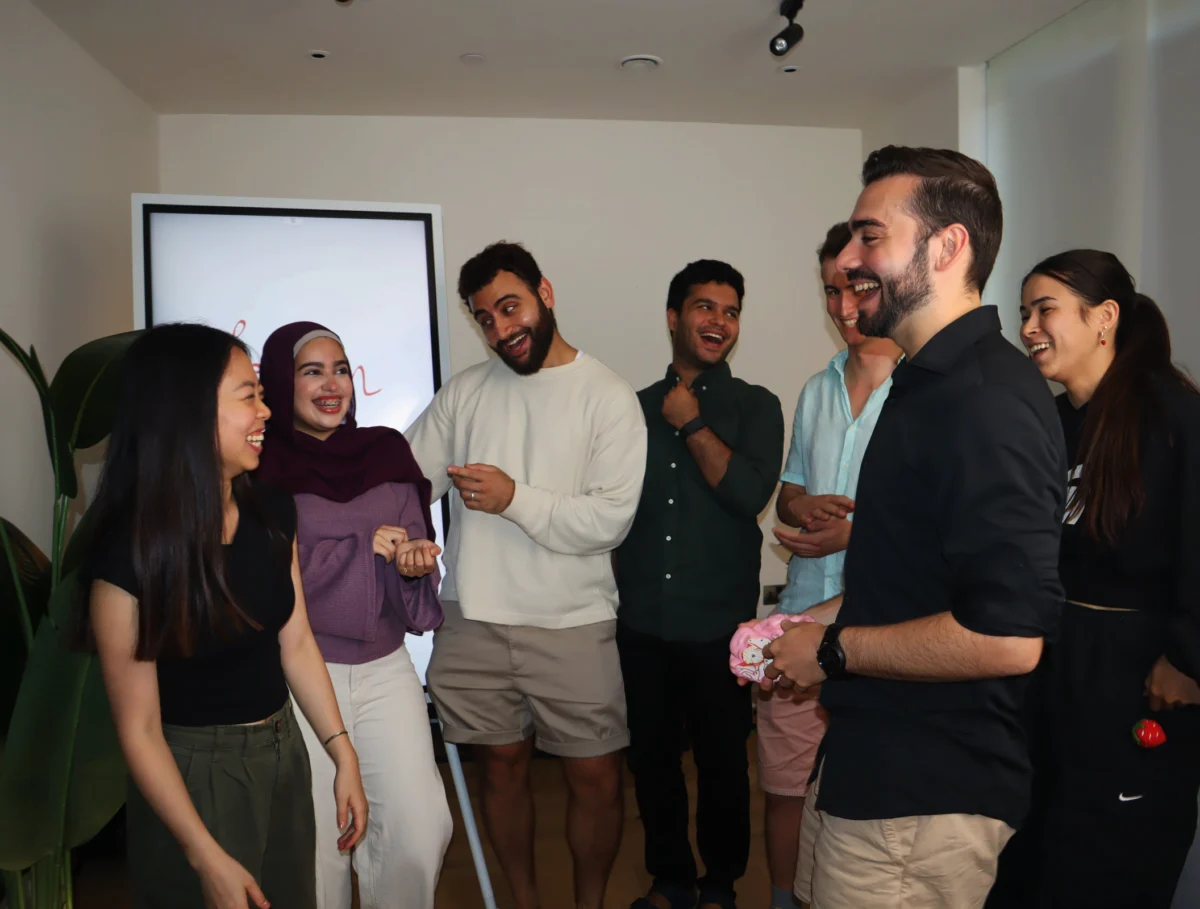
In the burgeoning tech landscape of East London, a novel experiment in co-living and co-working is challenging the prevailing ethos of Silicon Valley’s infamous hacker houses. The London Island Founder House, affectionately dubbed "Lift House," is an initiative spearheaded by six twentysomethings with a distinct vision: to foster a more holistic approach to building successful tech ventures, prioritizing well-being and sustainable growth over relentless, often burnout-inducing, hustle. This departure from the high-octane, "Demo Day or bust" mentality prevalent in San Francisco marks a significant cultural divergence, aiming to cultivate innovation through balance and mindful ambition.
Rowan Aldean, 26, a co-founder of Lift House and an entrepreneur who recently sold his AI-powered multifamily leasing company for millions, explained the fundamental philosophy behind the endeavor. "Our goal is a ‘holistic improvement in life,’ rather than ’12 weeks, Demo Day is coming,’" Aldean stated, drawing a stark contrast to the time-bound, high-pressure environments common in the U.S. tech hub.
A recent afternoon spent within the walls of Lift House offered a glimpse into this alternative model. The six-story building, situated in a modern East London development overlooking the water, serves as both a vibrant workspace and a communal living space for its residents. Aldean and his wife, Zahraa, 22, a pharmaceutical research PhD candidate, have been residents since May 2026, a few months after the house officially launched in March of the same year. Aldean’s current venture focuses on "applied AI," guiding companies on the strategic deployment of AI agents.
The concept of a hacker house, a shared living and working space for tech founders, is not new. However, Lift House distinguishes itself by its location and its underlying ethos. While San Francisco boasts dozens, if not hundreds, of such houses operating concurrently, London has historically seen far fewer. This scarcity makes Lift House a significant player in the emerging London tech scene, representing a bold assertion that groundbreaking companies can be built in the UK without adopting the often extreme "hustle culture" synonymous with Silicon Valley.
The contrast with San Francisco hacker houses is particularly pronounced. Reports from the U.S. tech hub often describe clandestine operations in warehouses, extravagant galas, or extreme work schedules like the "996" culture (9 a.m. to 9 p.m., six days a week). Aldean dismisses such an approach. "I don’t expect the performative and over-the-top events will be a thing here," he commented, referencing the success of London’s own AI powerhouse, DeepMind. "They’ve won Nobel Prizes and built frontier innovation without any song and dance." This sentiment underscores a broader trend in the London tech ecosystem, often referred to as "Londonmaxxing," where founders seek to optimize all aspects of their professional and personal lives within the city’s unique offerings. While London’s tech scene may be less ostentatious than San Francisco’s, its founders harbor equally ambitious goals: success, wealth, and market dominance.

The financial landscape of London’s tech sector, particularly AI, has been a significant driver of this ambition. By the end of 2026, London AI startups had collectively raised an impressive $12 billion, contributing to the broader $14.7 billion secured by all London startups, according to Dealroom data. Six companies alone—Wayve, Superintelligence, ElevenLabs, Recursive, Ineffable Intelligence, and Isomorphic Labs—each surpassed the $500 million funding mark. Notably, the latter three were founded by alumni of DeepMind, a testament to the deep talent pool cultivated in the city. This surge in AI investment has invigorated the UK’s tech morale, inspiring a new wave of entrepreneurs, like those at Lift House, to pursue ambitious ventures.
A Balanced Approach to Entrepreneurship
The residential tenure at Lift House is flexible, ranging from a few weeks to several months, allowing founders to find a rhythm that suits their evolving needs. The residents manage their own living expenses, including groceries, though communal cooking and ingredient sharing are common. Housekeeping duties are distributed among the group, fostering a sense of shared responsibility. Details regarding the specific rental agreements remain private.
What truly sets Lift House apart is its emphasis on a balanced approach to ambition, a concept that often seems at odds with the relentless pursuit of growth in San Francisco. On Sundays, the residents engage in a collective journaling practice, an initiative introduced by David Amor, 28, who leads a brain coaching and training company. This practice encourages founders to track crucial aspects of their well-being, such as time spent in nature, dietary habits, and physical activity.
Luke, 27, who heads an AI marketing company and requested his last name be withheld, attested to the positive impact of this lifestyle. "I’m eating healthier, working out more, and sleeping more," he shared. "I always make sure to have lunch now, which is something that is simple, but I wasn’t doing before I lived here."
Beyond structured reflection, Tuesdays are dedicated to communal recreation, with the residents forming a house team to compete in a local volleyball league. Evenings often involve shared activities like playing board games, such as Catan, or attending cultural events like art exhibitions. Wan Ying L, 25, who recently transitioned from an AI startup and is developing a new concept, finds solace in playing the piano in the common living area.
Presence Plumb, 25, a tech strategist, hosts regular rooftop dinner parties. These gatherings are more than just social events; they serve as curated networking opportunities, bringing together founders, researchers, investors, and operators to discuss emerging tech trends and investment strategies. The cuisine often reflects the diverse nationalities within the house, from Iraqi to Spanish, fostering a rich cultural exchange. "It’s a bit calmer, balanced, authentic in a way," Plumb observed about the London ecosystem. "They don’t want too much of that only startup tech bro vibe. They want a bit of balance."

The daily routines within Lift House reflect this emphasis on individual optimization rather than a collective, all-consuming work schedule. Amor, for instance, adheres to a strict morning routine, starting his workday precisely 30 seconds after waking up to maximize focused productivity. "I have a clear objective of ‘this is what I want to do in the first half of the day, when there’s no distractions,’" he explained, followed by a cold shower, which he believes boosts dopamine levels by 250%, providing a motivational spark.
Luke’s day typically begins around 8:30 a.m. He and his co-founder, Varun, 27 (who also requested his last name be withheld), often start their collaborative work at 9 a.m. with a team call. Aldean, the co-founder, generally starts his day later, around 10 a.m., unless significant investor calls necessitate an earlier start.
The Uniquely British Tech Identity
When asked what makes Lift House distinctively British compared to a wellness-focused Silicon Valley counterpart, Aldean humorously quipped, "Well, we drink tea together like Brits, and in SF folks just drink filtered coffee."
More seriously, he elaborated on the unique pressures faced by British founders. These include navigating a cultural aversion to risk, an inclination towards humility, and a societal discomfort with failure. Instead of sacrificing sleep for relentless work, UK founders often contend with "tall poppy syndrome," a phenomenon where individuals who achieve significant success are criticized or brought down by public scrutiny. This cultural dynamic can lead some founders to be more reserved in showcasing their achievements.
Despite these cultural nuances, London remains a compelling location for early-stage founders. Luke highlighted the city’s strong networking opportunities, accessible early-stage capital, and the potential for a fulfilling life beyond the confines of the tech industry. He perceives London’s culture as more akin to New York’s for founders than San Francisco’s. Amor further emphasized London’s diversity, noting that "if you look properly enough, you’ll always find something fun to get involved with, whether that’s a founder-run club, wellness events, [or going] to jazz nights."
Luke and Varun have leveraged the UK government’s Seed Enterprise Investment Scheme (SEIS) and Enterprise Investment Scheme (EIS) to attract angel investments, effectively sidestepping the need for substantial venture capital funding. "There’s people who will pay basically the same rate of tax if they give us the money versus if they pay income tax," Luke explained, illustrating another advantage of launching a startup in London.

Aldean also perceives the London ecosystem as less cutthroat than the Silicon Valley environment. He recalled his time in a Bay Area hacker house, where the focus was intensely on product development with a sense of constant competition and potential for gossip. In contrast, Aldean noted that such pervasive rumor-mongering is less prevalent in the UK. "There’s nothing like ‘oh my god did you hear that the CTO just, like, did this,’" Aldean remarked. "It’s like you’re always worried that someone would spread negative stories, especially if it benefited them."
Furthermore, Aldean believes that London startups are more likely to target large, established corporations for their client base, rather than selling primarily to other startups. This dynamic allows for building products without the need for extensive networking or appeasing peers. Varun and Luke echoed this sentiment, contrasting the UK market with the U.S. "It’s a relatively fleeting market," Varun said of the U.S. "You get quick wins. Here, it’s hard to close a customer, but if they close, they stay with you longer." This indicates a preference for long-term client relationships over rapid, short-term gains.
The U.S. Magnet: Opportunity and Investment
Despite the strengths of the London tech scene, the ultimate trajectory for many UK startups leads to the United States. The UK offers access to a rich pool of talent from prestigious universities like Oxford and Cambridge, and its time zone facilitates collaboration with Europe, the Middle East, Asia, and parts of North America. However, the U.S. market provides access to the world’s largest economy and, crucially, a vast network of investors willing to commit substantial capital across all stages of growth.
"It’s almost like a factory line in a way," Varun observed. "You start here, and then you expand there or vice versa." This common path highlights the interconnectedness of global tech ecosystems.
American investors are also actively influencing the migration of British talent. Founders have reported being pressured to relocate to the U.S. for investment, a common practice that can shape the geographical footprint of burgeoning companies. Luke shared an anecdote about an investor in Miami who similarly urged him and Varun to move. "It’s quite a common practice," he stated. While Luke and Varun have initiated their U.S. expansion, they acknowledge the possibility of relocating to be closer to their customer base, despite their affection for London.
This push-and-pull between local ecosystems and global opportunities represents a significant challenge for the UK and broader European tech sectors. Presence Plumb noted, "I work with a lot of people trying to support the European ecosystem more." However, she also acknowledged the pervasive sentiment that "founders ‘talk about London; everyone is bullish on the country until they get the opportunity to leave.’"

The lease for Lift House is set to expire within the next year, and there is a collective desire among the residents to extend its operation. While London hosts numerous short-term tech gatherings, such as the Solana Hacker House meet-up series, permanent, co-living hacker houses remain relatively scarce. Global networks like The Residency, which expanded into London in 2025, and BaseJump, planning a forthcoming London iteration of its program, are exceptions rather than the norm.
In 2024, "The London Founder House," a venture that Sifted reported on under the headline "The people here don’t want work-life balance," represented a more traditional, albeit short-lived, hacker house model. This initiative, London’s first of its kind, wound down last year but left a notable impact on the ecosystem through its events and network. Its entry criteria, requiring founders to have raised at least $500,000, starkly contrast with Lift House’s approach.
Lift House actively seeks residents who demonstrate a hobby outside their entrepreneurial pursuits and a genuine interest in fitness. This inclusive criteria aligns with the "Londonmaxxing" philosophy, aiming to retain talent by offering a comprehensive and balanced lifestyle. Aldean encapsulates this vision: "The culture is to build something that lasts, not necessarily burn out chasing a flash." This commitment to sustainable growth and personal well-being positions Lift House as a compelling alternative for the next generation of tech leaders.
About the Author





