In an era defined by hyper-connectivity and the pervasive adoption of remote work, the seemingly simple concept of time zones has evolved from a geographical curiosity into a critical operational challenge for businesses across the United States. The increasing prevalence of distributed workforces, with employees scattered across states as diverse as California, Wisconsin, and Maine, has brought "time zone fatigue" to the forefront of management concerns. This phenomenon, characterized by the mental and logistical strain of coordinating across multiple temporal landscapes, necessitates a comprehensive understanding of the United States’ complex time zone system. This article delves into why time zones matter in the modern business environment, outlines the distinct temporal divisions within the U.S., and offers strategies for effectively managing these differences to ensure seamless operations and foster a cohesive organizational culture.
The strategic importance of understanding and managing time zones cannot be overstated in today’s interconnected business ecosystem. With the rise of remote and hybrid work models, it is no longer an anomaly but a common occurrence to collaborate with colleagues, clients, and vendors situated in different time zones. This geographical dispersion necessitates a heightened awareness of temporal variations when scheduling meetings, setting deadlines, placing orders, or responding to client inquiries. A failure to adequately account for these differences can lead to missed opportunities, communication breakdowns, decreased productivity, and ultimately, a negative impact on the bottom line. For instance, a sales team attempting to reach a client on the West Coast at what they perceive as a reasonable hour might inadvertently be calling during the client’s evening or even after business hours, potentially jeopardizing a crucial deal. Similarly, project managers must carefully consider the availability of team members across different zones when assigning tasks that require synchronous collaboration, ensuring that no individual is consistently burdened with late-night or early-morning work.
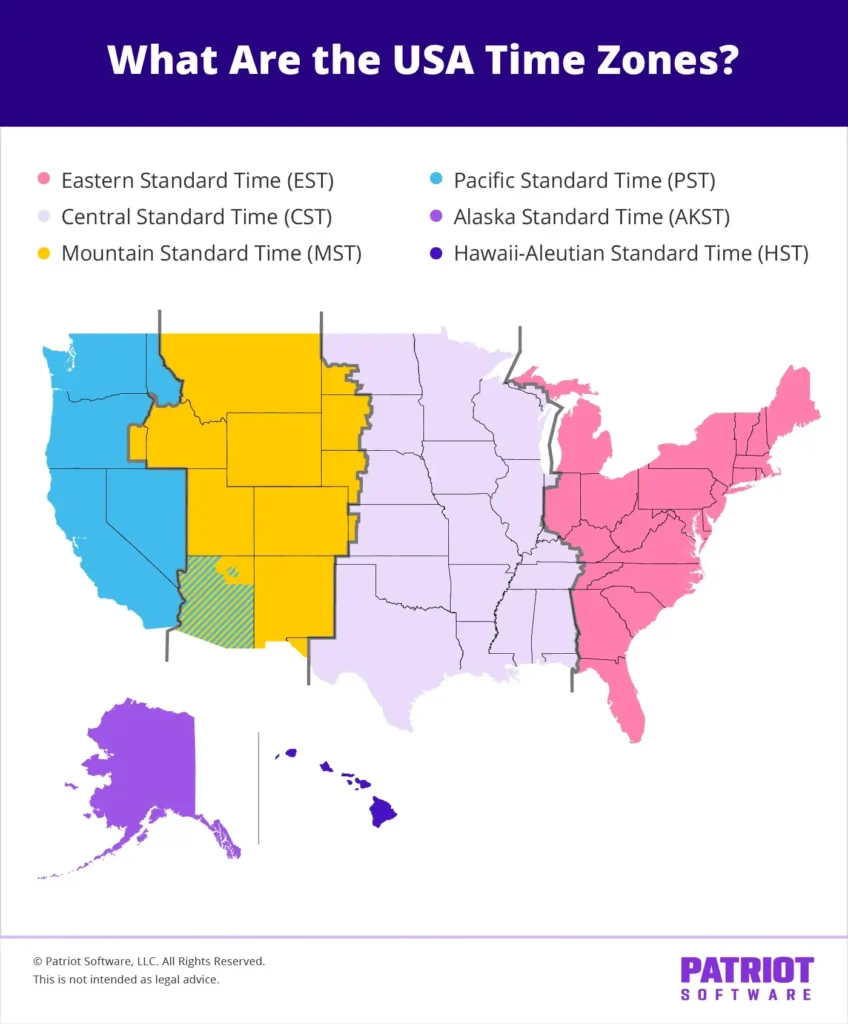
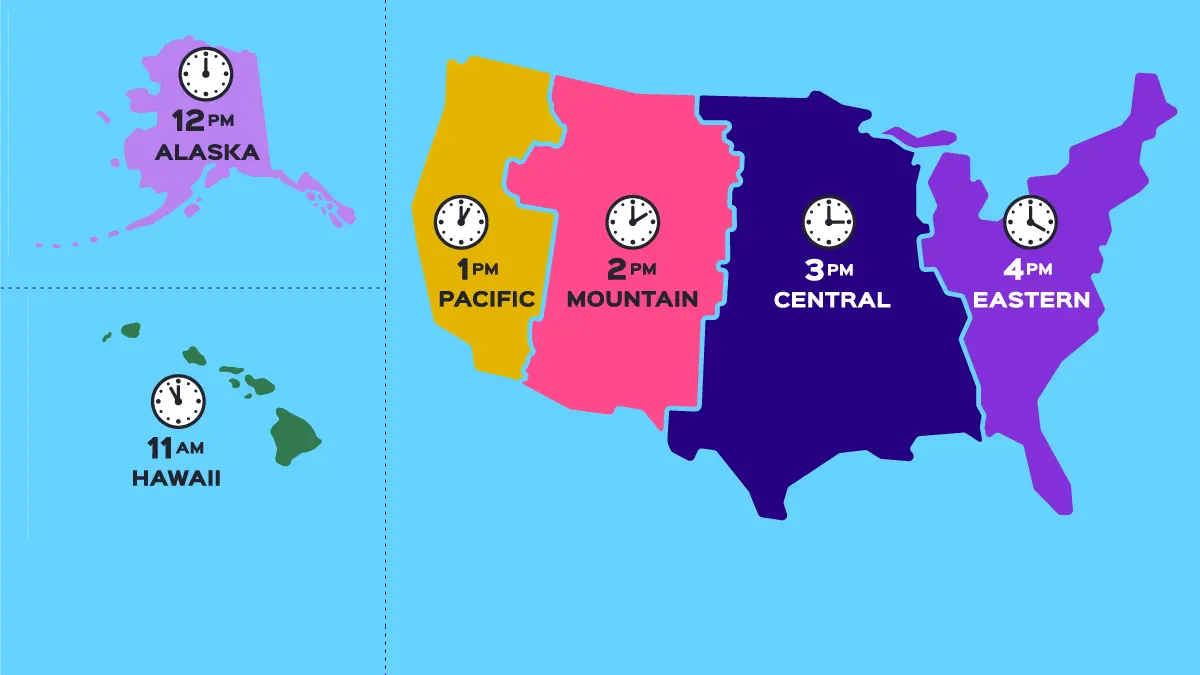
The United States, a vast nation spanning a continent, is officially divided into six primary time zones, each adhering to specific temporal standards. These zones, in order of their progression from east to west, are:
- Eastern Standard Time (EST): This is the easternmost time zone, encompassing states along the Atlantic coast, including major financial and political centers like New York City and Washington D.C. EST is UTC-5.
- Central Standard Time (CST): Located west of EST, CST covers a significant portion of the central United States, from the Great Lakes region down to the Gulf Coast. CST is UTC-6.
- Mountain Standard Time (MST): This zone stretches across the Rocky Mountain states. Notably, Arizona (with the exception of the Navajo Nation) and parts of New Mexico observe MST year-round. MST is UTC-7.
- Pacific Standard Time (PST): This zone encompasses the states along the Pacific coast, including California, Oregon, and Washington. PST is UTC-8.
- Alaska Standard Time (AKST): This zone covers the majority of Alaska. AKST is UTC-9.
- Hawaii-Aleutian Standard Time (HST): This zone includes Hawaii and a portion of the Aleutian Islands in Alaska. HST is UTC-10.
It is crucial to note that many states are bisected by these time zones, leading to regional variations within a single state. For example, Florida and Michigan have portions that fall under both EST and CST, while Idaho, Kansas, Nebraska, North Dakota, South Dakota, and Texas have areas that observe both CST and MST, or MST and PST. These internal divisions add another layer of complexity for businesses operating within these states or interacting with entities located in different parts of them.
Further complicating this temporal landscape is the widespread practice of Daylight Saving Time (DST). Implemented in most of the United States, DST involves advancing clocks by one hour during the warmer months, typically from the second Sunday in March to the first Sunday in November. The stated purpose of DST is to maximize the utilization of natural daylight by extending it into the evening hours. This practice effectively shifts the time difference between DST-observing states and those that do not observe it, such as Arizona (excluding the Navajo Nation) and Hawaii. During DST, for instance, Ohio (EST) is three hours ahead of Arizona (MST). However, when Ohio reverts to standard time in the fall, the time difference narrows to two hours because Arizona remains on MST. This annual ebb and flow of an hour can create temporary shifts in perceived synchronicity and requires businesses to remain vigilant in their scheduling.
The debate surrounding the utility and impact of Daylight Saving Time has been ongoing for decades, with proponents arguing for energy savings and increased opportunities for outdoor activities, while critics point to disruptions in sleep patterns, potential negative health effects, and confusion in scheduling. In recent years, there has been a growing movement to make DST permanent, with several bills introduced in Congress. However, as of early 2026, these legislative efforts remain stalled. If enacted, such legislation could standardize time across the nation, potentially simplifying scheduling for businesses but also necessitating adjustments for states that currently opt out of DST.
The logistical challenges posed by these time zone variations are manifold. Consider a scenario where a company has a manufacturing facility in Pennsylvania (EST) and a distribution center in California (PST). Orders placed at the end of the Pennsylvania workday might not be processed until the following morning in California, leading to delays in fulfillment. Similarly, customer service representatives in New York might receive calls from customers in Denver (MST) that are technically outside of their operating hours.
The implications of these temporal disparities extend to various business functions:
- Sales and Customer Service: Ensuring that customer inquiries are handled promptly, regardless of their location, requires a clear understanding of when each time zone’s business operations are active.
- Operations and Logistics: Coordinating supply chains, managing inventory, and scheduling deliveries across different time zones demand meticulous planning to avoid costly delays or disruptions.
- Human Resources and Team Management: For businesses with remote employees, effective communication, scheduling of virtual meetings, and setting realistic deadlines are paramount to maintaining team cohesion and productivity.
- Financial Transactions and Reporting: Businesses operating across multiple time zones must be mindful of market closing times and reporting deadlines, which can vary significantly.
To facilitate smoother operations, businesses can adopt several proactive strategies:
Harnessing Technology for Temporal Clarity:
In the digital age, numerous technological solutions can mitigate the challenges of time zone management.
- Time and Attendance Software: Modern time and attendance systems often automatically detect and display employee work times in their local time zones, simplifying payroll processing and workforce management.
- Collaboration Platforms: Many project management and communication tools, such as Slack, Microsoft Teams, and Asana, feature built-in functionalities that display the current time of team members, making it easier to find overlapping availability for meetings.
- Calendar Applications: Advanced calendar applications allow users to add multiple time zones to their view, enabling them to see the availability of colleagues or clients in different locations at a glance. When scheduling events, these tools can often suggest optimal times that work for all participants.
Strategic Communication and Scheduling Protocols:
Beyond technological solutions, establishing clear communication protocols is essential.
- Always Specify Time Zones: When scheduling meetings, setting deadlines, or communicating important information, always explicitly state the relevant time zone. For example, instead of "meeting at 2 PM," use "meeting at 2 PM EST (5 PM PST)." This practice eliminates ambiguity and prevents misinterpretations.
- Centralized Scheduling: Designate a central point person or team responsible for scheduling meetings across different time zones. This individual or team can leverage scheduling tools and have a comprehensive understanding of everyone’s temporal location.
- Meeting Agendas and Minutes: Distribute meeting agendas in advance, clearly indicating the start and end times in all relevant time zones. Following up with minutes that reiterate deadlines and action items, again with specified time zones, reinforces clarity.
- Customer-Facing Communications: For customer-facing teams, ensure that all published operating hours, response times, and appointment slots clearly indicate the time zone. This transparency helps manage customer expectations and reduces frustration.
Building a Time-Zone-Aware Culture:
Fostering an organizational culture that is mindful of time zone differences is perhaps the most sustainable approach to managing this challenge.
- Empathy and Flexibility: Encourage team members to be considerate of their colleagues’ time zones. This might involve adjusting meeting times to accommodate those in distant zones or being flexible with response times if immediate replies are not critical.
- Training and Education: Provide training to employees on the importance of time zone awareness and the tools and strategies available to manage it effectively. This can empower them to navigate these complexities independently.
- Regular Review and Adjustment: Periodically review scheduling practices and communication protocols to identify areas for improvement. As the workforce evolves and new technologies emerge, these strategies may need to be adapted.
The legal and regulatory landscape surrounding time zones and DST is also a factor. While the federal government has established standard time zones, states have the authority to opt out of DST. This patchwork of regulations underscores the need for businesses to stay informed about the specific practices in the regions where they operate or employ staff. The potential for DST to become permanent or for certain states to adopt their own standardized time further highlights the dynamic nature of this issue.
In conclusion, navigating the intricacies of U.S. time zones is no longer a secondary concern but a fundamental requirement for modern businesses. The increasing prevalence of remote work and geographically dispersed teams amplifies the need for meticulous planning, clear communication, and the strategic utilization of technology. By understanding the temporal divisions, acknowledging the impact of Daylight Saving Time, and implementing robust management strategies, businesses can transform potential time zone fatigue into an opportunity for enhanced operational efficiency, stronger team collaboration, and ultimately, greater success in an increasingly borderless professional world. The ability to master these temporal nuances will be a key differentiator for organizations striving to thrive in the future of work.
About the Author