
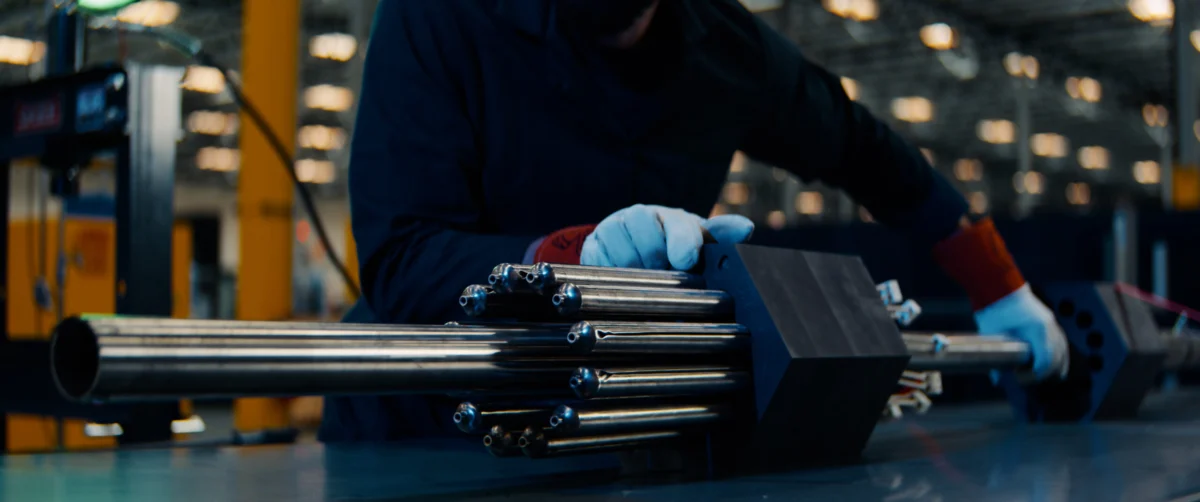
Nuclear power startup Antares announced on Monday that it has successfully raised $470 million in a significant funding round aimed at accelerating the development and deployment of small modular reactors (SMRs) for U.S. military installations. This substantial capital infusion, comprising $370 million in equity and $100 million in debt, was led by prominent investment firms Paradigm and Caffeinated Capital, with crucial participation from Industrious Ventures, Point72 Ventures, and Shine Capital. The Series C funding round underscores a burgeoning investor confidence in the advanced nuclear sector, a trend increasingly influenced by the exponential growth of artificial intelligence data centers and the persistent demand for innovative, reliable sources of clean energy.
A New Era for Advanced Nuclear Power
The substantial investment in Antares signals a pivotal moment for advanced nuclear energy technologies, particularly small modular reactors (SMRs). These next-generation reactors are designed to be factory-built and transported to sites, offering a flexible and scalable approach to nuclear power generation. Antares’ specific focus on powering U.S. military bases addresses a critical need for secure, resilient, and on-site energy solutions for installations that are often vulnerable to grid disruptions and require significant, consistent power. The company’s SMR is designed to produce between 100 kilowatts and 1 megawatt of electricity, an output capable of powering approximately 750 homes, making it suitable for a range of military applications from base operations to specialized equipment.
Technological Innovation and Safety First
Central to Antares’ reactor design is the utilization of TRISO (TRi-structural ISOtopic) fuel. This advanced fuel form is a significant departure from traditional nuclear fuel and has been lauded for its inherent safety features. TRISO fuel consists of tiny uranium particles encapsulated within multiple protective layers of ceramic and carbon. These billiard ball-sized spheres are exceptionally robust, designed to withstand extreme temperatures and prevent the release of radioactive materials, even in severe accident scenarios. The coating acts as a robust barrier, inhibiting fuel melting in the high-temperature environments characteristic of advanced reactors. This safety-focused approach aligns with the stringent requirements of military applications and contributes to the growing appeal of advanced nuclear technologies.
Milestones and Future Deployments
Antares has made significant strides in demonstrating the viability of its technology. On June 4th, the company’s demonstration reactor, dubbed the Mark-0, achieved criticality at the Idaho National Laboratory. This critical milestone signifies that the reactor successfully initiated and sustained a controlled nuclear chain reaction, a fundamental step in validating the reactor’s design and operational capabilities. The Idaho National Laboratory, a leading federal research institution for nuclear energy, provides a critical testing ground for advanced reactor technologies, offering invaluable data and insights for their further development.
The company’s progress has not gone unnoticed by the U.S. Department of Defense. Antares is one of three finalists selected for the Pentagon’s Advanced Nuclear Power for Installations program. This ambitious initiative aims to test and evaluate SMRs on U.S. Air Force bases located in Colorado and Montana, with the ultimate goal of integrating these clean energy solutions into military infrastructure. Antares has set an ambitious target to bring its first electricity-producing reactor online by next year, with plans for broader deployments at U.S. military installations commencing in 2028. This timeline underscores the urgency and strategic importance the military places on securing advanced nuclear power solutions.
The Resurgence of Nuclear Energy
The surge in investor interest in Antares and other advanced nuclear startups is emblematic of a broader revitalization of the nuclear power sector. This resurgence is largely driven by the escalating demand for electricity, propelled by the rapid expansion of artificial intelligence data centers and the ongoing electrification of the global economy. The need for reliable, carbon-free baseload power is becoming increasingly critical as traditional energy sources face scrutiny and the world grapples with climate change.
This trend is reflected in a series of significant investments within the advanced nuclear space. In April, X-energy, another prominent SMR developer, raised a substantial $1 billion through an Initial Public Offering (IPO). Prior to this, in late 2025 and early 2026, Radiant Energy, Standard Nuclear, and Last Energy each secured nine-figure funding rounds, highlighting a robust flow of capital into companies developing innovative nuclear solutions. Antares itself has a proven track record of attracting investment, having closed a $96 million Series B round in December of the previous year. Cumulatively, Antares has now raised over $604 million, according to an analysis of PitchBook data, positioning it as a significant player in the emerging SMR market.
Navigating the Challenges Ahead
Despite the palpable excitement and substantial capital flowing into advanced nuclear startups, the path to widespread commercialization is not without its obstacles. A key challenge lies in the development of a robust and mature domestic supply chain for SMR components and fuel. The United States has historically relied on international suppliers for certain nuclear materials and manufacturing capabilities, and building out a domestic infrastructure capable of supporting the mass production of SMRs is a complex undertaking.
Many SMR developers, including Antares, are banking on the principles of mass manufacturing to drive down costs significantly. The concept is that factory-built reactors, produced at scale, will be considerably more cost-effective than traditional, site-built nuclear power plants. However, realizing the full economic benefits of mass manufacturing typically requires a sustained period of at least a decade, and no SMR startup has yet reached this stage of scaled production.
Furthermore, the economic competitiveness of early SMR deployments remains a significant question. Projections suggest that the first SMRs, expected to enter commercial operation in the early 2030s, may not be cost-competitive with many new conventional power plants. Lazard, a financial advisory firm that meticulously analyzes the levelized cost of energy (LCOE) for various technologies, estimates that new SMRs could cost approximately $214 per megawatt-hour. At this price point, they would be more expensive than all but the most costly natural gas turbine power plants.
Strategic Pivot to Military Contracts
Antares has not publicly disclosed its specific pricing models for its SMR technology. However, given the current market realities and the projected costs of early SMR deployments, the company’s strategic decision to prioritize contracts with the U.S. military appears to be a pragmatic and astute move. The military, by its nature, is often less price-sensitive than commercial energy markets when it comes to securing critical infrastructure and energy security. The demand for reliable, on-site power for defense installations, coupled with the strategic imperative to reduce reliance on vulnerable civilian grids, makes military bases an ideal initial market for SMRs. This focus allows Antares to deploy its technology, gain operational experience, and build a track record without the immediate pressure of competing solely on cost in the commercial power sector. The military’s willingness to invest in and pilot new technologies like SMRs could prove instrumental in de-risking the technology and paving the way for broader adoption in civilian markets in the future.
The successful funding round for Antares represents more than just a financial transaction; it is a testament to the growing belief in the transformative potential of advanced nuclear energy. As the world navigates an increasingly complex energy landscape, SMRs like those being developed by Antares offer a compelling vision for a cleaner, more secure, and resilient energy future, particularly for critical national infrastructure. The coming years will be crucial in observing how Antares and its peers translate this significant investment into tangible energy solutions and overcome the inherent challenges of commercializing a nascent, yet profoundly important, technology.
About the Author





