The widespread adoption of artificial intelligence (AI) tools across industries is no longer a theoretical discussion but a tangible reality. However, a significant disconnect exists between the rapid deployment of these technologies and the preparedness of company leadership, particularly front-line managers, to effectively integrate and leverage them. Without robust managerial capabilities, organizations risk failing to realize the substantial gains they anticipate from their AI investments, according to a growing body of research and industry analysis.
The AI Readiness Deficit: A Stark Reality
A pivotal study conducted by ManpowerGroup Talent Solutions underscores the magnitude of this challenge. The survey revealed a startling statistic: only a mere 3% of surveyed leaders reported feeling "highly prepared" to guide their teams through the complexities of AI adoption. This indicates a profound lack of confidence and readiness among those tasked with overseeing the integration of these transformative technologies. Further compounding this issue, a mere 17% of organizations believe they possess "advanced" or "transformational" workforce readiness for AI-driven workflows, suggesting a widespread unpreparedness for the operational shifts AI demands.
This managerial deficit is not an isolated incident but symptomatic of broader organizational challenges in adapting to the AI era. The report, published on July 28, 2026, highlights that the inability of managers to effectively steer AI integration could be a primary bottleneck in realizing the projected benefits of AI technologies, which are increasingly being integrated into daily business operations.
The Pervasive AI Skills Gap Beyond Technical Proficiency
The struggle to harness AI’s potential extends beyond the managerial level, permeating the broader workforce. Numerous reports, including analysis from Forrester, have pointed to significant AI skills gaps haunting organizations. A March 2026 analysis noted that a substantial portion of the workforce simply lacks the fundamental knowledge of how to effectively utilize AI tools, a gap that could be directly attributed to employer inaction. This lack of basic AI literacy among employees creates a ripple effect, placing an even greater burden on managers to bridge this knowledge divide.
However, the issue is not solely about technical AI competencies. While understanding AI algorithms or data science is important, the core of effective leadership in the AI age lies in a different set of skills. Broader organizational learning, crucial for adapting to evolving technological landscapes, often falters without the active support and empowerment of managers. Studies have indicated that managers themselves require a suite of skills that transcend mere technical understanding. These essential competencies include strong communication, critical thinking, problem-solving, and a high degree of adaptability – qualities that enable them to guide their teams through uncertainty and foster a culture of continuous learning.
The Historical Trajectory of Technology Adoption and Managerial Roles
The current situation echoes historical patterns of technological disruption. When transformative technologies have emerged in the past, from the industrial revolution to the digital age, a common thread has been the lag between technological advancement and the evolution of managerial practices and skills.
Early Industrial Revolution (Late 18th – Mid-19th Century): The introduction of mechanization and factory systems required new forms of supervision. Managers, previously more akin to foremen, had to learn to coordinate larger workforces, manage production schedules, and enforce new discipline. The transition was often fraught with labor unrest and resistance as traditional skills became obsolete.

The Rise of Scientific Management (Early 20th Century): Figures like Frederick Winslow Taylor advocated for a more systematic approach to management, focusing on efficiency and optimizing workflows. This era saw managers tasked with analyzing tasks, standardizing processes, and training workers to perform specific, often repetitive, functions.
The Digital Revolution (Late 20th Century – Early 21st Century): The advent of computers and the internet fundamentally reshaped business operations. Managers had to grapple with new information systems, digital communication, and the increasing importance of data. This period saw a growing emphasis on IT literacy and strategic thinking regarding technology adoption.
The Current AI Era (2020s Onwards): The current wave of AI integration represents a paradigm shift, moving beyond automation to cognitive tasks and advanced analytics. Unlike previous technological waves that primarily automated manual labor or streamlined information processing, AI has the potential to augment human decision-making, create new forms of work, and fundamentally alter organizational structures. This necessitates a more sophisticated managerial role, one that involves fostering creativity, ethical considerations, and strategic foresight in the application of AI.
The current survey data suggests that organizations are, in many ways, still catching up from the digital revolution, let alone being fully prepared for the AI era. The fact that only 3% of leaders feel "highly prepared" indicates that this transition is proving more challenging than previous technological shifts, possibly due to the speed, pervasiveness, and cognitive capabilities of AI.

The Imperative for Managerial Upskilling in the AI Era
The implications of this managerial deficit are far-reaching. Companies investing heavily in AI solutions – from generative AI for content creation to predictive analytics for business forecasting – are unlikely to see a significant return on investment if their management layers are not equipped to guide their teams in utilizing these tools effectively. This can manifest in several ways:
- Underutilization of AI Capabilities: Managers who lack understanding or confidence in AI may inadvertently limit its deployment or discourage their teams from exploring its full potential, leading to suboptimal outcomes.
- Increased Operational Risks: Without proper oversight and understanding, the implementation of AI can lead to errors, biases, or security vulnerabilities that could have significant financial and reputational consequences.
- Decreased Employee Morale and Productivity: Employees may feel frustrated or demotivated if their managers cannot provide clear direction, support, or training on new AI tools, leading to a decline in productivity and engagement.
- Failure to Innovate: The true power of AI often lies in its ability to unlock new business models and innovative solutions. If managers are not equipped to think strategically about AI’s potential, these opportunities may be missed.
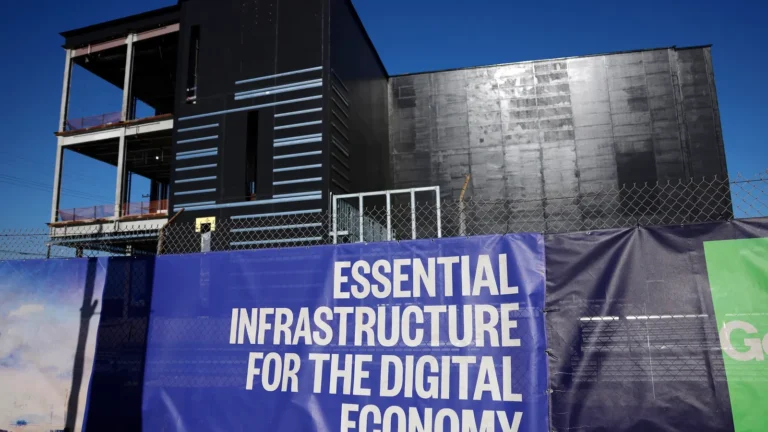
The development of AI infrastructure, such as the construction of advanced data centers, as depicted in the accompanying image (a 49.5 megawatt three-level data center under construction in Vernon, Calif., on April 14, 2026), signifies a substantial commitment to the digital economy. However, the physical infrastructure is only one part of the equation. The human infrastructure – the leadership and workforce capabilities – is equally, if not more, critical for realizing the benefits of such investments.
Expert Perspectives and Recommendations
Industry experts and researchers emphasize a multi-pronged approach to address this critical gap. Key recommendations often include:
- Targeted Managerial Training Programs: Organizations must invest in comprehensive training programs specifically designed to equip managers with AI literacy, strategic thinking regarding AI adoption, and the soft skills necessary for leading in a technologically advanced environment. These programs should go beyond technical training and focus on change management, ethical AI deployment, and fostering a culture of continuous learning.
- Empowerment and Autonomy: Managers need to be empowered to experiment with AI tools, make informed decisions, and lead their teams through the adoption process. This requires a supportive organizational culture that tolerates calculated risks and encourages learning from both successes and failures.
- Cross-Functional Collaboration: Fostering collaboration between IT departments, HR, and business units is essential. This ensures that AI implementation is aligned with business objectives and that the needs of the workforce are adequately considered.
- Clear Communication and Vision: Leadership must articulate a clear vision for AI adoption, emphasizing its benefits and addressing employee concerns. Managers play a crucial role in cascading this vision and ensuring buy-in at all levels.
- Continuous Learning and Adaptation: The AI landscape is constantly evolving. Organizations and their leaders must commit to ongoing learning and development to stay abreast of the latest advancements and adapt their strategies accordingly.
The report’s findings, published on July 28, 2026, serve as a critical wake-up call. As AI continues its relentless march, the ability of companies to thrive will increasingly depend on the effectiveness of their managerial leadership. The investment in AI technology must be matched by an equivalent, if not greater, investment in developing the human capital capable of steering these powerful tools toward organizational success. Without this crucial element, the promise of AI may remain largely unfulfilled, leaving companies struggling to justify their technological expenditures and falling behind competitors who have successfully navigated this critical transition. The path forward requires a deliberate and sustained focus on upskilling and empowering managers to become the architects of AI-driven transformation.
About the Author