The digital landscape is witnessing a significant transformation of one of the most recognizable names from the early internet era as LimeWire pivots from its historical roots into a comprehensive generative artificial intelligence (AI) and content publishing ecosystem. This evolution marks a departure from the peer-to-peer file-sharing model that defined the brand in the early 2000s, repositioning the entity as a high-tech studio designed to facilitate the creation, distribution, and monetization of AI-generated assets. The new LimeWire Studio serves as a multi-modal platform where users can leverage advanced machine learning models to produce visual content, with imminent plans to expand into audio and video synthesis.
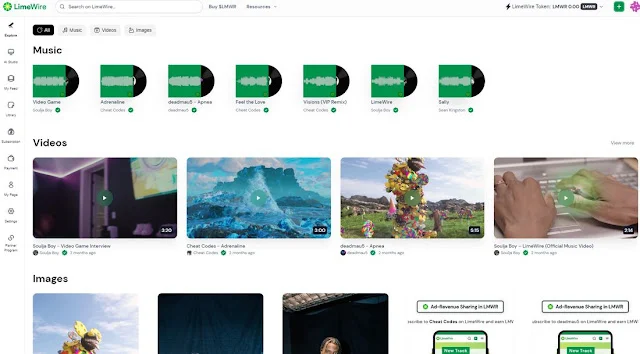
By integrating blockchain technology with generative AI, LimeWire has introduced a novel framework for the creator economy. The platform allows users to not only generate original digital works but also to mint these creations as Non-Fungible Tokens (NFTs) automatically. This strategic integration addresses long-standing issues in the digital art world regarding provenance, ownership, and secondary market royalties. High-profile figures in the entertainment industry, including Deadmau5, Soulja Boy, and Sean Kingston, have already utilized the platform to distribute exclusive content, signaling a growing institutional and professional interest in LimeWire’s new direction.
A Chronological Transition: From File-Sharing to AI Innovation
To understand the current trajectory of LimeWire, it is essential to examine its historical context and the subsequent rebranding efforts. Originally launched in 2000 by Mark Gorton, LimeWire became the dominant Gnutella-based file-sharing client, facilitating the exchange of music, software, and video files globally. However, following a protracted legal battle with the Recording Industry Association of America (RIAA), a federal court injunction led by Judge Kimba Wood ordered the platform to cease operations in October 2010.
The brand remained dormant for over a decade until 2022, when entrepreneurs Paul and Julian Zehetmayr acquired the rights to the LimeWire name and intellectual property. Unlike the original decentralized software, the new iteration was conceived as a centralized, regulated marketplace for digital collectibles. In 2023, the platform expanded its scope significantly by launching the LimeWire AI Studio. This move aligned the company with the rapid proliferation of generative AI tools, moving beyond a simple marketplace to become a foundational tool for content production. The transition reflects a broader industry trend where legacy brands are being revitalized through integration with Web3 and AI technologies.
Technical Infrastructure and Generative AI Capabilities
The core of the LimeWire AI Studio is built upon several industry-leading generative models, providing users with a sophisticated toolkit for image synthesis. Currently, the platform supports Stable Diffusion versions 2.1 and XL, as well as OpenAI’s DALL-E 2. These models allow for a wide range of creative outputs, from photorealistic renders to abstract digital art.
The user interface is designed to accommodate varying levels of technical expertise. Beginners can generate images using basic text prompts, while advanced creators can utilize "samplers" and fine-tuned settings to adjust the quality, detail, and stylistic consistency of the output. The platform offers a variety of preset design styles, including:
- Cinematic: High-contrast lighting and dramatic compositions.
- Digital Art: Vibrant colors and modern aesthetic finishes.
- Pixel Art: Retro-inspired, low-resolution graphics.
- Anime: Stylized character designs and backgrounds.
- Analog Film: Mimicking the grain and color profile of traditional photography.
In addition to third-party models, LimeWire is reportedly developing its own proprietary AI model. This move is intended to reduce reliance on external APIs and provide a unique "LimeWire aesthetic" that distinguishes its output from other platforms like Midjourney or Canva’s AI tools.
Blockchain Integration and Automated NFT Minting
A distinguishing feature of the LimeWire ecosystem is its "create-to-mint" workflow. When a user generates an image and chooses to publish it to their LimeWire profile, the platform automatically initiates a minting process on either the Polygon or Algorand blockchains. These networks were selected for their low environmental impact and minimal transaction fees compared to the Ethereum mainnet.
This automation lowers the barrier to entry for creators who may not be familiar with the technical complexities of smart contracts or crypto wallets. By minting content as an NFT, the creator establishes a verifiable record of authenticity. This digital signature is crucial in an era where AI-generated content can be easily replicated. Furthermore, the platform’s architecture ensures that creators retain control over their intellectual property. They can choose to make their posts public, allowing for broad discovery and trading, or restrict access to "subscriber-only" feeds, effectively creating a gated community model similar to Patreon but powered by blockchain.
Economic Model: Ad Revenue and the LMWR Token
LimeWire has introduced a multi-tiered monetization strategy designed to provide sustainable income for creators. The most prominent feature is the ad revenue sharing program. According to platform specifications, creators receive up to 70% of the revenue generated from advertisements displayed alongside their content. This model incentivizes the production of high-quality, engaging material that attracts viewers to the platform.
The financial backbone of this ecosystem is the LMWR token, LimeWire’s native cryptocurrency. Earnings from ad revenue and NFT sales are distributed to users in LMWR. This token serves several utility functions within the platform:
- Payment for Services: Users can spend LMWR to purchase additional credits for AI generations.
- Trading and Liquidity: The token is listed on major cryptocurrency exchanges, including Kraken, ByBit, and UniSwap, allowing users to convert their earnings into other digital assets or fiat currency.
- Governance: Token holders may eventually participate in platform governance decisions, influencing future features and fee structures.
Payments are processed on a monthly basis, providing a predictable revenue cycle for professional designers and hobbyists alike.
Comparative Analysis of Subscription Tiers
LimeWire operates on a "freemium" model, offering a range of subscription plans to cater to different user needs. The structure is designed to balance accessibility for casual users with the heavy resource requirements of professional creators.
- Free Tier: Provides 10 credits daily, allowing for approximately 20 image generations. Users in this tier receive a 50% share of ad revenue.
- Basic Plan ($9.99/mo): Increases capacity to 1,000 credits per month (up to 2,000 images) and provides early access to new AI models.
- Advanced Plan ($29/mo): Designed for more frequent users, offering 3,750 credits and a 60% ad revenue share.
- Pro Plan ($49/mo): Increases the ad revenue share to 70% and provides 5,000 credits.
- Pro Plus Plan ($99/mo): The highest tier, offering 11,250 credits per month (up to 22,500 images) and the full 70% revenue share.
All premium tiers include additional benefits such as a "Pro" profile badge, faster generation speeds, ad-free browsing, and a full history of all created assets. This tiered approach allows LimeWire to generate consistent SaaS (Software as a Service) revenue while simultaneously fostering a vibrant, ad-supported community.
Broader Impact on the Creative Industry and Future Outlook
The relaunch of LimeWire as an AI studio has significant implications for the broader creative industry. By democratizing access to high-end generative tools and providing a built-in monetization engine, LimeWire is challenging traditional content distribution platforms. Industry analysts suggest that the integration of AI and blockchain could solve the "attribution gap" that currently plagues the AI art world, where creators often struggle to prove ownership or monetize their prompts.
However, the platform also enters a crowded market. Competitors like Adobe Firefly, Shutterstock, and specialized AI platforms are all vying for the attention of creators. LimeWire’s success will likely depend on its ability to successfully launch its promised music and video generation tools. The music industry, in particular, remains wary of AI-generated content due to copyright concerns. LimeWire’s approach of partnering with established artists like Deadmau5 suggests a strategy of collaboration rather than disruption, which may be key to navigating the complex legal landscape of AI-generated audio.
As the platform continues to evolve, the focus will remain on the scalability of the LMWR token and the stability of its revenue-sharing model. If LimeWire can maintain its 70% payout ratio while expanding its user base, it may become a primary destination for the next generation of digital artists. For now, the platform stands as a unique case study in brand resurrection, transforming a symbol of the "piracy era" into a regulated, innovative hub for the future of artificial intelligence.
About the Author