The burgeoning field of commercial fusion energy witnessed a significant stride forward as Inertia Enterprises, a leading fusion startup, announced a revolutionary advancement in the manufacturing of its crucial fuel pellets. The company has successfully condensed the production timeline for these intricate components from a process spanning several days to a mere matter of minutes, a development poised to accelerate the path towards viable commercial fusion power. This breakthrough addresses one of the ten critical barriers identified by Inertia as essential for realizing the first phase of its ambitious commercial power plant objectives, offering a tangible step towards making fusion a practical and scalable energy source. TechCrunch was granted an exclusive first look at the innovative process, underscoring the importance of this technical leap.
The Core of the Breakthrough: Speeding Up Fuel Pellet Production
At the heart of Inertia’s fusion strategy are precisely engineered fuel pellets, tiny spherical capsules containing isotopes of hydrogen—deuterium and tritium—that, when subjected to extreme conditions, can fuse and release immense energy. Historically, the creation of these pellets, particularly at research facilities like the National Ignition Facility (NIF) at Lawrence Livermore National Laboratory (LLNL), has been an arduous, time-consuming, and exceedingly expensive endeavor. A single pellet at NIF could take a week or more to prepare, incurring costs that render mass production for commercial energy generation impractical. This lengthy and costly process has been a significant bottleneck, differentiating laboratory-scale scientific triumphs from industrial-scale energy production.
Inertia Enterprises, armed with $450 million in investor funding from prominent backers like Bessemer and Alphabet’s GV, was founded on the premise of commercializing the groundbreaking inertial confinement fusion (ICF) technology pioneered at NIF. CEO and co-founder Jeff Lawson articulated this challenge, noting that while NIF’s achievements were monumental science, their production methods were akin to creating prototypes rather than mass-manufacturable products. "When you really double-click on it, you’re like, wait a minute, they’re only making a handful of them a year," Lawson told TechCrunch. "I put on my commercial hat and was like, wait a minute, I know the word for this: Prototypes." This realization ignited Inertia’s mission to transform a painstaking scientific experiment into an industrial-scale manufacturing process.
The company’s team, intentionally recruiting talent from sectors known for high-volume, precision manufacturing, such as Apple, embarked on the challenge of industrializing pellet production. "There’s a bunch of industrial engineers who are like, ‘Alright, I guess I have to go figure out how to make that a billion times over in a factory’," Lawson remarked, highlighting the shift in mindset required to bridge the gap between scientific discovery and commercial application.
The Intricacies of the Fusion Fuel Pellet
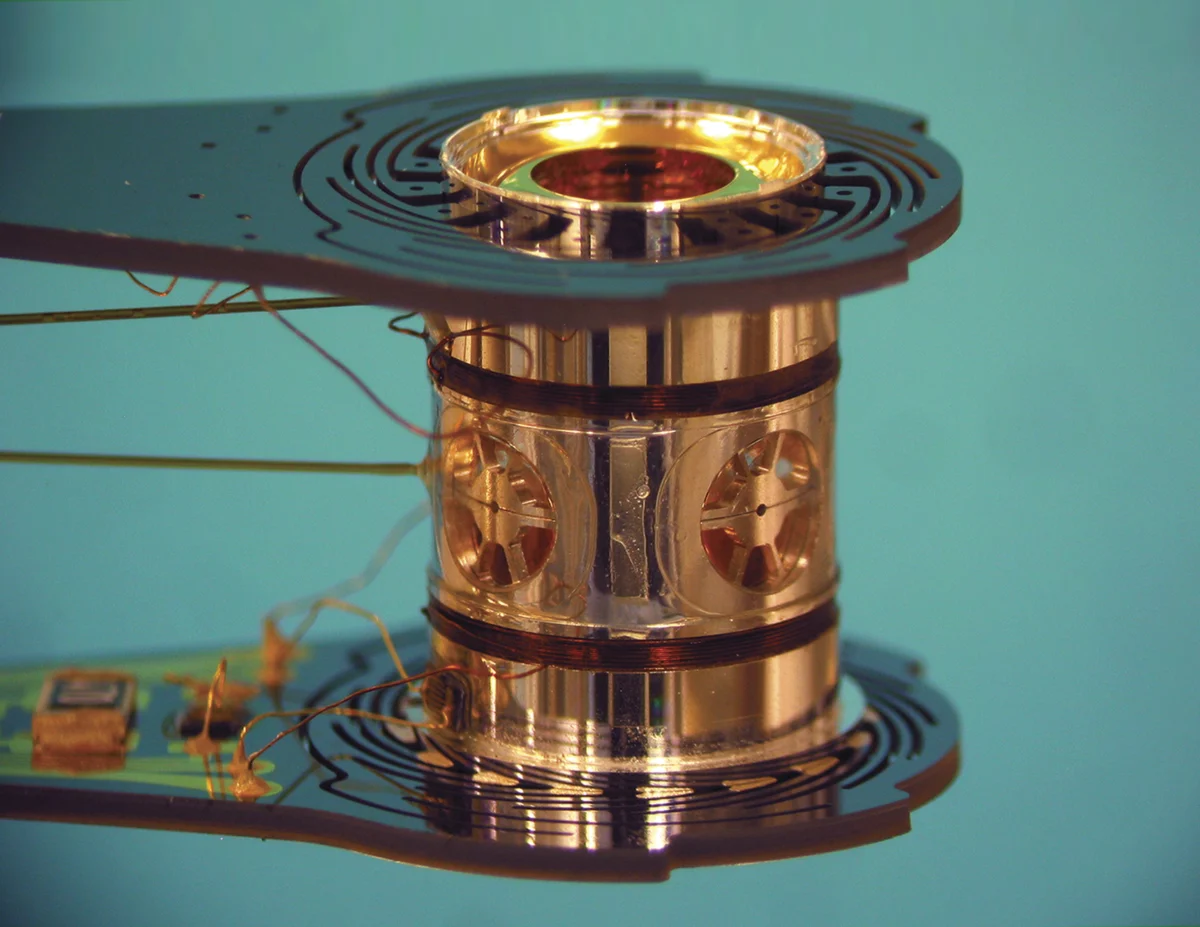
The fusion fuel pellet itself is a marvel of micro-engineering. It consists of a spherical diamond shell, within which lies a thin, cryogenically frozen layer of solid deuterium and tritium. Encased within this solid layer is a gaseous mixture of the same isotopes. The precision required is astounding; even minute imperfections in the spherical geometry of these layers can drastically impede the fusion reaction’s efficiency, preventing it from reaching its full potential. These pellets are then enclosed within gold casings known as hohlraums, which act as converters, transforming intense laser energy into uniform X-rays that compress the fuel pellet, ideally leading to ignition and energy release.
The challenge for Inertia was to streamline this complex, multi-stage manufacturing process—which involves precise crystal growth and layering—without compromising the fundamental physics discovered at NIF. The process at NIF, while scientifically robust, was not designed for speed or cost-effectiveness. The question posed by Lawson, "What happens if you try to do it faster?" was central to Inertia’s R&D efforts. The team had a distinct advantage in the expertise of co-founder and chief scientist Annie Kritcher, who was instrumental in designing the landmark NIF experiment that achieved net energy gain – producing more energy from fusion than was delivered to the fuel.
Through iterative development and leveraging their specialized knowledge, Inertia’s engineers successfully reduced the crystal growth phase, which typically took up to a week at NIF, to approximately 30 minutes. The entire manufacturing process for a single fuel pellet has now been condensed to about two to three hours. Critically, this accelerated process has been designed with scalability in mind, making it amenable to industrial-scale production. This achievement was facilitated by a public-private partnership with the Lawrence Livermore National Laboratory, allowing Inertia to build upon the foundational work of NIF while innovating for commercial viability.
Leveraging Advanced Technology and Strategic Margins
Inertia possesses a crucial advantage over the NIF research facility: its planned commercial reactors will utilize lasers significantly more powerful than those currently employed at NIF – four times more powerful, to be exact. This substantial increase in driver energy provides a vital margin of error. A more powerful laser can compensate for slight imperfections in the fuel pellet’s spherical shape or composition, imperfections that would otherwise disrupt the ignition process in a less energetic system. This strategic decision to "oversize our driver, our laser," as Lawson explained, directly contributed to accelerating the manufacturing process, as the stringent perfection requirements could be slightly relaxed without jeopardizing the fusion reaction. "We actually have a lot of margin," Lawson stated, emphasizing the deliberate strategy to build redundancy and flexibility into their system.
Implications for Tritium Management and Supply Chain
The dramatic reduction in fuel pellet manufacturing time carries significant ripple effects, particularly concerning tritium, one of the hydrogen isotopes essential for fusion. Tritium is a radioactive substance, necessitating stringent handling protocols and costly containment infrastructure. Moreover, it is exceedingly rare and expensive, currently priced at approximately $30,000 per gram. Global stockpiles are critically limited, with only about 25 kilograms available worldwide, according to a report in Science journal.
For a commercial fusion power plant, which Inertia projects will require an astonishing 10 fuel pellets per second, the ability to rapidly produce pellets means a much smaller inventory of tritium needs to be held at any given time. This not only reduces the financial burden associated with acquiring and storing such a precious and hazardous material but also minimizes the regulatory and safety overheads. While Inertia, like many fusion startups, plans to eventually breed its own tritium within its reactors using the neutrons generated by fusion reactions, an initial inventory is still required to kickstart operations. By making the production process faster and more efficient, Inertia significantly de-risks its initial fuel supply chain and operational costs.
"By reducing the latency of this step, you’ve made your facility smaller; you’ve made the whole thing faster, the whole thing more efficient," Lawson summarized, highlighting the cascading benefits of this manufacturing breakthrough across the entire commercial fusion plant design and operation.
Broader Impact and the Road to Commercial Fusion
This advancement by Inertia Enterprises marks a critical juncture in the quest for commercial fusion power. For decades, fusion has been dubbed "the energy of the future," perpetually 30 years away. However, recent scientific breakthroughs at NIF and substantial private investment into fusion startups are increasingly shifting this paradigm. Inertia’s achievement in pellet manufacturing moves fusion from a purely scientific endeavor closer to a practical engineering and industrial challenge.
The ability to rapidly and cost-effectively produce fusion fuel pellets is paramount for any commercial fusion venture aiming for continuous power generation. The NIF’s success in achieving ignition in December 2022, and subsequently exceeding net energy gain multiple times, validated the fundamental physics of inertial confinement fusion. However, translating a single shot experiment into a power plant capable of generating gigawatts of electricity continuously demands an entirely different scale of engineering and manufacturing prowess. Inertia’s breakthrough directly addresses this translational gap, demonstrating that the intricate components of a fusion reactor can indeed be mass-produced.
This development will likely be met with optimism within the broader fusion community and by investors who have poured billions into the sector. It provides tangible evidence that the "10 barriers" to commercialization are not insurmountable, but rather a series of engineering challenges that can be systematically overcome. For the global energy landscape, a viable fusion energy source promises a clean, virtually limitless, and inherently safe power supply, free from the long-lived radioactive waste associated with nuclear fission and the carbon emissions of fossil fuels.
While many hurdles remain – including sustained high-frequency ignition, efficient energy extraction, and reactor durability – Inertia’s success in fuel pellet production is a powerful indicator of progress. It underscores the importance of interdisciplinary innovation, combining fundamental physics with advanced industrial engineering and manufacturing techniques. As fusion startups race to deliver the first commercial power plants, advancements like these are not just technical achievements; they are crucial steps toward a future powered by the stars themselves, offering a beacon of hope for addressing climate change and meeting the world’s escalating energy demands. The journey from prototype to power plant is long, but Inertia’s latest announcement confirms that the pace of that journey is accelerating.
About the Author