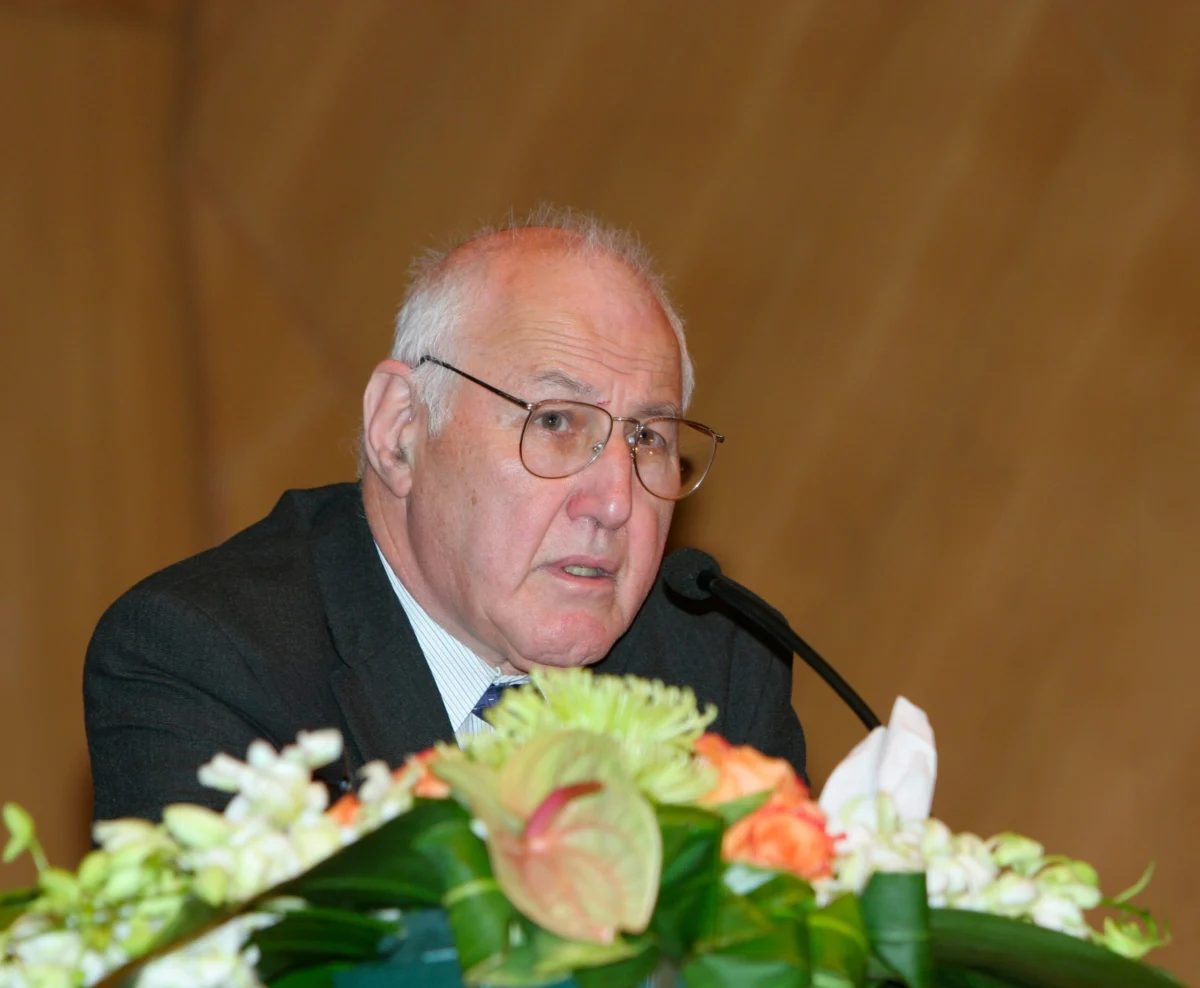
The International Chamber of Commerce (ICC) and the broader global legal community are mourning the loss of Sir Roy Goode, an Emeritus Professor of Law at the University of Oxford and a Fellow of the British Academy, whose work fundamentally reshaped the landscape of international commercial law. Recognized as one of the most influential legal minds of the 20th and 21st centuries, Sir Roy’s contributions spanned decades of academic research, legislative drafting, and the practical standardization of trade finance. His passing marks the end of an era for the ICC, where he served as a guiding force in the development of banking rules and commercial practices that underpin trillions of dollars in global trade.
Sir Roy’s career was defined by a unique ability to bridge the gap between complex legal theory and the pragmatic requirements of international business. As the founding Director of the Centre for Commercial Law Studies at Queen Mary University of London and later the Norton Rose Professor of English Law at Oxford, he mentored generations of practitioners who now lead the world’s top law firms and financial institutions. However, his legacy extends far beyond the lecture hall; it is embedded in the very fabric of the rules that govern cross-border transactions today.
A Career Defined by Intellectual Leadership and Harmonization
Sir Roy Goode’s professional trajectory was characterized by a relentless pursuit of legal clarity and the harmonization of disparate legal systems. Born in 1933, he initially practiced as a solicitor before transitioning to the bar and eventually into academia. This practical background provided him with a keen understanding of the "commercial common sense" that he believed should be the foundation of all mercantile law.
During his tenure with the ICC, Sir Roy served as the Chair of the ICC Global Commercial Law and Practice Commission. In this capacity, he was instrumental in ensuring that the ICC’s private-sector rules remained synchronized with the evolving needs of the digital and globalized economy. He was also a founding member of the ICC Task Force on Guarantees, a body that has been essential in providing security and predictability for large-scale international infrastructure and trade projects.
His work was not limited to the ICC. Sir Roy was a dominant figure in organizations such as UNIDROIT (the International Institute for the Unification of Private Law) and UNCITRAL (the United Nations Commission on International Trade Law). His ability to find common ground between common law and civil law traditions allowed for the creation of international instruments that could be adopted by nations with vastly different legal heritages.
The Architect of Modern Demand Guarantees and URDG 758
One of Sir Roy’s most significant achievements was his stewardship of the ICC’s banking rules, particularly regarding demand guarantees. He was the primary author and co-author of several authoritative texts, most notably the Guide to the Uniform Rules for Demand Guarantees (URDG 758).
The URDG 758 is widely considered the "gold standard" for demand guarantees globally. These instruments are vital for international trade, acting as a security for the performance of a contract. Sir Roy famously described demand guarantees as "abstract payment undertakings," a term that highlights their independence from the underlying contract. This conceptual clarity helped resolve decades of legal disputes regarding when and how a bank must pay out on a guarantee, thereby reducing the risk of litigation and increasing the efficiency of global commerce.
Data from the ICC indicates that the URDG rules are incorporated into hundreds of billions of dollars worth of contracts annually. By providing a clear, balanced framework that protects both the beneficiary and the applicant, Sir Roy’s work provided the stability necessary for the expansion of trade in emerging markets, where legal certainty is often the primary barrier to investment.
Chronology of a Distinguished Legal Career
The timeline of Sir Roy Goode’s life reflects a steady ascent to the pinnacle of the legal profession:
- 1933: Born in London, United Kingdom.
- 1955: Qualified as a solicitor, beginning his career in private practice.
- 1971: Appointed as a Professor of Law at Queen Mary College, University of London, where he founded the Centre for Commercial Law Studies (CCLS) in 1980.
- 1988: Transferred to the Bar, becoming a member of the Inner Temple.
- 1990: Appointed the Norton Rose Professor of English Law at the University of Oxford and became a Fellow of St John’s College.
- 1992: Played a leading role in the development of the ICC Uniform Rules for Demand Guarantees (URDG 458), the predecessor to the current 758 version.
- 2000: Received a knighthood for his services to academic law.
- 2001: Served as the Chairman of the Diplomatic Conference that adopted the Cape Town Convention on International Interests in Mobile Equipment.
- 2010: Oversaw the comprehensive revision of the URDG, resulting in the current URDG 758.
- 2024: Passed away, leaving behind a legacy of scholarship that continues to be the primary reference point for commercial lawyers worldwide.
The Cape Town Convention: A Global Economic Impact
Beyond trade finance, Sir Roy was the principal architect of the Cape Town Convention on International Interests in Mobile Equipment (2001). This international treaty was designed to standardize transactions involving movable property, specifically aircraft, railway rolling stock, and space assets.
The economic implications of this work are staggering. By creating an international registry and clear rules for the repossession of assets in the event of default, the Cape Town Convention significantly reduced the risk for lenders. According to a study by the Aviation Working Group, the implementation of the Cape Town Convention has resulted in billions of dollars in savings for the airline industry through lower borrowing costs. As of 2024, over 80 countries have ratified the convention, a testament to Sir Roy’s vision of a unified global legal framework for high-value mobile assets.
Official Responses and Tributes from the Legal Community
The announcement of Sir Roy’s passing has prompted a wave of tributes from the organizations he served. Tomasch Kubiak, ICC Policy Manager, emphasized Sir Roy’s personal qualities alongside his professional brilliance. "Sir Roy will be remembered not only for his unparalleled expertise but also for his generosity, intellectual rigor, and steadfast commitment to excellence," Kubiak stated. "His legacy will continue to shape ICC’s work and the global trade finance community for years to come."
Georges Affaki, Chair of the ICC Banking Commission Legal Committee, who collaborated with Sir Roy for over 35 years, described him as a "towering legal mind." Affaki noted Sir Roy’s unique talent for "making all legal traditions speak the same language of commercial common sense." This sentiment is shared by many in the international community who viewed Sir Roy as the ultimate "diplomat of law," capable of navigating the sensitivities of different national jurisdictions to achieve a greater global good.
Colleagues at the University of Oxford and the British Academy have also noted his profound influence on legal literature. His seminal textbook, Goode on Commercial Law, remains the definitive work in the field, used by students and practitioners across the Commonwealth and beyond.
Analytical Perspective: The Lasting Implications of His Work
Sir Roy Goode’s impact on the global economy can be analyzed through the lens of transaction cost economics. Before the widespread adoption of the rules he helped draft, international trade was fraught with "legal risk"—the danger that a contract would be interpreted differently in different countries. By codifying international standard practices into the ICC rules and UNIDROIT conventions, Sir Roy effectively lowered the cost of doing business across borders.
His work on the "independence principle" in banking law ensured that financial institutions did not become entangled in the disputes of the parties they served. This separation is what allows the global banking system to function as a neutral intermediary. Without the clarity provided by Sir Roy’s scholarship, the speed of modern international trade would be significantly throttled by legal uncertainty.
Furthermore, his commitment to mentoring ensured that his philosophy of "commercial common sense" survived him. The institutions he built, such as the CCLS at Queen Mary, continue to produce research that addresses contemporary challenges like digital trade and blockchain-based finance, using the foundational principles Sir Roy established.
Conclusion and Deep Condolences
The International Chamber of Commerce has extended its deepest condolences to Sir Roy Goode’s family, friends, and colleagues. While the legal world has lost a visionary jurist, the frameworks he built remain the bedrock of international commerce. From the financing of aircraft to the guarantees that secure global infrastructure, Sir Roy’s intellectual fingerprints are visible everywhere. As the ICC and other international bodies continue to navigate the complexities of the 21st-century economy, they do so on the firm foundation laid by Sir Roy Goode—a man who dedicated his life to ensuring that the law serves as a bridge, rather than a barrier, to global prosperity.
About the Author