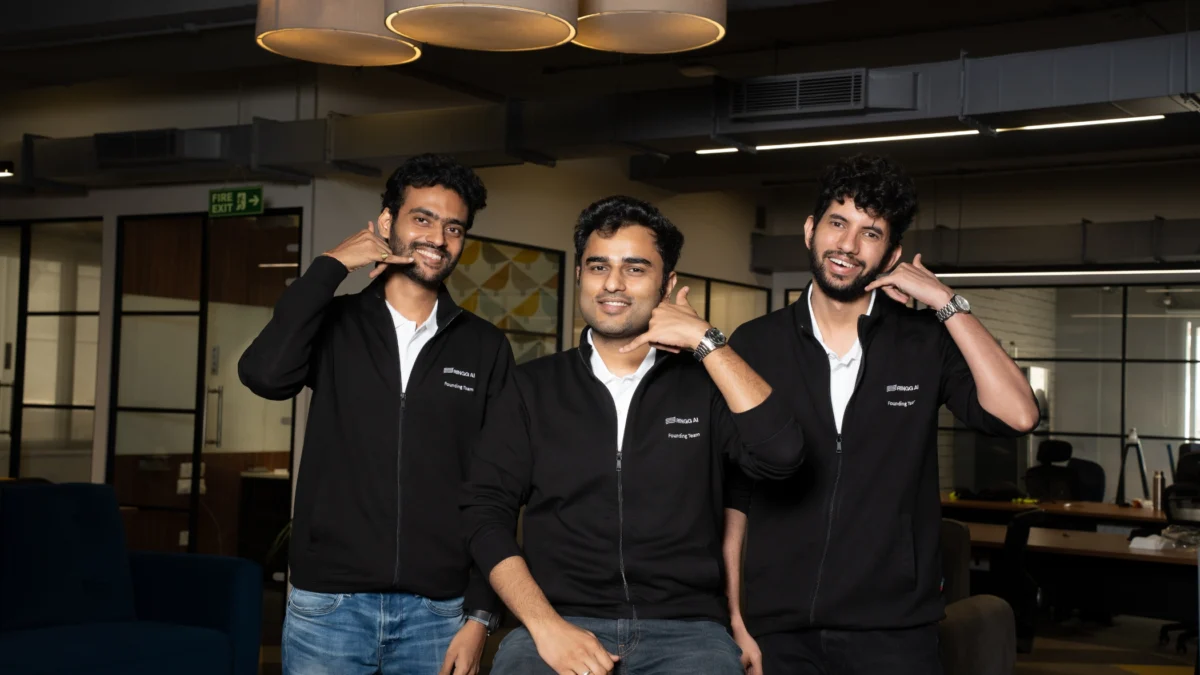
Ringg, a prominent voice AI startup specializing in automating business communication, has announced a significant funding boost, securing an additional $10 million as an extension of its Series A round. This latest investment, led by Peak XV Partners, brings the total Series A funding for Ringg to $15.5 million, following an initial $5.5 million raised earlier this year. The substantial capital infusion underscores investor confidence in Ringg’s strategic positioning within the rapidly expanding Indian market, where consumers overwhelmingly favor voice-based interactions for business communications.
The driving force behind this investment surge is a compelling market insight revealed by a recent Truecaller study. The report highlights that a staggering 76% of consumers in India prefer communicating with businesses via phone calls. This strong preference for voice interaction presents a vast opportunity for businesses to leverage automation, particularly through sophisticated voice AI solutions, to enhance customer support and streamline outreach efforts. Ringg, already processing an impressive 20 million call attempts monthly, is strategically poised to capitalize on this trend, anticipating continued growth in demand for its services.
The Evolution of Ringg: From Text-to-Speech to Enterprise Voice AI
Ringg’s journey began with a focus on text-to-speech technology under the name DesiVocal. However, the founders soon encountered the significant cost and complexity associated with developing proprietary speech models. This realization prompted a strategic pivot, moving "up the stack" to develop comprehensive voice AI agents tailored for enterprise needs. This shift proved prescient, attracting early adoption from notable Indian fintech firm Cred, which became Ringg’s first major client. Since then, the company has expanded its client roster to include other prominent Indian startups such as Flipkart, Practo, Groww, and PolicyBazaar, demonstrating its growing influence across various sectors.
Siddharth Tripathi, co-founder of Ringg, elaborated on this evolutionary phase. "At the start, we were doing high-volume, low-complexity use cases like outbound calling, lead qualification, loan collection, and more," he explained. "We quickly realized these are not sticky use cases, and so it’s always going to be a price game." This insight led Ringg to recalibrate its strategy, aiming for more intricate and higher-value applications.
Expanding Capabilities: Tackling Complex Workflows with Voice AI
While Ringg continues to support simpler, high-volume tasks, its primary focus has shifted towards automating more sophisticated business processes. These advanced use cases include streamlining appointment booking for healthcare clinics, implementing abandoned-cart recovery strategies for e-commerce platforms, and managing critical onboarding and Know Your Customer (KYC) verification processes for fintech applications.
A prime example of Ringg’s impact in the healthcare sector is its deployment with Practo, a leading health tech platform. Ringg’s voice agents now operate across 1,200 clinics, assisting patients with booking appointments and facilitating follow-ups post-visit. This initiative not only enhances patient experience but also optimizes operational efficiency for healthcare providers.
Although voice calls still constitute over 70% of Ringg’s business, the company is actively diversifying its communication channels. It has begun integrating its AI solutions into chat and WhatsApp platforms, and for select clients like Shell, Ringg is automating browser-based support requests. This multi-channel approach reflects a broader understanding of modern customer communication preferences and aims to provide a seamless, integrated experience.
"We are trying to position ourselves as a platform for agents that bring outcomes or get things done rather than voice agents for enterprises," Tripathi articulated, emphasizing Ringg’s commitment to delivering tangible results and value.
Strategic Market Penetration and Global Ambitions
Ringg’s primary customer base is currently concentrated in India, with a growing presence in the Middle East and the United States. However, the startup’s international expansion strategy is nuanced. Instead of directly targeting U.S. companies, Ringg aims to collaborate with Global Capability Centers (GCCs) in India. These offshore hubs are increasingly vital for multinational corporations seeking to outsource back-office operations and customer support functions. By partnering with GCCs, Ringg can offer its automation capabilities as a complement to existing human support structures, thereby enhancing efficiency and scalability for global businesses.
The company’s commitment to technological independence is evident in its internal development of speech recognition and generation models. While owning the entire voice stack, including infrastructure and deployment, remains a long-term aspiration, the current prohibitive costs necessitate an orchestration layer approach. This layer intelligently routes tasks to various models based on specific use-case requirements, ensuring optimal performance and cost-effectiveness.
Investor Perspective: Technical Depth Driving Enterprise Solutions
Rishen Kapoor, a Principal at Peak XV Partners, highlighted the strategic advantage derived from Ringg’s foundational research and development. "Because Ringg started as a research lab building its own models, that technical depth shows up in the complex use cases it’s now tackling," Kapoor stated. "Because of the technical capabilities, they can actually do these hard-won enterprise workflows end to end. They can complete these higher-value tasks like merchant onboarding, like L1 and L2 support, with quality and with consistency." This emphasis on technical prowess is a key differentiator in a competitive market.
Navigating a Crowded Voice AI Landscape in India
The Indian voice AI sector is characterized by intense competition, with numerous players vying for market leadership. Prominent global model makers such as Deepgram, ElevenLabs, and Cartesia are active in the space, alongside strong local contenders like Sarvam and Smallest.ai, which are also attracting significant investment.
Beyond model development, the market includes orchestration-focused startups like Bolna and Blue Machines, operating in a similar layer to Ringg. Furthermore, sector-specific players such as Gnani and Arrowhead concentrate their efforts on niche industries like finance. This multifaceted competitive environment underscores the dynamic nature of the AI landscape.
The overarching trend in this layered ecosystem – encompassing model creators, orchestrators, and application-layer providers – is the increasing value placed on ownership of the customer relationship and the ability to deliver demonstrable outcomes. Companies that can effectively bridge the gap between advanced AI capabilities and tangible business results are best positioned for long-term success and defensibility.
Ringg’s Growth Trajectory and Future Outlook
Ringg currently employs a team of 40 individuals, with over 15 new hires joining in the last three months alone. The company is actively recruiting for forward-deployed engineer roles that require a blend of technical expertise and product management acumen. Additionally, it is investing in researchers focused on optimizing model performance and reducing operational costs.
The recent funding round signifies a strong validation of Ringg’s business model and its potential to disrupt enterprise communication through advanced voice AI. As consumer preferences in India continue to lean towards voice interactions, Ringg’s ability to deliver sophisticated, outcome-driven automation solutions positions it for sustained growth and market leadership in the coming years. The strategic expansion into multi-channel communication and the focus on complex enterprise workflows suggest a company poised to redefine how businesses engage with their customers.
About the Author