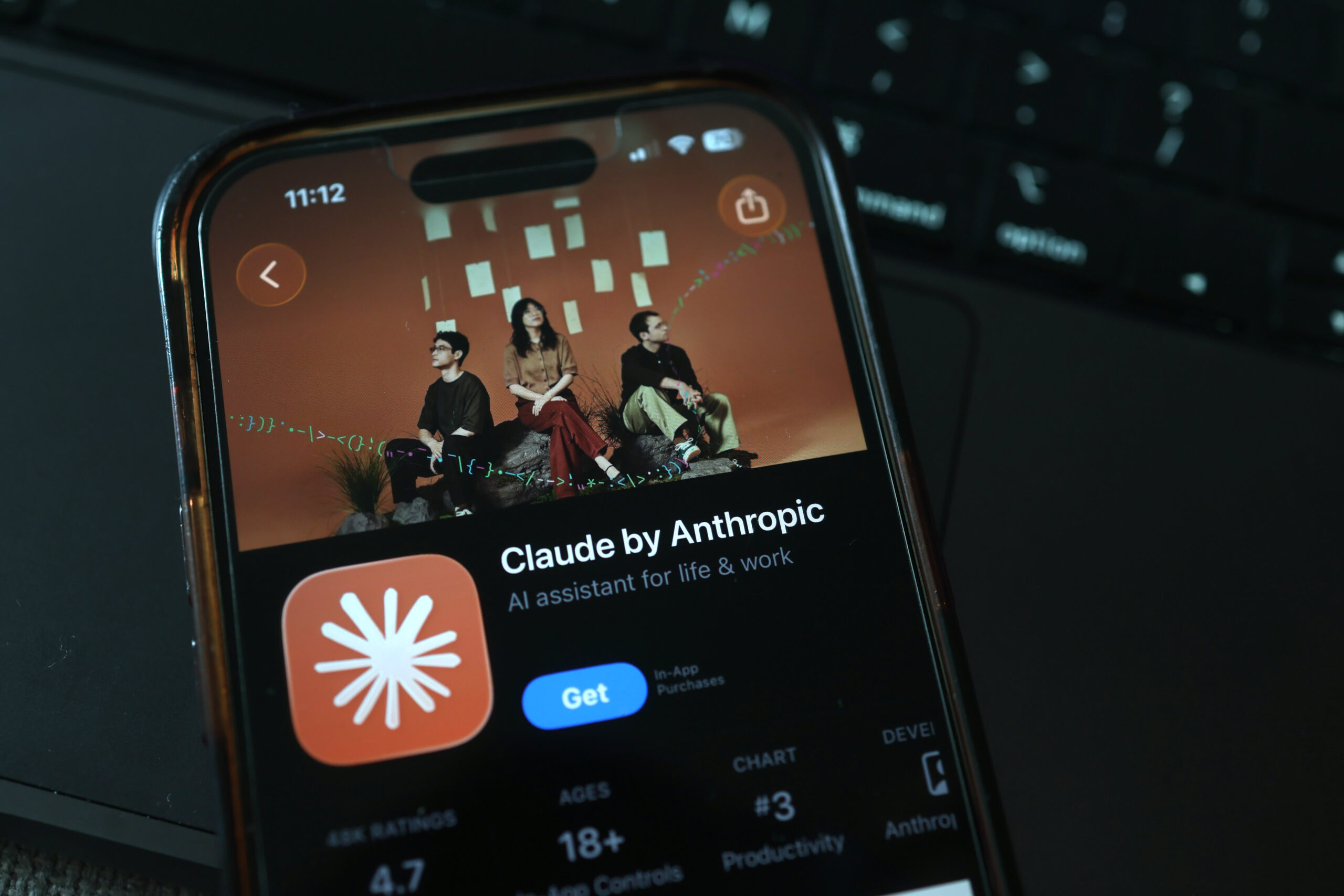
The artificial intelligence assistant app Claude, developed by Anthropic, dramatically ascended to the No. 2 position on Apple’s chart of top U.S. free applications late on Friday, mere hours after the Trump administration initiated a move to bar government agencies from deploying the startup’s advanced technology. This rapid surge in consumer adoption underscores a critical juncture in the burgeoning AI industry, where technological prowess is colliding with deeply entrenched ethical principles and national security imperatives. The unprecedented government action, spearheaded by President Donald Trump and Defense Secretary Pete Hegseth, has ignited a fierce debate about the control, application, and moral boundaries of artificial intelligence, propelling Anthropic into an unexpected spotlight that appears to resonate strongly with the public.
A Volatile Friday: The Catalyst for Conflict
The dramatic events of Friday, February 27, 2026, represent a significant escalation in the ongoing tension between Silicon Valley’s ethical AI developers and the U.S. government’s defense apparatus. The day began with a bombshell report from the Wall Street Journal, detailing the U.S. Department of Defense’s alleged use of Anthropic’s Claude AI, facilitated through its long-standing contract with Palantir Technologies, in operations targeting Venezuela, specifically aimed at the capture of former President Nicolás Maduro. While the specifics of Claude’s involvement in such a sensitive geopolitical maneuver remained partially obscured, the report immediately cast a shadow over Anthropic’s publicly stated commitments against the use of its models for mass domestic surveillance or fully autonomous weapons systems.
Sources close to Anthropic, speaking anonymously due to the sensitive nature of the discussions, indicated that the company had become aware of interpretations and deployments of its technology that potentially diverged from its stringent terms of service and foundational ethical guidelines. This awareness, particularly in the wake of the Venezuela report, reportedly led Anthropic to engage in direct, assertive dialogue with the Department of Defense, seeking clarity and imposing stricter enforcement of its usage policies. It was this firm stance, a direct challenge to the Pentagon’s operational autonomy in deploying critical technologies, that appears to have triggered the administration’s swift and severe response.
President Donald Trump, known for his direct and often confrontational communication style, wasted no time in publicly castigating Anthropic. In a characteristic post on his Truth Social platform, the President lambasted the company, writing, "The Leftwing nut jobs at Anthropic have made a DISASTROUS MISTAKE trying to STRONG-ARM the Department of War, and force them to obey their Terms of Service instead of our Constitution. This is a betrayal of our national security and a disgrace!" The President’s remarks framed the dispute not merely as a contractual disagreement but as a fundamental clash between corporate policy and constitutional authority, injecting a highly charged political dimension into the technological debate.
Following the President’s public rebuke, Secretary of Defense Pete Hegseth formalized the administration’s stance. In a televised address from the Pentagon, Secretary Hegseth announced that he had directed the Department to officially label Anthropic as a "supply-chain risk to national security." This designation is not merely symbolic; it carries profound practical implications. Under this directive, no U.S. defense contractor would be permitted to integrate or draw upon Anthropic’s tools or models in any projects related to national defense, effectively blacklisting one of the leading AI developers from a significant segment of the technology market. "The Department’s mission is sacrosanct," Secretary Hegseth stated, "and we cannot allow the vital technologies that protect our nation to be held hostage by corporate terms of service that undermine our operational capabilities and strategic interests."
Anthropic CEO Dario Amodei responded with a carefully worded statement, acknowledging the Department’s "prerogative to select contractors most aligned with their vision." However, Amodei also underscored the company’s perspective, adding, "But given the substantial value that Anthropic’s technology provides to our armed forces, we hope they reconsider." This measured response highlighted Anthropic’s desire for continued engagement while maintaining its commitment to its core ethical framework.
Anthropic’s Ethos: "Constitutional AI" and Responsible Development
To understand the depth of this conflict, it is crucial to delve into Anthropic’s origins and its unique philosophical approach to AI development. Founded in 2021 by former OpenAI employees, including siblings Dario and Daniela Amodei, Anthropic emerged from a fundamental disagreement over the pace and safety priorities in the burgeoning field of artificial general intelligence (AGI). The founders, many of whom had contributed significantly to early breakthroughs at OpenAI, advocated for a more cautious, safety-first approach, prioritizing the development of AI systems that are demonstrably harmless, helpful, and honest.
This philosophy crystallized into what Anthropic terms "Constitutional AI." Unlike traditional AI alignment methods that rely heavily on human feedback (Reinforcement Learning from Human Feedback, or RLHF), Constitutional AI trains models to adhere to a set of principles or "constitution" derived from various ethical frameworks, including the UN Declaration of Human Rights and Apple’s terms of service. This approach aims to imbue AI systems with an intrinsic understanding of desired behaviors and ethical boundaries, theoretically making them more robust against misuse and less reliant on constant human oversight.
Anthropic’s commitment to these principles has been a cornerstone of its brand identity and a significant draw for investors and enterprise clients alike. The company has attracted substantial funding, including multi-billion-dollar investments from tech giants like Google and Amazon, valuing it in the tens of billions of dollars. Its Claude models have gained significant traction in corporate environments for tasks ranging from sophisticated coding assistance to advanced data analysis and content generation, often praised for their coherence and reduced propensity for "hallucinations" compared to some competitors. The company’s refusal to allow its models for mass domestic surveillance or fully autonomous weapons systems is not merely a marketing slogan but a core tenet of its operational policy, rooted in its founding mission to develop beneficial AI responsibly.
The App Store Phenomenon: Public Curiosity and Celebrity Influence
The immediate aftermath of the government’s blacklisting saw an extraordinary response from the public, particularly manifesting in the dramatic ascent of the Claude AI app on Apple’s App Store. According to data from analytics firm Sensor Tower, Claude’s journey to the No. 2 spot on Friday was a culmination of weeks of steady, albeit less dramatic, growth. On January 30, the app was ranked No. 131 in the U.S. Throughout much of February, it fluctuated between the top 20 and top 50, indicating a growing user base. However, the Friday controversy provided an unprecedented acceleration, pushing it past established competitors like Google’s Gemini, which sat at No. 3 on Saturday. OpenAI’s ChatGPT, the dominant player in the conversational AI space with over 900 million weekly users, maintained its No. 1 position, largely unshaken by the day’s events.

Industry analysts suggest that the surge in Claude’s downloads is a multifaceted phenomenon. Part of it can be attributed to sheer public curiosity, driven by the sensational headlines and the high-profile nature of the government’s intervention. Users, intrigued by an AI system deemed controversial enough to be blacklisted by the Pentagon, likely sought to experience its capabilities firsthand. Furthermore, the narrative of a tech company standing firm on ethical principles against governmental pressure may have resonated with a segment of the public, fostering a sense of solidarity or even defiance.
Adding a unique dimension to the consumer response was the subtle but impactful endorsement from pop superstar Katy Perry. Hours after the government’s announcement, Perry posted a screenshot of Anthropic’s Pro subscription for consumers on her social media, overlaid with a simple heart emoji. While not an explicit statement, the implicit support from a celebrity with hundreds of millions of followers undoubtedly amplified Claude’s visibility and desirability, particularly among a demographic less directly engaged with the intricacies of AI policy but highly responsive to cultural cues. This "Katy Perry effect" underscores the increasingly blurred lines between technology, politics, and popular culture in the digital age.
Broader Implications: A Precedent for the AI Industry and National Security
The standoff between Anthropic and the Trump administration carries profound implications, not just for the companies involved but for the entire artificial intelligence industry, national security policy, and the global debate on ethical AI.
For Anthropic: The immediate impact is a severe blow to its prospects in the lucrative government contracting space. While the company has diversified its revenue streams significantly, defense contracts represent substantial, long-term partnerships that often validate a technology’s robustness and security. However, the public nature of this conflict could also paradoxically strengthen Anthropic’s brand as a leader in ethical AI, attracting enterprises and developers who prioritize responsible development. This could lead to a "halo effect" in other markets, potentially offsetting the loss of government revenue.
For the Department of Defense and National Security: The incident highlights the growing dependence of modern defense strategies on cutting-edge AI, as well as the inherent challenges in integrating such technology. The blacklisting of a major AI provider creates a potential gap in the Pentagon’s technological arsenal, forcing a re-evaluation of its AI procurement strategy. It may push the DoD to invest more heavily in developing proprietary AI capabilities in-house or to rely on providers with fewer ethical constraints on use cases, which could itself raise long-term concerns about accountability and global norms for military AI. The quick pivot to OpenAI, with CEO Sam Altman announcing an agreement with the U.S. Defense Department hours after Anthropic’s blacklisting, suggests a strategic maneuver to fill any perceived void and solidify OpenAI’s position as a preferred government vendor, potentially signaling a divergence in ethical frameworks within the industry.
For the AI Industry at Large: This event sets a powerful precedent regarding the enforcement of ethical boundaries by AI developers. It brings to the forefront the question of who ultimately controls the application of powerful AI technologies: the creators, the users, or a combination mediated by policy and regulation? The controversy will likely intensify calls for clearer industry-wide standards, international treaties on AI use in warfare, and more robust mechanisms for accountability. It could also spur further differentiation in the market, with "ethical AI" emerging as an even more distinct and sought-after category, potentially influencing investment flows and talent acquisition.
The Ethical AI Landscape: A Defining Moment
The Anthropic-Pentagon clash is more than just a corporate dispute; it is a defining moment in the ongoing global conversation about the ethical development and deployment of artificial intelligence. Organizations like the Future of Life Institute, the Campaign to Stop Killer Robots, and numerous academic institutions have long warned about the dangers of autonomous weapons and unchecked surveillance, advocating for robust governance frameworks. This incident brings these abstract debates into stark, practical relief, demonstrating that the theoretical "red lines" for AI ethics are now being tested in real-world applications with significant geopolitical stakes.
The concept of "responsible AI" — encompassing principles like fairness, transparency, accountability, and safety — has been gaining momentum across governments and corporations. However, the interpretation and enforcement of these principles remain highly contested, particularly when they intersect with national security interests. Anthropic’s principled stand, even at significant commercial risk, could embolden other AI developers to prioritize ethical considerations, potentially shaping the trajectory of AI development towards more human-centric and less exploitative applications. Conversely, it could also lead governments to view such ethical stances as impediments to national security, prompting efforts to bypass or regulate against them.
Looking Ahead: An Unpredictable Future
The path forward for Anthropic, the U.S. government, and the broader AI ecosystem remains uncertain. It is plausible that Anthropic could pursue legal challenges against the "supply-chain risk" designation, arguing it is arbitrary or retaliatory. The government, for its part, may face pressure from civil liberties groups and tech ethics advocates to clarify its AI procurement policies and ensure alignment with responsible AI principles.
Ultimately, this standoff serves as a potent reminder that as AI becomes increasingly integrated into the fabric of society and governance, the ethical frameworks guiding its development and deployment will be continually tested and redefined. The dramatic rise of Claude on the app store, juxtaposed against its blacklisting by the Pentagon, encapsulates the complex, often contradictory forces shaping the future of artificial intelligence: immense technological potential, profound ethical dilemmas, intense market competition, and an unpredictable public response. The resolution of this particular conflict will undoubtedly set a precedent for how these powerful technologies are governed, developed, and ultimately used in the years to come.
About the Author