
The initial months of the second Trump administration have been characterized by a widening chasm between executive policy objectives and the operational realities of the American economy. While the administration campaigned on a platform of deregulation, energy independence, and protectionist trade measures designed to lower costs for the average citizen, the early data from 2025 and 2026 suggests a different trajectory. Instead of the promised relief, U.S. households have been met with a 12 percent average increase in electricity prices, while the corporate sector has begun a systematic migration toward the judicial system to challenge executive orders that many CEOs argue are stifling growth and inflating consumer prices.
The friction is most visible in three specific arenas: the energy sector, where the push for fossil fuels has collided with the economic efficiency of renewables; international trade, where "reciprocal" tariffs are being challenged as unconstitutional; and the labor market, where aggressive immigration enforcement has triggered both grassroots boycotts and internal corporate dissent. As these pressures mount, the administration finds itself increasingly at odds not only with traditional political opponents but with its own voting base and the institutional leaders of the American economy.
The Energy Paradox: Rising Costs and Shifting Voter Sentiment
During the 2024 campaign, Donald Trump frequently asserted that a pivot away from renewable energy subsidies in favor of expanded fossil fuel production would reduce household power bills by 50 percent within a single year. However, by early 2026, the economic reality has proven more complex. According to data tracked by industry analysts, electricity prices rose significantly throughout 2025. A report from the National Energy Assistance Directors Association (NEADA) indicates that most U.S. households are expected to spend over $1,200 on home heating this winter, a figure that represents a historical high for many regions.
The administration’s efforts to revitalize coal and gas at the expense of wind and solar appear to ignore a decade of technological advancement. In 2015, critics of renewable energy could argue that solar and wind were dependent on heavy government subsidies to remain competitive. By 2026, that argument has largely been rendered obsolete by the falling levelized cost of energy (LCOE) for solar and onshore wind. Today, utility-scale solar is widely recognized as the fastest and most economical method for adding capacity to the national grid.
This economic shift has fundamentally altered the political landscape. A recent poll conducted by the research firm Fabrizio, Lee & Associates on behalf of First Solar reveals a surprising trend: Trump’s own supporters are increasingly supportive of renewable energy. The survey of 800 Trump voters found that 65 percent agree the U.S. needs all forms of electricity generation, including utility-scale solar, to lower costs. Furthermore, 79 percent of those polled stated that political factors should not favor one energy resource over another.
The polling suggests a significant political risk for the administration and its allies ahead of the 2026 midterm elections. A majority of Republican voters indicated they are more likely to support congressional candidates who advocate for an "all-of-the-above" energy agenda. Support for solar energy specifically jumps to 70 percent when the panels are manufactured in the United States, highlighting a preference for domestic industrial policy over a pure fossil fuel mandate.
Judicial Reversals in Offshore Wind
The administration’s hostility toward renewables reached a flashpoint in December 2025, when the federal government issued stop-work orders on five major offshore wind farms currently under construction. The administration cited "national security risks" as the primary justification for the halt, though it provided minimal evidence to support these claims. The impact was immediate, costing project developers millions of dollars in daily losses and threatening thousands of clean-energy jobs.
The corporate response was swift and litigious. Developers, including the utility giant Dominion Energy, filed separate lawsuits to challenge the legality of the stop-work orders. In January 2026, federal judges began ruling in favor of the energy companies, allowing work to resume. Among the revived projects is the 2.6-gigawatt Coastal Virginia Offshore Wind project, which remains on track for a March 2026 completion.
Legal analysts and industry experts, such as Signe Sorensen of Aegir Insights, have characterized the administration’s actions as "politically motivated campaigns" lacking a rational or legal basis. For states along the East Coast, the stakes are high; Massachusetts and Virginia are relying on offshore wind capacity to meet the surging electricity demands of data centers, which are critical to the burgeoning artificial intelligence sector. By attempting to stall these projects, the federal government has inadvertently positioned itself as an obstacle to both energy stability and technological infrastructure growth.
The Tariff Battle: Costco and the Small Business Coalition
Trade policy has emerged as another major theater of conflict. In late 2025, the retail giant Costco took the unprecedented step of suing the federal government in the Court of International Trade. The lawsuit seeks a full refund of tariffs paid under executive orders issued by President Trump, alleging that the president lacks the constitutional authority to unilaterally set tariff rates without congressional approval.

Costco is not alone in this legal challenge. The company has joined a coalition of approximately 1,000 firms—the majority of which are small to mid-sized businesses—seeking relief from the "reciprocal" tariff regime. Costco’s leadership has been vocal about the impact of these trade barriers, noting that the company has had to absorb the cost of tariffs on food staples to avoid passing the burden onto its members.
The defiance of Costco is particularly notable given its high brand loyalty across the political spectrum. With a membership renewal rate exceeding 90 percent, the company has maintained a "bipartisan reputation" that allows it to resist political pressure. This was further evidenced when Costco shareholders overwhelmingly rejected an anti-DEI (Diversity, Equity, and Inclusion) proposal in early 2025, with more than 98 percent of investors voting to maintain the company’s current social and governance policies.
Chronology of the Corporate and Public Pushback (2024-2026)
To understand the current state of unrest, it is necessary to examine the timeline of policy implementation and the subsequent reactions:
- November 2024: Donald Trump wins the presidency, promising a 50 percent reduction in energy costs and the implementation of aggressive "reciprocal" tariffs.
- January 2025: Upon inauguration, executive orders are signed to reduce renewable energy subsidies and initiate new tariff protocols.
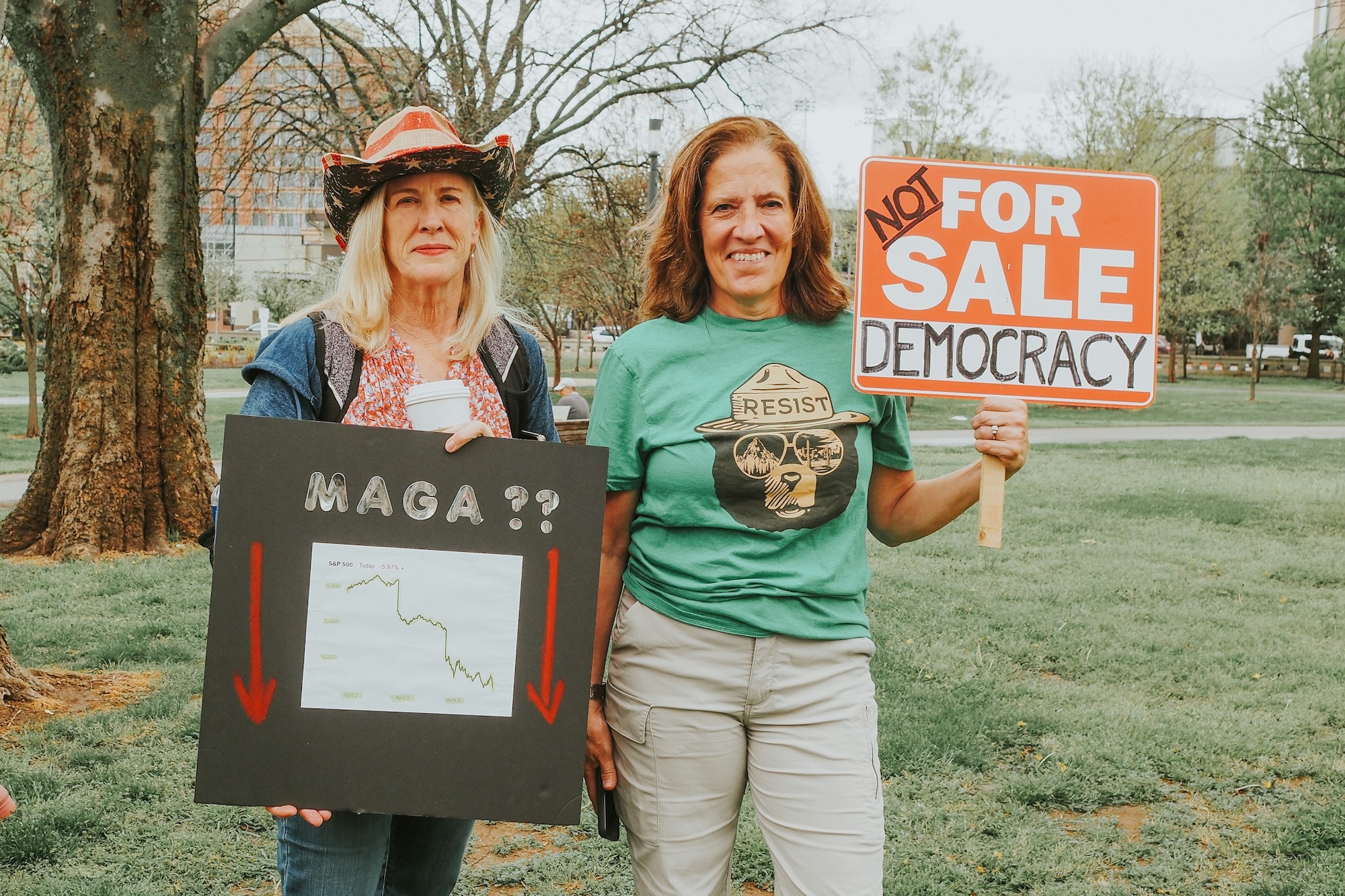
- April 2025: Large-scale public demonstrations occur in major cities, protesting the economic impact of the administration’s trade and energy policies.
- August 2025: Internal data from utilities confirms a 12 percent rise in household electricity costs, contradicting campaign promises.
- December 2025: The federal government halts five offshore wind projects. Costco and 1,000 other firms file suit against the administration’s tariff policies.
- January 2026: Federal courts rule against the administration in multiple offshore wind cases, allowing construction to resume.
- February 2026: The "Resist and Unsubscribe" movement gains national traction, targeting companies perceived as complicit in the administration’s immigration and social policies.
Immigration Enforcement and the "Resist and Unsubscribe" Movement
While energy and trade dominate the economic headlines, the administration’s immigration policies have sparked a different form of resistance: the grassroots consumer boycott. High-profile enforcement actions, including raids in cities like Minneapolis, have led to a climate of fear that critics say is damaging the social fabric of American communities.
In response, business commentator and NYU professor Scott Galloway launched the "Resist and Unsubscribe" campaign. The movement encourages consumers to sever ties with "Big Tech" firms and other corporations that provide the infrastructure for federal immigration enforcement or that have failed to use their influence to temper administration policies. The campaign advocates for "market-moving" actions, such as shifting from Uber to mass transit, shopping locally instead of using Amazon, and canceling subscriptions to platforms like Netflix and Apple TV.
The tech sector is also facing internal pressure. At Google, more than 800 employees and contractors recently signed a petition demanding the cancellation of contracts with federal immigration authorities. The petition points to past instances where tech leaders successfully lobbied the White House to prevent the deployment of the National Guard to San Francisco, arguing that CEOs have a moral and business obligation to intervene once again.
Broader Implications: The Loss of the Middle Ground
The current landscape suggests that the "middle ground" for American corporations is rapidly disappearing. For decades, the standard corporate strategy was to remain politically neutral to avoid alienating any segment of the customer base. However, the polarizing nature of the second Trump administration’s policies—ranging from the construction of large-scale detention centers to the disruption of established global supply chains—has made neutrality increasingly difficult.
Companies like Tesla and Target have already felt the sting of consumer volatility. Tesla’s sales have continued to slide as CEO Elon Musk’s vocal political alignment has alienated traditional electric vehicle buyers. Target, meanwhile, has faced boycotts from both the left and the right after oscillating on its support for LGBTQ+ advocacy and DEI programs.
The broader implication for the U.S. economy is a potential period of prolonged instability. As the administration continues to use executive orders to bypass traditional legislative processes, the reliance on the court system to provide "checks and balances" will only grow. For investors, the primary concern remains whether the administration’s focus on 19th-century energy sources and protectionist trade will ultimately erode the competitive advantages of the 21st-century American economy.
As the 2026 midterm elections approach, the administration faces a critical juncture. The data suggests that even within its own coalition, there is a growing demand for a more pragmatic approach to energy and a more constitutional approach to trade. Whether the White House will pivot in response to these market and judicial pressures, or continue its current course of executive-led disruption, remains the central question for the remainder of the term.
About the Author