Jeremy Siegel, the renowned professor emeritus of finance at the Wharton School and senior economist at Wisdom Tree, recently offered a comprehensive analysis of several critical factors shaping the current global economic landscape. His insights spanned the intricate implications of Supreme Court rulings on tariffs, the surprising resilience of financial markets amidst persistent policy uncertainty, the potential ramifications of a figure like Kevin Warsh assuming the Federal Reserve chairmanship, and the palpable influence of escalating geopolitical tensions with Iran on global interest rates and economic growth trajectories. These disparate yet interconnected elements form a complex tapestry that investors, policymakers, and the public must understand to navigate the evolving economic environment.
The Supreme Court’s Influence on Trade Policy and Tariffs
The Supreme Court, as the ultimate arbiter of constitutional law, periodically issues rulings that can significantly alter the landscape of U.S. economic policy, including the application and enforcement of tariffs. Tariffs, essentially taxes on imported goods or services, have long been a contentious tool in international trade, employed by nations to protect domestic industries, generate revenue, or exert political leverage. Historically, the power to impose tariffs primarily rests with Congress, as outlined in Article I, Section 8 of the U.S. Constitution, which grants Congress the power "to regulate Commerce with foreign Nations." However, subsequent legislation, such as the Trade Act of 1974 (specifically Section 301) and Section 232 of the Trade Expansion Act of 1962, has delegated substantial authority to the President to impose tariffs under certain conditions, such as unfair trade practices or national security concerns.
A Supreme Court ruling pertaining to tariffs could address a variety of issues, such as the scope of presidential authority in imposing or modifying tariffs, the legality of specific tariff measures, or the procedural requirements for their implementation. For instance, a decision that either affirms or curtails presidential power in this domain would have profound implications. If the Court were to broadly uphold presidential discretion, it could embolden future administrations to use tariffs more aggressively as a tool of foreign policy and industrial protection. Conversely, a ruling that limits presidential authority could force a greater reliance on Congressional action, potentially leading to more predictable but also more cumbersome trade policy adjustments. The chronology of such legal challenges often begins with a presidential action imposing tariffs, followed by legal challenges from affected industries or countries, working their way through lower courts before potentially reaching the Supreme Court.
Professor Siegel’s analysis likely delves into how such a ruling would affect global supply chains, which have already been strained by recent geopolitical events and the COVID-19 pandemic. Businesses often make long-term investment decisions based on the stability and predictability of trade policy. A shift in the legal framework surrounding tariffs could compel companies to re-evaluate their sourcing strategies, potentially leading to reshoring or nearshoring efforts to mitigate risks associated with uncertain trade barriers. This could, in turn, influence domestic manufacturing capacity and employment. For example, after the U.S. imposed tariffs on steel and aluminum imports in 2018 under Section 232, domestic producers initially saw some benefits, but downstream industries faced higher input costs, leading to calls for exemptions and a complex web of economic adjustments.
From a macroeconomic perspective, tariffs can lead to higher import costs, which are often passed on to consumers in the form of increased prices, contributing to inflation. For example, the tariffs imposed on various goods during the U.S.-China trade dispute in 2018-2019 led to significant cost increases for American businesses and consumers, with studies by organizations like the National Bureau of Economic Research estimating billions of dollars in economic losses. A Supreme Court decision that either validates or invalidates certain tariff regimes could therefore directly impact inflationary pressures and consumer purchasing power. Furthermore, such rulings can affect international trade relations, potentially prompting retaliatory tariffs from other nations, leading to trade wars that disrupt global commerce and economic growth. Siegel’s insights would critically assess the balance between the intended protective effects of tariffs and their often-unintended consequences on economic stability and international cooperation. Official responses from trade partners would likely hinge on the ruling’s impact on their access to the U.S. market, potentially triggering diplomatic negotiations or further trade disputes.
Market Resilience Amidst Policy Uncertainty
Despite a period characterized by significant policy shifts and geopolitical turbulence, financial markets have often demonstrated a remarkable degree of resilience. This phenomenon puzzles many, as conventional economic theory suggests that uncertainty typically dampens investor confidence, leading to market volatility and capital flight. Policy uncertainty can stem from various sources: changes in fiscal policy (e.g., tax reforms, government spending priorities), monetary policy (e.g., interest rate hikes, quantitative tightening), regulatory shifts, and geopolitical developments.
Considerable policy uncertainty has been a recurring theme over the past decade. For instance, the fluctuating trade policies under different administrations (e.g., the U.S.-China trade war from 2018-2020), the unpredictable nature of global health crises like the pandemic and the subsequent unprecedented fiscal and monetary responses (e.g., the CARES Act in 2020, Fed’s zero-interest rate policy), and ongoing debates over national debt and entitlement programs have all contributed to an environment of elevated uncertainty. Yet, major stock indices like the S&P 500 have often reached new highs, and corporate earnings have, in many sectors, remained robust. For example, despite a period of intense trade tensions between the U.S. and China from 2018-2020, the S&P 500 continued its bull run, gaining approximately 28% in 2019. Similarly, following the initial shock of the COVID-19 pandemic in early 2020, markets recovered rapidly, supported by massive fiscal stimulus and accommodative monetary policy, with the S&P 500 recovering all its losses by August 2020 and reaching new all-time highs. U.S. GDP growth, while experiencing fluctuations, has generally shown strength, alongside historically low unemployment rates, often below 4% in recent years.
Professor Siegel’s analysis likely highlights several factors contributing to this market resilience. One key element could be the adaptability of corporations. Many multinational companies have become adept at navigating complex regulatory environments and supply chain disruptions, often by diversifying their production bases or adjusting their market strategies. Another factor could be the strong underlying fundamentals of the U.S. economy, characterized by low unemployment rates (e.g., hovering around 3.5-4.0% in recent years, historically low), robust consumer spending, and technological innovation. The consistent growth in sectors like technology and healthcare has provided a strong impetus to overall market performance.
Furthermore, investors may have developed a higher tolerance for uncertainty, perhaps viewing certain policy pronouncements as temporary noise rather than fundamental threats to long-term growth. The "buy the dip" mentality has also been prevalent, where investors quickly step in to purchase assets after market corrections, anticipating a rebound. This behavior is often fueled by the expectation of central bank intervention during periods of significant stress, a pattern observed during the 2008 financial crisis and the 2020 pandemic. The Federal Reserve’s swift and decisive actions to inject liquidity and lower interest rates during crises have arguably created a "Fed put" perception, where investors believe the central bank will always step in to prevent a catastrophic market collapse. Investor sentiment, as measured by surveys like the University of Michigan Consumer Sentiment Index, often shows short-term dips during periods of uncertainty but tends to rebound, reflecting underlying optimism.
However, Siegel would also likely caution that this resilience is not boundless. Sustained, severe policy missteps or an accumulation of multiple negative shocks could eventually overwhelm the market’s ability to absorb uncertainty. Factors such as persistent inflation well above target, a significant economic downturn (e.g., a protracted recession), or a major geopolitical conflict could test this resilience to its limits, potentially leading to more prolonged and deeper market corrections. Understanding the nuances of what drives this resilience is crucial for assessing future market vulnerabilities.
The Potential Impact of Kevin Warsh as Fed Chair
The selection of the Federal Reserve Chair is one of the most consequential economic decisions made by a U.S. President, as this individual steers the monetary policy of the world’s largest economy. The Fed Chair’s decisions on interest rates, quantitative easing, and financial regulation directly impact everything from mortgage rates and corporate borrowing costs to inflation and employment levels. The dual mandate of the Federal Reserve is to achieve maximum employment and stable prices, a delicate balancing act that requires astute judgment and a deep understanding of complex economic dynamics.
Kevin Warsh, a former member of the Federal Reserve Board of Governors from 2006 to 2011, has been a prominent figure in discussions surrounding potential Fed leadership, particularly during the search for a new chair in 2017. During his tenure at the Fed, Warsh was known for his hawkish leanings, often expressing concerns about inflation and the need for fiscal discipline. He played a significant role during the 2008 financial crisis, contributing to the Fed’s emergency responses, but also advocated for a timely exit from unconventional monetary policies. His post-Fed career has seen him continue to comment on monetary policy, often urging the Fed to normalize rates and reduce its balance sheet more aggressively. For instance, he publicly criticized the Fed’s prolonged period of low interest rates and large balance sheet expansion in various op-eds and interviews.
If a figure like Kevin Warsh were to be appointed Fed Chair, Professor Siegel’s analysis would likely focus on the potential shift in monetary policy direction. Warsh’s known inclinations suggest a more hawkish stance compared to some of his predecessors or contemporaries. This could translate into a greater emphasis on inflation control, potentially leading to a faster pace of interest rate hikes or a more aggressive reduction of the Fed’s balance sheet (quantitative tightening). Such a shift would have immediate repercussions across financial markets. The bond market, in particular, would likely react to expectations of higher interest rates, leading to increased yields on government bonds (e.g., the 10-year Treasury yield could rise). Equity markets might face headwinds as higher borrowing costs could dampen corporate profits and make bonds a more attractive alternative to stocks.
Moreover, a Warsh chairmanship could signal a renewed focus on regulatory reform, potentially favoring deregulation to stimulate economic activity, although this is more typically the purview of the Vice Chair for Supervision. His views on the appropriate size and role of the Fed’s balance sheet could also lead to significant changes in how the central bank manages its assets and liabilities, impacting market liquidity. The timeline for such policy shifts would typically begin with the Chair’s initial statements and actions, followed by market adjustments as investors reprice assets based on new expectations.
Inferred reactions from related parties would vary significantly. "Hawks" within the economics community and some market participants who prioritize inflation control might welcome such an appointment, viewing it as a necessary step to prevent overheating. Conversely, "doves" and those concerned about economic growth or potential recession risks might express apprehension, fearing that an overly aggressive tightening cycle could stifle recovery or trigger a downturn. Businesses heavily reliant on low-cost financing, such as real estate developers or highly leveraged corporations, could face increased financial strain. Siegel’s insights would provide a nuanced perspective on how these potential policy shifts could ripple through the economy, affecting employment, investment, and the overall trajectory of economic growth.
Geopolitical Tensions with Iran: Impact on Interest Rates and Economic Growth
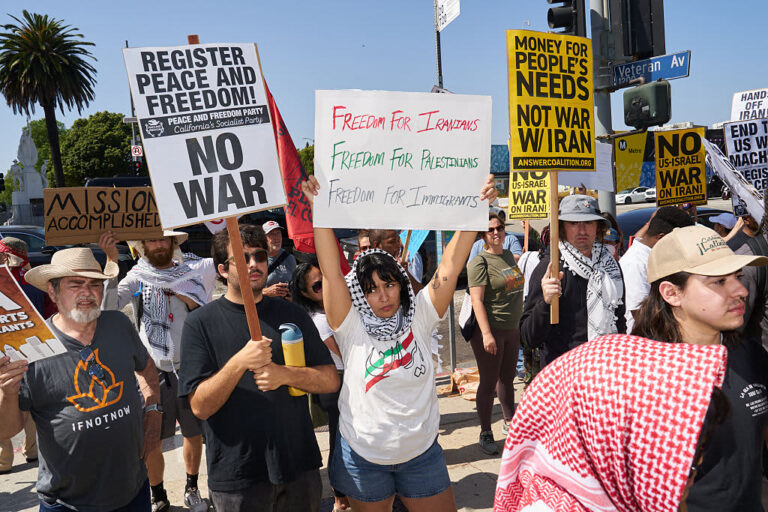
Geopolitical tensions, particularly in critical regions like the Middle East, invariably cast long shadows over the global economy. Iran, a major oil producer and a strategically vital nation in the Persian Gulf, frequently finds itself at the epicenter of such tensions. Conflicts or instability involving Iran have a direct and often immediate impact on global energy markets, which then ripple through the broader economy, influencing inflation, interest rates, and economic growth.
Iran possesses the world’s fourth-largest proven crude oil reserves and the second-largest natural gas reserves. Its ability to export oil, or disruptions to the flow of oil from the Persian Gulf (through which approximately 20% of the world’s petroleum liquids pass daily via the Strait of Hormuz), can significantly affect global oil supply and prices. Historical examples abound: the 1973 oil crisis, the 1979 Iranian Revolution, and the various Gulf conflicts all led to substantial spikes in crude oil prices, demonstrating the region’s outsized influence. More recently, renewed sanctions on Iran’s oil exports or attacks on shipping in the Strait of Hormuz have caused temporary price increases and market jitters. For instance, the attack on Saudi Aramco facilities in 2019, while not directly involving Iran’s oil production, demonstrated the vulnerability of the region’s oil infrastructure and caused an immediate, albeit temporary, surge in oil prices.
Professor Siegel’s analysis would meticulously trace the causal chain from geopolitical tension to economic outcomes. When tensions escalate, such as through nuclear program disputes, regional proxy conflicts, or attacks on oil infrastructure, the risk premium on oil rises. This anticipation of supply disruption drives up crude oil prices globally. For example, a barrel of Brent crude, which might normally trade around $70-80, could jump significantly, potentially exceeding $100 or even higher during periods of acute crisis.
Higher oil prices act as a direct inflationary force. They increase the cost of transportation, manufacturing, and nearly all goods and services that rely on energy inputs. This "cost-push" inflation erodes consumer purchasing power and increases business operating expenses. This inflationary pressure is often reflected in the Consumer Price Index (CPI) and Producer Price Index (PPI) data. Central banks, including the Federal Reserve, are then faced with a difficult dilemma: allow inflation to persist, risking economic instability, or raise interest rates to curb demand and bring inflation back to target. In most scenarios, central banks opt for the latter, tightening monetary policy to combat inflationary pressures. The timeline for this impact usually sees oil price spikes immediately reflected in energy component inflation, followed by broader inflationary pressures and then central bank policy responses, typically within a few quarters.
The decision to raise interest rates, while necessary to maintain price stability, has its own set of economic consequences. Higher interest rates increase the cost of borrowing for consumers (e.g., mortgages, car loans, credit cards) and businesses (e.g., investment capital, operational loans). This dampens consumer spending and business investment, which are crucial drivers of economic growth. If the rate hikes are aggressive enough or if the economy is already fragile, they can slow economic expansion or even trigger a recession. This creates a challenging "stagflationary" environment – a combination of stagnant economic growth and high inflation – which is particularly difficult for policymakers to manage.
Siegel’s insights would likely emphasize the dual impact of these tensions: direct inflationary pressure from energy prices and the subsequent tightening of monetary policy that slows growth. He would probably highlight the interconnectedness of these global events, demonstrating how a conflict thousands of miles away can directly influence the financial well-being of households and businesses in the United States and worldwide. The risk for investors includes not only market volatility but also the potential for reduced corporate earnings as input costs rise and consumer demand wanes. Policymakers must contend with the difficult task of balancing energy security, geopolitical stability, and domestic economic health in the face of such complex global challenges. Official statements from international bodies like the International Energy Agency (IEA) or OPEC+ would be critical in assessing the actual impact on global supply.
Broader Implications and Interconnectedness
Jeremy Siegel’s multifaceted analysis underscores the intricate and often unpredictable nature of the global economic system. The issues he addresses – judicial rulings on trade, market psychology amidst uncertainty, the direction of monetary policy, and the volatile currents of geopolitics – are not isolated phenomena but rather interconnected threads in a constantly evolving tapestry. A Supreme Court decision on tariffs, for instance, might influence corporate investment strategies, which in turn could affect market resilience, while simultaneously becoming a factor for the Federal Reserve to consider in its inflation outlook. Similarly, geopolitical tensions in the Middle East directly impact energy prices, which then feed into the Fed’s calculus for interest rates and the overall trajectory of economic growth, potentially challenging the very resilience that markets have demonstrated.
Navigating this complex environment requires not only an understanding of each individual factor but also an appreciation for their dynamic interplay. Policymakers must contend with a myriad of domestic and international pressures, attempting to balance growth with stability. Investors must remain vigilant, adapting their strategies to evolving legal frameworks, monetary policy shifts, and geopolitical risks. Professor Siegel’s comprehensive perspective serves as a crucial guide for comprehending these challenges, providing a framework for anticipating potential economic shifts and informing strategic decisions in an increasingly interconnected and uncertain world. His work consistently highlights that a holistic view, integrating legal, financial, and geopolitical dimensions, is indispensable for anyone seeking to understand the true forces at play in the global economy.
About the Author