
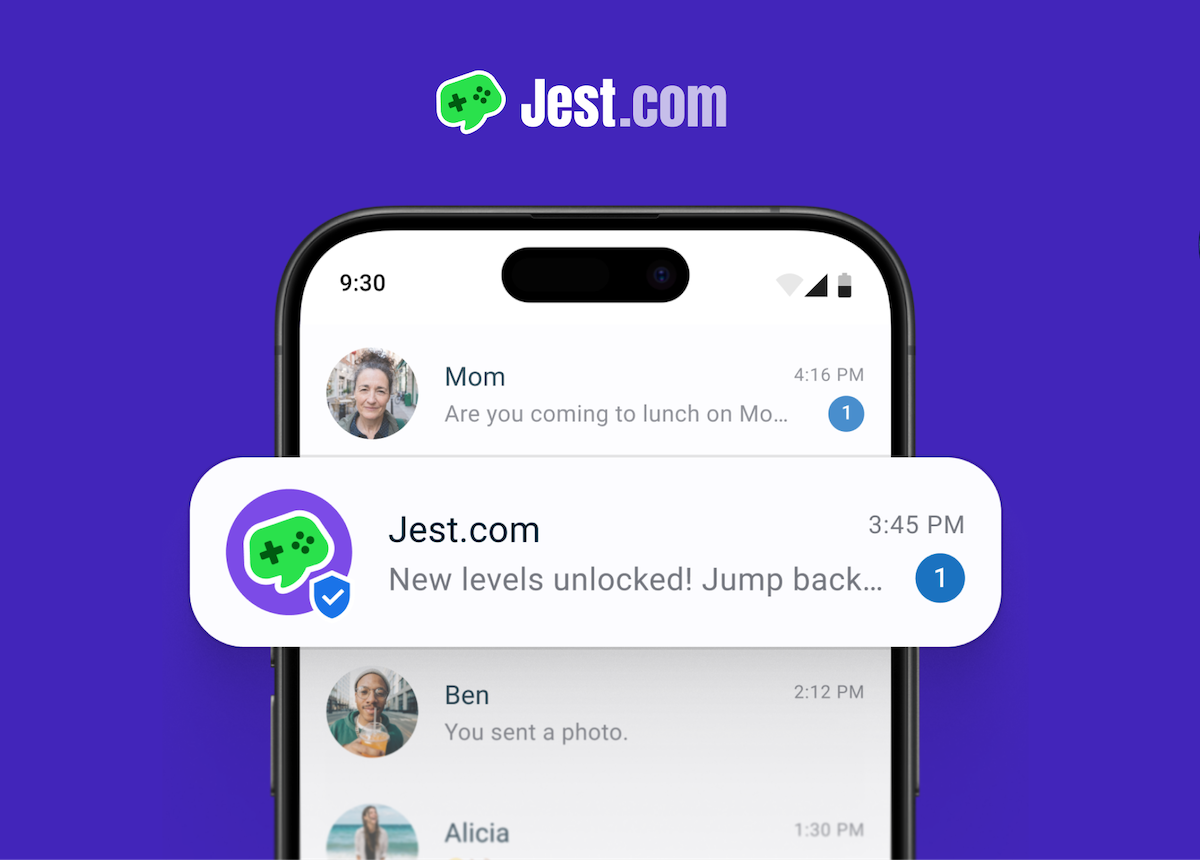
For years, the landscape of mobile gaming has been largely dictated by the formidable gatekeepers of distribution: Apple and Google’s respective app stores. Developers, pouring countless hours and significant capital into game creation, have consistently faced a substantial toll, surrendering up to 30% of their hard-earned revenue to these tech giants. This long-standing model, often criticized for its monopolistic tendencies and its impact on startup growth, is now facing a potent challenge from a new entrant: Jest. Having recently emerged from stealth with an impressive $7 million in seed funding, Jest is poised to revolutionize mobile game distribution by championing a radical shift from dedicated app stores to the ubiquitous messaging inbox.
The Entrenched App Store Paradigm and Its Discontents
The conventional wisdom in mobile gaming has been inextricably linked to the app store ecosystem since its inception. Apple’s App Store, launched in 2008, and Google Play, following shortly after, created a centralized marketplace that democratized software distribution but also established a powerful duopoly. While these platforms offered unparalleled reach to billions of smartphone users, they also imposed stringent rules, review processes, and, most notably, a non-negotiable revenue share. The standard 30% commission, often referred to as the "Apple Tax" or "Google Tax," has been a persistent point of contention for developers, particularly smaller studios and startups.
This commission structure significantly impacts a developer’s profitability and reinvestment capacity. For a game generating $1 million in revenue, $300,000 is immediately siphoned off by the platform owners before development costs, marketing, and operational expenses are even considered. Critics, including Y Combinator, have argued that this model hinders startup growth and stifles innovation by limiting the capital available for new ventures. High-profile legal battles, such as the one between Epic Games and Apple, have brought these anti-competitive concerns into sharp public focus, highlighting the urgent need for alternative distribution channels that offer more equitable terms for creators. Despite these challenges, the sheer volume of users and the ease of discovery through app stores have kept developers largely tethered to this model, making any significant departure a high-stakes gamble.
The Rise of RCS: A New Foundation for Messaging Games
Jest’s strategic timing is deeply intertwined with the maturation and widespread adoption of Rich Communication Services (RCS). RCS represents a transformative evolution of the decades-old Short Message Service (SMS), transcending its limitations to offer a far richer and more interactive messaging experience. Unlike basic SMS, which is restricted to plain text, RCS enables capabilities such as high-resolution photo and video sharing, larger file transfers, read receipts, typing indicators, group chat enhancements, and, crucially for Jest, interactive features and embedded payment functionalities.
The journey of RCS from a niche standard to a mainstream communication protocol has been marked by several significant milestones. Google has been a primary driver of RCS adoption, pushing its "Chat" features across Android devices. However, a pivotal moment arrived in 2024 when Apple, long seen as a holdout, announced its support for RCS with the release of iOS 18. This decision was a game-changer, ensuring cross-platform compatibility and significantly broadening the potential reach of RCS-enabled experiences. By May 2025, the impact of this expanded support was evident, with Google reporting that over a billion RCS messages were being sent daily in the U.S. alone. This rapid ascent solidifies RCS not just as an upgraded messaging standard but as a robust and widely accessible platform capable of supporting complex interactive applications, including games.
Jest’s Vision: Gaming Within the "Stickiest Surface"
Deyan Vitanov, CEO and co-founder of Jest, articulates the company’s core philosophy with clarity: "Mobile game developers have largely been locked into app store distribution as the primary way to reach players. RCS games live in the messaging inbox, the stickiest surface on mobile, where people are already spending huge amounts of time talking to friends and family. We’re building on an interaction pattern people already use every day." This insight forms the bedrock of Jest’s strategy. By embedding games directly within chat threads, Jest bypasses the traditional app store entirely, eliminating the friction of downloading a new application.

Users simply receive a game link within a message, tap it, and the game launches instantly in a web browser. This seamless "tap-and-play" experience leverages existing user habits, transforming the messaging inbox from a mere communication channel into a dynamic portal for entertainment. While requiring a Wi-Fi connection to play, this model significantly reduces the barrier to entry, offering unparalleled convenience.
The timing of Jest’s launch also capitalizes on shifting consumer behavior. Data from Appfigures’ annual report reveals a consistent decline in mobile game downloads. In 2025, mobile games were downloaded 39.4 billion times, an 8.6% year-over-year drop, following a 6.6% decline from 2023 to 2024. This trend suggests that while consumers still engage with mobile gaming, the appetite for downloading new, dedicated apps is waning. Jest’s approach directly addresses this by offering instant access to games without adding to a device’s app clutter, aligning perfectly with the growing preference for lightweight, accessible entertainment.
Early Validation and Impressive Performance Metrics
Despite being just four months into its beta phase, Jest has already demonstrated remarkable traction, validating its innovative distribution model. By the end of January, the platform had achieved two significant milestones: over 1 million messaging games played and more than 300,000 messages exchanged. These figures underscore not only user willingness to engage with games through messaging but also the inherent virality and social component of the platform.
Vitanov elaborates on the compelling performance Jest is observing: "We’re seeing 3-4 times better retention than traditional mobile apps. That’s a fundamental shift in the engagement curve. On the user acquisition front, we’ve completely validated that people will sign up and play games through messaging, with our early partners reporting 30-60% lower acquisition costs compared to mobile apps. It’s remarkably simple. Just tap on a link, and you’re in."
These metrics are profoundly impactful for developers. User retention is a critical challenge in the highly competitive mobile gaming market. A 3-4x improvement signifies that users are not just trying games but are consistently returning to play, indicating a deeper level of engagement fostered by the messaging environment. Similarly, the dramatic reduction in user acquisition costs (CAC) — often the largest expenditure for mobile game studios — represents a massive financial advantage. By leveraging the organic sharing mechanisms of messaging and the "stickiness" of the inbox, Jest provides a pathway for developers to reach and retain players more efficiently and affordably than ever before. This inherent viral loop within messaging applications means that users are more likely to discover games through recommendations from friends and family, a far more trustworthy and cost-effective channel than traditional paid advertising.
A Revolutionary Revenue Model for Developers
Perhaps the most compelling aspect of Jest’s offering, particularly for the developer community, is its groundbreaking revenue model. The platform offers an impressive 90/10 revenue split, with 90% of earnings going directly to the game developers. This stands in stark contrast to the standard 70/30 split (or often even less generous tiers for smaller developers) imposed by traditional app stores, representing a monumental shift in profitability potential for gaming studios.
Beyond the direct revenue share, Jest has engineered a clever network effect into its economic model, further incentivizing collaboration and growth across the platform. Vitanov explains: "There’s also a clever network effect built in. If one studio acquires a user but another studio monetizes them, we split the economics: 70% to the monetizing studio, 20% to the acquiring studio, and 10% to Jest. This creates powerful incentives where even viral games that don’t monetize well can generate revenue streams for their developers when those users play other games on the platform."
This innovative structure addresses a common challenge in the mobile gaming space: games that achieve massive viral reach but struggle with direct monetization. Under Jest’s model, a developer creating a highly shareable, engaging game, even if it’s free-to-play with limited in-game purchases, can still generate revenue if its users go on to play and spend money in other games within the Jest ecosystem. This fosters a collaborative environment, encouraging developers to focus on creating compelling experiences without solely bearing the burden of direct monetization for every single title. It also enhances user discovery, as players are exposed to a wider variety of games through this interconnected network.

Strategic Funding and Developer Ecosystem Support
The $7 million in seed funding, spearheaded by Innovation Endeavors, underscores investor confidence in Jest’s disruptive potential. This capital infusion is earmarked for critical strategic initiatives: scaling the platform’s infrastructure, enhancing its technological capabilities, and, crucially, onboarding the initial cohort of gaming studios. A robust and diverse game library is paramount for any gaming platform, and Jest is actively investing in cultivating this content.
To further accelerate content creation and support its developer community, Jest has launched a dedicated Games Fund. This fund is designed to provide financial backing to studios at various stages of franchise development, offering capital across three distinct tiers:
- $1 million for flagship titles: This substantial investment aims to attract established studios and enable the creation of high-production-value games that can serve as tentpole experiences for the platform.
- $200,000 for promising mid-stage titles: This tier supports studios with proven concepts looking to scale or refine their games, helping them transition from prototypes to polished, market-ready products.
- $40,000 for exploratory projects and experimental concepts: This tier fosters innovation and encourages developers to experiment with new ideas and unique gameplay mechanics specifically tailored for the messaging game format, lowering the financial risk associated with creative exploration.
This multi-tiered funding approach demonstrates Jest’s commitment to building a vibrant and sustainable developer ecosystem, recognizing that a diverse portfolio of games, from experimental concepts to flagship titles, is essential for long-term success.
Market Reception and Future Outlook
Jest has already begun to attract significant interest from the developer community, signaling the viability and appeal of its model. The platform has garnered partnerships with teams behind popular titles such as "Episode," "Puppy Mansion," and "Kingdom Maker." The involvement of developers associated with these known franchises lends credibility to Jest and suggests that established players in the mobile gaming industry are recognizing the potential of this new distribution paradigm.
Currently operational in the U.S., Jest has ambitious plans for rapid international expansion. The company is set to extend its reach to 14 additional countries by the third quarter of 2026. This global rollout will significantly broaden Jest’s user base and developer pool, further solidifying its position as a major contender in the mobile gaming market.
Broader Implications and Potential Disruptions
Jest’s emergence carries significant implications for various stakeholders within the mobile technology and gaming ecosystems:
- For Mobile Game Developers: Jest offers a potential lifeline, providing a more financially viable and creatively liberating alternative to the app store duopoly. The promise of higher revenue shares, lower user acquisition costs, and enhanced retention could democratize game development, allowing smaller studios and indie developers to compete more effectively. It could also encourage more experimental game designs optimized for quick, social interactions within messaging apps.
- For Users: The "tap-and-play" model within messaging apps promises unprecedented convenience, reducing friction and decluttering devices. It also fosters a more social and integrated gaming experience, as games are shared and played directly within existing communication channels.
- For App Store Incumbents (Apple and Google): While Jest might not immediately dismantle their empires, its success could exert significant pressure. If Jest’s model proves scalable and highly profitable for developers, it could force app stores to re-evaluate their commission structures and developer policies to remain competitive. The increasing adoption of RCS itself, facilitated by Apple’s recent support, inadvertently creates a more fertile ground for platforms like Jest.
- For the Messaging Industry: Jest validates RCS as a powerful platform for interactive content beyond simple communication. It could inspire other messaging platforms to integrate similar gaming functionalities, further blurring the lines between communication and entertainment.
- Potential Challenges: While promising, Jest’s model isn’t without its potential hurdles. Ensuring consistent performance for browser-based games across diverse devices and network conditions will be crucial. The platform will also need to manage content moderation and quality control effectively as it scales. Furthermore, while RCS is gaining traction, its full potential relies on universal adoption and consistent implementation across all carriers and device manufacturers globally.
In conclusion, Jest represents a bold and timely innovation at the intersection of mobile gaming and messaging technology. By leveraging the pervasive nature of RCS and offering an economically attractive model for developers, Jest is not merely launching a new platform; it is challenging a deeply entrenched paradigm. Its early successes, strong financial backing, and strategic vision position it as a significant force capable of reshaping how mobile games are discovered, played, and monetized in the years to come, potentially ushering in a new era of open, developer-friendly distribution.
About the Author