
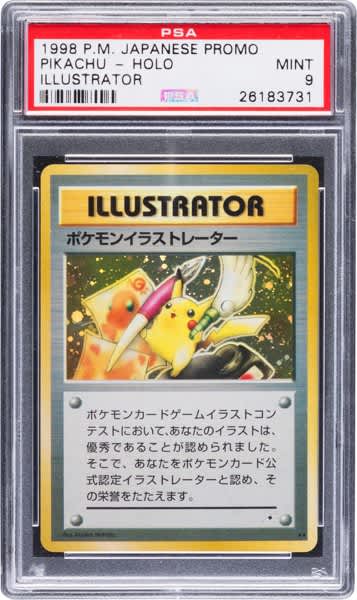
The world of high-stakes collectibles witnessed a seismic event last week as social media titan and professional wrestler Logan Paul orchestrated the record-shattering sale of a highly coveted Pokémon "Pikachu Illustrator" Trainer Promo Hologram Trading Card for an astounding $16.5 million. This monumental transaction not only established a new global benchmark for a trading card sold at auction but also underscored the accelerating trend of rare tangible assets being recognized as legitimate, albeit unconventional, investment vehicles by discerning collectors and financial strategists alike. The purchaser, AJ Scaramucci, a burgeoning investor and son of former White House communications director Anthony Scaramucci, publicly framed his acquisition as a strategic investment, signaling a deliberate move into the burgeoning alternative asset class.
The Crown Jewel: Unpacking the Pikachu Illustrator Card’s Genesis and Rarity
At the heart of this record-breaking sale lies the "Pikachu Illustrator" card, a piece of Pokémon history shrouded in mystique and extreme scarcity. Created in 1998, this card was never commercially released in booster packs or standard distribution channels. Instead, it was awarded as a prize to a select group of winners of illustration contests organized by CoroCoro Comic, a Japanese manga magazine. These contests, held between 1997 and 1998, challenged fans to submit their original Pokémon artwork, with the top entries receiving this unique promotional card featuring artwork by Atsuko Nishida, one of the original designers of Pikachu.
The card’s design is distinct, featuring a unique "Illustrator" designation in the top right corner, replacing the usual "Trainer" text. Its iconic artwork depicts Pikachu holding a pen and brush, a nod to its origin in an art contest. The extreme rarity stems from the limited number of copies produced; estimates suggest only 39 copies were ever distributed, making it one of the rarest Pokémon cards in existence. Of these, only a fraction has been professionally graded, further solidifying its status as an elusive treasure. The specific card sold by Paul was reportedly a PSA Grade 10, the highest possible grade indicating gem-mint condition, which dramatically amplifies its value to collectors and investors. Its historical significance, combined with its unparalleled scarcity and pristine condition, positions the Pikachu Illustrator as the undisputed holy grail for many Pokémon enthusiasts and a blue-chip asset in the broader collectibles market.
Logan Paul’s Midas Touch: From Influencer to Market Mover
Logan Paul, a figure synonymous with internet virality and high-profile stunts, has played an undeniable and often polarizing role in catapulting the trading card market into mainstream consciousness. His journey into the world of Pokémon cards began notably during the COVID-19 pandemic, a period that saw an unprecedented surge in interest and investment in collectibles. Paul’s public passion, documented through unboxing videos and highly publicized purchases, injected a new level of excitement and visibility into the hobby.
The very card he sold last week has its own backstory linked to Paul. He acquired it in 2021 for a staggering $5.3 million, setting a Guinness World Record at the time for the most expensive Pokémon trading card sold at a private sale. This particular card gained additional notoriety when Paul famously wore it around his neck, encased in a custom-made pendant, during his WrestleMania 38 appearance in April 2022. This audacious display, broadcast to millions globally, brought unprecedented attention to the card and, by extension, the entire Pokémon TCG market. His initial purchase and subsequent public showcase acted as a powerful endorsement, signaling to a vast audience that these cards were not merely nostalgic playthings but serious investments. The subsequent sale for $16.5 million represents an astonishing return of over 200% on his initial investment in just a few years, a testament to both the card’s intrinsic value and the significant "influencer effect" Paul has on market dynamics. His involvement has undoubtedly drawn a younger, digitally native demographic into the collecting space, contributing to the market’s current vibrancy and elevated valuations.
The Investor’s Gambit: AJ Scaramucci’s Vision
The record-breaking acquisition by AJ Scaramucci, founder of Solari Capital, transcends mere passion for Pokémon; it represents a calculated move within a broader investment philosophy. Scaramucci, the son of veteran investor Anthony Scaramucci, has quickly carved out his own niche in the financial world, with Solari Capital focusing on disruptive technologies and alternative assets. His interest in trading cards is relatively recent, reportedly sparked during the pandemic, aligning with a broader trend of new money entering the collectibles space.
In an interview following his historic win, Scaramucci articulated his perspective on the Illustrator card’s significance, stating, "Picassos are great, but Pokémon means way more than just a Picasso painting to people." This statement encapsulates a generational shift in how value is perceived and attributed, suggesting that cultural relevance and emotional resonance for a modern demographic can rival, or even surpass, the traditional prestige of fine art. Scaramucci views this purchase as the inaugural step in what he terms a "planetary treasure hunt," an ambitious endeavor he is undertaking with his younger brother to amass a diversified portfolio of real-world, scarce assets across various categories. This vision positions collectibles not as isolated hobbies but as integral components of a robust investment strategy, particularly appealing in an era marked by economic uncertainties. He also cited the "debasement trade" as a key driver for his strategy, referring to the practice of investing in hard, tangible assets as a hedge against potential currency devaluation or inflation, a concern that has gained traction among investors in recent years.
Explosive Growth: The Collectibles Market Phenomenon
The record sale of the Pikachu Illustrator card is not an isolated incident but rather a dramatic punctuation mark in a broader narrative of explosive growth within the trading card and collectibles markets. The COVID-19 pandemic acted as a significant catalyst, driving unprecedented interest and capital into these segments. With more disposable income due to reduced travel and entertainment options, coupled with a yearning for nostalgia and community during lockdowns, many individuals rediscovered or newly embraced hobbies like trading card collecting. Digital platforms, online auctions, and social media further facilitated this boom, creating transparent marketplaces and fostering vibrant communities of buyers and sellers.
Data from Card Ladder, a leading analytics firm specializing in tracking trading card prices and sales, paints a clear picture of this acceleration. The monthly sales volume in secondary trading across various card categories has nearly doubled in the last two years alone, indicating a sustained and robust market expansion. This growth has not gone unnoticed by major e-commerce players. Jamie Iannone, CEO of eBay, highlighted in a recent earnings call that collectibles were the largest contributor to the company’s gross merchandise volume (GMV) growth in the fourth quarter, specifically "driven by continued strength in trading cards." This institutional acknowledgment from a retail giant like eBay underscores the sector’s transition from a niche hobby to a significant economic force.
The Boom in Trading Cards: Data and Drivers
Beyond Pokémon, other segments of the trading card market, including sports cards (NBA, NFL, MLB) and other TCGs (Magic: The Gathering, Yu-Gi-Oh!), have also experienced substantial appreciation. The "Pokémon index" tracked by Card Ladder has seen a remarkable 145% growth in the past year. To put this into perspective, the benchmark S&P 500 index saw gains of approximately 15.2% over the same period, while even high-performing "Magnificent Seven" tech stocks like Alphabet, a darling of the current market cycle, were up around 73.4%. These comparative figures highlight the extraordinary, and in some cases, unparalleled returns witnessed in the collectibles market, drawing attention from traditional investors seeking diversified, high-growth opportunities.
Ken Goldin, founder and CEO of Goldin Auctions, a prominent auction house in the collectibles space now owned by eBay, observed the "astronomical" growth, especially in 2025 (likely a typo in original article, meant to be 2023 or 2024 given the context of "past year"). He noted that participants are driven by a dual motivation: either profound personal affection for the items or a firm conviction that trading cards and other collectibles represent a "legitimate alternative asset class." This sentiment is gaining increasing traction, with many seeing these items as more than just sentimental artifacts, but as tangible stores of value.
Auction Houses and the Validation of Value
Auction houses like Goldin Auctions have played a pivotal role in legitimizing and driving the growth of the collectibles market. By providing expert authentication, grading services, and a competitive bidding environment, they establish transparent valuation mechanisms for rare items. The professionalism and global reach of these platforms transform what was once a fragmented, private market into a sophisticated, high-stakes arena. Goldin himself presided over the auction of the Illustrator card, further cementing his firm’s reputation at the forefront of the collectibles boom. The increasing frequency of record-breaking sales publicized by these houses continuously reinforces the perception of collectibles as valuable assets, attracting new participants and higher bids.
Collectibles as an Alternative Asset Class: Opportunities and Perils
The notion of collectibles serving as alternative investments is not entirely new, though its current scale and mainstream acceptance are. Historically, high-net-worth individuals have diversified their portfolios with assets like fine art, rare wines, classic cars, and antique furniture, using them as hedges against inflation, stores of value, and avenues for portfolio diversification. These items often offer a unique blend of potential appreciation and personal enjoyment.
The Dual Nature: Passion Meets Portfolio Diversification
AJ Scaramucci embodies this dual motivation, stating, "The compounded annual growth rate of these cards is out of control. And they should be treated as investments because that’s what they are. It’s just obvious." This perspective highlights the strong financial returns observed, framing them explicitly as investment vehicles. However, financial advisors often preach caution, emphasizing that while passion-driven investments can yield significant returns, they come with inherent risks distinct from traditional financial assets.
Paul Karger, co-founder and managing partner at wealth advisory firm TwinFocus, advises clients who collect various luxury items, from art and wine to watches and guitars. While acknowledging their potential as investments, he urges a "passion first, and kind of an investment second" mentality. Karger emphasizes that such items are "absolutely not a replacement to financial assets; it’s just maybe a complement at the margin." This prudent approach stresses that while collectibles can enhance a portfolio, they should not form its core, given their specialized nature.
Navigating the Risks: Liquidity, Valuation, and Taxation
Karger further highlights critical risks associated with collectible investments. The illiquid nature of these assets means they cannot be easily or quickly converted to cash without potentially impacting their value, unlike publicly traded stocks or bonds. Their worth is also highly dependent on subjective factors, often determined by auction results and the fluctuating whims of a relatively small pool of wealthy collectors. This dependency introduces volatility and a lack of predictable pricing mechanisms.
Another significant consideration, as pointed out by Kaycee LeCong, managing director of the family office at Brighton Jones Wealth Management, is the tax implication. Capital gains on collectibles are typically taxed at a higher rate of 28% in the U.S., significantly exceeding the long-term capital gains tax rates for stocks, which generally range from 15% to 20% for most investors. This higher tax burden can substantially erode net returns, a crucial factor for investors to consider when evaluating the true profitability of such assets. Additionally, issues like counterfeiting, storage costs, insurance, and the potential for market bubbles fueled by speculation further complicate the investment landscape for collectibles.
The Road Ahead: Scaramucci’s "Treasure Trove" and the Future of Tangible Wealth
Despite the inherent risks, Ken Goldin remains optimistic about the future of collectibles as alternative assets. He projects that as more high-profile sales generate headlines and as data analytics tools make price discovery more accessible and transparent, the market will continue to attract a broader base of participants, including sophisticated investors. This increasing institutionalization and data availability could further solidify collectibles’ position within the alternative investment landscape.
AJ Scaramucci’s plans extend beyond this single, record-breaking purchase. He is embarking on his "planetary treasure hunt" through a newly established company, aptly named Treasure Trove. While specific details regarding the company’s operational model, target assets beyond Pokémon cards, or its funding structure (other than receiving capital from Solari Capital) remain undisclosed, the venture signals a serious commitment to this asset class. Scaramucci has also not clarified whether he intends to sell the Illustrator card or any other collectibles should their value appreciate further, maintaining an element of strategic ambiguity.
His stated ambition to eventually acquire items of profound historical significance, such as the Declaration of Independence, underscores the grand scale of his "treasure hunt." While acknowledging the monumental effort required for such an endeavor, he currently offers no concrete plan for achieving it. For Scaramucci, this lack of immediate clarity is part of the strategy. As he enigmatically put it, "For now, if you think I’m just a crazy person buying up real-world, scarce assets, that’s all you need to know." This statement encapsulates the disruptive, confident spirit of a new generation of investors who are redefining what constitutes valuable assets in a rapidly evolving financial world.
The record-breaking sale of the Pikachu Illustrator card by Logan Paul to AJ Scaramucci is more than just a sensational headline; it is a profound indicator of shifting investment paradigms. It highlights the potent combination of celebrity influence, cultural nostalgia, digital market accessibility, and a growing investor appetite for tangible assets in an uncertain economic climate. While the collectibles market continues its meteoric rise, navigating its complexities requires a careful balance of passion, rigorous due diligence, and a clear understanding of its unique opportunities and inherent risks. The "planetary treasure hunt" has begun, and its trajectory promises to be one of the most intriguing financial narratives of the coming decade.
About the Author