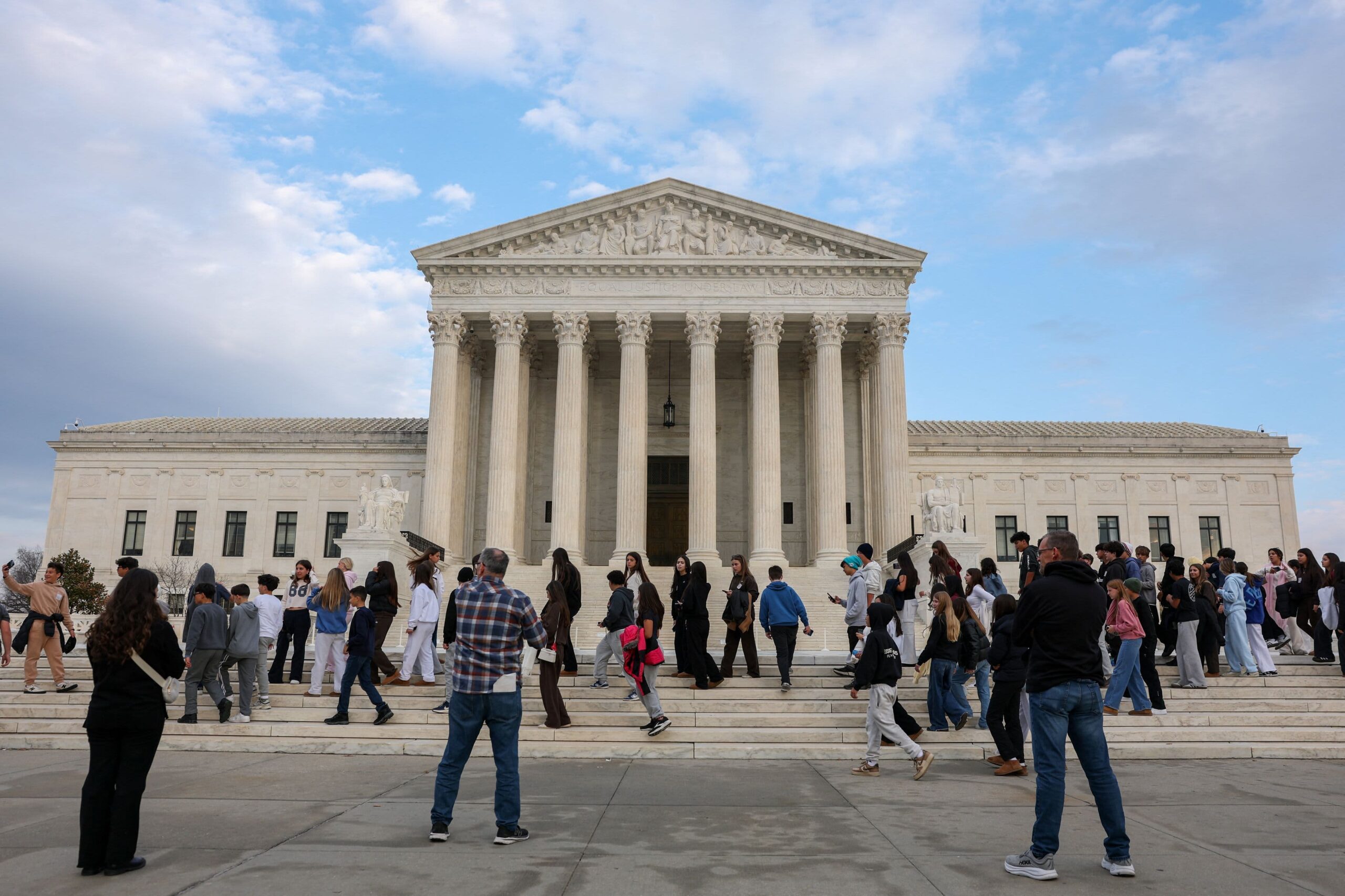
The United States Supreme Court on Monday issued a pivotal ruling that effectively prohibits the redrawing of the boundary lines for New York’s 11th Congressional District, ensuring the current electoral map remains in place for the crucial 2026 midterm elections. This decision marks a significant victory for incumbent Representative Nicole Malliotakis, a Republican representing Staten Island and parts of South Brooklyn, who had petitioned the High Court to intervene and block any further attempts to alter the district’s boundaries. The ruling arrives at a critical juncture for the Republican Party, which holds a razor-thin 218-214 majority in the House of Representatives, making every district a key battleground in their efforts to retain control of Congress.
The Contested District: A Battleground Defined
New York’s 11th Congressional District, encompassing all of Staten Island and strategically significant portions of South Brooklyn, has long been a political bellwether, frequently shifting between Republican and Democratic control. Its unique demographic composition and socio-economic diversity make it one of the most closely watched congressional races in the nation. Historically, Staten Island leans Republican, while the Brooklyn portions of the district, particularly neighborhoods like Bay Ridge and Dyker Heights, exhibit more diverse political affiliations, with a significant presence of working-class families and various ethnic communities. This intricate balance has rendered the 11th District a perennial target for both parties in their pursuit of electoral dominance.
Representative Nicole Malliotakis, first elected in 2020 by unseating a Democratic incumbent, has successfully navigated this complex political landscape. Her re-election campaigns have consistently highlighted local issues, economic concerns, and public safety, resonating with a broad cross-section of the district’s voters. Her ability to retain the seat, often against well-funded Democratic challengers, underscores her political acumen and the district’s swing nature. For the Republican Party, Malliotakis’s seat is not merely one of 435; it represents a crucial bulwark in their national strategy, especially given the state of New York’s otherwise predominantly Democratic congressional delegation. Preserving the current district lines, which were drawn in 2024, is seen by Republicans as essential to Malliotakis’s path to re-election and, by extension, to maintaining their precarious House majority.
A Chronology of Redistricting Battles in New York
The Supreme Court’s decision is the latest chapter in a protracted and often acrimonious redistricting saga within New York State, a process intensified by the decennial census and the subsequent redrawing of political maps. Following the 2020 Census, New York lost one congressional seat due to slower population growth, reducing its delegation from 27 to 26 members. This reduction ignited a fierce partisan struggle over how the remaining districts would be configured.
In an effort to mitigate partisan gerrymandering, New York voters had previously approved a constitutional amendment establishing an independent redistricting commission. This commission was tasked with drawing new district maps, which would then be presented to the state legislature for approval. However, the commission’s initial attempts to reach a bipartisan consensus proved futile, resulting in two sets of maps that were ultimately rejected by the legislature in 2022. The Democratic-controlled state legislature then took matters into its own hands, passing highly partisan maps that were widely criticized by Republicans for heavily favoring Democratic candidates.
These legislative maps faced immediate legal challenges, culminating in a landmark ruling by New York’s highest court, the Court of Appeals, which deemed the maps unconstitutional due to partisan gerrymandering. The court ordered an independent special master to redraw the maps, which were subsequently used for the 2022 midterm elections. This intervention significantly altered the political landscape, leading to unexpected Republican gains in New York, including Malliotakis’s re-election under the court-drawn lines.
The legal and political wrangling did not end there. In 2023, the Court of Appeals, with a newly constituted majority, ruled that the independent commission should be given another opportunity to draw maps for the 2024 election cycle. This led to a revised set of maps, which were ultimately adopted for the 2024 federal elections, including the map for the 11th Congressional District that is now at the heart of the Supreme Court’s recent ruling. It is these 2024 lines that the plaintiffs challenged and that Malliotakis sought to defend.
The Legal Challenge: Allegations of Racial Vote Dilution
The lawsuit that prompted the Supreme Court’s intervention was filed in October 2024 by four New York City residents. Their legal challenge specifically targeted the design of the 11th Congressional District, as redrawn and implemented for the 2024 elections. The plaintiffs argued that the district’s configuration diluted the voting power of Black and Latino residents, thereby violating their constitutional rights.
Central to their argument were claims rooted in the Fourteenth Amendment’s Equal Protection Clause, which guarantees equal protection under the law, and potentially implications of the Voting Rights Act of 1965. The plaintiffs contended that the district lines were drawn in a manner that fragmented minority communities, making it more difficult for them to elect candidates of their choice. They posited that a different configuration of the district could create a more cohesive minority-majority or minority-influence district, thereby enhancing the political efficacy of Black and Latino voters.
Such claims are not uncommon in redistricting litigation, often invoking complex legal standards established in cases like Thornburg v. Gingles regarding vote dilution under Section 2 of the Voting Rights Act, or challenges to racial gerrymandering under the Equal Protection Clause. These cases often involve detailed demographic analysis and expert testimony to demonstrate discriminatory intent or effect. Lower courts had reviewed the plaintiffs’ arguments and the district’s composition. Malliotakis’s appeal to the Supreme Court was a preemptive move to prevent these challenges from forcing a redrawing of the map that would likely be less favorable to her and the Republican Party.
The Supreme Court’s Deliberation and Ruling
The Supreme Court’s decision on Monday effectively sided with Representative Malliotakis, affirming the stability of the 2024 congressional map for the 11th District. While the Court’s full opinion or the specific legal reasoning behind its order was not immediately detailed, the outcome is clear: the existing boundaries will stand for the 2026 midterm elections. The Court’s action signals a reluctance to intervene and mandate further redrawing of an already established map so close to an election cycle, especially when the issue has traversed multiple state and federal legal pathways.
Often, in cases involving electoral maps and impending elections, the Supreme Court operates under an "emergency docket" or issues summary orders without extensive written opinions, prioritizing electoral stability and avoiding disruption to the election administration process. The "effectively barring" language suggests that the Court either denied the plaintiffs’ appeal, affirmed a lower court’s decision that favored the existing map, or issued an order that prevented any judicial remedy that would necessitate a redrawing. In essence, the Court declined to overturn the current 2024 district lines, thereby validating Malliotakis’s position that the existing map should remain.
This decision reflects a broader trend of judicial caution in electoral matters, particularly when claims of partisan gerrymandering are intertwined with racial vote dilution allegations. While the Court has been willing to strike down maps based on explicit racial gerrymandering, it has also shown deference to state processes and has been hesitant to impose judicial solutions that could be perceived as politically motivated, especially when a state’s independent commission or legislative process has already produced a map, even if controversial.
Political Ramifications: A Boost for the Republican House Majority
The Supreme Court’s ruling carries immense political weight, particularly for the Republican Party’s strategy to retain its narrow majority in the House of Representatives. With a current majority of just 218-214, the GOP can afford to lose very few seats if it hopes to maintain control. New York’s 11th Congressional District, often considered a toss-up or a lean-Republican seat under the current lines, is therefore indispensable to their electoral calculus.
Had the Supreme Court ruled in favor of the plaintiffs, mandating a redrawing of the district, the new boundaries could have significantly altered the district’s demographic and political composition, potentially shifting it to a more reliably Democratic-leaning seat. Such a scenario would have created a substantial uphill battle for Malliotakis and represented a severe setback for the Republican Party’s national ambitions. The current 2024 map, while still making the district competitive, is generally seen as more favorable to Malliotakis than many potential alternative configurations that might have emerged from a court-ordered redrawing based on vote dilution claims.
For Republicans, this decision is a morale booster, signaling that at least one key battleground district will not be subject to a last-minute re-engineering that could jeopardize their incumbent. It allows the party to allocate resources, strategize campaigns, and rally support with a clear understanding of the electoral playing field. Conversely, Democrats and the plaintiffs will likely view this as a missed opportunity to achieve what they believe would be a fairer and more representative map, potentially forcing them to contest the district under conditions they deem disadvantageous.
Reactions from Key Stakeholders
While official statements are still emerging, the implications of the Supreme Court’s decision will undoubtedly elicit strong reactions from various political figures and organizations.
Representative Nicole Malliotakis is expected to express profound satisfaction with the ruling. Her statements will likely emphasize the importance of electoral stability, the validation of the current district lines, and a focus on serving her constituents without the distraction of ongoing legal battles over district boundaries. She may frame the decision as a victory for voters seeking certainty and continuity.
Republican Party leadership, both in New York and nationally, will undoubtedly hail the Supreme Court’s action as a win for fair electoral processes and an important step in safeguarding their House majority. Figures like House Speaker and the Chairman of the National Republican Congressional Committee are anticipated to underscore the strategic importance of the NY-11 seat and praise the Court for upholding the integrity of the existing electoral map. They may also use the opportunity to criticize what they perceive as politically motivated attempts by Democrats to manipulate district lines through litigation.
On the other side, the plaintiffs and their legal counsel, along with Democratic Party officials and advocacy groups focused on voting rights, are likely to express deep disappointment. Their reactions will probably reiterate their concerns about racial vote dilution and the need for maps that accurately reflect the diversity of New York City’s population. They may vow to continue their advocacy efforts through other means, potentially exploring future legal avenues or legislative reforms to address perceived inequities in representation. Voting rights organizations may also issue statements analyzing the broader implications of the Supreme Court’s decision on the future of redistricting litigation concerning minority voting rights.
Legal scholars specializing in constitutional law and electoral jurisprudence will be closely scrutinizing the Court’s order. Their analyses will focus on the precedent (or lack thereof, if it’s a summary order) set by this decision, particularly how it balances judicial deference to state redistricting processes against claims of racial gerrymandering or vote dilution. They may debate whether this ruling signals a retreat from judicial intervention in redistricting disputes or simply reflects the Court’s preference for electoral stability in the lead-up to an election.
The Road Ahead: 2026 Midterms and Beyond
With the district lines for NY-11 now settled for the 2026 midterm elections, the political focus will intensify on the campaigns themselves. Representative Malliotakis will undoubtedly face a robust challenge from Democratic contenders, who will view the seat as a prime target regardless of the map. The national political climate, presidential approval ratings, and local issues will all play significant roles in shaping the outcome of what promises to be another highly competitive race.
The Supreme Court’s ruling, while providing immediate clarity for the 2026 cycle, does not entirely extinguish the broader debate over redistricting in New York or across the nation. The underlying tensions between independent commissions, legislative control, and judicial oversight will persist. Future census cycles will inevitably trigger new rounds of redistricting, bringing with them renewed legal and political battles. Advocacy groups will continue to push for reforms aimed at creating what they consider fairer and more equitable maps, while political parties will consistently strive to maximize their electoral advantage within the bounds of the law.
The 2026 midterms will serve as a crucial test for the Republican Party’s ability to defend its narrow House majority. Districts like NY-11, where the legal landscape has just been clarified, will be central to that effort. The Supreme Court’s decision ensures that, at least for now, the battle for this key New York seat will be fought on the existing terrain, allowing both parties to fully focus their resources on voter persuasion and mobilization rather than protracted legal skirmishes over district boundaries.
About the Author