The marketing industry is poised for its most significant evolution in decades, with artificial intelligence (AI) emerging as the primary catalyst for this profound shift, according to major AI predictions for 2026. Marketers are currently navigating a complex terrain marked by fragmented customer journeys, diminishing attention spans, escalating acquisition costs, and campaigns that frequently fall short of expectations. The integration of AI is set to redefine brand-consumer interactions through its capacity for real-time data processing and sophisticated predictive analytics.
A comprehensive analysis, drawing heavily from the HubSpot 2026 State of Marketing report, reveals that over 64% of organizations already leverage AI in some capacity. This adoption rate is projected to surge dramatically in the coming year, fueled by advancements in AI-driven content creation, the proliferation of AI agents, the rise of hyper-personalized campaigns, and an array of other AI-powered innovations. Consequently, marketing professionals will need to adapt, transitioning towards more strategic and analytical responsibilities while delegating routine operational tasks to AI tools. This article delves into the pivotal AI predictions for 2026 and extends its outlook to the future beyond this critical year, offering insights for teams aiming to proactively implement and benefit from AI technologies. Resources such as the HubSpot AI Agent Playbook provide detailed frameworks for automating marketing workflows and deploying AI agents effectively across campaigns.
The Shifting Tides: From Basic AI to Autonomous Agents
The capabilities of AI in marketing are rapidly evolving. Currently, AI is adept at generating basic summaries, drafting initial marketing content, and creating singular text, image, or video assets based on user prompts. It also assists with fundamental customer segmentation and handles repetitive tasks. However, the trajectory points towards a future where AI will power search engine-like conversational answers, manage entire marketing campaigns with autonomous AI agents interacting with each other, repurpose single assets into multimodal content, achieve advanced individualistic personalization, and replace repetitive tasks with predictable, optimized workflows. A crucial development will be AI’s increased focus on data privacy, prioritizing first-party and zero-party data.
The year 2026 is anticipated to be a watershed moment for AI in marketing, moving beyond task automation to influence strategic decision-making. This will enable marketers to translate insights into actionable strategies with unprecedented speed, while simultaneously bringing to the forefront critical discussions around data privacy, ethical considerations, and the delicate balance between human creativity and machine intelligence.
The AI-Powered Search Revolution: Beyond Traditional SEO
A paramount AI prediction for 2026 is the obsolescence of traditional Search Engine Optimization (SEO) in favor of new paradigms such as Search Everywhere Optimization (SEvO), Generative Engine Optimization (GEO), and Answer Engine Optimization. The fundamental nature of search behavior is undergoing a radical transformation, shifting from a quest for links to a demand for direct answers. Consumers are increasingly turning to AI-powered search engines like Perplexity, Claude, Gemini, and ChatGPT for immediate and comprehensive responses, rather than solely relying on traditional search engines like Google.
This fragmentation of search behavior necessitates a strategic evolution for brands. Discoverability will no longer be confined to conventional search platforms but must extend to AI-generated summaries and conversational interfaces. Consequently, brand mentions across credible sources such as reviews, forums, podcasts, and social media are gaining prominence over traditional backlinks. AI systems will surface brands based on "AI authority," which is determined by the frequency and credibility of their mentions. This underscores the critical importance of a strong brand reputation and high-quality content for visibility in the AI-driven discovery landscape.
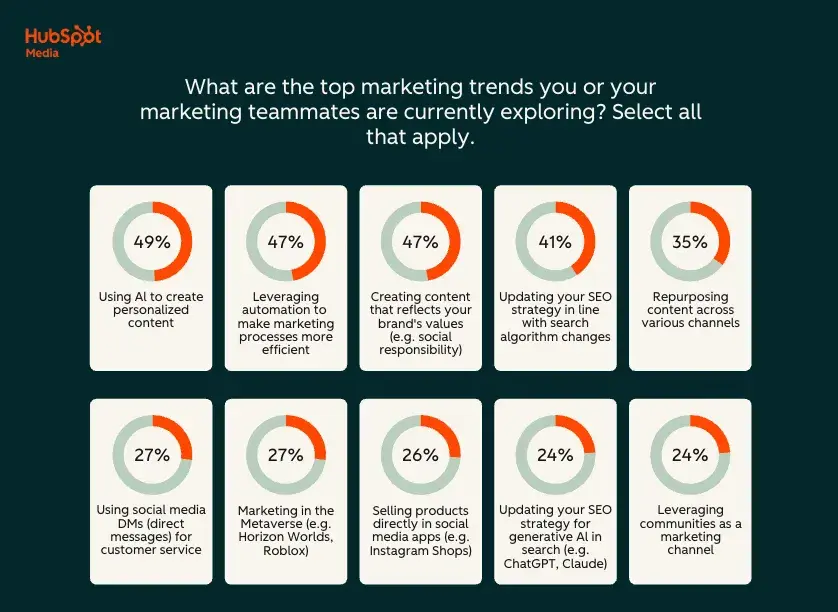
In essence, the SEO strategy of 2026 must transform into Answer Engine Optimization (AEO). Content must be meticulously structured to be comprehensible and valuable to both Large Language Models (LLMs) and human users. Brands that fail to adapt will risk becoming invisible in the evolving digital conversation. The HubSpot 2026 State of Marketing report indicates a significant industry response, with 40.6% of marketers actively updating their SEO strategies for AI-powered search engines, while an additional 48.57% are employing AI to create personalized content.
The strategic implications are clear: marketing in 2026 will demand optimization for multimodal content relevance across diverse channels, extending far beyond keyword-based SEO. For instance, a brand’s ability to be cited as a "source of truth" will hinge on its capacity to communicate effectively with both AI models and human audiences.
The Ascendance of AI Agents: From Assistants to Autonomous Orchestrators
Another significant AI prediction for 2026 is the widespread integration of AI agents into marketing workflows. These autonomous systems, capable of independent thought, action, and optimization, are set to redefine operational efficiency. AI agents are transitioning from mere assistants to fully autonomous decision-makers. By the close of 2026, agentic AI systems are expected to manage and optimize entire marketing campaigns, from planning and execution to continuous refinement, with minimal human intervention. These agents will operate seamlessly across platforms, manage budgets, conduct creative testing, and adapt strategies in real-time.

The consumer landscape is also evolving, with individuals increasingly utilizing personal AI agents for product research and purchasing decisions. With 24% of AI users already employing AI shopping assistants, marketers must adapt their strategies to cater not only to human audiences but also to "agent-to-agent" interactions. This necessitates structuring product data for accessibility via APIs and ensuring its interpretability by AI systems.
The future of commerce and advertising is increasingly agent-mediated. AI agents are poised to negotiate media buys directly with one another, potentially bypassing traditional human intermediaries. This agent-to-agent trading promises faster, more scalable transactions and the development of novel ad formats that may not align with current programmatic pipelines. Furthermore, consumers using AI agents for product comparison, stock checks, and direct purchases may interact less frequently with brand websites. Protocols like the Agentic Commerce Protocol (ACP) and the Model Context Protocol (MCP) are emerging to facilitate embedded, transactional experiences within AI chat interfaces.
While AI was primarily used for content drafting in 2025, 2026 will witness AI orchestrating entire campaigns. AI agents will operate with predefined goals, handling tasks such as prospecting and lead qualification in the background, awaiting human command for downstream actions. According to the HubSpot 2026 State of Marketing report, 19.20% of marketers are already employing AI agents for end-to-end marketing automation, a figure expected to grow substantially.
The strategic advantage lies in leveraging AI agents to automate routine workflows, thereby freeing up human marketers to concentrate on high-level brand strategy and creative endeavors. For example, assigning a target to an AI agent can facilitate background research, qualification, and initial engagement with leads, allowing sales teams to focus on closing deals.
AI Content Generation Matures: From Drafts to Dynamic Narratives
A primary AI prediction for 2026 is the maturation of generative AI from a content-drafting tool to a creative co-pilot. Marketers will increasingly utilize AI to produce multimodal content – encompassing text, images, audio, and video – at scale, enabling rapid localization and personalization. However, this surge in AI-generated content, sometimes referred to as "slop," necessitates a renewed emphasis on authenticity and human creativity as key differentiators. Brands will need to strike a balance between AI-driven efficiency and human-led storytelling to maintain emotional resonance and consumer trust.
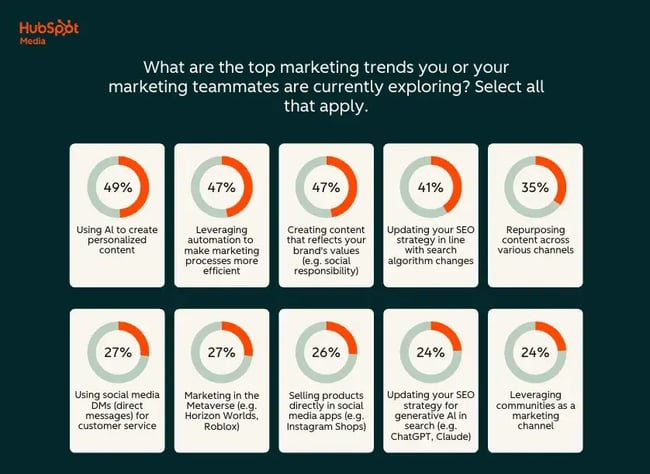
As previously noted, nearly half of marketers surveyed in HubSpot’s report have already used AI for personalized content creation, with 35.08% repurposing content across multiple channels. In 2026, AI will move beyond mere content production to drive "living campaigns" that dynamically adjust messaging, formats, visuals, and tones based on real-time performance data across various platforms. Traditional static advertisements are likely to be supplanted by evolving creative assets that adapt to specific audience segments.
The use of AI-generated images, videos, and copy is expected to become standard practice rather than an experimental endeavor. Marketers will leverage AI tools to generate thousands of creative variations for A/B testing, shifting their focus from execution to strategy and creative direction. Consumers’ demand for fluid content formats that suit their immediate needs will drive the development of AI tools capable of generating multimodal content by adapting a single asset into audio, visual, and text formats.
Hyper-Personalization and Predictive Analytics: The Dawn of Anticipatory Marketing
A significant AI prediction for 2026 points towards AI-driven personalization that transcends basic user segmentation to achieve real-time, cross-channel individualization. By analyzing behavioral signals, context, and intent, AI tools will tailor content, product offers, and customer journeys for each user, dynamically adjusting emails, advertisements, and website experiences. Predictive analytics will usher in an era of anticipatory marketing, where brands can proactively present offers before customers consciously recognize their need. Tools like Google Analytics 4’s AI Insights are already predicting churn, purchase likelihood, and optimal next actions, enabling marketers to act preemptively.
The HubSpot 2026 State of Marketing report indicates that 32.96% of marketers are extensively utilizing AI for data analysis and automated reporting, with another 33.24% employing AI for market research and competitor analysis. The future of AI in marketing will empower marketers to deliver one-to-one personalization, driving enhanced engagement and conversion rates. Marketing will evolve from generalized segmentation to truly individualized experiences, with AI enabling the creation of unique content, product recommendations, and messaging for each customer in real-time, by analyzing behavioral patterns, purchase history, and contextual signals.
The Evolving Role of Marketing Teams: From Executors to Strategists
A major AI prediction for 2026 is the fundamental transformation of marketing roles. As AI automates routine tasks, marketers will increasingly focus on strategy, creativity, and ethical oversight. New roles are expected to emerge, such as AI Ethicists, AI Workflow Designers, and AI Literacy Trainers, to manage the integration and impact of AI. Leadership will be tasked with fostering AI literacy and implementing human-in-the-loop processes to ensure AI augments, rather than replaces, human judgment.

The "30% Rule" suggests that AI should automate approximately one-third of the routine workload, freeing up 30% of a marketing team’s time for high-leverage creative pursuits. The emergence of roles like "Vibe Marketing," inspired by trends like "Vibe Coding," signifies a shift where marketers provide the strategic direction ("the vibe"), and AI handles the execution. This democratizes campaign execution, allowing junior marketers to manage senior-level campaigns effectively, provided their strategic acumen is sound.
The HubSpot 2026 State of Marketing report highlights that 32.82% of respondents believe AI tools are saving marketing teams 10-14 hours per week, with 41.81% reporting a moderate increase in productivity due to AI. The enduring presence of AI necessitates continuous upskilling for marketers to secure their positions and identify AI-proof career paths. The focus will shift from mastering specific software to understanding customer needs and deploying strategy effectively.
Privacy-First Data Strategies: Building Trust in the AI Era
Privacy-focused data operations for AI systems represent a critical AI prediction for 2026. With the impending phase-out of third-party cookies and the continuous tightening of global privacy regulations, first-party and zero-party data are becoming foundational. Brands are migrating towards consent-based data models, directly collecting customer preferences through surveys, loyalty programs, and preference centers. AI will play a crucial role in extracting value from limited data by leveraging intent-based signals and contextual targeting, thereby reducing reliance on personal identifiers. The responsible use of AI not only ensures regulatory compliance but also cultivates consumer trust, transforming data strategy into a significant competitive advantage.
As AI adoption accelerates, ethical considerations such as data privacy, bias mitigation, transparent decision-making, and responsible usage are evolving from optional considerations to strategic imperatives. Brands that prioritize trustworthy and explainable AI will gain a distinct competitive edge. Concerns about data privacy and security are prevalent among marketers, with 40.13% expressing reservations, making it a significant barrier to AI adoption in marketing.
Preparing for the AI-Driven Future: A Call to Action for Marketers
The window of opportunity for marketers to adapt to the forthcoming AI wave is rapidly closing. Proactive preparation is essential for navigating the evolving landscape. Marketers must prioritize continuous learning and upskilling in AI tools and methodologies. Embracing AI-powered platforms that offer integrated solutions for content generation, campaign management, personalization, and data analysis will be crucial. Developing a deep understanding of customer data, ethical AI practices, and the strategic deployment of AI agents will be paramount.
AI Predictions Beyond 2026: A Glimpse into 2030 and 2050
Looking further ahead, AI marketing predictions by 2030 envision a landscape characterized by intelligent, ethical, immersive, and human-first brands, all powered by AI but guided by empathy. By 2050, in the age of Artificial General Intelligence (AGI), marketing will transcend the mere selling of products to focus on designing intelligent relationships between humans and the systems that serve them.
Marketing in 2030: Predictive, Personalized, and Empathetic
By 2030, marketing will operate through predictive AI systems that anticipate customer needs before they are explicitly expressed, replacing reactive campaigns with adaptive, real-time, and deeply human experiences. All marketing campaigns will be AI-powered but fundamentally empathy-led. This shift signifies marketing becoming predictive rather than reactive, moving towards hyper-personalization at the individual identity level, rendering segmentation obsolete. The rise of zero-party data and "trust economics" will be driven by stricter privacy laws and cookie-less ecosystems. AI co-marketers will become the norm, with humans focusing on strategic oversight, ethical governance, and creative direction, while AI handles execution. Content will evolve from static formats into immersive experiences, catering to the growing demand for interactive and engaging narratives.
The 2050 Vision: Marketing in the Age of AGI
By 2050, marketing will be defined not by tools, channels, or data, but as a co-evolutionary system where human values, machine intelligence, and consumer intent continuously adapt to each other in real-time. The focus will shift from optimization to understanding, with AGI systems delving into the "why" behind consumer behavior. The concept of campaigns will give way to "living brands" that are dynamic and continuously evolving. Human marketers will evolve into philosophers, curators, and governors, exercising judgment and ethical oversight. The ultimate shift will be from the attention economy to the "meaning economy," where value is derived from genuine connection and shared purpose.
Frequently Asked Questions About AI Predictions
What is the best AI predictor?
The efficacy of an AI predictor is contingent on the specific use case and data requirements. Integrated predictive capabilities, such as those offered by the HubSpot Breeze AI suite, are highly regarded for marketing attribution, lead scoring, and revenue forecasting. These systems analyze historical customer data to generate actionable predictions that inform campaign strategy and resource allocation.
What are the future predictions of AI?
Future AI predictions encompass the proliferation of AI search engines, the integration of AI agents in marketing, advanced AI-generated content, hyper-personalization, evolving job profiles, and the establishment of privacy-first protocols. By 2030, marketing is expected to become more predictive, AI co-marketers will be commonplace, and content will transform into immersive human experiences.
What is the 30% rule for AI?
The 30% rule for AI posits that AI should automate approximately 30% of a workflow, specifically targeting repetitive, data-intensive tasks. This allows human employees to dedicate the remaining 70% of their time to activities requiring critical thinking, creativity, and ethical judgment, positioning AI as an assistive tool rather than a replacement.
What jobs will be eliminated by 2030?
Jobs involving routine tasks and data processing, such as telemarketing, bookkeeping, and certain administrative roles, are at risk of elimination by AI by 2030. However, strategic marketing roles emphasizing creativity, ethical considerations, and cultural understanding are likely to remain essential and evolve.
AI in 2026: The Bottom Line
The transformative impact of AI in 2026 will not be characterized by a single, dramatic breakthrough but by the quiet, yet powerful, optimization of how work is conducted. Organizations that successfully integrate AI into their core operations will experience compounding benefits. While advancements in AI model capabilities will continue, the most significant success stories will emerge from the practical integration of AI into daily marketing workflows. The future demands proactive adaptation, continuous learning, and a strategic embrace of AI’s potential to redefine the art and science of marketing.
About the Author