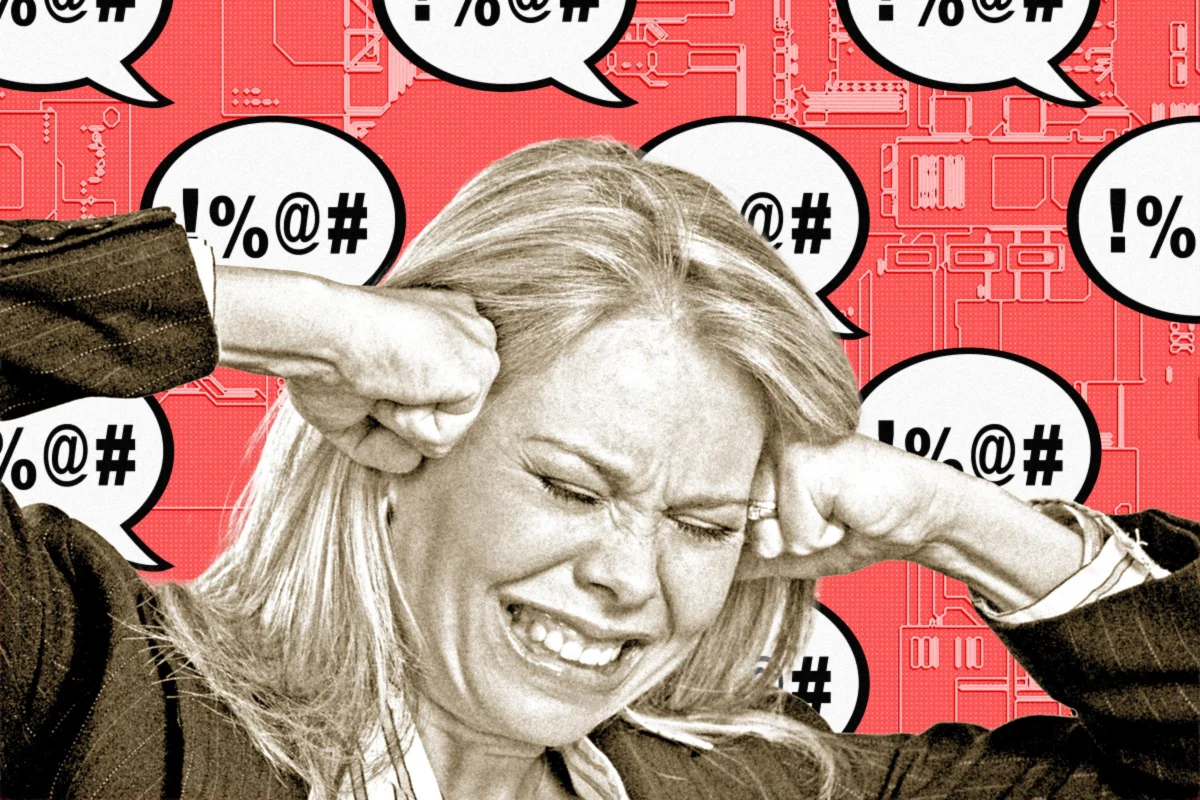
Recent data from the job review platform Glassdoor indicates that a specific segment of the American workforce has emerged as the most vocal opponent of artificial intelligence integration: insurance claims adjusters. While discussions surrounding the impact of AI often focus on creative professionals, educators, or software engineers, research reveals that claims adjusters harbor a nearly universal dissatisfaction with the technology. According to a Glassdoor analysis, 98 percent of reviews from claims adjusters that mention AI are critical of its implementation, a figure that highlights a significant rift between corporate leadership and the employees tasked with managing policyholder crises.
The nature of this discontent is rooted in what workers describe as a forced transition toward error-prone systems that prioritize automation over accuracy and human empathy. Reviews on the platform frequently characterize AI-driven tools as "trash" and express frustration with "AI-obsessed leaders" who implement these technologies prematurely. For the professionals on the front lines of the insurance industry, the current state of AI is not a labor-saving miracle but rather a source of increased workload, as they are frequently required to rectify mistakes generated by the very systems designed to replace their manual tasks.
The Operational Reality of AI in Insurance
The integration of artificial intelligence in the insurance sector was initially marketed as a solution to the "bureaucracy problem." By automating the First Notice of Loss (FNOL) and using machine learning to categorize claims, companies hoped to streamline simple cases while allowing human adjusters to focus on complex, high-value incidents. However, the practical application of these tools has often resulted in a phenomenon adjusters describe as "AI fatigue."
Ahmad Jackson, a former claims professional for a major national carrier, provides a case study in the friction between intent and execution. When his employer introduced AI for initial loss reporting, the system was intended to gather data and route claims to appropriate departments. Instead, Jackson encountered a surge in misclassified claims. The AI often failed to distinguish between minor fender-benders and complex liability cases, forcing adjusters to spend hours rerouting files.
More concerningly, Jackson noted the prevalence of "hallucinations"—a common issue in Large Language Models (LLMs) where the software generates plausible but entirely false information. When these summaries were inadvertently relayed to claimants or legal counsel, the human adjuster, rather than the software developer, bore the professional and emotional brunt of the resulting conflict. Jackson eventually resigned, citing the increased burden of "fixing" the AI’s output as a primary motivator for his departure.
Statistical Trends and Economic Indicators
The hostility toward AI among adjusters is closely linked to broader economic trends and job security concerns within the industry. Data from the Bureau of Labor Statistics (BLS) and Glassdoor paints a stark picture of a profession in contraction.
- Projected Job Losses: The BLS reported expectations for the number of claims adjusters in the U.S. to decrease by approximately 18,900—a 5 percent decline—over the coming decade.
- Sector-Specific Contraction: Between May 2025 and May 2026, employment in the claims sector saw a staggering 21 percent drop, according to BLS data.
- The Entry-Level Gap: Glassdoor research shows that entry-level job postings for claims adjusters have plummeted by 50 percent since 2025, suggesting that the "on-ramp" for the profession is being effectively closed by automation.
The BLS explicitly identifies technology as the primary driver behind this decline. As companies seek to reduce overhead, they are increasingly turning to AI startups to "reinvent" the claims process. Companies like Liberate and Pace have successfully raised millions in venture capital by promising "reasoning AI agents" and "agentic workforces" that can handle the end-to-end lifecycle of an insurance claim without human intervention.
A Chronology of Automation: From 2015 to the Present
The current tension is the culmination of a decade-long shift toward "Insurtech." The timeline of this transformation highlights the escalating stakes for human workers:
- 2015: The founding of Lemonade, a company built on the premise of replacing traditional insurance infrastructure with "bots and machine learning."
- 2019–2021: Legacy insurers begin large-scale pilots of computer vision technology, allowing policyholders to upload photos of property damage for instant estimates.
- 2023: Generative AI becomes a focal point, with companies deploying LLMs to summarize hundreds of pages of medical records and legal documents.
- 2024–2025: Automation levels reach a tipping point. Lemonade reports that its proprietary chatbot, "AI Jim," handles 96 percent of initial reports, with automation successfully processing 55 percent of all claims from start to finish.
- 2026 (Projected): The industry faces a critical crossroads as the "hybrid model"—combining human and digital expertise—shifts heavily toward digital-first strategies.
Corporate Justifications and Employee Pushback
Industry leaders maintain that AI is a necessary evolution. Paul Staats, a spokesperson for Lemonade, acknowledges that AI will "impact many jobs and threaten many incumbents," but argues that the primary goal is to free employees from mundane tasks. By automating the routine, the argument goes, adjusters can dedicate their "empathy, care, and expertise" to the most traumatic and complex claims.
This sentiment is echoed by legacy carriers like State Farm. Justin Tomczak, a representative for the company, emphasized that the goal is to provide agents and employees with better tools so they can prioritize customer service. However, the 98 percent negativity rate on Glassdoor suggests that employees do not feel empowered; they feel replaced.
Geoffrey Conrad, a claims executive based in Mobile, Alabama, argues that the fundamental flaw in the "AI-first" strategy is the loss of the human element during a crisis. Conrad, who lost his own home to a fire 25 years ago, notes that a claimant’s primary need is often reassurance and a sense of safety—something a chatbot cannot provide. "AI is just a tool," Conrad stated. "It should never be given the keys."
Fact-Based Analysis of the "Hallucination" Risk
One of the most significant technical hurdles facing the industry is the lack of reliability in AI summaries. In the insurance context, accuracy is not merely a matter of convenience; it is a legal and financial necessity.
Consultant Sandy Avina, who transitioned from adjusting to industry consulting, points out that even minor technical glitches can have cascading effects. A smudge on a scanned document from an attorney or a poorly formatted medical bill can trigger an AI hallucination. If the AI "reads" a $1,000 charge as $10,000, or misses a critical diagnosis in a medical report, the resulting payout will be incorrect.
When these errors occur, policyholders rarely blame the software. They blame the adjuster assigned to their file. This creates a high-stress environment where adjusters are held accountable for the failures of a "black box" system they do not fully understand and cannot control.
Implications for the Future of the Workforce
The situation in the insurance industry serves as a "canary in the coal mine" for other middle-class, white-collar professions. The data suggests that when AI is implemented primarily as a cost-cutting measure rather than a productivity enhancer, worker morale collapses.
The decline in entry-level positions is particularly concerning for the long-term health of the industry. By automating the "simple" claims that typically serve as the training ground for new adjusters, the industry may be inadvertently destroying its future talent pool. Without a steady stream of junior adjusters learning the nuances of the trade, there will be fewer experienced professionals capable of handling the "complex claims" that companies claim they want humans to focus on.
Furthermore, the "AI fatigue" identified by Glassdoor economist Chris Martin suggests a growing skepticism toward corporate leadership. When workers feel that a subpar product is being "shoved down their throats" at the expense of their job security and the quality of service provided to clients, the resulting cultural rift can lead to high turnover and a loss of institutional knowledge.
As the insurance sector continues its aggressive push toward automation, the overwhelming negativity from its workforce remains a significant hurdle. Whether AI can eventually evolve to meet the high standards of accuracy and empathy required in claims adjusting remains to be seen. For now, the "biggest AI haters" in the American workforce are sending a clear message: technology is a poor substitute for human judgment in the aftermath of a catastrophe.
About the Author