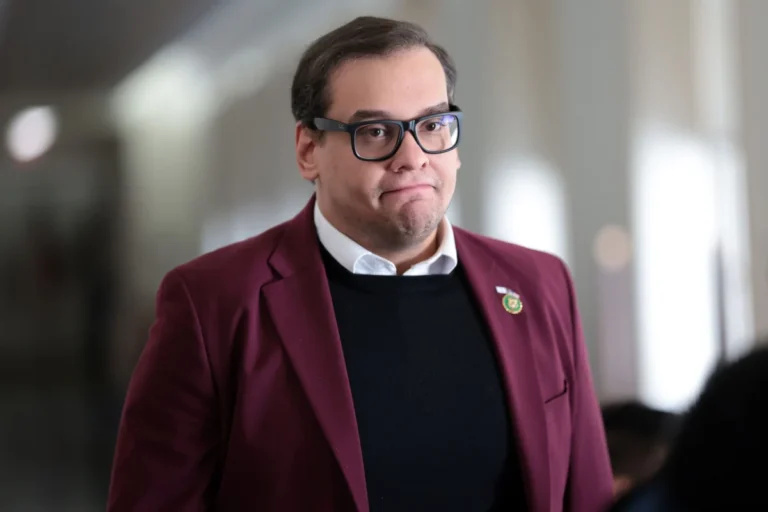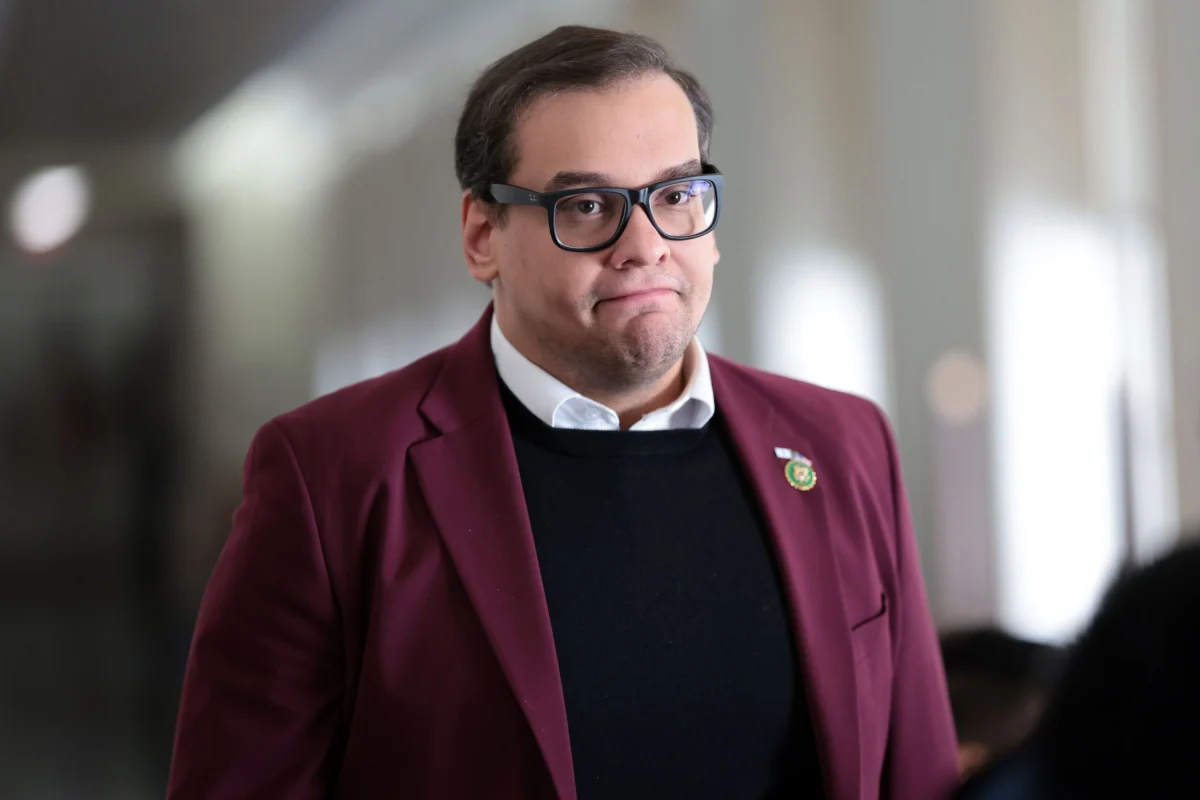
The prediction market platform Kalshi has issued a historic disciplinary ruling against former Republican Congressman George Santos, imposing a first-of-its-kind lifetime ban and a financial penalty of $71,356. The sanctions follow an internal investigation into what the platform described as a calculated effort by Santos to engage in insider trading and market manipulation. The disciplinary notice, released publicly by Kalshi, details a pattern of behavior in which the former lawmaker utilized his public platform to influence the pricing of event contracts in which he held a direct financial stake.
According to the regulatory filing, the controversy centers on trades placed by Santos involving markets tied to his own physical presence at President Donald Trump’s State of the Union address in February 2026. Kalshi’s enforcement division concluded that Santos leveraged his unique position as a public figure to move the needle on contract prices, ultimately profiting from misleading information disseminated to his followers and the broader trading public.
The Mechanics of the Manipulation
The investigation focused on a series of contracts related to whether Santos would attend the high-profile presidential address. Under Kalshi’s rules, as a regulated exchange under the Commodity Futures Trading Commission (CFTC), participants are strictly prohibited from trading on non-public information or engaging in "wash trading" and market manipulation.
Kalshi’s disciplinary notice indicates that Santos began accumulating positions in the "attendance" market well in advance of the event. On the day before the State of the Union, Santos took to the social media platform X to announce his intentions, stating, "I’m going to be there for the State of Union in the gallery, guys." This public declaration caused an immediate spike in the price of contracts predicting his attendance.
However, as the event unfolded, it became clear that Santos’s public statements were at odds with his actual movements. During the speech, Santos posted a follow-up message on X, revealing that he was not at the Capitol but was instead at an airport watching the address on a television screen. He accompanied the revelation with the phrase "FML" (an acronym for "fuck my life"). The shift in information caused the market for his attendance to collapse, a move that Kalshi alleges Santos capitalized on through his trading activity.
The exchange’s enforcement team flagged the trades as suspicious almost immediately. The platform subsequently froze Santos’s account and initiated a referral to the CFTC, the federal agency responsible for overseeing the derivatives and prediction markets in the United States.
A History of Legal and Ethical Challenges
The Kalshi ban is the latest in a long line of legal and ethical entanglements for the former New York representative. George Santos rose to national prominence—and infamy—following his election to Congress in 2022, after which a series of investigative reports revealed that he had fabricated nearly every aspect of his personal, professional, and educational biography.
In 2023, Santos became only the sixth member of the House of Representatives to be expelled by his colleagues. The expulsion followed a scathing report from the House Ethics Committee, which found "substantial evidence" that Santos had used campaign funds for personal luxuries, including designer clothing, spa treatments, and adult content websites.
Following his expulsion, Santos faced a multi-count federal indictment. He eventually pleaded guilty to charges including wire fraud and aggravated identity theft. He was sentenced to 87 months in federal prison for embezzling from campaign donors and lying to the Federal Election Commission. However, his period of incarceration was truncated when President Trump commuted his sentence in early 2025, allowing Santos to return to the public eye, where he quickly pivoted to the burgeoning world of prediction markets and social media influence.
The CFTC Settlement and Financial Penalties
The $71,356 fine imposed by Kalshi is distinct from earlier federal penalties. During the summer of 2026, Santos reached a settlement with the CFTC regarding the same suspicious trades. In that settlement, Santos agreed to pay $35,000, which included $17,500 in disgorged profits and an additional $17,500 civil penalty.
At the time of the CFTC settlement, Santos’s legal counsel emphasized that the agreement was reached to "put this matter behind him" and noted that the settlement was made without admitting or denying the commission’s findings. The new fine from Kalshi, however, represents the platform’s own internal disciplinary mechanism. Kalshi spokesperson Elisabeth Diana stated that the company remains committed to maintaining the integrity of its markets and will pursue "legal action" against Santos if the $71,356 fine remains unpaid.
The $71,356 figure was calculated based on the scale of the manipulation and the disruption caused to the market’s price discovery mechanism. Kalshi’s notice stated that Santos "successfully influenced the pricing of several markets," causing harm to other traders who relied on his public statements as credible indicators of his future actions.
Broader Crackdown on Political Figures
Santos was not the only political figure caught in Kalshi’s recent wave of enforcement. The platform also issued disciplinary notices to several other candidates and politicians who attempted to trade on their own electoral outcomes or related political events.
Among those penalized were:
- Laurie Buckhout: A retired military officer and North Carolina Congressional candidate. Buckhout was fined for trading on contracts related to her own race. In a statement to the media, she described the trades as a "dumb mistake," explaining that she was simply "betting on herself" without realizing it violated exchange rules.
- Stephen Kloobeck: A California gubernatorial candidate who was issued a temporary suspension and a fine.
- Ben Midgley: A Maine gubernatorial candidate who also faced disciplinary action for trading on his own political prospects.
- Mark Moran: A U.S. Senate candidate who was previously fined for insider trading. Unlike Buckhout, Moran was defiant, telling reporters that he performed the trades "on purpose" and signaled a refusal to cooperate with Kalshi’s investigation.
Kalshi’s aggressive stance highlights a growing tension between the rise of prediction markets and the ethical obligations of political figures. While prediction markets are often praised for their ability to aggregate information and provide more accurate forecasts than traditional polling, they are highly susceptible to manipulation by those who have direct control over the outcomes being traded.
The Role and Regulation of Prediction Markets
Prediction markets like Kalshi and its offshore rival, Polymarket, have seen an explosion in volume during the mid-2020s. These platforms allow users to buy and sell "shares" in the outcome of future events, ranging from Federal Reserve interest rate hikes to movie box office totals and election results.
Kalshi has distinguished itself by seeking and obtaining regulatory approval from the CFTC to operate as a designated contract market. This status requires Kalshi to maintain rigorous surveillance systems to detect and prevent fraud, wash trading, and insider manipulation. The enforcement action against Santos is seen by industry analysts as a signal to the CFTC and the public that the exchange is capable of self-regulation.
However, the industry faces ongoing headwinds. Kalshi has been embroiled in legal battles with state authorities, including those in Nevada, over the regulation of event contracts. Some regulators argue that prediction markets are a form of gambling that should be subject to strict state-level oversight, while proponents argue they are sophisticated financial instruments that provide valuable hedging opportunities and data.
Reaction and Implications
George Santos has reacted to the ban with characteristic defiance. On social media, he sarcastically thanked Kalshi for the "lifetime ban from your gambling platform" and questioned the long-term viability of the company, referencing its ongoing regulatory hurdles.
Industry experts suggest that the Santos case may lead to stricter "know your customer" (KYC) protocols for public figures on prediction platforms. "The Santos incident is a textbook case of why insider trading rules must be strictly enforced in event markets," said Dr. Aris Xanthos, a financial markets analyst. "If a person has the power to unilaterally decide the outcome of a contract—such as whether or not they walk through a door—they cannot be allowed to trade that contract. It undermines the entire concept of a fair market."
The $71,356 fine represents one of the largest individual penalties ever issued by a private prediction exchange. As the market for political event contracts continues to grow, the Santos case serves as a precedent for how platforms will handle "influencer-led" manipulation.
For Santos, the ban marks yet another door closed in his post-congressional career. Having already been severed from promotional ties with Polymarket earlier in the year, the former congressman is increasingly finding himself persona non grata in the very financial and digital spaces he sought to inhabit after his release from prison.
As of the date of publication, the fine remains unpaid, and Kalshi has indicated it is prepared to move forward with civil litigation to recover the funds. The case continues to draw attention to the intersection of political ethics, social media influence, and the rapidly evolving landscape of American financial regulation.
About the Author