For years, marketing professionals have been cautioned against the allure of "vanity metrics" – those impressive-sounding figures like website traffic and search engine rankings that, while seemingly positive, often fail to translate into tangible business results or profitability. This long-standing advice, however, is undergoing a significant transformation with the advent of artificial intelligence in search. What was once considered the bedrock of marketing success, namely high traffic volumes and top search engine positions, is now being re-evaluated as potentially misleading in the new era of AI-powered search.
The paradigm shift began with the widespread integration of AI into search engines. While traditional search engine optimization (SEO) strategies focused on achieving high organic search rankings and driving substantial website traffic, the emergence of AI-generated answers and conversational search interfaces has fundamentally altered user behavior and the way brands are discovered. According to Semrush, visitors arriving via AI search convert at an astonishing 4.4 times the rate of those from standard organic traffic. This dramatic difference implies that a brand could potentially see a 40% decrease in overall traffic and still achieve superior results in AI search environments. Conversely, maintaining a #1 ranking in traditional search engines might not guarantee visibility across the burgeoning landscape of AI-powered search platforms. This disconnect highlights the critical need for a new set of key performance indicators (KPIs) specifically designed to measure AI search performance. These new metrics aim to quantify AI search visibility, attribution signals, conversion rates, and the ultimate revenue impact derived from AI-driven discovery.
The Rise of AI in Search: A New Frontier for Marketing Measurement
The integration of AI into search engines, particularly through features like AI Overviews (formerly known as AI Generative Experiences or SGE), has rapidly reshaped the search landscape. BrightEdge reports that AI Overviews now appear in approximately 48% of all Google searches, a significant increase from 31% just a year prior. This surge in AI-generated content has a direct impact on traditional search metrics. When AI Overviews are present, organic click-through rates can plummet by as much as 61%, even for the top-ranked organic result. This indicates a fundamental shift in how users interact with search results, often finding their answers directly within the AI-generated summary, thereby bypassing traditional links.
This dramatic change renders previously reliable metrics like raw website traffic and page rankings insufficient for a comprehensive understanding of marketing effectiveness. The excitement around increasing these numbers can distract from the metrics that truly reflect business growth and profitability. Without the proper context, these figures can become mere "vanity metrics" – impressive on a dashboard but devoid of actionable insights.
Understanding the New Metrics: Beyond Traffic and Rankings
The challenge for marketers now is to adapt their measurement strategies to account for the nuances of AI search. This involves moving beyond superficial numbers and focusing on metrics that demonstrate real business impact. The author’s journey, like many in the marketing field, has been one of re-education, recognizing that established KPIs no longer paint the complete picture.
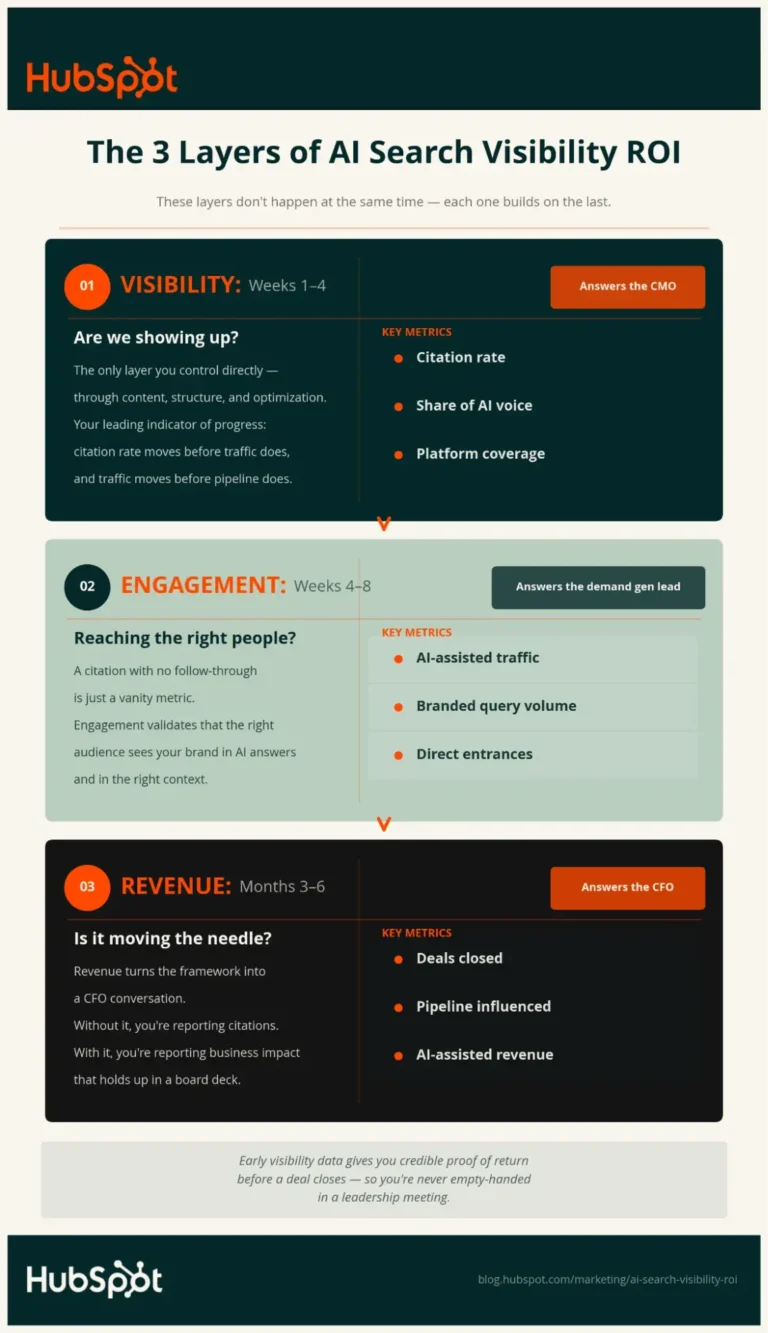
AI search performance KPIs can be broadly categorized into three interconnected layers:
- Direct Metrics: These provide immediate insights into a brand’s presence and performance within AI search results.
- Proxy Metrics: These offer indirect indicators of AI search impact by analyzing user behavior and downstream effects.
- Revenue Metrics: These directly link AI search efforts to financial outcomes, demonstrating the ultimate return on investment.
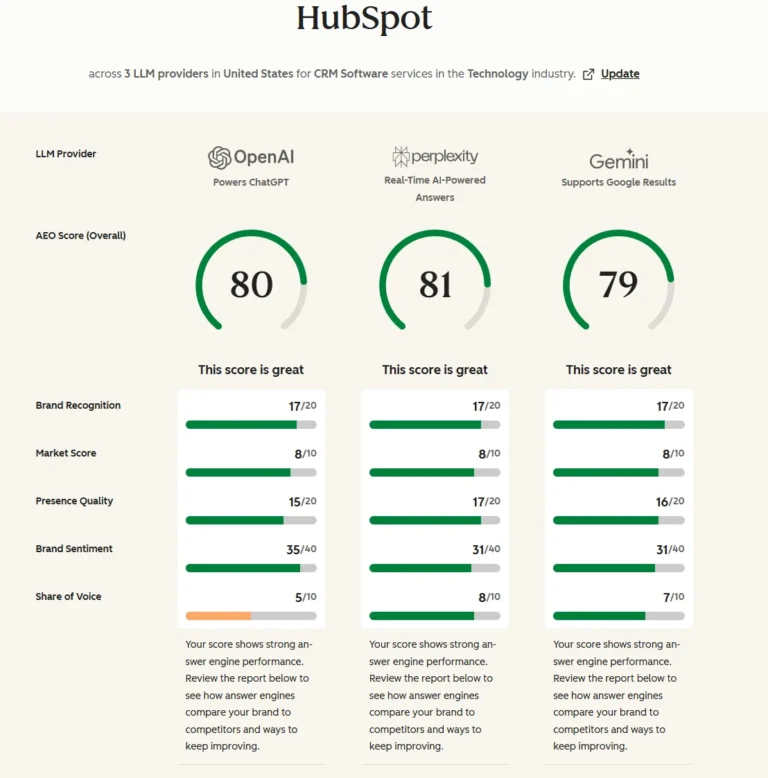
While not every brand may have immediate access to all these direct metrics, the objective is to establish a comprehensive reporting stack that layers these three categories to avoid over-reliance on any single data point. For organizations beginning their AI measurement journey, tools like HubSpot’s AI Search Grader can provide a crucial starting point by benchmarking current AI search visibility against competitors.
Direct Metrics: Measuring AI Visibility and Performance
The foundation of effective AI search measurement lies in understanding a brand’s direct presence within AI-generated answers.
-
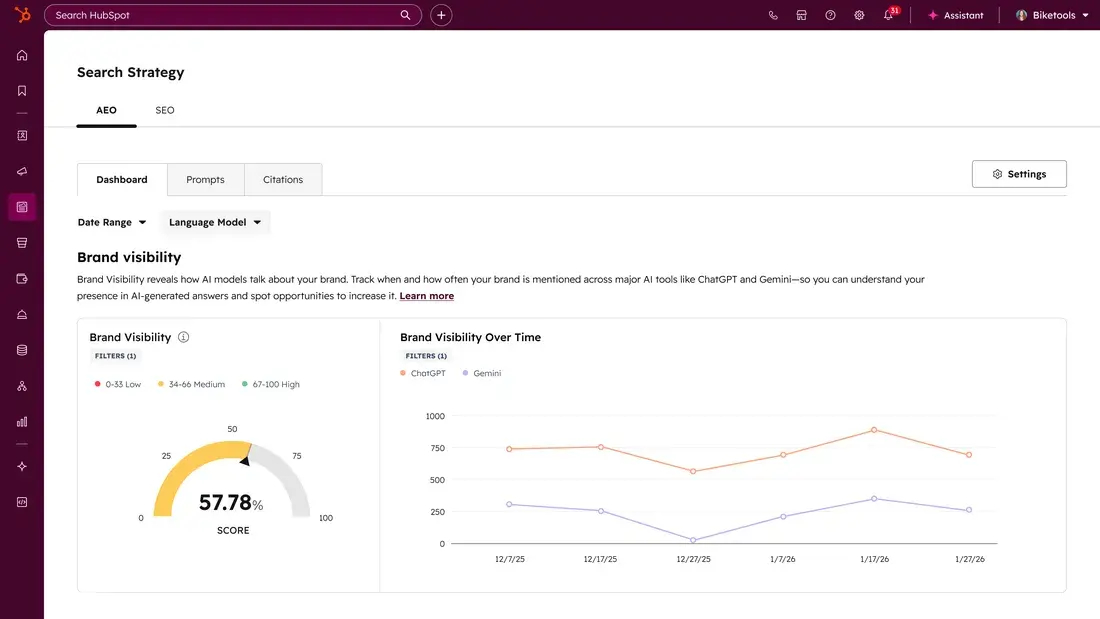
AI Visibility Rate: This foundational metric quantifies how frequently a brand is cited in AI-generated answers across a defined set of search prompts. It directly answers whether a brand is appearing in front of its target audience within AI search environments. Measuring AI Visibility Rate involves identifying relevant prompts, tracking brand appearances, and calculating the percentage of times the brand is cited. Key considerations include the breadth of the prompt set, the frequency of testing, and the specific AI platforms being monitored.
-
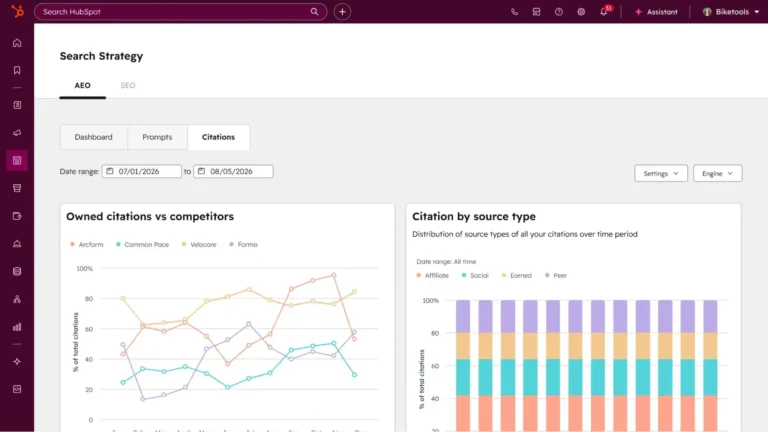
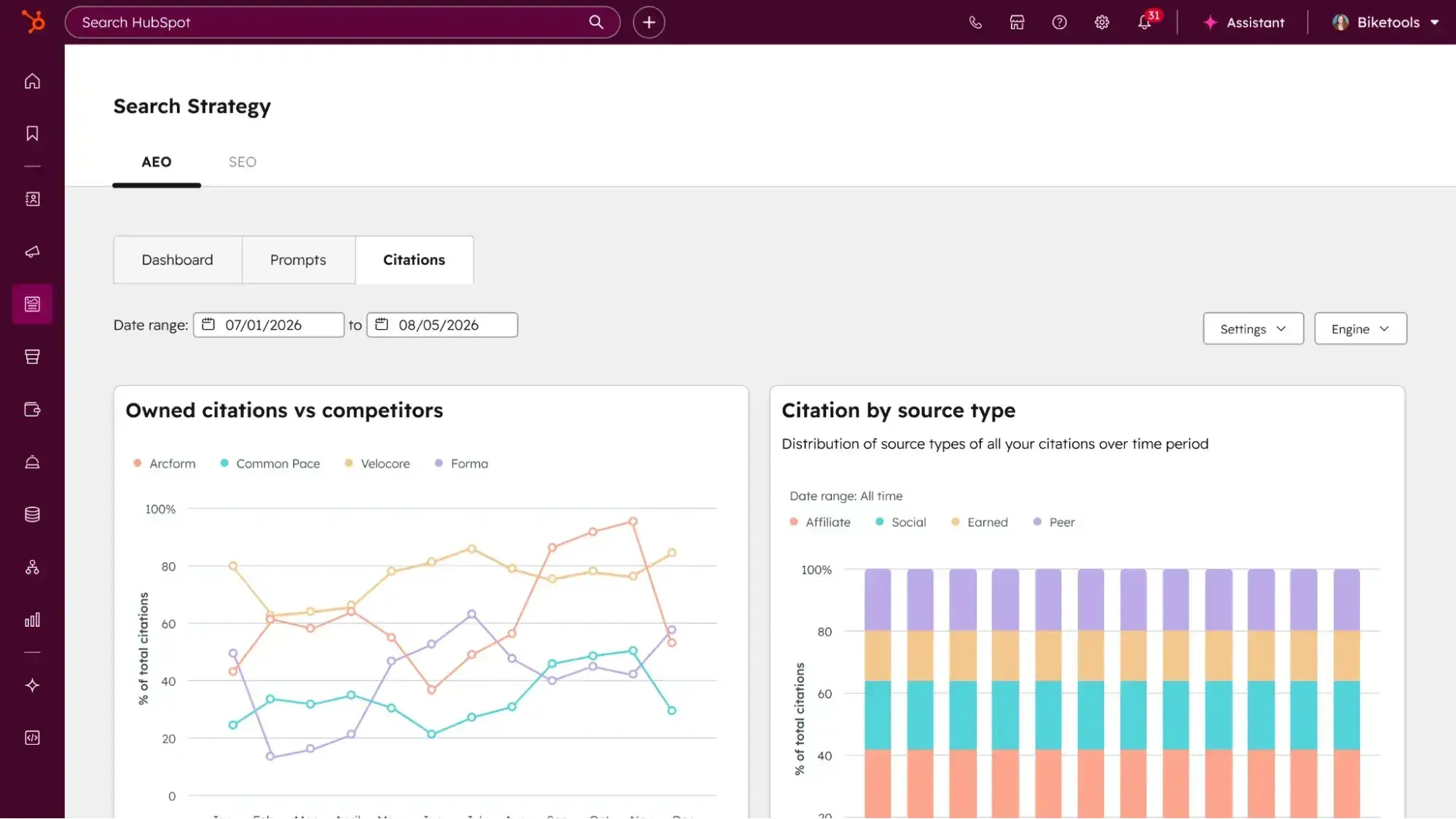
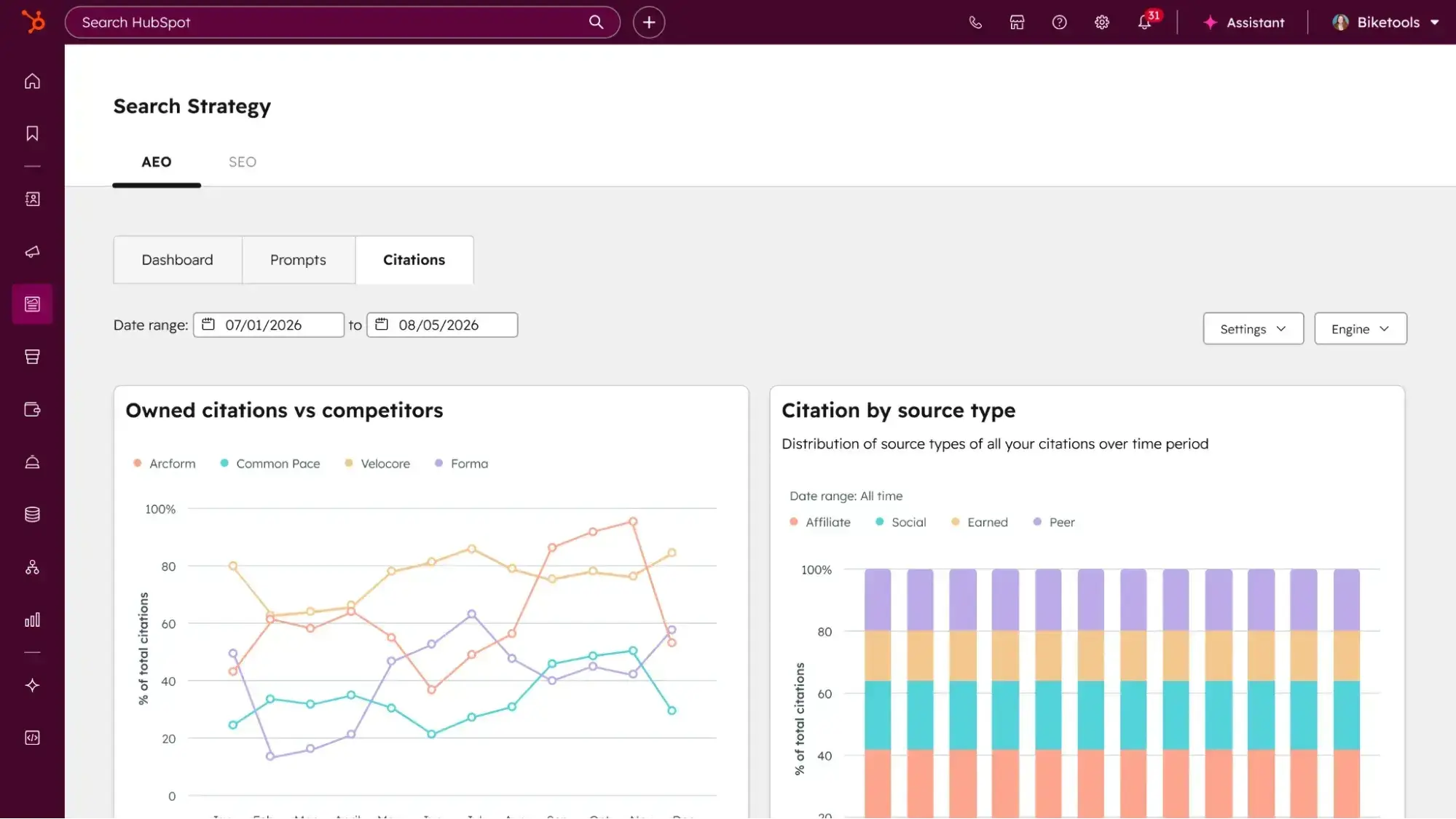
Citation Share: Building upon AI Visibility Rate, Citation Share contextualizes a brand’s visibility by comparing its citation percentage against that of its competitors for the same set of prompts. This metric functions similarly to "share of voice" in traditional marketing, offering a competitive benchmark. For instance, a brand might appear in 30% of AI answers, but if a competitor appears in 60%, the brand is effectively losing ground in the AI search battle.
How to Calculate Citation Share:
- Define a comprehensive prompt set: This should encompass questions relevant to your industry and target audience.
- Run prompts across key AI platforms: Include platforms like ChatGPT, Gemini, and Perplexity, as their user bases and search retrieval logic can differ.
- Track brand citations: Manually or through automated tools, record instances where your brand is mentioned.
- Track competitor citations: Do the same for your key competitors within the same prompt set.
- Calculate the share: For each prompt, determine the total number of citations and your brand’s percentage of those citations. Aggregate these percentages to derive an overall Citation Share.
Pro Tip: Regularly running prompts for competitors, not just your own brand, is crucial for gaining actionable competitive intelligence.
-
Answer Accuracy and Sentiment: The efficiency of AI engines does not always guarantee accuracy. A brand frequently cited but with incorrect information (e.g., outdated pricing, inaccurate feature descriptions) can negatively impact conversion rates and brand reputation. Tracking the accuracy and sentiment of AI-generated answers is therefore paramount.
How to Measure Accuracy and Sentiment:
- Manual Review: Systematically review AI-generated answers that cite your brand.
- Content Audits: Compare the information presented in AI answers against your own authoritative content.
- Sentiment Analysis: Assess the tone and context of the citation. Is it positive, neutral, or negative?
- Feedback Mechanisms: Encourage users to provide feedback on the accuracy and helpfulness of AI answers.
Proxy Metrics: Gauging AI Search’s Downstream Impact
While direct metrics offer immediate visibility, proxy metrics help infer the influence of AI search on user behavior and subsequent actions.
-
Branded Search Lift: This is a critical, yet often underutilized, proxy metric. When an AI platform recommends a brand to a user unfamiliar with it, that user is significantly more likely to search for the brand directly on Google or visit its website within a week. Scrunch’s analysis of millions of search events found that users exposed to a brand via AI were 182% more likely to search for the brand on Google and 117% more likely to visit its website directly. Since AI engines typically do not pass referral data, these subsequent actions often manifest as organic branded searches or direct traffic, masking their AI origin. Monitoring the increase in branded search queries and direct website visits following improved AI visibility can serve as a strong indicator of AI search’s influence.
How to Measure Branded Search Lift:

- Monitor Google Search Console: Track the volume of branded search queries over time.
- Analyze direct traffic in GA4: Observe trends in direct website visits.
- Correlate with AI visibility: Look for increases in branded search and direct traffic that coincide with improvements in AI visibility metrics.
-
AI-influenced Engagement: Traffic originating from AI search often exhibits different engagement patterns compared to standard organic traffic. Similarweb data indicates that visitors referred by ChatGPT spent an average of 15 minutes on-site and viewed 12 pages per session, significantly higher than the 8 minutes and 9 pages from Google referrals. Furthermore, AI-referred visitors converted at a 7% rate on transactional sites, compared to 5% for Google referrals. Analyzing engagement metrics like time on site, pages per session, bounce rate, and conversion rates specifically for AI-referred traffic segments provides insights into content resonance and areas for improvement.
How to Measure AI-influenced Engagement:
- Segment AI traffic in GA4: Utilize referral source data or custom tracking to isolate AI-referred visitors.
- Track engagement metrics: Monitor time on site, pages per session, and bounce rates for this segment.
- Analyze content consumption: Identify which content resonates most with AI-referred users.
-
AI-influenced Conversion Rate: The intent behind AI search is often high. By the time an AI engine directs a user to a website, the user has likely already synthesized options and pre-qualified their needs. Ahrefs found that AI-referred visitors, while constituting only 0.5% of their website sessions, drove 12.1% of all signups – a 23x conversion differential. This demonstrates that users arriving via AI are often further down the purchase funnel and ready to act.
How to Measure AI-influenced Conversion Rate:
- Segment conversions by AI traffic sources in GA4: Compare conversion rates for AI-referred sessions against organic and direct traffic.
- Track goal completions: Monitor specific conversion events (e.g., form submissions, purchases) attributed to AI traffic.
Revenue Metrics: Connecting AI Search to the Bottom Line
Ultimately, the success of any marketing initiative is measured by its contribution to revenue.
-
AI Revenue Contribution (via CRM): This is the ultimate KPI that bridges AI search visibility to tangible financial outcomes. While direct attribution from AI search is challenging due to the lack of referral data, a combination of self-reported attribution, branded search lift, and CRM data can provide a reliable directional picture.
How to Measure Revenue Contribution:
- Self-Reported Attribution: Include "AI engine" as an option in "How did you hear about us?" fields on forms and surveys.
- Track Branded Search Lift and Direct Entrances: Monitor increases in branded search and direct traffic as proxy indicators of AI influence.
- CRM Integration: Configure CRM systems to capture AI discovery signals at the contact level. This involves creating custom fields for "AI Discovery Source" and tracking contacts through the entire sales cycle. By mapping AI-influenced leads to closed deals, organizations can quantify the pipeline contribution of AI-driven discovery.
Limitations: Self-reported attribution is inherently imprecise. However, it is currently the only method capable of capturing the zero-click discovery path that traditional analytics tools miss. When layered with other proxy metrics and robust CRM tracking, it provides a defensible business case for AI search investment. Tools like HubSpot’s Smart CRM facilitate the creation of custom contact properties and automated tracking, enabling a clear view of AI-sourced pipeline data.
Establishing a Measurement Framework: Building a Consistent System
The measurement of AI search visibility is a nascent practice. Unlike traditional SEO, where ranking KPIs and organic traffic benchmarks are well-established, a universal tool for capturing all AI search data does not yet exist. Therefore, marketers must construct a consistent and repeatable tracking system.
-
Establish Your Prompt Set: The foundation of AI visibility measurement is a curated list of prompts that accurately reflect how your target audience searches within AI engines. This set should include prompts categorized by:
- Informational: Broad questions seeking general knowledge.
- Navigational: Queries aiming to find specific websites or brands.
- Transactional: Searches with a clear intent to purchase or take a specific action.
-
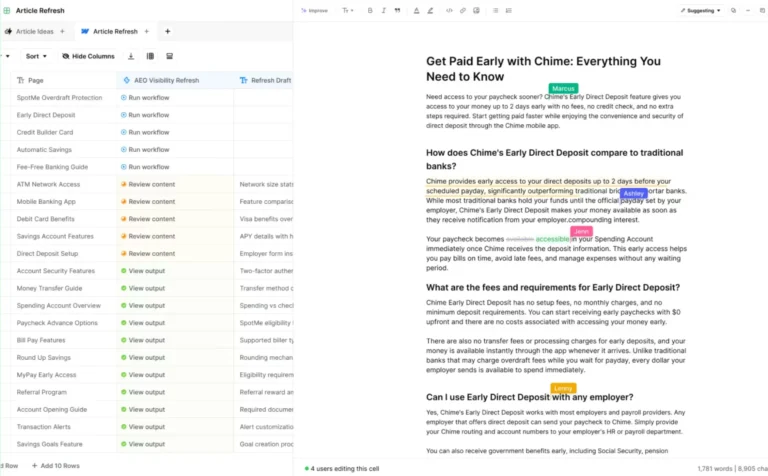
Input Prompts into AI Visibility Tools: Prompts can be tested manually across various AI platforms (ChatGPT, Gemini, Perplexity) or by utilizing specialized tools like HubSpot AEO, which automate citation tracking. It’s crucial to test across multiple platforms, as their AI models and citation behaviors can differ significantly. Goodie’s 2026 Wave 2 report indicated a substantial shift in AI referral traffic, with ChatGPT’s share dropping while Claude and Gemini gained prominence. This underscores the need for multi-platform monitoring.
-
Evaluate and Document Findings: Regular analysis of citation data is essential. Track increases or decreases in your brand’s citations and those of your competitors. Document key findings, including:
- The specific prompts that yield the most citations.
- The types of AI answers that cite your brand (e.g., direct answers, summaries).
- Any changes in the AI platforms where your brand is appearing.
This data informs content briefs and strategy, helping to identify which content pieces drive the most AI citations and engagement. Analyzing competitor data can reveal content gaps and opportunities.
-
Repeat Consistently: Consistency is paramount. After implementing strategic changes based on data insights, repeat the prompt testing process on a regular schedule, ideally weekly or biweekly. This iterative approach allows for ongoing monitoring and refinement of AI search strategies.
Connecting AI Search KPIs to Conversions and Revenue: The Attribution Challenge
The most significant hurdle in AI search measurement is attribution. The lack of referral data from most AI engines makes it difficult to directly link AI discovery to conversions. Users may discover a brand in a chat window, close it, and later search for it directly on Google or visit the website, with no traceable link back to the AI interaction.
To overcome this, a multi-pronged approach is necessary:
-
Self-Reported Attribution: This is the most crucial method for capturing the zero-click discovery path. By adding "AI engine" as an explicit option in "how did you hear about us?" fields on forms, surveys, and post-purchase questionnaires, businesses can gather valuable, albeit imperfect, data on AI influence. Surveys indicate a significant portion of consumers use AI for product research, and the number of customers citing LLMs as their discovery source has grown exponentially.
-
Track Branded Search Lift and Direct Entrances: As previously discussed, monitoring increases in branded search volume and direct traffic following AI visibility improvements serves as a powerful proxy for AI influence. This correlation, while not a direct attribution, provides a strong directional signal.
-
Set Up CRM to Capture AI Discovery Signals: To ensure that AI-attributed leads are not lost, CRM systems must be configured to capture and track AI discovery sources. This involves creating custom contact properties to record the AI engine of discovery, the user’s initial query, and the specific answer that led to their interest. With this structured data, organizations can filter deals by AI discovery source, analyze close rates for AI-sourced contacts, and accurately calculate the pipeline contribution of AI-influenced leads.
By combining these approaches, businesses can build a more complete and defensible picture of AI search’s impact on their bottom line, moving beyond mere visibility scores to demonstrate concrete business outcomes.
Frequently Asked Questions About AI Search Performance KPIs
-
How do we handle variations in AI answers across users and locations?
AI answers are inherently non-deterministic. To mitigate this, run prompts at consistent times, from fixed locations (or via VPN), and repeat each prompt multiple times before recording a result. Focus on tracking trends over 4-6 week windows rather than individual sessions. -
What if AI platforms don’t provide referral data?
When referral data is absent, rely on proxy metrics: branded search lift in Google Search Console, direct traffic trends in GA4, and self-reported attribution from forms. Layering these provides a directional understanding. ChatGPT’s recent implementation of UTM parameters for citation links offers some improvement for web-based tracking. -
Which tools should we start with if we’re short on time?
Begin with HubSpot’s AI Search Grader for visibility benchmarking, Google Analytics 4 for engagement and conversion tracking, and your CRM for revenue attribution. Supplementing lead forms with self-reported attribution options is also critical. -
How do we prevent vanity metrics from derailing our reporting?
Always pair visibility metrics with business outcome metrics. For example, AI visibility rate is only meaningful when juxtaposed with conversion rates or pipeline data. Citation share gains importance when compared against competitors. The goal is measurement that informs decisions, not just impressive-looking dashboards.
Ready to Measure Your AI Search Visibility?
Before any improvements can be made, understanding your current standing is paramount. The HubSpot AI Search Grader offers a swift benchmark of your brand’s AI search visibility across various answer engines, highlighting citation rates, competitive positioning, and key areas for improvement. This provides a concrete baseline for developing future AI search strategies. Requesting a demo can further illustrate how the AI Search Grader integrates into a comprehensive AI Search Optimization (AEO) measurement workflow, enabling you to establish your baseline and build from there.
About the Author