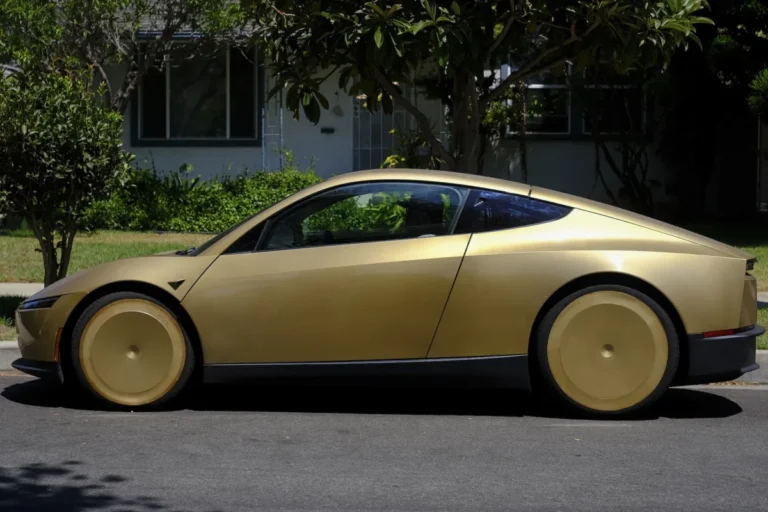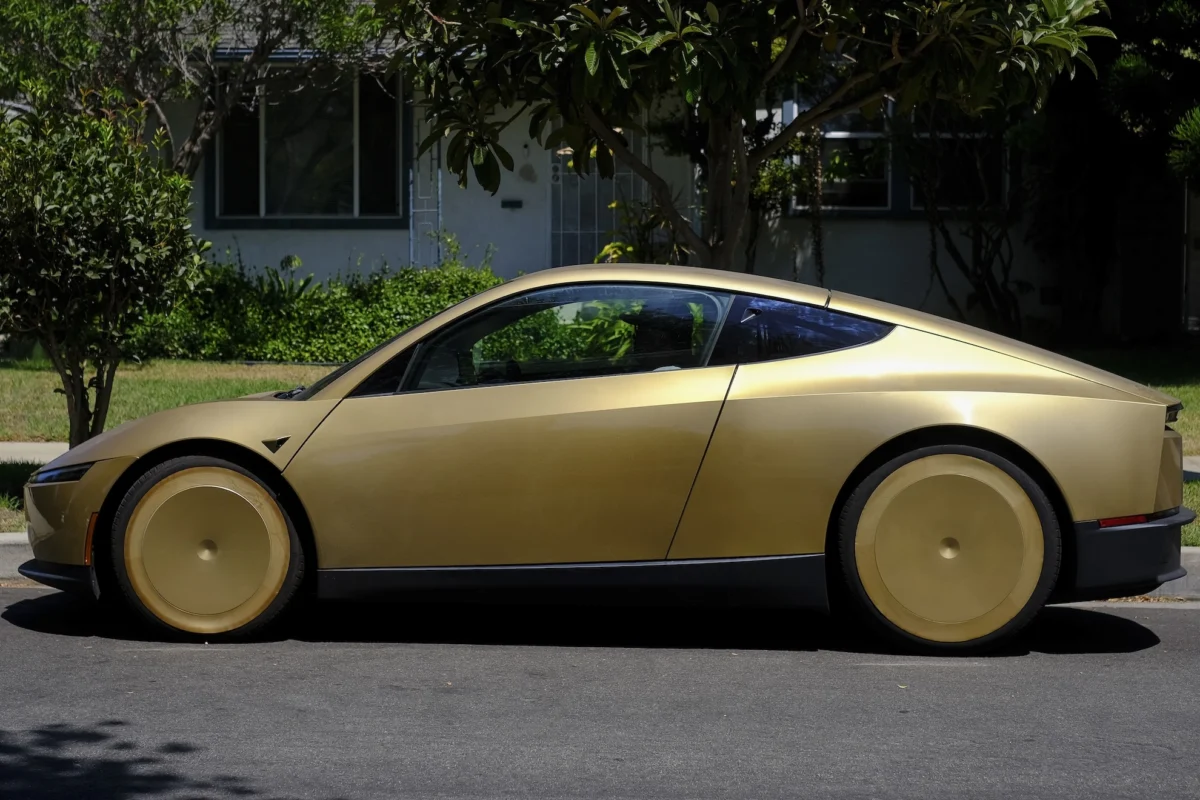
The United States’ top automotive safety regulator, the National Highway Traffic Safety Administration (NHTSA), has initiated a formal investigation into Tesla’s decision to deploy its new Cybercab vehicles on public roads without a steering wheel or pedals. This probe commenced mere hours after the electric vehicle manufacturer began operating its driverless ride-hailing service in Austin, Texas, signaling immediate federal scrutiny over a design that challenges established vehicle safety paradigms.
Regulatory Crossroads: Manual Controls and Autonomous Driving
At the heart of the NHTSA’s concern lies the fundamental requirement within federal vehicle safety regulations that mandates manual controls, such as brake pedals, for all vehicles. The presence of a steering wheel and pedals has historically been a non-negotiable aspect of automotive design, ensuring a driver has the means to intervene in critical situations. However, this long-standing requirement has been under review. In a significant development earlier this year, the Department of Transportation proposed removing these specific mandates for vehicles designed for fully autonomous operation. This proposed rule change, which could be interpreted as a concession to the burgeoning autonomous vehicle industry, including companies like Tesla, has placed regulators in a complex position.
Tesla, in its self-certification process, has informed the NHTSA that it deems the Cybercab compliant with all Federal Motor Vehicle Safety Standards (FMVSS). Self-certification is a standard practice within the automotive industry, where manufacturers attest to their vehicles meeting all applicable safety regulations. The Cybercab, envisioned by Tesla as a purpose-built robotaxi, is designed from the ground up to operate without human intervention, eliminating the need for traditional driver interfaces. This fundamental design choice, while pushing the boundaries of automotive innovation, directly confronts the existing regulatory framework.
Chronology of a Regulatory Standoff
The unfolding events present a clear timeline of innovation meeting regulatory caution:
- Early 2026: Tesla publicly reveals its vision for the Cybercab, a fully autonomous electric vehicle designed exclusively for ride-hailing services, with no manual controls. The company emphasizes its advanced autonomous driving system as the sole means of operation.
- June 2026: The Department of Transportation, under the Trump administration, proposes a significant revision to Federal Motor Vehicle Safety Standards (FMVSS), including the potential elimination of requirements for manual driving controls like brake pedals in vehicles designed for autonomous driving. This move is widely seen as a preparatory step to accommodate vehicles like Tesla’s proposed Cybercab.
- Late August 2026: Tesla begins pilot programs and public demonstrations of the Cybercab in controlled environments, showcasing its driverless capabilities.
- September 4, 2026 (Early Morning PDT): Tesla officially launches the Cybercab service on public roads in Austin, Texas, marking the first time vehicles without steering wheels or pedals are deployed in a commercial ride-hailing capacity.
- September 4, 2026 (Morning PDT): Within hours of the Cybercab’s public deployment, the National Highway Traffic Safety Administration (NHTSA) announces the opening of a formal investigation into Tesla’s decision to operate these vehicles without traditional manual controls.
This rapid sequence highlights the tension between rapid technological advancement and the deliberate, often bureaucratic, pace of regulatory adaptation. Tesla’s bold move to deploy the Cybercab ahead of definitive regulatory clearance for such designs has evidently prompted a swift and decisive response from the NHTSA.
The Cybercab: A Vision for Future Mobility
The Tesla Cybercab represents a radical departure from conventional automotive design, conceived as a dedicated autonomous vehicle for a ride-sharing ecosystem. Unlike modified passenger vehicles that have been retrofitted with autonomous technology, the Cybercab is engineered from its inception to function solely as a driverless service. Its interior is optimized for passenger comfort and interaction, with seating arrangements and digital interfaces designed to enhance the experience of being transported rather than driving.
Tesla’s ambitious plan for the Cybercab is intrinsically linked to its Full Self-Driving (FSD) software, a suite of advanced driver-assistance features that the company aims to evolve into a true autonomous driving system. The company has consistently asserted its belief that its autonomous technology is superior and safer than human drivers, and the Cybercab is the ultimate manifestation of this philosophy. The elimination of manual controls underscores Tesla’s confidence in its FSD system’s ability to navigate complex urban environments safely and reliably.
The potential economic implications of such a vehicle are substantial. By removing the cost of a human driver, Tesla aims to significantly reduce the per-mile cost of ride-hailing, potentially disrupting existing ride-sharing giants like Uber and Lyft. The company has projected that the Cybercab could generate substantial revenue through its autonomous fleet, contributing significantly to its overall business model. However, realizing this potential is contingent upon navigating the complex regulatory landscape and proving the safety and reliability of its technology to both regulators and the public.
Broader Implications and Industry Impact
The NHTSA’s investigation into the Tesla Cybercab has far-reaching implications for the entire autonomous vehicle industry. This probe serves as a critical juncture, forcing a confrontation between the industry’s push for innovation and the imperative of public safety.
Regulatory Uncertainty: The investigation underscores the existing regulatory vacuum surrounding fully autonomous vehicles without manual controls. While the Department of Transportation’s proposed rule changes signal a willingness to adapt, the lack of finalized regulations creates an environment of uncertainty for all companies developing similar technologies. Tesla’s actions may accelerate the regulatory process, but the outcome remains to be seen.
Public Perception and Trust: The deployment of driverless vehicles, particularly those lacking traditional safety redundancies like steering wheels and pedals, raises significant public trust issues. Accidents or malfunctions involving such vehicles could have a disproportionately negative impact on the public’s acceptance of autonomous technology. The NHTSA’s investigation is not only a regulatory process but also a measure to assure the public that safety is paramount.
Industry Standards: The outcome of this investigation could set a precedent for the development and deployment of future autonomous vehicles. If Tesla is permitted to operate its Cybercabs without manual controls, it could pave the way for other manufacturers. Conversely, if the NHTSA imposes strict limitations or mandates specific safety features, it could shape the trajectory of autonomous vehicle design for years to come.
Technological Evolution: The investigation highlights the ongoing debate about the definition of "driving" and "driver." As vehicles become increasingly autonomous, the legal and ethical frameworks surrounding their operation must evolve. The Cybercab challenges these definitions, pushing the boundaries of what is considered a vehicle and who or what is responsible for its safe operation.
The NHTSA’s swift action demonstrates a commitment to ensuring that the rapid advancement of automotive technology does not outpace the fundamental principles of public safety. The coming weeks and months will be crucial in determining how the regulatory environment adapts to the disruptive innovations presented by companies like Tesla, and what this means for the future of transportation. This investigation is not merely about a single vehicle but about shaping the future of mobility for generations to come.
About the Author