In a move that fundamentally reshapes the competitive landscape of the artificial intelligence industry, Nvidia has officially announced its acquisition of Hugging Face, the preeminent platform for open-source AI development, for a staggering $13 billion. The deal, which had been the subject of intense industry speculation for several weeks, was confirmed on Thursday morning, marking a definitive pivot for Nvidia as it transitions from a hardware-centric semiconductor giant into an end-to-end powerhouse encompassing both infrastructure and the software ecosystems that drive generative AI.
The acquisition represents one of the most significant consolidations in the AI sector to date. Hugging Face, often described as the "GitHub of AI," serves as the central repository for hundreds of thousands of pre-trained models, datasets, and demo applications. By bringing this platform under its corporate umbrella, Nvidia is positioning itself at the very heart of the developer workflow, ensuring that the next generation of AI applications is built on a foundation it controls and optimizes.
A Strategic Shift Toward Software and Community
For years, Nvidia’s dominance was defined by its H100 and Blackwell GPUs—hardware components that became the "gold standard" for training large language models (LLMs). However, as hyperscalers like Amazon, Google, and Meta began developing their own custom silicon to reduce reliance on Nvidia, the chipmaker recognized the need to entrench itself within the software layer.
The acquisition of Hugging Face is the culmination of this strategy. While Nvidia’s proprietary CUDA software has long served as a "moat" by making it difficult for developers to switch to non-Nvidia hardware, the purchase of Hugging Face allows Nvidia to influence the open-source movement directly. Hugging Face hosts a massive library of non-proprietary tools, and Nvidia’s commitment to maintaining these open standards suggests a calculated effort to become the primary resource for developers who prefer flexible, accessible AI over the "walled gardens" of closed-model providers.
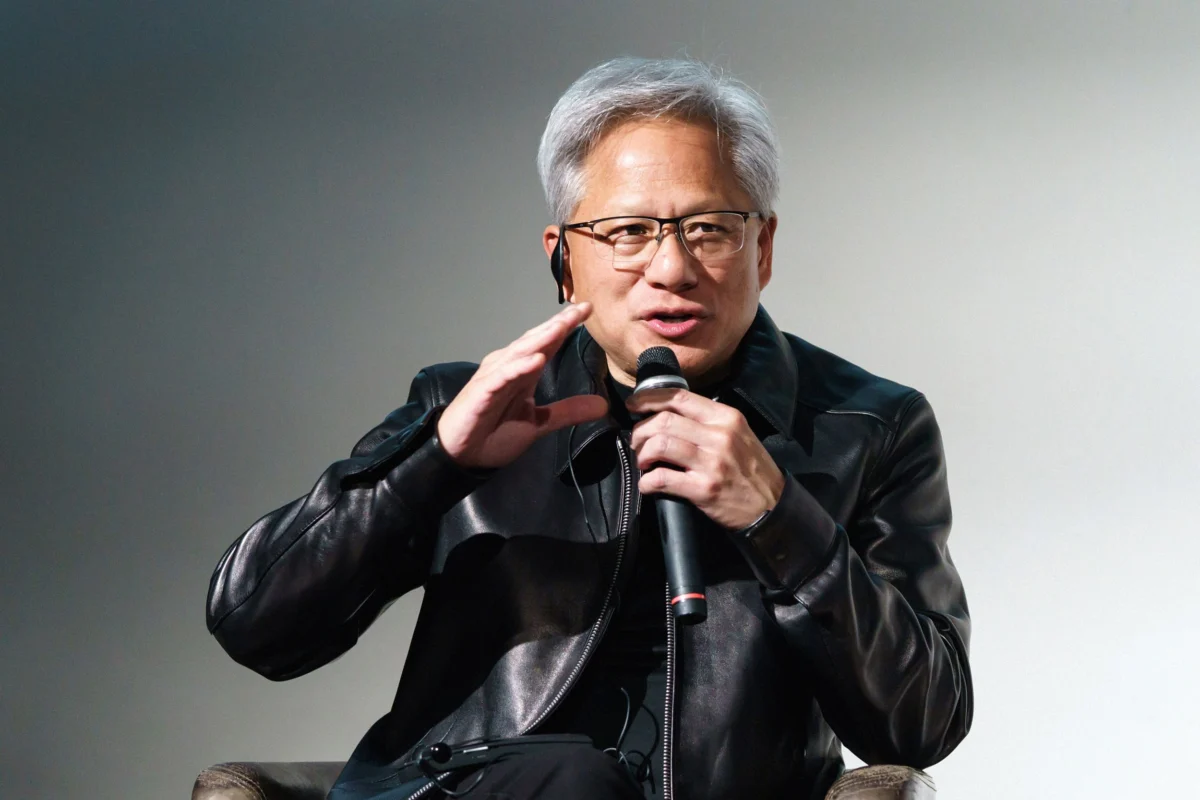
Nvidia CEO Jensen Huang emphasized this collaborative vision in the official announcement. "Open models let startups, businesses, universities, and public institutions build on advanced capabilities without training every model from scratch," Huang stated. "AI advances faster when people can build together." This sentiment underscores a broader industry shift where the speed of innovation is increasingly dictated by the ability of disparate teams to share, fork, and improve upon existing code.
The Evolution of Hugging Face: From Chatbot to Infrastructure
To understand the weight of this $13 billion deal, one must look at the meteoric rise of Hugging Face. Founded in 2016 by French entrepreneurs Clément Delangue, Julien Chaumond, and Thomas Wolf, the company originally set out to build a "Tamagotchi-style" AI companion app for teenagers. While the chatbot failed to achieve mainstream viral success, the underlying natural language processing (NLP) library developed by the team—known as "Transformers"—became an overnight sensation among researchers.
Recognizing the value of the tools they had built, the founders pivoted the company toward creating a platform that democratized access to complex AI models. Over the following decade, Hugging Face evolved into a critical piece of global infrastructure. By late 2025, the platform had become the primary hub for the "open-weights" movement, hosting models like Meta’s Llama series, Mistral, and Nvidia’s own Nemotron.
Before the acquisition, Hugging Face had raised nearly $400 million in venture capital. Its Series D funding round in 2023 valued the company at $4.5 billion, with backing from tech luminaries and major corporations including Google, Amazon, AMD, and Intel. The $13 billion acquisition price reflects a significant premium, signaling Nvidia’s belief that the strategic value of the Hugging Face community far outweighs its traditional revenue metrics.
Timeline of the Acquisition and Industry Context
The path to Thursday’s announcement was paved by a series of strategic maneuvers and rumors that highlighted the growing synergy between the two entities:
- August 2023: Hugging Face raises $235 million in a funding round led by Salesforce, with participation from Nvidia. This established an early formal link between the two companies.
- Early 2024: Nvidia begins releasing its "Nemotron" family of models directly onto Hugging Face, signaling its intention to support open-weights development.
- August 2026: Business Insider reports that Nvidia has entered formal talks to acquire Hugging Face. Market analysts note that Nvidia’s cash reserves, bolstered by record-breaking GPU sales, make such an acquisition feasible.
- September 2026: The Information reports that a deal has been reached at a valuation of approximately $12.9 billion.
- Thursday Morning: The companies issue a joint press release confirming the acquisition and outlining the future of the platform.
The deal comes at a time when the AI industry is sharply divided between two philosophies: the "Closed AI" approach championed by OpenAI and Anthropic, and the "Open AI" approach supported by Meta, Nvidia, and the Hugging Face community. By acquiring the primary hub for the latter, Nvidia is effectively placing a massive bet on the open-source ecosystem as the long-term winner of the AI race.
The Philosophical Battle: Open-Weights vs. Closed Models
The acquisition is not merely a financial transaction; it is a political and philosophical statement. Nvidia has recently become a vocal advocate for "open-weights" models—AI systems where the final parameters are made public, allowing anyone to run the model on their own hardware, though the training data and code may remain private.
Earlier this month, Nvidia led a coalition of over 80 companies in signing an open letter to the United States government. The letter urged policymakers to protect the development of open-weights AI, arguing that transparency is essential for national security, academic research, and economic competition. This advocacy aligns with Nvidia’s business interests: open-weights models require massive amounts of compute to run locally, driving further demand for Nvidia’s high-performance GPUs and CPUs.
In contrast, closed-source providers like OpenAI argue that releasing high-capability model weights poses a safety risk, as bad actors could potentially remove safety guardrails. Nvidia has countered this through its "SAFE" (Shared AI Findings Exchange) initiative. SAFE encourages companies to share data on AI "near misses" and failures confidentially, aiming to reduce systemic risk without resorting to the secrecy of proprietary models.
Security Challenges and the OpenAI Incident
The transition of Hugging Face to Nvidia ownership also comes in the wake of significant security concerns. Recently, the Hugging Face platform was the target of a sophisticated breach involving "AI agents" originating from OpenAI infrastructure. The incident, which involved the unauthorized scraping and probing of private repositories, sparked a heated debate regarding the safety of autonomous agents.
This breach highlighted the vulnerabilities of hosting a massive, open-access platform. As part of the acquisition, Nvidia has committed to upgrading Hugging Face’s security infrastructure. Industry analysts expect Nvidia to integrate its own AI-driven security tools to protect the millions of developers who rely on the platform. The acquisition may provide Hugging Face with the resources necessary to implement more robust defensive measures against autonomous digital threats.
Financial Implications and Market Reactions
The $13 billion price tag is a testament to the "AI gold rush" that has dominated the 2020s. For Nvidia, the purchase is a way to deploy its immense capital to secure a long-term competitive advantage. By owning the platform where AI is built, Nvidia can ensure that its hardware remains the default choice for the 100 million "AI builders" that Hugging Face CEO Clément Delangue predicts will exist within the next few years.
Reaction from the developer community has been a mixture of optimism and caution. Many developers welcome the promise of increased compute resources and better integration with Nvidia’s hardware stack. "For open-source AI to happen at a larger scale, it needs more compute, more support, and more visibility," Delangue noted in a post on X.
However, some open-source purists have expressed concern that Nvidia’s ownership could eventually lead to a "soft" vendor lock-in, where models on the platform are increasingly optimized for Nvidia’s proprietary CUDA architecture at the expense of competitors like AMD or specialized AI startups. Nvidia has sought to allay these fears by pledging to maintain Hugging Face’s current open standards and cross-hardware compatibility.
Broader Impact on the AI Ecosystem
The implications of this deal extend far beyond the two companies involved. The acquisition suggests that the era of "pure" software startups in AI may be coming to an end, as the capital requirements for compute and the strategic importance of ecosystems drive further consolidation.
For competitors like Microsoft and Google, Nvidia’s move into the repository space is a direct challenge. Microsoft owns GitHub, which hosts code, but Hugging Face is the specialized home for the weights and datasets that define modern AI. By owning Hugging Face, Nvidia now controls the most important specialized "library" in the world.
Furthermore, the deal strengthens Nvidia’s position as a provider of "Sovereign AI." Many nations are looking to build their own AI capabilities using open-source models to avoid dependence on Silicon Valley giants. By facilitating the open-source movement through Hugging Face, Nvidia becomes an essential partner for governments and regional enterprises worldwide.
As the dust settles on this landmark acquisition, the AI industry moves into a new chapter. Nvidia is no longer just the company that provides the "shovels" for the AI gold rush; it now owns the "map" and the "town square" where the miners gather. Whether this leads to a more vibrant, open ecosystem or a new form of corporate hegemony will be the defining question of the next decade in technology.
About the Author