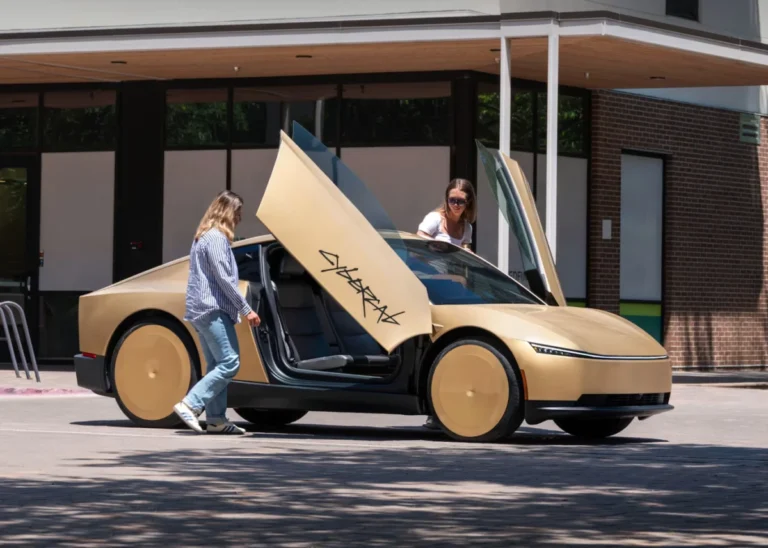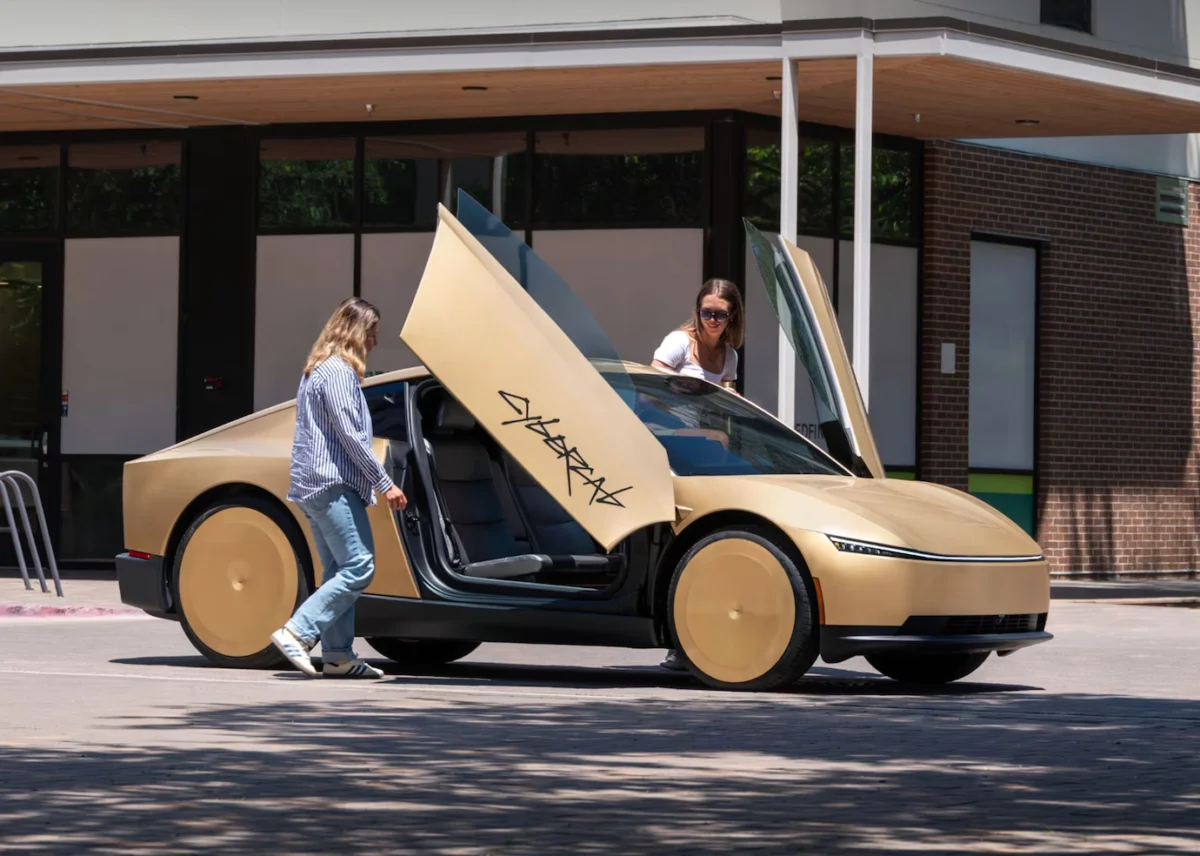
Tesla’s highly anticipated Cybercab event, a pivotal moment for CEO Elon Musk’s long-held vision of autonomous transportation, unfolded not with the usual fanfare of a major product launch, but with a decidedly subdued, private affair. This stark departure from Tesla’s typical grand, livestreamed spectacles has raised questions about the company’s strategy for introducing a product poised to redefine personal mobility. Unlike previous product unveilings that generated widespread public engagement and immediate media coverage, the Cybercab’s debut was characterized by a lack of prominent public address from Musk himself, with the keynote reportedly lasting a mere 15 minutes. This minimalist approach to showcasing a technology years in the making has left many observers and industry analysts alike scrutinizing the underlying rationale and potential implications.
The promise of the Cybercab is indeed immense. Tesla envisions a fully autonomous vehicle, relying solely on cameras and sophisticated artificial intelligence for navigation, all offered at a price point significantly lower than existing competitors like Waymo. This ambitious proposition, however, has been met with a fragmented release of information. Key details have been dispersed across PDF documents released by the company, updated terms of service within its "Robotaxi" application, and largely left to a curated group of dedicated enthusiasts to disseminate across online platforms. This unconventional distribution of information contrasts sharply with the company’s historical approach to product launches, often characterized by high-profile reveals designed to maximize immediate public and media impact.
The challenge now facing Tesla is to definitively prove the safety and reliability of the Cybercab to a skeptical public, a complex web of regulatory bodies, and federal agencies. Notably, the National Highway Traffic Safety Administration (NHTSA) has already initiated an investigation into Tesla’s Cybercab rollout, signaling a heightened level of scrutiny from regulators. This investigation, launched just as the vehicle begins its deployment, underscores the significant hurdles Tesla must overcome in demonstrating compliance and safety standards that meet public and governmental expectations.
Despite the opaque rollout, several intriguing details have emerged from the limited information made available, offering a glimpse into the design and operational philosophy behind the Cybercab. These specifics, while shedding light on certain aspects, also introduce new questions and highlight potential areas of concern for consumers and regulators.
Restrictions on Young Passengers Raise Eyebrows
Among the more curious stipulations found within the Cybercab’s operational guidelines is a notable restriction: minors under the age of 13 are currently prohibited from riding in the vehicle. This directive stands in contrast to Tesla’s existing "Robotaxi" Model Y SUVs, which do permit passengers between the ages of 8 and 17, and for which the company provides guidance on the use of child safety seats. While Tesla does offer guidelines for child seat installation in both vehicle types, the Cybercab itself lacks the standard Lower Anchors and Tethers for Children (LATCH) system. Instead, child seats can only be secured using the vehicle’s seat belts.
This design choice, particularly the absence of LATCH anchors, has drawn attention. Tesla executives, including Elon Musk, have frequently emphasized their strategy of simplifying designs and eliminating superfluous components to reduce manufacturing costs. However, the omission of child seat anchors, especially in the context of Musk’s public pronouncements on increasing birth rates, presents a seemingly paradoxical decision. While all passengers under 18 are required to be accompanied by an adult in both Tesla’s Robotaxi Model Y and the Cybercab, the specific exclusion of very young children from the Cybercab suggests a deliberate safety consideration or a regulatory constraint that Tesla has yet to fully elucidate. The company’s hesitancy to allow younger children in the Cybercab at this time points to a specific safety concern or a need for further validation of the autonomous system’s capabilities in handling the complexities associated with very young passengers.
Post-Collision Protocols: A Focus on Safety and Communication
While the ultimate goal of autonomous vehicles is to eliminate the possibility of accidents, the reality is that even the most advanced systems can be involved in collisions. The Cybercab’s programmed response in such scenarios has been detailed, aiming to prioritize passenger safety and facilitate immediate assistance.
In the event of a crash, the Cybercab is designed to automatically activate its airbags. Concurrently, the doors will unlock, hazard warning lights will illuminate, and interior lights will switch on to enhance visibility. The high-voltage battery system will be disabled as a safety measure, and the windows will be set to a "vent" position to allow for potential airflow. The vehicle will then apply its brakes to bring itself to a controlled stop and park. Crucially, upon coming to a halt, the infotainment system will initiate a two-way communication link with Tesla’s dedicated rider support team, ensuring that passengers can immediately connect with assistance.
The automatic unlocking of doors in a collision scenario is a particularly noteworthy feature, especially given recent scrutiny of Tesla’s electronic door latch systems. The company has faced criticism in both its primary market, the United States, and its largest international market, China, regarding the potential for electronic latches to trap occupants following an accident. This concern culminated in a significant recall in China just last month, where Tesla, along with other automakers, agreed to address issues related to electronic door latches that posed a risk of trapping individuals after a crash. The Cybercab’s built-in protocol to unlock doors automatically in an emergency situation appears to be a direct response to these safety concerns, demonstrating a proactive measure to mitigate risks associated with its door latch technology.
Redesigned Manual Door Releases for Enhanced Accessibility
The issue of door access in emergencies has been a recurring point of discussion for Tesla vehicles. Critics have pointed to the sometimes-obscure placement of interior manual door release mechanisms, which are essential backups to the primary electronic latches activated via buttons or smartphone apps. The Cybercab, while continuing to utilize electronic door latches that allow for automatic opening at the beginning or end of a ride, and featuring an external button for rider access, appears to have addressed this criticism with a more accessible manual release.
Inside the Cybercab, the manual door release is reportedly located in a prominent and easily identifiable position on the armrest of each door. This placement aims to ensure that occupants can quickly and intuitively locate and operate the manual release in the event of an emergency, providing a crucial layer of safety and accessibility that has been a point of contention in previous Tesla models.
Brake-by-Wire System: A Shift Towards Electronic Control
In another significant technological departure, Tesla is implementing a brake-by-wire system in the Cybercab. This system replaces the traditional hydraulic brake lines with electronic actuators that control the brake calipers. The primary driver for this innovation, as with many of Tesla’s design choices, appears to be cost reduction and simplification of the vehicle’s architecture.
Elon Musk has previously commented on the advantages of such systems, noting that electric brakes eliminate the complexity associated with hydraulic systems, such as the need to route plumbing throughout the vehicle. This move aligns with Tesla’s broader strategy of leveraging advanced electronics and software to control vehicle functions, a philosophy also evident in the steer-by-wire system introduced in the Cybertruck, which severs the physical connection between the steering wheel and the front wheels. The adoption of brake-by-wire in the Cybercab further underscores Tesla’s commitment to a fully electronic, software-driven approach to vehicle dynamics and control.
Limited Window Operation: An Unexplained Constraint
A peculiar detail emerging from the Cybercab’s documentation is the statement that its windows "cannot be fully opened at this time." The specific reasons behind this limitation have not been elaborated upon in the materials released by Tesla. This constraint, while seemingly minor, raises questions about potential design compromises or unresolved technical challenges that may impact passenger comfort or emergency egress in certain situations. Without further clarification from Tesla, the rationale for this restricted window functionality remains a point of speculation.
Enhanced Power Delivery via USB-C Ports
In a nod to the increasing demand for mobile device charging and connectivity, the Cybercab is equipped with USB-C power outlets. According to reports from influencers who have had early access, these ports deliver a substantial 90W of power. This output is significantly higher than the typical charging capabilities found in most vehicles, offering a much faster and more efficient charging experience for laptops, tablets, and other power-hungry devices. This feature reflects an understanding of the evolving needs of passengers in a connected world, where maintaining device power is often a priority.
Broader Implications and Future Outlook
The subdued launch of the Cybercab, coupled with the ongoing NHTSA investigation, signifies a critical juncture for Tesla. While the company has long been at the forefront of electric vehicle innovation, its foray into fully autonomous ride-sharing presents a new set of regulatory, safety, and public perception challenges. The success of the Cybercab will hinge not only on its technological capabilities but also on Tesla’s ability to transparently address safety concerns, navigate complex regulatory landscapes, and build public trust.
The company’s historical approach to innovation has often been characterized by a willingness to push boundaries and challenge established norms. The Cybercab, with its unique design features and a less conventional launch strategy, is a testament to this ethos. However, as autonomous vehicle technology matures and becomes more integrated into the fabric of society, the emphasis on safety, transparency, and robust regulatory oversight will only intensify. Tesla’s ability to balance its drive for innovation with these crucial factors will ultimately determine the long-term impact and widespread adoption of its revolutionary Cybercab. The coming months will be crucial in observing how Tesla addresses the lingering questions and demonstrates the safety and viability of its autonomous taxi service to a watchful world.
About the Author