The bond market is sending an unequivocal warning to the Federal Reserve, a signal growing louder with each upward tick in long-term Treasury yields. These crucial benchmarks, which influence everything from mortgage rates to corporate borrowing costs, have climbed to levels not witnessed in decades, prompting serious questions about the Fed’s ability to tame inflation while simultaneously safeguarding market confidence and avoiding a severe economic downturn. The current environment is a complex tapestry woven from persistent inflationary pressures, robust economic data, escalating fiscal deficits, and a shifting global financial landscape, all converging to test the central bank’s resolve and the efficacy of its monetary policy tools.
A Decades-Long Climb: Understanding the Yield Surge
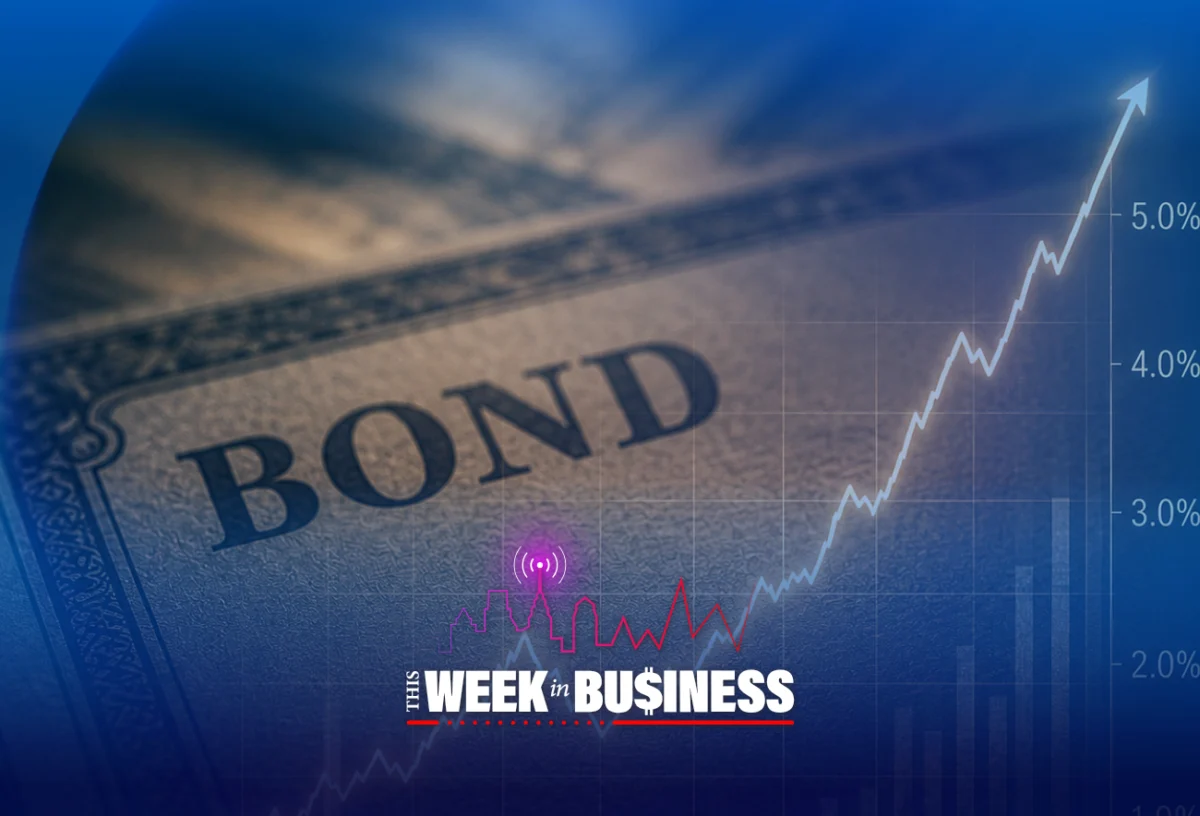
The recent ascent in long-term yields, particularly the benchmark 10-year and 30-year Treasury notes, represents a significant shift from the low-interest-rate environment that characterized much of the post-2008 financial crisis era and the immediate aftermath of the COVID-19 pandemic. For instance, the 10-year Treasury yield, which hovered below 1% in mid-2020, has surged past critical thresholds, breaching 4.5% and, at times, nearing 5% – levels not consistently seen since before the 2008 financial crisis. This dramatic climb reflects a confluence of factors.
Firstly, market participants are increasingly anticipating that inflation will remain "higher for longer" than previously expected, necessitating a sustained period of elevated interest rates. While the Federal Reserve’s preferred inflation gauge, the Personal Consumption Expenditures (PCE) price index, has shown some moderation from its peak of 7% in June 2022 to around 3% in recent readings, it remains stubbornly above the central bank’s 2% target. Core PCE, which strips out volatile food and energy prices, also remains elevated, suggesting underlying price pressures persist. This has led bond investors to demand higher compensation for holding long-term debt, anticipating that inflation will erode the purchasing power of future fixed payments.
Secondly, the sheer volume of government borrowing to finance widening fiscal deficits is exerting upward pressure on yields. The U.S. federal budget deficit has ballooned in recent years, fueled by pandemic-era spending, ongoing entitlement programs, and rising interest payments on existing debt. When the Treasury issues large quantities of new bonds to fund these deficits, it increases the supply of debt in the market, which, absent a corresponding increase in demand, typically leads to lower bond prices and higher yields. The Congressional Budget Office (CBO) projects that federal debt held by the public will reach 116% of GDP by 2034, far exceeding any previous level. This trajectory raises concerns about long-term fiscal sustainability and contributes to the upward bias in yields.
Finally, the Federal Reserve’s own quantitative tightening (QT) program, initiated in June 2022, plays a role. By allowing its balance sheet holdings of Treasury securities and mortgage-backed securities to mature without reinvestment, the Fed is effectively withdrawing liquidity from the financial system and reducing its demand for long-term bonds. This contrasts sharply with the quantitative easing (QE) programs that suppressed yields for years, making the current market environment fundamentally different.
The Fed’s Herculean Task: Battling Inflation and Maintaining Confidence
The Federal Reserve operates under a dual mandate from Congress: to achieve maximum employment and stable prices. The current challenge places these two objectives in a delicate balance. Since March 2022, the Fed has embarked on one of the most aggressive rate-hiking cycles in decades, raising the federal funds rate from near zero to a range of 5.25% to 5.50% by mid-2023. The goal has been to cool aggregate demand and bring inflation back down to its 2% target.
However, the resilience of the U.S. economy, characterized by robust job growth, historically low unemployment rates (hovering around 3.8%), and sustained consumer spending, has complicated the Fed’s task. Strong economic data can be interpreted by the market as a sign that the economy can withstand higher rates, potentially requiring the Fed to maintain restrictive policy for longer or even implement further hikes. This expectation is precisely what the bond market is pricing in through higher long-term yields.
Wharton finance professor Nikolai Roussanov highlights the critical role of market perception in this environment. He points out that former Federal Reserve Governor Kevin Warsh’s recent messaging has unsettled investors. Warsh, known for his hawkish views and deep understanding of financial markets, has likely underscored the severity of the inflation challenge and the potential for the Fed to either fall short of its target or be forced into more drastic action. Such statements from respected figures can amplify market anxieties, suggesting that the Fed’s current strategy might not be sufficient or that it risks losing control of the narrative.
Roussanov also emphasizes that the Fed’s "reaction function" may matter more than its explicit guidance on the path of interest rates. The Fed’s guidance, often communicated through the "dot plot" of individual policymakers’ rate projections or public statements, outlines its intended future policy. However, the reaction function refers to how the Fed actually responds to incoming economic data – inflation prints, employment reports, GDP figures, and financial stability indicators. If the market perceives a disconnect between the Fed’s stated guidance and its actual responsiveness to economic developments, or if it believes the Fed will be forced to pivot prematurely due to economic weakness or political pressure, confidence in its long-term commitment to the 2% inflation target can erode. This erosion of confidence can lead investors to demand an even higher "inflation premium" on long-term bonds, pushing yields further up.
The Monetary-Fiscal Nexus: A Policy Tug-of-War
A significant tension exists between monetary and fiscal policy, especially in the current climate. The Federal Reserve, through monetary policy, aims to tighten financial conditions to reduce inflation. Conversely, expansionary fiscal policy, characterized by large government spending and deficits, can stimulate demand and potentially counteract the Fed’s efforts, keeping inflationary pressures alive.
Roussanov specifically examines whether Treasury efforts to push down long-term yields could undermine the Fed’s strategy. While the Treasury’s primary role is to manage the government’s debt efficiently and at the lowest possible cost, its actions can have monetary implications. For instance, the Treasury might adjust the maturity structure of its debt issuance, favoring shorter-term bonds over longer-term ones, in an attempt to reduce the supply of long-term debt and thereby lower long-term yields. However, such actions are often perceived as attempts to influence market rates, which could be seen as encroaching on the Fed’s independence or creating an impression that fiscal considerations are taking precedence over monetary stability.
Historically, the independence of the central bank from political influence has been a cornerstone of effective monetary policy. When fiscal policy (government spending and taxation) and monetary policy (interest rates and money supply) work at cross-purposes, the overall economic policy becomes less effective and can create greater volatility. If the market believes that the Treasury’s borrowing needs or debt management strategies are effectively forcing the Fed to be less aggressive than needed to fight inflation, it further undermines the Fed’s credibility and commitment to its mandate. This dynamic creates a delicate balancing act, where both institutions must navigate their respective responsibilities without inadvertently sabotaging the other’s objectives. The perception of coordination or conflict can significantly influence market expectations and, by extension, long-term yields.
Economic Ripples: Implications for Consumers and Businesses
The rise in long-term yields has profound implications across the economy. For consumers, the most direct impact is felt in the housing market. Mortgage rates, particularly the popular 30-year fixed-rate mortgage, are closely tied to the 10-year Treasury yield. As the 10-year yield climbed, average 30-year fixed mortgage rates have soared past 7% and even approached 8%, a level not seen in over two decades. This dramatically increases the cost of homeownership, pricing many potential buyers out of the market and leading to a significant slowdown in housing transactions. Existing homeowners with adjustable-rate mortgages or those looking to refinance also face higher costs.
Businesses, too, face higher borrowing costs, whether they are issuing corporate bonds to finance expansion, taking out bank loans for working capital, or financing large capital expenditures. This increase in the cost of capital can lead to reduced investment, slower hiring, and potentially lower economic growth. Smaller businesses, often more reliant on variable-rate loans, are particularly vulnerable to rising interest rates.
Furthermore, the U.S. government itself is directly impacted. As interest rates rise, the cost of servicing the national debt escalates. With a national debt exceeding $34 trillion, even a modest increase in average interest rates translates into billions of dollars in additional interest payments annually, diverting funds that could otherwise be used for public services or deficit reduction.
The Credibility Crucible: Can the Fed Preserve Its Mandate?
As inflation, energy prices, and fiscal pressures continue to evolve, the Federal Reserve faces what might be its most critical test in decades. At its core, the challenge is to preserve its 2% inflation target – or risk losing credibility with the bond market and, by extension, the broader economy. Central bank credibility is paramount; it’s the belief by the public and financial markets that the central bank will do what it says it will do to achieve its objectives. If this credibility is eroded, managing inflation expectations becomes significantly harder.
If the market believes the Fed will ultimately compromise its inflation target, perhaps to avoid a deep recession or to accommodate fiscal pressures, then inflation expectations will become unanchored. This can lead to a self-fulfilling prophecy, where workers demand higher wages and businesses raise prices in anticipation of continued inflation, making the Fed’s job even more difficult and potentially requiring even more aggressive and painful measures to restore price stability.
The Fed’s actions in the coming months will be scrutinized intensely. Will it continue to signal a "higher for longer" stance on interest rates, even if it means risking a recession? Or will it be compelled to ease policy prematurely if economic data weakens significantly, potentially allowing inflation to re-accelerate? The path forward requires a delicate balance of communication, data dependency, and unwavering commitment to its mandate. The bond market, with its relentless focus on future inflation and risk premiums, will continue to serve as the ultimate arbiter of the Fed’s success or failure in navigating this treacherous economic landscape.
Looking Ahead: Navigating an Uncharted Landscape
The current environment is marked by an unusual combination of strong economic indicators and persistent inflationary pressures, coupled with a significant shift in long-term yield expectations. The Fed’s policy decisions are no longer just about adjusting the federal funds rate; they are about managing market expectations, preserving credibility, and deftly navigating the complex interplay between monetary and fiscal policy.
The evolving geopolitical landscape, global supply chain dynamics, and the energy transition also add layers of complexity, making the task of forecasting inflation and economic growth particularly challenging. The Federal Reserve must remain agile, data-dependent, and transparent in its communication to reassure markets and the public that it is steadfast in its commitment to price stability. The warning from the bond market is clear: the stakes are exceptionally high, and the margin for error is increasingly narrow. The coming period will undoubtedly be a defining chapter in the history of modern central banking.
About the Author