Insurance, at its core, is a business built on strong relationships. However, managing the intricate web of client contacts, communications, and policy lifecycles presents a significant challenge for individual agents and entire agencies. This is where a robust Customer Relationship Management (CRM) system for insurance companies becomes indispensable. A well-implemented CRM empowers agencies to effectively manage client relationships throughout the policy lifecycle, encompassing crucial activities such as proactive follow-up, personalized nurturing, exceptional customer service, and timely renewals. In today’s fast-paced digital landscape, the speed of response is paramount. Studies indicate that leads contacted within the first hour are 60 times more likely to convert than those contacted after a full day. A CRM system streamlines these processes, enabling insurance companies to automate outreach, secure new business, and ensure client retention through efficient renewal management. This comprehensive guide explores the functionality of CRMs tailored for the insurance sector, differentiates them from other insurance software, and highlights the leading platforms poised to support agencies in 2026.
Understanding the Insurance CRM Landscape
A CRM system for insurance companies serves as a centralized hub for tracking customer contacts, managing quotes, and overseeing the entire policy lifecycle. This allows agents to not only sell policies more effectively but also to provide superior customer service. Modern insurance CRM platforms are designed to integrate seamlessly with email and phone systems, and many offer direct connections to carrier tools, thus consolidating operations and eliminating the need to toggle between disparate software.
Historically, the insurance industry has grappled with fragmented and often outdated legacy systems. Some agencies have relied on manual methods like filing cabinets for contact management, while others have been forced to navigate separate systems for sales, policy documentation, and customer service. Insurance CRM systems are engineered to address these inefficiencies by organizing leads, automating routine tasks, and ultimately helping agents close more deals and reduce time spent on manual data entry.
Differentiating Insurance Software: CRM, AMS, and Agent Portals
To fully appreciate the value of an insurance CRM, it’s essential to understand how it differs from other critical software used in the industry: Agency Management Systems (AMS) and Agent Portals. Each serves a distinct yet complementary purpose within an insurance agency’s operational framework.
| System | Primary Users | Main Purpose | Key Functions |
|---|---|---|---|
| CRM | Sales teams, Marketing | Manage relationships and pipeline | Lead tracking, email automation, sales forecasting |
| AMS | Service staff, Operations | Policy administration | Policy records, commissions, accounting, downloads |
| Agent Portal | Producers, Agents | Quote and bind policies | Rate comparison, application submission, policy issuance |
Customer Relationship Management (CRM): The primary focus of a CRM is on managing interactions with current and potential customers. It is geared towards nurturing leads, managing the sales pipeline, automating marketing efforts, and providing insights into customer behavior. For insurance agencies, this translates to tracking prospect engagement, sending targeted marketing campaigns, managing follow-up schedules, and fostering customer loyalty.
Agency Management System (AMS): An AMS is the operational backbone of an insurance agency. It is designed to manage the entire lifecycle of an insurance policy once it has been sold. This includes storing policy details, managing client information, handling commissions and billing, processing claims, and facilitating downloads from carriers. While CRMs focus on acquisition and retention through relationship building, AMS systems are about the administrative and operational management of policies.
Agent Portal: An agent portal is typically a platform provided by insurance carriers or independent agencies that allows agents to quote, compare, and bind policies. These portals are crucial for streamlining the quoting and application process, often integrating with rating engines and carrier systems to provide real-time policy information and submission capabilities. They are transactional in nature, focused on facilitating the sale of specific insurance products.
The Compelling Case for Insurance-Specific CRMs
Insurance agencies operate within a unique ecosystem that differs significantly from general B2C or B2B businesses. The inherent nature of insurance products, the regulatory environment, and the long-term client relationships necessitate specialized CRM functionalities.
1. Elevating Client Retention Rates:
A significant driver of profitability in insurance is client retention. Policies that slip through the cracks represent lost revenue and potential gaps in client coverage. A sophisticated insurance CRM incorporates automated renewal workflows that proactively alert agents well in advance of policy expiration dates. This allows for timely outreach, personalized discussions about coverage needs, and ultimately, the securing of renewals. For instance, YuLife, a global insurtech company, leveraged HubSpot’s CRM to implement automated renewal flags and personalized outreach sequences. This strategic approach contributed to an impressive 98% customer retention rate, a figure that significantly outperforms the industry average of approximately 84%.
2. Amplifying Cross-selling Opportunities:
An insurance CRM is instrumental in identifying and capitalizing on cross-selling opportunities. By analyzing a client’s existing policy context, the CRM can intelligently flag potential needs for additional coverage. For example, a client with only an auto insurance policy might be automatically identified by the CRM for a homeowner’s or umbrella policy quote. This data-driven approach eliminates the need for laborious manual account reviews, ensuring that valuable cross-selling opportunities are not missed.
3. Empowering Mobile Agent Accessibility:
The modern insurance agent often operates beyond the confines of a traditional office, attending client meetings, industry events, and networking functions. The reliance on business cards or post-event data entry is inefficient and prone to errors. Mobile CRM access is crucial for these agents, enabling them to update client notes, tasks, and follow-up actions in real-time as conversations unfold. This ensures that no valuable interaction is lost and that the client’s profile is always up-to-date, accessible from anywhere.
4. Unifying the Client View Across the Agency:
A paramount benefit of a robust insurance CRM is the creation of a unified client view. This means that any member of the agency, whether it’s a service representative handling an incoming call or a producer who initially sold the policy, has access to the same comprehensive history of interactions and policy details. This shared context significantly reduces the need for policyholders to repeatedly provide information and enables seamless collaboration among team members, fostering a more cohesive and efficient customer experience. CJ Hutsenpillar of Hutsenpillar Insurance highlighted this transformative aspect: "We used to have frustrated employees and frustrated customers because they were having to chase information, which was extremely inefficient. HubSpot users are spoiled with an activity timeline where you can see everything – for example, Facebook Messenger inbox messages. We can see our data now, and figuring that out was a huge problem solved."
Essential Features for an Insurance-Focused CRM
Not all CRM systems are created equal, and a generic contact management tool will fall short of the specific demands of an insurance agency. An effective insurance CRM goes beyond basic contact management to incorporate functionalities tailored to the industry’s unique workflows and data structures.
Insurance-Native Data Fields: A superior insurance CRM features pre-configured fields that understand insurance-specific concepts such as policyholders, beneficiaries, carriers, and various coverage types. This eliminates the need for extensive customization required by generic CRMs to track insurance-specific data. Look for systems that natively support fields for policy numbers, coverage limits, deductibles, and carrier information, providing a unified and contextually relevant view of client data.

Seamless Integrations with AMS, PAS, and Carrier Tools: The true power of an insurance CRM is amplified through its ability to integrate with existing Agency Management Systems (AMS), Policy Administration Systems (PAS), carrier portals, and document management solutions. Essential integrations include those with the agency’s primary AMS, rating platforms for quoting, and e-signature tools for policy execution. When evaluating CRM vendors, inquire about their integration ecosystem and confirm compatibility with your current AMS, preferred carriers, and critical communication tools.
Centralized Contact Management and Communication Hub: A CRM should act as a master database for all customer contact information and historical interactions. The most effective platforms feature a centralized inbox that allows agents to send multi-channel messages (email, SMS, phone, social media) and automatically log these communications within the client’s contact history. This provides a complete and easily accessible record of all client engagements.
Intelligent Lead Capturing, Enrichment, and Routing: In today’s multi-channel lead generation environment, a CRM is vital for capturing every inquiry, regardless of its source. Beyond simply creating a new contact, a robust CRM can initiate personalized and immediate responses, automatically route leads to the most appropriate agent based on predefined criteria, and enrich lead profiles with additional personal or company details gathered from external sources. This ensures prompt engagement and efficient lead allocation.
Automated Lead Routing: Timely assignment of new inquiries to the right producer is critical for maximizing conversion rates. Manual lead sorting is a bottleneck that leads to lost opportunities. An automated lead routing system within a CRM ensures that inquiries from website forms, phone calls, or referrals are instantly directed to the most suitable agent, thereby accelerating the sales process and improving close rates.
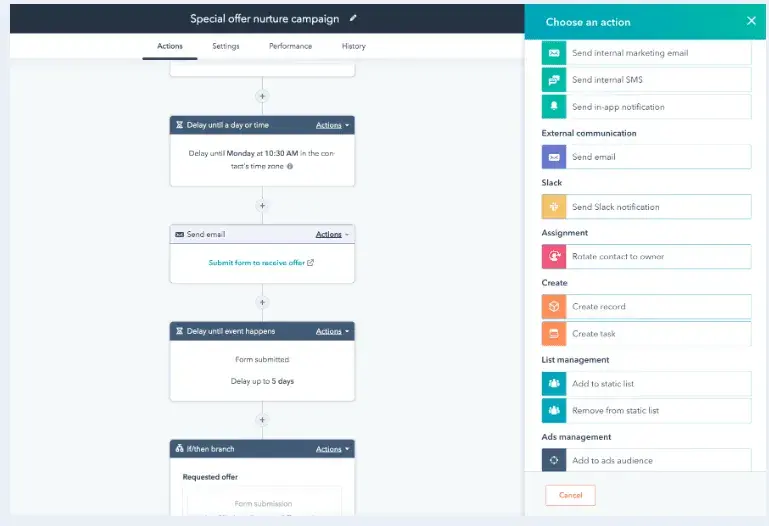
Automated Follow-up Sequences: Insurance sales often require multiple touchpoints over an extended period. Many agents abandon follow-up efforts prematurely due to time constraints or a lack of organized systems. CRM automation facilitates the creation and execution of scheduled communication sequences and task reminders, ensuring prospects remain engaged without constant manual intervention. For instance, a system can be configured to send a quote follow-up three days after delivery, schedule a reminder for a check-in call two weeks later, and send a final nurturing email after 30 days.
Streamlined Renewal Workflow Management: Policy renewals are the bedrock of an insurance agency’s revenue. With average retention rates hovering around 84%, proactive renewal management is essential. CRMs equipped with renewal workflow capabilities track policy expiration dates and automatically trigger targeted renewal campaigns. This might involve an initial retention call 90 days prior to expiration, followed by a re-engagement check-in 60 days out, and final paperwork processing 30 days before renewal.
Robust Reporting and Pipeline Visibility: Agency owners require clear insights into their business performance. Reporting dashboards within a CRM provide critical data on lead sources, agent performance, conversion rates, and overall pipeline health. This visibility enables managers to identify areas for improvement, provide targeted support to underperforming agents, and recognize top performers. Advanced AI-powered analytics can further enhance this by offering predictive scoring to help agents prioritize outreach and improve revenue forecasting.
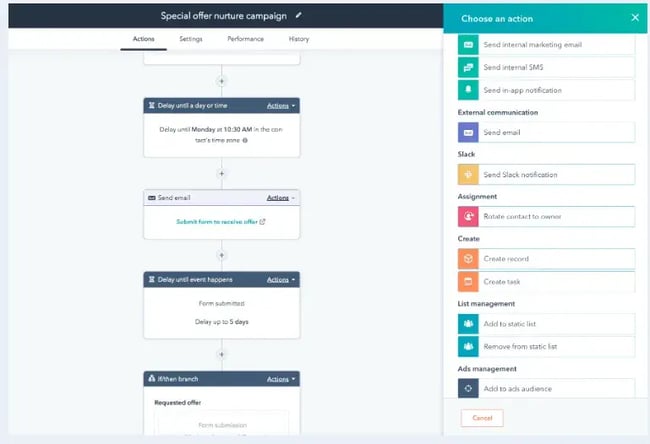
AI-Powered Outreach Capabilities: The integration of Artificial Intelligence (AI) into insurance CRMs is revolutionizing agent workflows. AI can assist in tracking conversations, summarizing interactions, drafting personalized outreach messages, and automating communication sequences for renewals or identified cross-sell opportunities, significantly reducing manual effort and enhancing efficiency.
Leading CRMs for Insurance Agencies in 2026
The selection of the right CRM can profoundly impact an insurance agency’s growth and operational efficiency. Based on industry recognition, user reviews, pricing structures, and specialized insurance features, several platforms stand out:
| CRM | G2 Rating | Key Features | Starting Price | Best For |
|---|---|---|---|---|
| HubSpot CRM | 4.4/5 (35,739 reviews) | Unified customer records, lead management, pipeline visibility, AI automation. | Free tier; paid plans from $20/month | Growing agencies seeking an all-in-one platform. |
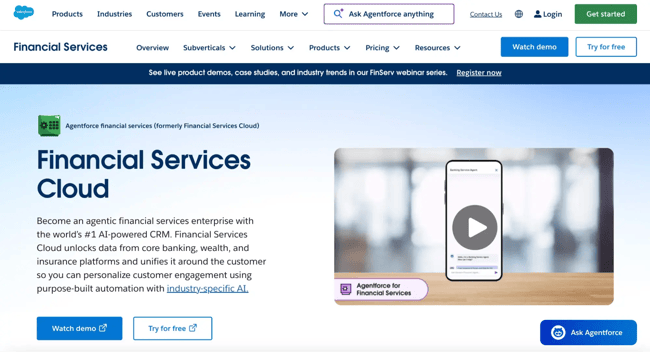
| Agentforce Financial Services (Salesforce) | 4.3/5 (226 reviews) | Industry-specific data models, AI automation, 360-degree client view. | Starting at $325/user/month | Large enterprises with complex requirements. |
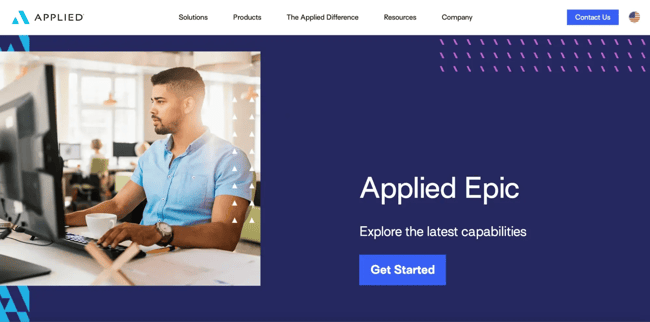
| Applied Epic | 4.4/5 (1,571 reviews) | Workflow automation, combined AMS/CRM, carrier connectivity, mobile access. | Custom Quote | P&C and benefits agencies needing AMS + CRM. |
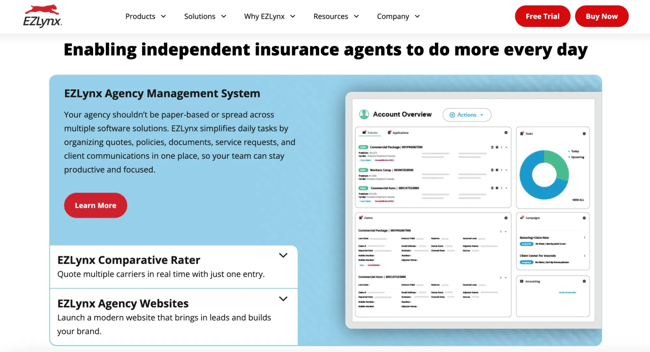
| EZLynx | 4.4/5 (716 reviews) | Policy management, renewal automation, communication center, AI note-taking. | Custom Quote | Independent P&C agencies needing rating + CRM. |
| Vertafore AMS360 | 4.3/5 (949 reviews) | Integrated AMS, AI-powered workflows, carrier connectivity, compliance tools. | Custom Quote | Established agencies needing comprehensive AMS. |
1. HubSpot CRM:
HubSpot CRM offers a unified, AI-powered customer data layer that integrates marketing, sales, and service functions. Its strength lies in its scalability, offering a free CRM tier that can be expanded with Marketing Hub, Sales Hub, or Service Hub as agencies grow. The platform’s extensive integration capabilities through the HubSpot Marketplace further enhance its utility for insurance agencies. HubSpot’s ability to connect sales, marketing, and customer service in a single, cohesive platform makes it an attractive option for agencies looking to streamline operations and foster collaboration. The platform’s AI-driven features, such as automated follow-ups and lead nurturing, significantly boost efficiency.
2. Agentforce Financial Services (formerly Salesforce Financial Services Cloud):
Tailored for financial institutions, including insurance companies, Agentforce by Salesforce provides industry-specific CRM capabilities. Its strengths lie in its highly customizable nature, unified data management, AI-powered workflows, and intelligent lead routing. While it offers deep functionality, its implementation can be complex and time-consuming, often requiring specialized consultants. This makes it most suitable for large agencies or enterprises with dedicated IT resources and implementation budgets. The pre-built financial data model simplifies the setup of complex client relationships and policy structures.
3. Applied Epic:
Applied Epic is a comprehensive agency management system that incorporates robust CRM functionalities. It is particularly well-suited for mid-size to large agencies, especially those managing complex commercial lines of business across multiple locations. Its integrated approach offers a single platform for both agency management and customer relationship management, making it an ideal choice for agencies that handle both Property & Casualty (P&C) and Benefits lines. Users consistently praise its efficiency and data management capabilities, though implementation can involve a learning curve.
4. EZLynx:
EZLynx uniquely combines a CRM, a comparative rater, and an agency management system into a single cloud-based platform. It is specifically designed for independent agencies focusing on personal lines of insurance. Its intuitive interface and rapid implementation are key advantages. For agencies that also deal with life, health, or Medicare products, it’s important to note that EZLynx may require separate quoting tools for these lines. The platform’s AI-assisted features, such as note-taking and task management, further enhance its appeal for streamlining daily operations.
5. Vertafore AMS360:
AMS360 by Vertafore is an agency management system with integrated CRM features, making it a powerful solution for established insurance agencies. It is particularly beneficial for agencies already utilizing other Vertafore products, creating a cohesive ecosystem. A standout feature is its AI-powered email agent, which intelligently reads incoming emails, summarizes their content, and triggers appropriate workflows within the management system. Its reconciliation agent also automates the matching of carrier statements to transactions, streamlining commission and payable processing.
Strategic Considerations for Choosing an Insurance CRM
Selecting the right CRM is a pivotal decision that can have long-lasting financial and operational implications. A methodical approach is crucial to ensure the chosen solution aligns with an agency’s specific needs and objectives.
1. Define Your Business Needs and Goals:
Begin by pinpointing the primary challenges your agency aims to solve with a CRM. Is it a leaky sales pipeline, inefficient administrative processes, or a need to improve client retention? Clearly articulate these pain points and set measurable goals, such as increasing renewal rates, shortening the quote-to-cash cycle, or boosting overall sales volume. Develop a realistic CRM budget, considering potential software consolidation and projected revenue gains.
2. Solicit Feedback from All Stakeholders:
Engage with all potential users of the CRM system – from sales agents and brokers to front-end and back-end office staff. Gather their insights on essential features and workflows. Sales agents might prioritize easy quote tracking and follow-up reminders, while managers will likely focus on pipeline visibility and performance analytics.
3. Compile a Comprehensive Feature Wishlist:
Based on stakeholder feedback, create a detailed list of required CRM features. This should include functionalities critical for insurance operations, such as:
- Insurance-specific data fields: For policy details, coverage, carriers, etc.
- AMS and carrier integrations: To ensure seamless data flow.
- Centralized contact management: A single source of truth for all client information.
- Automated lead capture and routing: For efficient lead management.
- Automated follow-up and nurture campaigns: To maintain client engagement.
- Renewal management workflows: To secure ongoing business.
- Reporting and analytics dashboards: For performance tracking and strategic insights.
- Mobile access: To empower field agents.
- AI-powered automation: For enhanced efficiency and personalization.
4. Conduct Thorough Vendor Comparisons:
Deeply research specific CRM solutions, evaluating their capabilities and pricing structures. Calculate the total cost of ownership, which may include onboarding fees, per-module pricing, and necessary add-ons, as these can significantly increase the advertised monthly cost, especially for integrated AMS/CRM platforms. Engage with peer agencies with similar profiles to gain practical insights. Inquire about vendor implementation timelines, return on investment (ROI) projections, and request customer references.
5. Request Tailored Demos with Agency Data:
Narrow down your selection to two to three promising platforms and request live demonstrations that utilize your agency’s actual workflows and data scenarios. This hands-on approach allows you to visualize how the CRM will handle critical processes such as the quote-to-bind process, renewal campaigns, and cross-sell workflows.
6. Plan for Effective CRM Implementation and Adoption:
Once a CRM is selected, a structured implementation process is key. This involves setting up user accounts, providing comprehensive onboarding training, and guiding users through their initial workflows. Designating a CRM champion within the agency can provide ongoing support, answer questions, and encourage consistent usage. Remember, the success of a CRM is directly tied to the quality and consistency of user input.
HubSpot CRM’s Position for Insurance Teams
For insurance agencies, integrating HubSpot CRM alongside an existing Agency Management System (AMS) offers a powerful combination. The AMS can continue to manage policy administration and back-office operations, while HubSpot excels at driving new business growth through its front-office capabilities in sales, marketing, and customer service. HubSpot is designed to support agency growth from the initial lead acquisition to long-term client retention.
Insurance teams commonly leverage HubSpot for:
- Lead Generation and Nurturing: Creating targeted campaigns and automated workflows to attract and convert new clients.
- Sales Pipeline Management: Tracking deals, managing tasks, and forecasting revenue with clear visibility.
- Client Communication: Centralizing all client interactions across various channels for a unified view.
- Renewal Management: Automating reminders and outreach to secure policy renewals.
- Cross-selling and Upselling: Identifying opportunities based on client data and policy context.
- Customer Service: Providing efficient and personalized support through a unified inbox and ticketing system.
A practical tip for agencies considering HubSpot is to begin with the free HubSpot CRM. This allows for hands-on experience with importing contacts, connecting email, and tracking deals for a 30-day period, providing valuable insights into its suitability before committing to paid features.
Addressing Common Questions About Insurance CRMs
Do agencies still need an AMS when using a CRM?
For most insurance agencies, both a CRM and an AMS are necessary. The CRM manages the client acquisition and relationship-building phase, from lead generation to the point of sale. The AMS, on the other hand, handles the administrative aspects of policy management, commissions, and official record-keeping post-sale. Smaller agencies might initially operate with a CRM-only approach if they outsource policy servicing or rely heavily on carrier portals for administration. However, as agencies grow and policy volumes increase, an AMS becomes indispensable for managing operational complexities and ensuring compliance.
Can a CRM integrate with existing policy admin systems and carrier rating tools?
Yes, modern insurance CRM platforms are designed with extensive integration capabilities. They can connect with major AMS systems, Policy Administration Systems (PAS), and various carrier tools. Platforms like HubSpot offer access to hundreds of applications through their marketplace. When evaluating CRMs, it is crucial to verify that they support your current AMS, preferred carriers, and essential third-party tools such as e-signature solutions and document management systems.
How long does CRM implementation typically take for insurance teams?
CRM implementation timelines can vary significantly based on the complexity of the platform and the size of the agency. Basic setups involving contact imports and initial configuration might take two to four weeks. More complex implementations, which include custom fields, advanced workflows, and numerous integrations, can extend to six months or longer. Agencies opting for HubSpot often experience a faster go-live for basic setups, with the flexibility to add more advanced features incrementally.
What is the optimal approach for data migration into a CRM?
A successful data migration begins with a thorough cleanup of existing contact records to eliminate duplicates and outdated information. Mapping out essential data fields, such as policy numbers, renewal dates, and lead sources, and performing a test migration with a small dataset before migrating all data can prevent unexpected issues. This proactive approach ensures a smoother transition and more accurate data in the new CRM system.
Is CRM beneficial for solo agents and small agencies?
Absolutely. Solo agents and small agencies stand to gain immensely from CRM systems. The automation capabilities handle routine tasks like follow-up emails and renewal reminders, freeing up valuable time that would otherwise be spent on manual processes. This allows solo agents to focus on client interaction and business development. Small agencies and solo agents will experience a significant return on investment through increased deal closures, improved client retention, and substantial time savings. Many CRMs, including HubSpot, offer a free tier that can effectively meet the basic needs of smaller operations before they require investment in advanced features.
CRMs: The Engine of Relationship-Based Businesses
In the realm of relationship-based businesses like insurance, the quality of customer records is paramount. As CJ Hutsenpillar warns, agencies clinging to legacy systems risk falling behind their more technologically advanced competitors. Furthermore, disorganized data can diminish an agency’s valuation should the business ever be considered for sale. A CRM system for insurance companies is not merely a tool; it is an essential investment that manages the entire customer journey, from the initial inquiry to ongoing policy renewals. The longer an agency delays in adopting a CRM, the more challenging it will become to bridge the gap and achieve optimal operational efficiency and client engagement.
About the Author