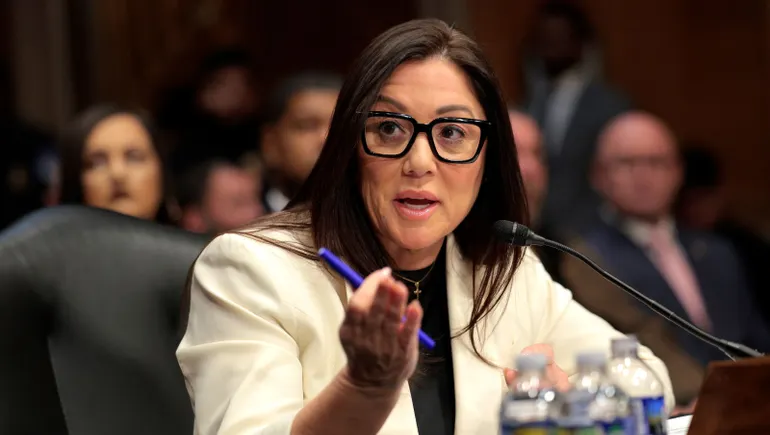
A comprehensive report released by the U.S. Department of Labor (DOL) on September 3rd has detailed a "recurring pattern" of workplace misconduct that occurred under the tenure of former Secretary Lori Chavez-DeRemer. The investigation, initiated in early January following an anonymous complaint, uncovered a series of allegations against Chavez-DeRemer, her chief of staff, and her deputy chief of staff, painting a picture of a deeply troubled work environment. These allegations included the creation of a hostile atmosphere, an inappropriate relationship with a member of her security detail, violations of travel regulations, on-duty alcohol consumption, and the solicitation of personal favors from direct reports. The report’s findings have cast a long shadow over the former secretary’s time leading the department, culminating in her resignation in April amidst the burgeoning controversy.
The investigation, conducted by the DOL’s Office of Inspector General (OIG), was extensive, examining not only the former secretary and her top aides but also the director of advance, who was responsible for planning the secretary’s public appearances, events, and travel. In total, 53 current and former DOL employees were interviewed, and over 500 documents, images, and videos were reviewed. The OIG concluded that "a preponderance of the evidence substantiated multiple violations of DOL policy by all five former DOL officials who were subjects of this investigation."
A Toxic and Intimidating Environment
The report’s findings paint a stark picture of the work environment fostered under Chavez-DeRemer. Thirty-eight witnesses described the atmosphere surrounding the former secretary as "toxic, intimidating, and humiliating," with the chief of staff and deputy chief of staff frequently identified as central figures in perpetuating this negative climate. Employees reported that performance matters were discussed openly in front of other staff, including sensitive details such as "whether employees had cried" during performance reviews. This lack of privacy and professionalism contributed to "widespread fear and job insecurity" among the workforce.
The allegations of misconduct extended beyond mere verbal reprimands. Witnesses described instances of "beatdowns," a term used to describe situations where employees were severely berated for perceived performance issues. Threats of termination were reportedly common, as was favoritism shown towards senior staff. The director of advance was also implicated in bullying and intimidation tactics. One particularly concerning incident detailed in the report involved the director backing a career employee into a cubicle while confronting them over unpaid travel vouchers, a clear demonstration of aggressive and unprofessional behavior.
Allegations of an Inappropriate Relationship and Further Violations
A significant portion of the OIG’s investigation focused on allegations of an inappropriate relationship between Secretary Chavez-DeRemer and a member of her protective detail. Thirty-five witnesses were interviewed regarding these claims. The report noted that "witnesses described interactions they viewed as inconsistent with the professional boundaries ordinarily expected between a Cabinet-level protectee and a protective-detail agent."
Evidence gathered included observations of frequent text message exchanges between the two, often outside of work hours and concerning non-departmental matters. Witnesses also described unusually informal interactions, including a massage and the exchange of sexual innuendo. Hotel door lock records obtained by the OIG further suggested that the two subjects spent "at least portions overnight in the other’s room" during their travels.
The report indicates that this alleged relationship had tangible consequences for other staff members and the department’s operations. During a trip to Oregon, Chavez-DeRemer reportedly requested a stop at an establishment featuring "partially nude dancers." She entered with the security member and her driver. When the driver expressed hesitation about giving money to a performer, the security member allegedly instructed him to obey the secretary’s directive. This incident highlights how the alleged personal relationship may have led to the misuse of departmental resources and the inappropriate use of subordinates. Furthermore, the report concluded that the relationship interfered with the security agent’s ability to effectively perform his protective duties, raising concerns about the safety and security of the secretary and her team.
Beyond the harassment and relationship allegations, the OIG’s investigation unearthed a pattern of other policy violations by Chavez-DeRemer. These included improperly combining personal and official travel, contravening the department’s vehicle rental policies, and regularly consuming and storing alcohol on-site without proper authorization. Additionally, she directed subordinates to perform personal tasks and accepted gifts, such as rodeo tickets and an alligator-hide wallet, without adhering to the department’s established ethics policies. These actions collectively suggest a disregard for established rules and procedures, potentially compromising the integrity and efficiency of the department.
Timeline of Events and Investigation
The series of events leading to the DOL report can be traced back to early January of the current year when an anonymous complaint was filed. This complaint served as the catalyst for the OIG’s investigation. The scope of the inquiry rapidly expanded to include multiple high-ranking officials within the department.
- Early January: Anonymous complaint filed, alleging a hostile work environment and other misconduct by Secretary Lori Chavez-DeRemer and her top staff.
- January – April: U.S. Department of Labor Office of Inspector General (OIG) conducts an extensive investigation, interviewing numerous employees and reviewing a vast amount of documentation.
- April: Facing mounting scrutiny and the ongoing investigation, Secretary Lori Chavez-DeRemer resigns from her position.
- September 3rd: The OIG releases its comprehensive report detailing the findings of its investigation, outlining a "recurring pattern" of workplace misconduct.
The OIG’s methodical approach, involving interviews with a significant portion of the workforce and a thorough review of evidence, aimed to provide a factual and impartial assessment of the allegations. The report’s findings are based on a "preponderance of the evidence," a legal standard that requires the evidence to show that a particular claim is more likely true than not true.
Broader Implications and Recommended Actions
The repercussions of the OIG’s report extend beyond the individuals implicated. The findings underscore the critical importance of maintaining a professional and ethical workplace, particularly within government agencies entrusted with public service. The detailed accounts of intimidation, fear, and favoritism suggest systemic issues that require immediate attention.
In response to the investigation’s conclusions, the OIG has put forth several recommendations aimed at preventing similar incidents in the future and strengthening the department’s internal controls and ethical standards. These recommendations include:
- Establishing structural independence for the division of protective operations: This aims to ensure that security details operate with greater autonomy and are less susceptible to undue influence.
- Implementing independent and recurring oversight of DOL senior official travel: This recommendation seeks to enhance accountability and transparency in travel expenditures and practices.
- Establishing or revising a department-wide policy regarding relationships between supervisors and subordinates: This crucial step aims to provide clear guidelines and prevent the exploitation of power dynamics.
- Mandating training on inappropriate workplace relationships: Comprehensive training can educate employees and managers on acceptable conduct and the consequences of violations.
- Strengthening whistleblower protections: Ensuring that employees feel safe to report misconduct without fear of retaliation is paramount to fostering a culture of accountability.
The report marks a significant moment for the Department of Labor, which experienced a tumultuous period under Chavez-DeRemer’s leadership. Confirmed in March 2025, her tenure was unfortunately cut short by these serious allegations. The department is currently being led by former Deputy Secretary of Labor Keith Sonderling, who remains acting secretary while his confirmation is pending. His leadership will be instrumental in implementing the OIG’s recommendations and restoring confidence in the department’s ethical standards.
Think Big, the public relations firm where Chavez-DeRemer is now a senior advisor, was contacted for comment by HR Dive but had not responded by press time. The full impact of these revelations on the department’s reputation and employee morale remains to be seen, but the OIG’s report provides a clear roadmap for necessary reforms and a renewed commitment to ethical governance. The detailed findings serve as a stark reminder that adherence to policy and ethical conduct is not merely a bureaucratic formality but a fundamental requirement for public trust and effective administration. The recommendations put forth by the OIG are designed to build a more robust framework of accountability, ensuring that such patterns of misconduct are not repeated.
About the Author