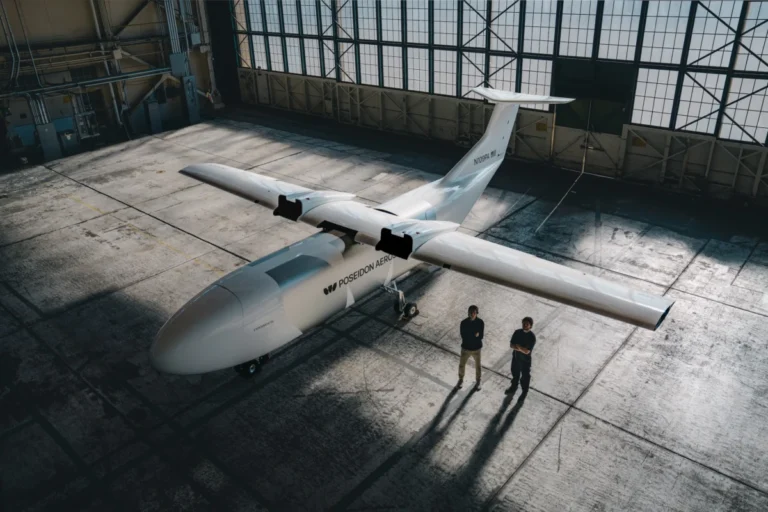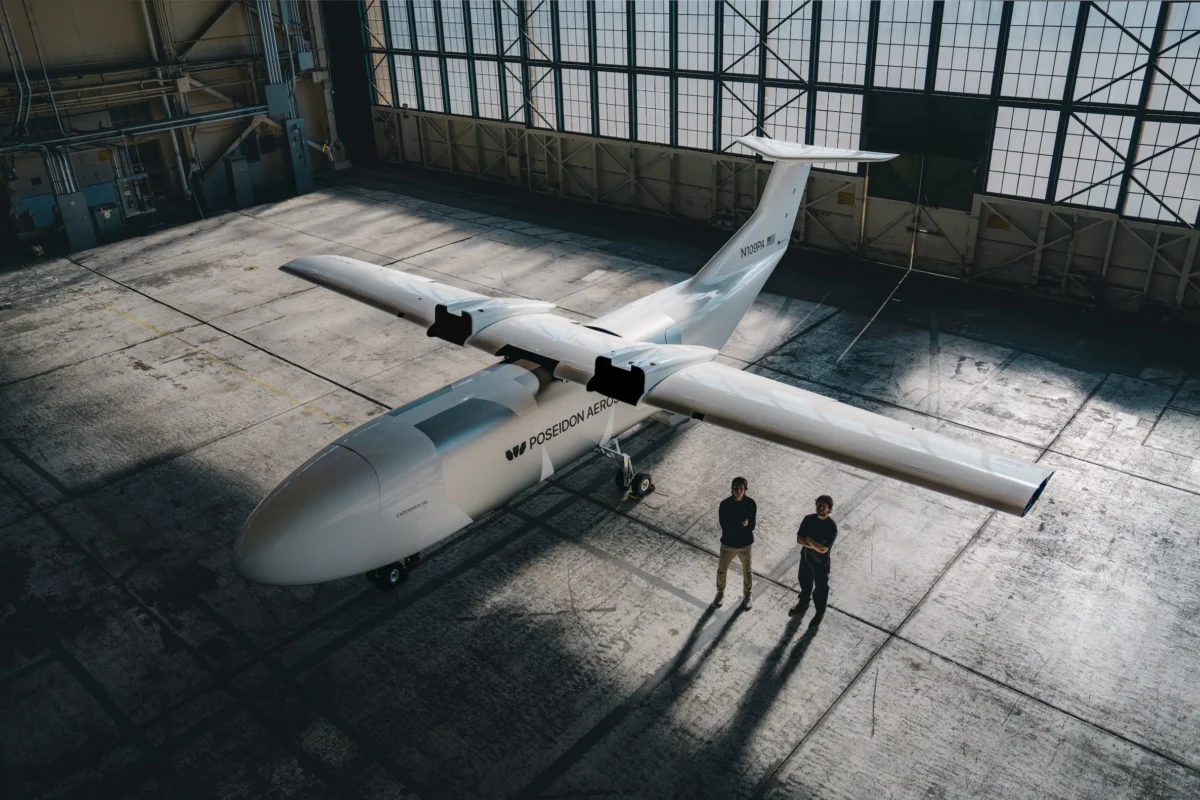
Poseidon Aerospace, a burgeoning player in the aerospace sector, has successfully closed a $60 million Series A funding round, bringing its total capital raised to $71 million. This significant investment is poised to accelerate the company’s development of uncrewed, fixed-wing cargo aircraft, aiming to fundamentally reshape the logistics landscape by prioritizing efficiency and cost-effectiveness over flashy, nascent technologies. The announcement comes as the company prepares for the maiden test flight of its full-scale cargo plane, Egret, anticipated by the end of this year.
This latest funding round was spearheaded by early-stage venture capital firm TQ Ventures, with notable new investments from Hanwha Asset Management, G Squared, and JAWS. Existing backers, including Starship Ventures, Draper Associates, and Drover Ventures, also reaffirmed their confidence by participating in the round. The capital infusion signals strong investor belief in Poseidon’s pragmatic strategy to revolutionize aerologistics, a sector ripe for innovation but often distracted by complex, unproven technological pursuits.
A Pragmatic Approach to Aerospace Innovation
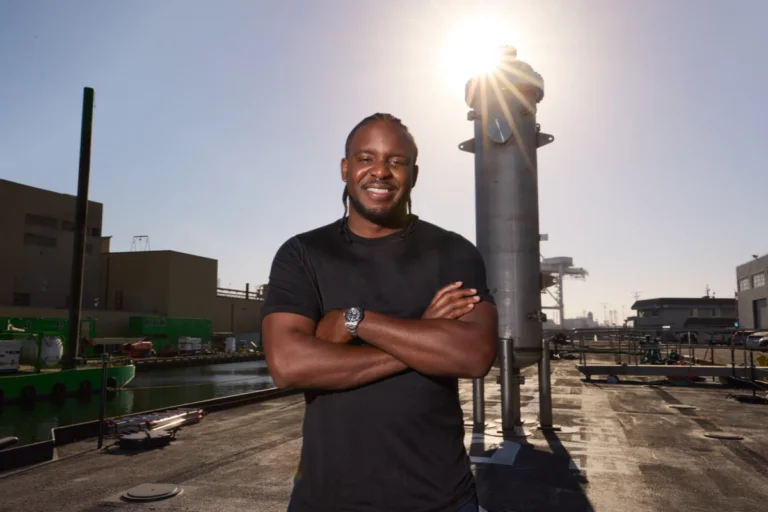
In a departure from the common Silicon Valley ethos of "move fast and break things," Poseidon Aerospace’s co-founder and CEO, David Zagaynov, articulates a singular focus: "move things fast." This philosophy underpins the company’s entire operational and technological strategy. Zagaynov, who honed his understanding of logistics at Amazon until 2024, co-founded Poseidon with Parker Tenney, an aerospace veteran from Lockheed Martin. Their collaboration was born from a shared observation that the burgeoning advanced air mobility (AAM) sector was overwhelmingly fixated on introducing novel technologies, often at the expense of practical, cost-efficient solutions for cargo transport.
"Philosophically, we want to build the future of aerologistics," Zagaynov stated in an exclusive interview. He candidly expressed his view that many aerospace startups risk becoming "nerd-sniped" by intriguing yet currently unworkable technologies. Instead, Poseidon’s mission is clear: "For us, we want to improve cargo." This deliberate eschewal of cutting-edge but unproven innovations like vertical takeoff and landing (VTOL) capabilities, or electric and hydrogen powertrains, sets Poseidon apart. Their aircraft, the Egret, and its seaplane variant, Heron, are designed as conventional fixed-wing aircraft powered by traditional combustion engines.
The Genesis and Growth of Poseidon Aerospace
The journey of Poseidon Aerospace began in 2024, stemming from Zagaynov and Tenney’s mutual recognition of a critical void in the rapidly evolving air mobility sector. While numerous startups vied for attention with promises of electric air taxis and futuristic VTOL concepts, the foundational challenge of efficient cargo movement remained largely unaddressed by these new ventures. Their combined experience—Zagaynov’s deep understanding of scalable logistics from Amazon and Tenney’s expertise in aerospace engineering from Lockheed Martin—provided a solid bedrock for their vision.
Last year, the company secured an initial $11 million in seed funding, a testament to the early validation of their focused strategy. This initial capital allowed Poseidon to embark on the critical design and prototyping phase. A significant milestone was achieved with the successful development and flight of a quarter-scale version of their vehicle, aptly named Seagull. This demonstrator proved the viability of their core design principles and paved the way for scaling up.
The recent $60 million Series A round now provides the necessary resources to transition from prototype to full-scale production and rigorous testing. To accommodate the ambitious development schedule for its 50-foot-wingspan Egret aircraft, Poseidon has expanded its operations into a sprawling former Navy hanger in Alameda, California. This expansion is accompanied by an aggressive hiring spree, aimed at bolstering the engineering, manufacturing, and operational teams required to achieve the ambitious goal of Egret’s first test flight by year-end. This methodical progression—from conceptualization and seed funding to prototyping, Series A, and full-scale development—illustrates a disciplined approach to aerospace innovation, prioritizing tangible milestones over speculative ventures.
Engineering for Utmost Efficiency: A Design Philosophy
Poseidon’s engineering philosophy is a direct manifestation of Zagaynov’s allergy to being "nerd-sniped." The company is meticulously designing its aircraft with a ruthless focus on lowering the cost of transporting cargo. This commitment translates into specific technological choices that, while perhaps less glamorous than those of some competitors, are demonstrably more practical and cost-effective in the near to mid-term.
The Egret and Heron models are fixed-wing aircraft, a well-understood and highly efficient aerodynamic configuration for long-distance flight. Crucially, they are powered by conventional combustion engines, bypassing the complexities and current limitations of electric or hydrogen propulsion systems. Zagaynov succinctly explains this choice: "It’s really hard to beat the energy density of fuels of anything carbon-related." This pragmatic stance acknowledges the current technological maturity and widespread availability of fossil fuels, allowing Poseidon to leverage existing infrastructure and proven performance.
A cornerstone of Poseidon’s strategy is embracing autonomy and remote piloting. By eliminating the need for an on-board pilot, the aircraft design undergoes a radical transformation. "Get rid of the cockpit; get rid of the life support systems," Zagaynov elaborated. This removal of human-centric requirements drastically reduces the aircraft’s structured weight. The resulting "virtuous cycle" means that a lighter empty weight allows for a higher payload-to-empty-weight ratio, enabling the use of lighter, more efficient engines. The cumulative effect is an aircraft that is inherently "lighter, cheaper," and capable of operating on a significantly lower cost curve with much higher utilization rates. This lean design philosophy, focused on fundamental engineering advantages rather than novel propulsion, is central to Poseidon’s promise of affordable air cargo.
Target Markets and Operational Paradigm Shifts
Poseidon Aerospace is strategically targeting two primary markets: defense and regional commercial cargo. Each segment presents unique opportunities for their uncrewed, cost-efficient aircraft.
On the defense side, Poseidon is designing its aircraft to service "remote communities and underserved routes where air cargo service is constrained." The ability of these planes to operate in locations with "degraded or nonexistent infrastructure" is a critical advantage. Such capabilities are not merely logistical conveniences but strategic imperatives, making a nation’s logistics infrastructure "harder to disrupt and more resilient to adversary denial." This aspect gains particular relevance in the current geopolitical climate, where nations are increasingly aware of the strategic value of resilient supply chains. The company has previously highlighted that global powers, such as China, are already actively testing their own cargo drones for military and civilian applications, underscoring the urgent need for robust domestic capabilities in this domain.
For the commercial sector, Poseidon’s strategy diverges from merely selling aircraft. Instead, Zagaynov intends for Poseidon to operate its own regional air cargo business. This model positions the company to directly compete with established air cargo carriers for contracts from major logistics players like UPS, FedEx, and others. The competitive edge lies squarely in cost. "Logistics is a commodity," Zagaynov stated, "and so if you sell a commodity and do it better, faster, cheaper, the demand is all yours."
The absence of pilots unlocks a multitude of operational advantages. Without the constraints of human flight hours, rest periods, and geographical bases, Poseidon’s aircraft can achieve significantly higher utilization rates. Traditional air cargo models often involve aircraft spending considerable time waiting on the ground due to pilot availability or regulatory limits. "When you have a pilot, they have a maximum amount of hours that they can fly. So if they fly a five-hour leg in one direction, they’re not able to come back home. And unless you have a relief [pilot], then you have to pay for them to spend the night somewhere," Zagaynov explained, highlighting how "the plane is like a very expensive asset that spends most of its life just waiting."
Furthermore, autonomy allows for unparalleled flexibility in route planning. If demand surges in a specific region, Poseidon can rapidly adjust its routes without the logistical nightmare of reassigning or relocating pilots. This adaptability also paves the way for a departure from the conventional hub-and-spoke model prevalent in regional air cargo. Poseidon envisions its aircraft conducting more efficient point-to-point trips, akin to the operational models of low-cost commercial airlines like Breeze or Avelo, thereby reducing transit times and further optimizing costs.
Market Context and Broader Implications
The global air cargo market is a colossal industry, valued at over $150 billion annually and projected to grow steadily. Within this vast market, the segment for autonomous cargo is an emerging frontier, with analysts forecasting substantial expansion as technologies mature and regulations adapt. Poseidon’s focus on uncrewed fixed-wing aircraft positions it uniquely to capture a significant share of this growth by offering a compelling value proposition: lower operational costs, higher efficiency, and greater flexibility than traditional piloted operations.
The company’s strategy also comes at a time when the regulatory environment is becoming increasingly conducive to autonomous aviation. The Federal Aviation Administration (FAA) recently launched pilot programs designed to streamline the testing and certification process for novel aircraft, particularly those in the electric vertical takeoff and landing (eVTOL) space. While Poseidon’s technology differs from eVTOL, Zagaynov acknowledges that these broader regulatory advancements create a more favorable landscape for all autonomous aviation. "There’s a path to commercialization that I don’t think existed like five to 10 years ago," he observed, indicating a maturing regulatory framework that reduces barriers to market entry for innovative aerospace companies.
The implications of Poseidon’s success extend beyond mere cost savings. For defense, it promises enhanced logistical resilience and responsiveness, particularly in contested or austere environments where traditional airfields are unavailable or dangerous. For commercial logistics, it could democratize air cargo, making it accessible and affordable for a wider range of goods and destinations, including remote communities previously underserved by expensive, labor-intensive air transport. This shift could stimulate economic growth in isolated regions and provide a critical lifeline for disaster relief and humanitarian aid.
The "lighter, cheaper" paradigm championed by Poseidon Aerospace represents a potentially disruptive force, challenging the status quo of both legacy carriers and many of the more futuristic, yet currently impractical, AAM startups. By focusing on a clear, unmet market need with a technically sound and economically viable solution, Poseidon is not just building aircraft; it is building a new blueprint for the future of aerologistics. As Egret approaches its inaugural flight, the industry will be watching closely to see if Poseidon Aerospace can indeed move things fast, and in doing so, break the mold of traditional air cargo.
About the Author