Earlier this summer, the technology world watched as Travis Kalanick’s latest venture, Atoms, announced a monumental $1.7 billion funding round spearheaded by the prominent venture capital firm Andreessen Horowitz (a16z). This significant capital injection immediately positioned Atoms as a formidable entity, yet the exact nature of its ambitions remained shrouded in a degree of secrecy, prompting industry speculation and anticipation. Kalanick, the controversial co-founder and former CEO of Uber, had previously described this new endeavor as "unfinished business," a cryptic remark that hinted at a deeper connection to his past in transforming urban mobility. Recent revelations, particularly those detailed in a comprehensive report by the Financial Times, have now peeled back layers of that mystery, unveiling Atoms’ strategic intent to become a major player in the burgeoning autonomous vehicle (AV) sector, with a specific and aggressive focus on robotaxi technology.
The Unveiling of Atoms’ Robotaxi Ambitions
The Financial Times report, citing sources close to the company, has illuminated Atoms’ strategic direction, indicating a bold move into the highly competitive autonomous vehicle space. The startup is reportedly gearing up for an aggressive hiring spree, aiming to recruit top talent across engineering, AI, and robotics disciplines to accelerate its development timelines. Beyond organic growth, Atoms is also said to be pursuing a strategy of strategic acquisitions, a tactic often employed by well-funded tech companies to rapidly consolidate expertise, intellectual property, and market share. This dual approach of talent acquisition and M&A signals a serious intent to challenge established players and carve out a significant niche within the industry.
Crucially, the report highlighted ongoing discussions between Atoms and Uber, Kalanick’s former company, regarding the potential integration of Atoms’ robotaxi technology into Uber’s expansive ride-hailing network. This potential collaboration underscores the strategic alignment and shared vision that could exist between the two entities, despite Kalanick’s tumultuous departure from Uber in 2017. Uber, which has itself navigated a complex journey in autonomous vehicle development, has openly adopted a partnership model for its AV strategy, engaging with a diverse portfolio of autonomous technology providers. The Financial Times further confirmed a previously reported $100 million investment from Uber into Atoms, a figure independently verified by TechCrunch, solidifying the strategic ties between Kalanick’s new venture and his old empire. While sources have emphasized that robotaxis do not encompass the entirety of Atoms’ long-term vision, this aggressive entry into the autonomous ride-hailing segment aligns perfectly with Kalanick’s "unfinished business" narrative, suggesting a return to the disruptive innovation he championed at Uber.
A Mega-Round and Kalanick’s "Unfinished Business"
The $1.7 billion funding round, led by Andreessen Horowitz, represents one of the largest single investments in a robotics or autonomous vehicle startup in recent years. This capital infusion is a testament to investor confidence in Kalanick’s vision and ability to execute, even after the controversies that marked his tenure at Uber. Andreessen Horowitz, known for its bold bets on transformative technologies and disruptive founders, clearly sees significant potential in Atoms. The sheer scale of the funding provides Atoms with substantial runway and resources, enabling it to pursue its ambitious hiring and acquisition strategies without immediate pressure for short-term profitability – a luxury many smaller AV startups do not possess.
Kalanick’s use of the phrase "unfinished business" to describe Atoms’ mission resonated deeply within the tech community. It suggests a continuation or culmination of his foundational ideas about transportation and logistics, which he initiated with Uber. While Uber revolutionized human-driven ride-hailing, the next frontier has always been autonomous mobility. Kalanick’s previous attempts to push Uber into self-driving technology were met with challenges, including the high-profile lawsuit with Waymo and the eventual divestiture of Uber’s Advanced Technologies Group (ATG). Atoms, therefore, appears to be Kalanick’s second act in fulfilling the promise of fully autonomous transportation, leveraging new technologies and learnings from past experiences.
Kalanick’s Post-Uber Ventures and Strategic Pivot
Following his resignation as CEO of Uber in 2017 amid intense pressure from investors, Travis Kalanick did not withdraw from the entrepreneurial scene. He quickly pivoted to new ventures, most notably founding CloudKitchens, a real estate startup focused on building and operating commissary kitchens for food delivery businesses. CloudKitchens also attracted significant investment, demonstrating Kalanick’s continued ability to draw capital and talent. However, Atoms marks a distinct strategic shift back towards the core domain of transportation and logistics, albeit with a focus on robotics and autonomy rather than human-driven services.

This pivot underscores Kalanick’s enduring interest in disrupting traditional industries through technology. His return to the autonomous vehicle space is particularly noteworthy given the immense capital and technological hurdles involved. It suggests a calculated move to re-enter a market he knows intimately, armed with a new company structure, a vast war chest, and potentially, a refined strategy. The choice to focus on robotaxis, a segment with direct parallels to Uber’s ride-hailing model, indicates a clear understanding of market needs and potential synergies.
The Shadow and Expertise of Anthony Levandowski
A critical piece of Atoms’ strategic puzzle is its acquisition of Pronto, an autonomous mining startup, and the involvement of its founder, Anthony Levandowski. Levandowski is a name synonymous with autonomous vehicle innovation, but also with significant controversy. A former Google engineer and a key figure in Uber’s early self-driving efforts, he was at the center of a high-profile legal battle between Waymo (Google’s self-driving car project) and Uber. Levandowski was accused of stealing trade secrets from Waymo before joining Uber, leading to a conviction and an 18-month prison sentence. However, he was later controversially pardoned by then-President Donald Trump.
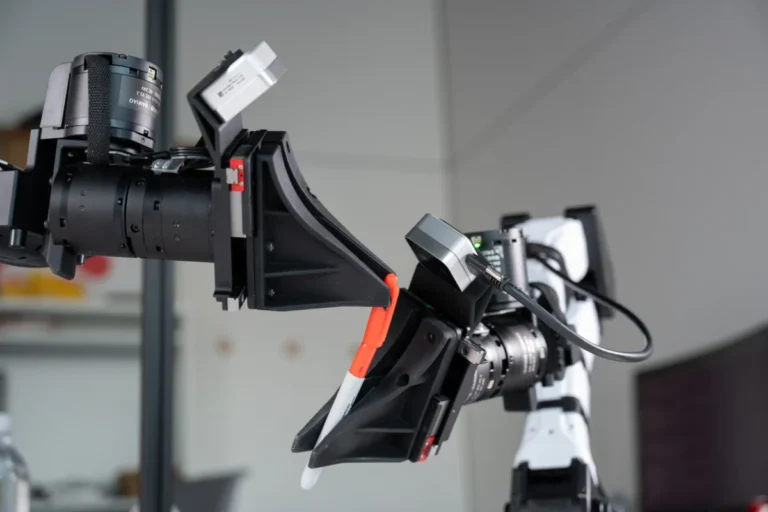
Despite his legal troubles, Levandowski’s technical prowess in the autonomous vehicle field is widely recognized. His involvement, through the acquisition of Pronto, brings a wealth of specialized knowledge and engineering talent to Atoms. Pronto’s focus on autonomous mining, while distinct from robotaxis, involves sophisticated navigation, perception, and control systems in complex, unstructured environments – technologies directly transferable to urban autonomous driving. The integration of Levandowski’s expertise and Pronto’s technological foundation provides Atoms with an immediate competitive edge, accelerating its research and development capabilities. It also signals Kalanick’s willingness to leverage top talent, even those with complicated pasts, if they align with his strategic objectives.
Uber’s Autonomous Journey and Atoms’ Role
Uber’s history with autonomous vehicles has been tumultuous. Early on, the company invested heavily in its own self-driving unit, the Advanced Technologies Group (ATG), viewing autonomous technology as existential to its long-term profitability. However, the path was fraught with challenges, including the Waymo lawsuit, a fatal accident involving an Uber self-driving test vehicle, and the enormous capital expenditure required for R&D. In 2020, Uber made a strategic decision to divest ATG, selling it to Aurora, an autonomous vehicle technology company, while retaining a minority stake in Aurora and committing to integrate Aurora’s technology into its network.
This shift marked Uber’s transition from an in-house developer to a platform aggregator for autonomous services. The company has since forged partnerships with a growing list of AV developers, including Waymo, Motional, and now potentially Atoms. Uber’s $100 million investment in Atoms and ongoing discussions regarding collaboration highlight its continued commitment to integrating autonomous technology, but through a more capital-efficient partnership model. For Uber, partnering with Atoms could offer another avenue to deploy robotaxis, potentially diversifying its AV suppliers and reducing reliance on any single technology provider. For Atoms, a partnership with Uber would provide immediate access to a massive customer base, extensive operational data, and a proven ride-hailing infrastructure, a critical advantage for scaling robotaxi services.
The Broader Autonomous Vehicle Landscape
The autonomous vehicle industry is at a pivotal juncture. After years of hype and massive investments, the path to widespread commercial deployment has proven more challenging and time-consuming than initially anticipated. Technical hurdles, regulatory complexities, and public acceptance issues remain significant obstacles. However, progress continues, with companies like Waymo and Cruise offering limited robotaxi services in select cities. The market is projected for substantial growth, with some estimates valuing the global autonomous vehicle market at hundreds of billions of dollars by the next decade, driven by demand for enhanced safety, efficiency, and new mobility services.
Major players in the AV space include dedicated self-driving companies like Waymo (Alphabet), Cruise (General Motors), Zoox (Amazon), and Aurora. Traditional automakers like Ford (Argo AI partnership, now dissolved) and Volkswagen have also invested heavily, as have tech giants and a multitude of well-funded startups. The competitive landscape is fierce, characterized by intense R&D, patent races, and a push for regulatory approvals. Atoms’ entry, backed by significant capital and led by a disruptive entrepreneur, adds another potent force to this already dynamic environment. Its focus on robotaxis places it in direct competition with some of the most advanced and well-capitalized AV companies.

Strategic Implications and Market Impact
Atoms’ emergence as a serious contender has several strategic implications. Firstly, it intensifies the competition in the robotaxi sector. Kalanick’s track record at Uber demonstrates an unparalleled ability to scale operations rapidly and aggressively, often disrupting incumbents. If Atoms can replicate this operational intensity in the AV space, it could accelerate the commercialization of robotaxis and force existing players to innovate faster.
Secondly, the involvement of Travis Kalanick brings a unique blend of vision, ambition, and controversy. While his leadership style at Uber was polarizing, his strategic foresight in identifying and scaling massive market opportunities is undeniable. His "unfinished business" narrative suggests a deep-seated desire to complete the autonomous revolution he arguably started with Uber’s initial vision. This personal drive, combined with a substantial financial backing, positions Atoms as a force to be reckoned with.
Thirdly, the potential for collaboration with Uber is a game-changer. A direct integration of Atoms’ technology into Uber’s platform could provide an instant pathway to market for Atoms, bypassing the arduous process of building a ride-hailing network from scratch. For Uber, it offers a diversified and potentially competitive source of autonomous technology, reinforcing its asset-light partnership model for AV deployment.
Funding Trends and Investor Confidence
The $1.7 billion funding round for Atoms also reflects broader trends in venture capital, particularly in the deep tech and mobility sectors. While the overall funding environment has seen fluctuations, investors continue to pour massive amounts of capital into companies perceived to be at the forefront of transformative technologies. The scale of this investment in Atoms underscores a belief that autonomous vehicles, despite their challenges, represent a multi-trillion-dollar opportunity that will fundamentally reshape transportation, logistics, and urban planning. Andreessen Horowitz’s lead investment signals a strong endorsement of Kalanick’s ability to navigate complex technological and market landscapes. Such mega-rounds often precede aggressive growth phases, indicating that Atoms is poised for rapid expansion.
Regulatory Horizons and Societal Considerations
The successful deployment of robotaxis is not solely dependent on technological advancements and capital. Regulatory frameworks, public acceptance, and ethical considerations play equally critical roles. Governments worldwide are grappling with how to regulate autonomous vehicles, establishing safety standards, liability rules, and operational guidelines. Public trust, which was impacted by early accidents and safety concerns, needs to be rebuilt through transparent development and rigorous testing. Atoms, like all AV companies, will need to navigate this complex regulatory maze and build public confidence to achieve widespread adoption. Kalanick’s previous experience with regulatory battles at Uber, albeit in a different context, may provide some insights into tackling these challenges, but the autonomous vehicle landscape presents unique and often more stringent requirements.
In conclusion, the veil of secrecy surrounding Travis Kalanick’s Atoms has finally lifted, revealing an ambitious strategy to conquer the autonomous vehicle market, starting with robotaxis. Armed with a staggering $1.7 billion in funding, a strategic acquisition in Pronto, and the formidable expertise of Anthony Levandowski, Atoms is poised to make a significant impact. The potential collaboration with Uber adds another layer of intrigue and strategic advantage, hinting at a powerful synergy between Kalanick’s new venture and his former company. As Atoms gears up for a major hiring spree and potential acquisitions, the autonomous vehicle industry watches keenly to see if Kalanick can once again disrupt a multi-billion-dollar market and finally complete his "unfinished business" in transforming global mobility. The road ahead for Atoms will undoubtedly be challenging, but with Kalanick at the helm and a substantial war chest, it promises to be anything but ordinary.
About the Author