The landscape of technology employment is undergoing a significant transformation, with companies across a widening array of industries actively seeking AI-proficient talent. This shift signifies a move from the exploratory phase of artificial intelligence to its widespread integration into core business operations, according to recent analyses by industry organizations. As of August 2026, nearly 600,000 active technology occupation postings were identified, with a substantial 42% representing newly created positions, highlighting the dynamic and expanding nature of this job market.
The AI Imperative: From Experimentation to Implementation
The recent surge in technology job openings is directly correlated with the accelerating adoption of artificial intelligence across diverse business functions. CompTIA, a leading technology industry association, has observed a palpable shift in employer strategies, moving beyond initial AI experimentation to actively embedding AI technologies into their day-to-day operations. This transition necessitates a workforce equipped with the skills to not only utilize AI tools but also to manage AI-enhanced workflows and contribute to the strategic development of AI-driven initiatives.
"Companies are no longer just dabbling in AI; they are actively integrating it to drive efficiency, innovation, and competitive advantage," stated a CompTIA spokesperson in an emailed statement. "This fundamental change in how businesses operate is directly translating into a robust demand for tech professionals who can bridge the gap between cutting-edge AI capabilities and practical business applications."
The sheer volume of active job postings underscores the continued strength of the technology talent market, even amidst broader economic discussions that may highlight workforce reductions in certain sectors. CompTIA’s August 2026 report revealed close to 600,000 active technology occupation postings. Of these, 42% were newly posted positions, indicating a fresh wave of demand, while the remaining 58% represented roles that had been open for some time, suggesting a persistent challenge in finding qualified candidates. This data paints a picture of a market characterized by both sustained demand and evolving skill requirements.
Diversification of Demand: Tech Roles Outside Traditional Sectors
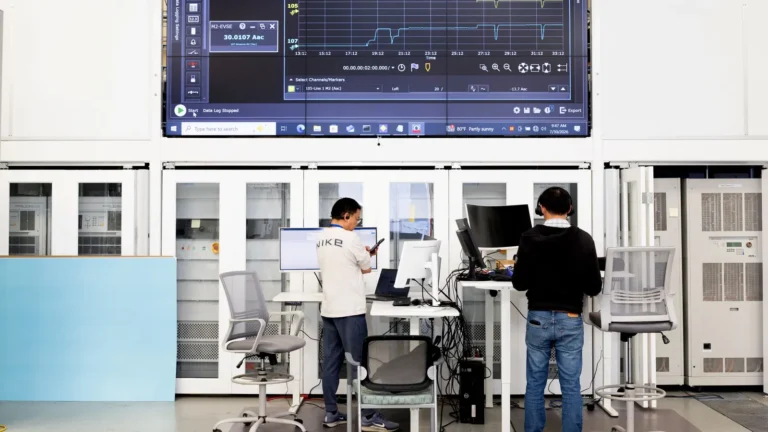
A critical observation from the CompTIA analysis is the increasing prevalence of technology job openings originating from outside the traditional technology sector. Manufacturing, administrative support services, and retail are emerging as significant employers of tech talent. This diversification suggests that the impact of AI and digital transformation is permeating industries at an unprecedented pace, requiring a broader range of technical expertise across the economy.
"We are seeing a profound broadening of where technology jobs are being created," explained Lara Ewen, a contributor to HR Dive, the publication that originally reported on these findings. "What was once concentrated in Silicon Valley or major tech hubs is now being distributed across industries that are leveraging technology to reinvent themselves. This is a fundamental shift that requires a more agile and adaptable approach to talent acquisition and development."
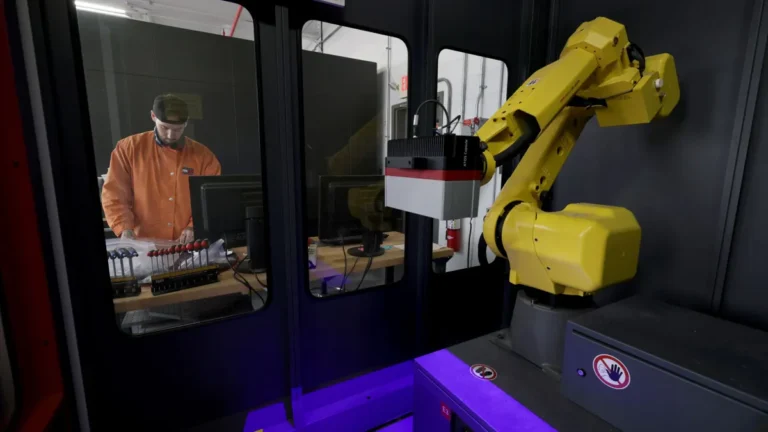
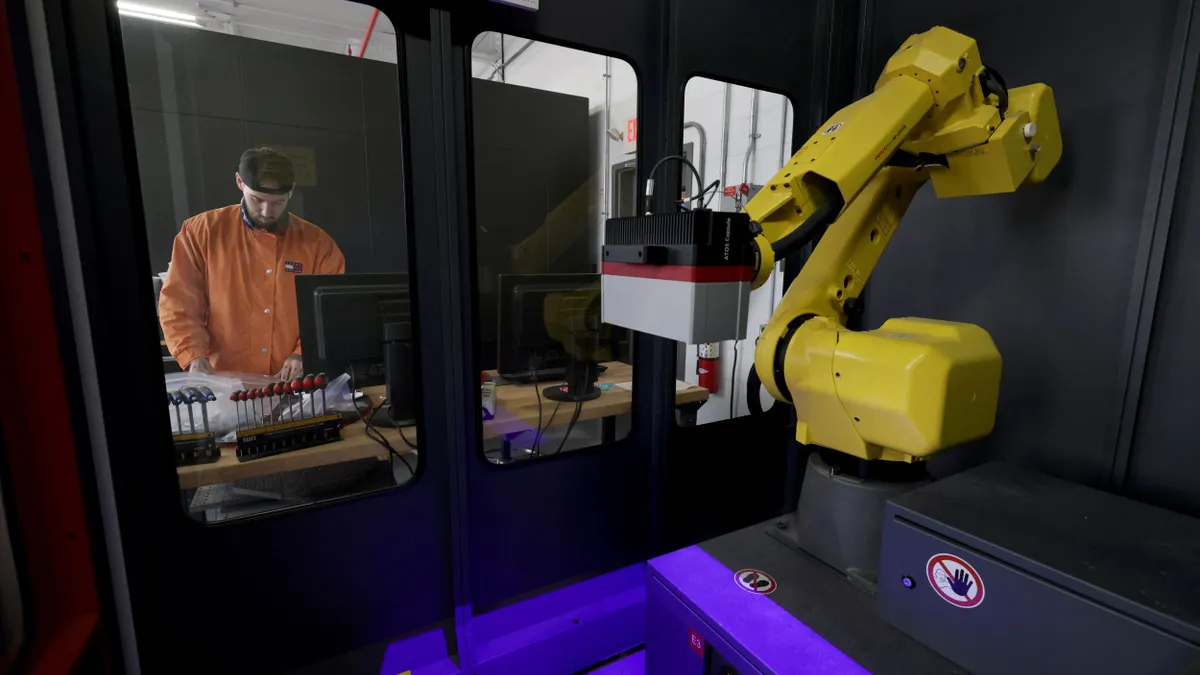
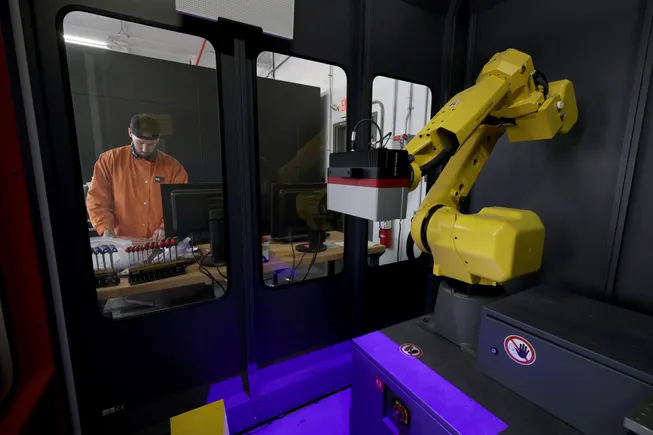
For instance, a GE Appliances employee working in a 3-D scan lab on August 8, 2025, in Louisville, Kentucky, exemplifies the integration of advanced technology within manufacturing. This image, captured by Michael Hickey for Stringer via Getty Images, visually represents the kind of cutting-edge work that is increasingly becoming commonplace in non-tech industries. The caption accompanying the image highlights that CompTIA’s findings of nearly 600,000 active technology occupation postings in August 2026, with 42% being newly posted, are directly supported by such real-world examples of technological adoption.
The AI Job Title Explosion: A Trend Across Global Markets
Further bolstering these findings, a July report from Indeed’s Hiring Lab provided a stark illustration of the growing influence of AI on job titles. The number of job postings explicitly mentioning "artificial intelligence" in the title has more than tripled in the United States since 2022. More broadly, "AI-touched job titles" have seen an increase across all tracked markets. This trend is particularly pronounced outside of traditional tech occupations. In five out of the six countries examined by Indeed’s report, more than half of all AI-touched job titles were found outside the tech sector. The United States led this non-tech category, with 63% of AI-touched job titles falling into this domain.
The Indeed report also shed light on the evolution of existing roles, noting that many positions with "AI" now in their titles are not entirely new professions but rather established roles that have been updated to incorporate AI responsibilities. This indicates a need for upskilling and reskilling within the existing workforce to adapt to these evolving job descriptions.

Sector-Specific Growth and Shifting Priorities
The impact of AI is not uniform across all sectors. A separate report from Dice, a tech career site, revealed a significant year-over-year increase of 173% in job postings for roles with "AI" in the title during the first quarter of 2026. This surge in AI-specific roles contrasts with a reported dip of 22% in software development jobs during the same period. While this might suggest a shift in focus, it’s crucial to note that software development remains a foundational element for AI implementation and innovation.
The Dice report also highlighted uneven growth in tech hiring across different sectors. The finance and banking sector, for example, experienced a substantial 47% year-over-year increase in tech listings, significantly outpacing the 23% year-over-year increase in overall tech job postings. This suggests that industries like finance are aggressively investing in technology, particularly AI, to enhance their services, manage risk, and improve customer experiences.
Underlying Drivers of Demand: Beyond AI
While AI is a prominent driver, the CompTIA analysis also points to sustained demand for professionals in core technology functions. Growth in tech support, infrastructure, project management, and cybersecurity roles indicates that employers are simultaneously focused on strengthening their foundational technology operations while also building out emerging capabilities. This dual focus is essential for maintaining robust and secure digital ecosystems that can support advanced technologies like AI.
The demand for tech support and infrastructure professionals is critical for ensuring the reliable operation of the systems that underpin AI applications. Project managers are needed to oversee the complex implementation of AI initiatives, ensuring they are delivered on time and within budget. Cybersecurity experts are more crucial than ever, as the expanded use of AI and interconnected systems creates new vulnerabilities that must be addressed proactively.
The Evolving Nature of Tech Skills
The current job market trends suggest a recalibration of required skills for technology professionals. While deep technical expertise in areas like AI development and machine learning remains highly valued, there is also a growing need for individuals who can bridge the gap between technology and business needs. This includes professionals with strong analytical skills, problem-solving abilities, and the capacity to understand and articulate the business value of AI.

Furthermore, the diversification of industries seeking tech talent implies that a one-size-fits-all approach to tech education and training will be insufficient. Companies will likely seek candidates with domain expertise relevant to their specific industry, combined with a strong foundation in technology principles and a willingness to learn and adapt to new AI tools and methodologies.
Implications for the Workforce and Education
The burgeoning demand for AI-savvy professionals, particularly outside traditional tech firms, presents both opportunities and challenges. For individuals, it signifies a fertile ground for career advancement and the acquisition of in-demand skills. For educational institutions, it underscores the need to adapt curricula to meet the evolving needs of the job market, emphasizing practical AI applications and interdisciplinary learning.
The trend of established roles being updated to include AI responsibilities also points to the importance of continuous learning and professional development. Employees across all sectors will likely need to engage in ongoing training to remain competitive and effectively contribute to their organizations’ digital transformation journeys.
The increasing integration of AI into business operations is not merely a technological shift; it is a fundamental reshaping of the workforce. As companies move from experimentation to implementation, the demand for skilled technology professionals is set to remain robust and increasingly dispersed across the economic spectrum, requiring a proactive and adaptable approach from individuals, businesses, and educational providers alike. The coming years will likely see further innovation in how AI is leveraged, leading to the creation of new job categories and an ongoing evolution of the skills required to thrive in this dynamic technological era.
About the Author