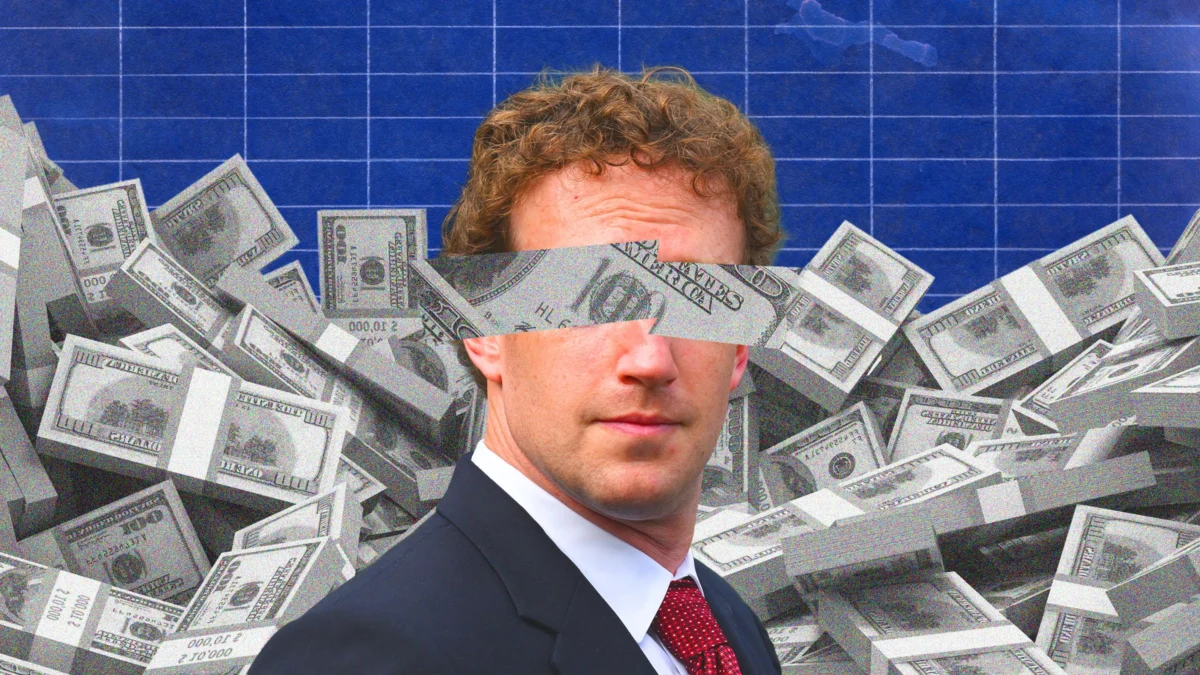
In a landmark ruling that signals a sharpening of judicial scrutiny over Big Tech, a New Mexico state judge has ordered Meta Platforms Inc. to pay a record-breaking $25 billion fine. The penalty follows a determination that the social media conglomerate violated state consumer protection laws, specifically the New Mexico Unfair Practices Act, in a series of data-handling failures tracing back to the 2018 Cambridge Analytica scandal. While the figure represents the largest single fine ever leveled against the company, it arrives at a time when Meta’s market valuation exceeds $1.7 trillion, prompting a broader debate among legal experts and financial analysts regarding whether such penalties serve as an effective deterrent or merely a manageable "cost of doing business."
The ruling, handed down by Judge Francis Mathew, follows a September jury verdict that found Meta liable for misleading users about the security and accessibility of their personal data. The state’s lawsuit, originally filed in 2021, argued that Meta’s failure to safeguard information allowed third-party developers nearly unfettered access to user profiles, a practice that came to light during the global outcry over Cambridge Analytica’s use of Facebook data to influence electoral processes.
The Evolution of the New Mexico Litigation
The $25 billion penalty is the culmination of a multi-phased legal battle in New Mexico that has seen Meta face repeated losses in court. Earlier this year, the company was hit with two separate significant fines in the same state. The first, totaling $375 million, was related to violations of the Unfair Practices Act specifically concerning child safety and the platform’s failure to protect minor users from predatory behavior. A second phase of that litigation resulted in an additional $567 million penalty, bringing the state’s total claims against the company to nearly $1 billion even before the most recent data privacy ruling.
The state’s legal strategy has been aggressive. During the most recent trial, attorneys for New Mexico initially requested that the court award damages between $35 billion and $45 billion. Under the statutory maximums allowed by the Unfair Practices Act, Meta could have theoretically faced a fine as high as $219 billion, calculated at $5,000 for each of the approximately 43 million individual violations identified by the prosecution. Judge Mathew’s decision to set the fine at $25 billion represents a middle ground that acknowledges the severity of the misconduct while remaining within a range that the court deemed defensible upon appeal.
Corporate Response and the "Tax on Speech" Defense
Meta’s executive leadership has signaled a firm intention to contest the ruling, characterizing the state’s legal approach as an overreach that threatens the viability of digital commerce within New Mexico. C.J. Mahoney, Meta’s Chief Legal Officer, issued a statement following the ruling, asserting that the legal environment in the state has become hostile to technology firms.
"This ruling, and the Attorney General’s approach to enforcement, makes it all but impossible to do business in the state of New Mexico," Mahoney stated. "At its core, this lawsuit seeks to impose a tax on speech to enforce new rules for what people can say online. We are confident we will prevail on appeal."
The company’s defense hinges on the argument that the state is attempting to retroactively apply standards to data management and content moderation that were not clearly defined at the time the alleged violations occurred. Furthermore, Meta maintains that it has since overhauled its privacy architecture and developer policies to prevent a recurrence of the Cambridge Analytica incident.
Financial Context: A $1.7 Trillion Shield
To understand the impact—or lack thereof—of a $25 billion fine, analysts point to Meta’s current financial standing. As of late 2024, Meta remains one of the most valuable companies in the world, with a market capitalization hovering around $1.7 trillion. Its recent earnings reports show robust revenue growth, driven largely by its dominant position in the digital advertising market and its aggressive pivot toward artificial intelligence.
While $25 billion is an objectively massive sum—exceeding the annual GDP of several small nations—it is viewed by the markets with relative composure. On the day following the announcement, Meta’s stock did experience a decline, but market analysts attributed the volatility to factors other than the New Mexico ruling. Investors were primarily concerned with the company’s massive capital expenditure on AI infrastructure, which is projected to reach $40 billion annually, and a broader cooling of AI-related stocks across the Nasdaq.
For a company that generates tens of billions of dollars in free cash flow every quarter, even a multi-billion-dollar settlement can be absorbed without fundamentally altering its long-term strategy. This has led to criticism from consumer advocacy groups who argue that unless fines are tied to a percentage of global revenue or market cap, they fail to force behavioral changes in Silicon Valley.
Uncovering Secret Records: The Discovery Process
Perhaps more damaging than the financial penalty is the public disclosure of internal documents forced by the New Mexico litigation. Corban Rhodes, a partner at DiCello Levitt and outside counsel for the state, noted that the trial allowed for the introduction of more than 100 exhibits into the public record—many of which had been shielded from public view for over a decade.
Among the most significant disclosures was a 2018 email from then-Chief Operating Officer Sheryl Sandberg. Sent just days after the Cambridge Analytica scandal broke, Sandberg warned colleagues of the systemic nature of the company’s data vulnerabilities. "The single biggest issue we face—and I really need everyone to know this—is that there were a MILLION developers with access to the data," Sandberg wrote. "We are going to have many, many, many more moments like this in the next month and year."
Such evidence provides a roadmap for other jurisdictions currently pursuing litigation against Meta, as it suggests that the company’s leadership was aware of the scale of the privacy risks long before they were publicly acknowledged or rectified.
The Growing Multi-Front Legal War
The New Mexico ruling is not an isolated event but part of a cascading series of legal setbacks for Meta across the United States and Europe.
- Multistate Settlement: In August 2024, Meta reached a settlement with a coalition of more than 40 U.S. states regarding the addictive nature of its platforms and their impact on youth mental health. As part of this agreement, the company committed to paying between $17 billion and $18 billion over a ten-year period.
- Mental Health Liability: A Los Angeles County Superior Court recently found Meta and Google’s YouTube liable for the "addictive design" of their apps, which a plaintiff argued led to severe mental health struggles. While the individual award was $6 million, the precedent for "design liability" poses a significant future risk.
- European Regulatory Pressure: In 2023, European regulators fined Meta a record €1.2 billion ($1.3 billion) for transferring user data from the EU to the U.S. in violation of GDPR standards.
The Insurance and Governance Crisis
A burgeoning crisis for Meta lies in the realm of corporate insurance and indemnification. Traditionally, large corporations carry insurance to cover the costs of legal defense and settlements. However, in March 2024, a Delaware judge ruled that Meta’s insurers do not have a "duty to defend" the company against the thousands of lawsuits currently being brought against it.
If private insurers begin to balk at covering tech companies due to the sheer volume of litigation and the "willful" nature of the alleged violations, the financial burden will shift directly to the company’s balance sheet. Some legal scholars suggest that insurance companies may eventually become "de facto governors" of technology, requiring specific safety and privacy designs as a condition for coverage.
Furthermore, the protection of individual directors and officers is coming into question. Brian Quinn, a law professor at Boston College Law School, notes that while corporate law typically protects executives who act in "good faith," repeated violations involving the same facts can erode that protection. If shareholders can prove that directors repeatedly ignored legal warnings, they may be able to block the company from indemnifying those individuals, leaving executives personally liable for damages.
The Future: From Social Media to AI Litigation
As Meta transitions its core business model to focus on the "Metaverse" and Generative AI, the nature of its legal troubles is expected to evolve. Legal experts predict that the next wave of litigation will shift away from Social Media 2.0 issues—like data privacy and content moderation—and toward the ethics and legality of AI training data.
"Regulators and courts have for a long time been focused on the impact of social media, and I think we’re moving on from that era," says Rhodes. "I expect the next wave of litigation will be focused on AI."
The $25 billion New Mexico fine serves as a massive bookend to the era of social media data negligence. Whether it serves as a final warning or a preamble to even larger AI-related penalties will depend on the outcome of the inevitable appeals and the company’s ability to convince both the courts and the public that its era of "moving fast and breaking things" has truly come to an end. For now, the tech giant remains a fortress of capital, seemingly capable of weathering even the most historic of judicial storms.
About the Author