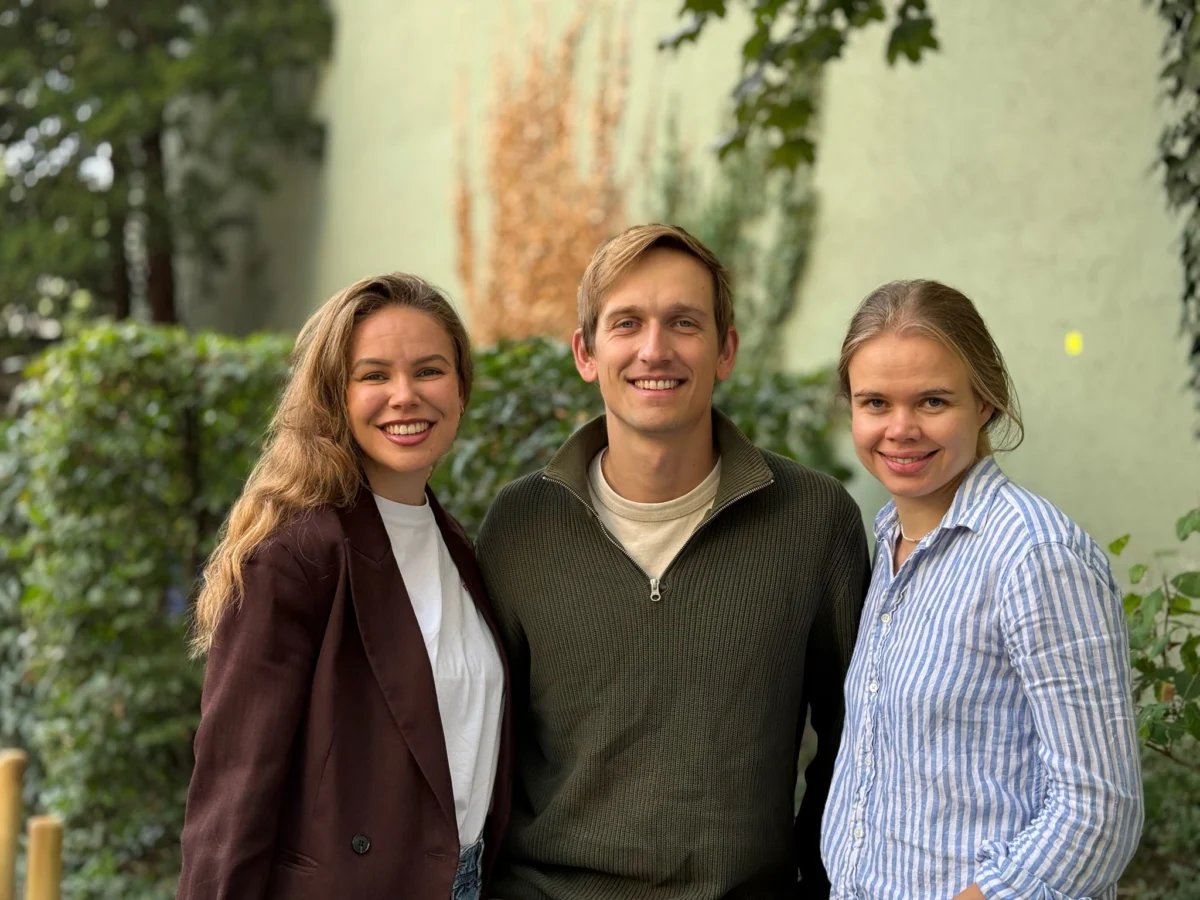
In a significant departure from the long-held venture capital dogma that once mandated international startups relocate to Silicon Valley to secure funding, Furo, a burgeoning German deep-tech company, has demonstrated a compelling counter-narrative. Founded by three 28-year-old entrepreneurs, Lena Sophia Voß, Leonie Wagner, and Simon Wittner, Furo made the strategic decision to leave the Bay Area and return to their native Germany, a move that has demonstrably paid dividends in both securing substantial VC investment and achieving rapid business growth. This strategic pivot highlights an evolving landscape in global venture capital, where localized expertise and market proximity are increasingly valued over a singular geographic hub.
Furo, which specializes in developing sophisticated software for industrial battery storage systems, recently announced a successful funding round totaling $4 million. Notably, the majority of this capital was raised from prominent U.S. backers, including a round led by TQ Ventures with additional participation from Neo and Sheryl Sandberg’s fund, Sandberg Bernthal Venture Partners. This influx of capital underscores a growing willingness among U.S. investors to support innovative companies addressing critical market needs outside traditional Silicon Valley confines. Furthermore, just a year after its inception, Furo has already secured high-profile enterprise clients, including the venerable German rail operator Deutsche Bahn, signaling strong market validation and rapid traction within a crucial industrial sector.
The Shifting Paradigm of Global Venture Capital
For decades, the allure and perceived necessity of Silicon Valley for ambitious tech startups, particularly those seeking significant venture capital, were almost absolute. The prevailing wisdom dictated that to tap into the deepest pools of capital, gain access to top-tier talent, and immerse oneself in a culture of relentless innovation, a startup, regardless of its origin, needed to establish a physical presence in the Bay Area. U.S. venture capitalists often explicitly conditioned investment on such relocation, believing it essential for hands-on mentorship, networking, and eventual scalability within the American market.
However, the global tech ecosystem has matured considerably. The rise of robust startup hubs in Europe, Asia, and other regions, coupled with the increasing digitalization of industries worldwide, has challenged this monolithic view. A recent observation by the influential VC firm a16z (Andreessen Horowitz) succinctly captured this evolving reality, noting that "there is now an advantage to having one foot in your home country, and one foot in Silicon Valley." This hybrid approach acknowledges the enduring strengths of Silicon Valley – its unparalleled capital markets, deep expertise in scaling, and extensive network – while simultaneously recognizing the critical importance of local market understanding, regulatory navigation, and talent pools for specific industries. Furo’s journey serves as a compelling case study for this new paradigm, demonstrating how strategic localization can be a competitive advantage rather than a hindrance.
Furo’s Genesis: Bridging Continents through Education
The founders’ journey is itself a testament to this transatlantic bridge-building. Lena Sophia Voß, Leonie Wagner, and Simon Wittner were alumni of Munich’s prestigious Center for Digital Technology and Management (CDTM), an interdisciplinary program tied to their alma mater, Technische Universität München (TU Munich). CDTM is renowned for fostering entrepreneurial talent, blending technical education with business acumen, and maintaining strong ties to both German industry and international tech hubs. It was through this program that the trio gained exposure to the Silicon Valley ecosystem, pursuing further studies at esteemed U.S. institutions like Stanford University and UC Berkeley. This educational background provided them with a unique dual perspective: a deep understanding of European industrial and academic rigor combined with an immersion in Silicon Valley’s fast-paced, growth-oriented startup culture.
When the founders conceived Furo, initially operating under the name Lumera Energy, their ambition was clear: to help industrial companies significantly reduce their electricity costs through intelligent battery storage management. Their decision to locate the company in Germany, despite their recent U.S. experiences and connections, was not arbitrary but deeply strategic.
Identifying a Pressing European Problem: Germany’s Energy Imperative
The core problem Furo aimed to solve – optimizing industrial energy consumption – was, in their estimation, far more pressing and economically impactful in Europe, particularly in Germany. As Lena Sophia Voß articulated, "We’re currently moving faster in Europe than if we’d have stayed in the U.S." This statement is rooted in the unique challenges and opportunities within the German energy market.
Germany has been at the forefront of the "Energiewende," or energy transition, a national policy aimed at phasing out nuclear and fossil fuels in favor of renewable energy sources like wind and solar. While commendable, this ambitious transition has introduced significant volatility into the electricity grid and, at times, led to substantial increases in energy prices, especially for industrial consumers. Over the past five years, Germany has grappled with a series of energy crises, exacerbated by geopolitical events such as the conflict in Ukraine and the subsequent reduction in Russian natural gas supplies. These events sent electricity prices skyrocketing, pushing many energy-intensive German industries to the brink.
For instance, average industrial electricity prices in Germany, already among the highest in Europe, saw unprecedented spikes, with some forecasts predicting increases of over 50% for businesses. In 2022, wholesale electricity prices in Germany reached record highs, at times exceeding 500 euros per MWh, compared to pre-crisis averages of around 50 euros per MWh. This volatile and expensive energy landscape created an urgent and quantifiable need for solutions like Furo’s software, which can help industrial facilities intelligently manage their energy consumption, store excess renewable energy, and discharge it during peak price hours, thereby significantly reducing operational costs and enhancing grid stability. The potential for cost savings and operational resilience offered by Furo’s technology became an immediate and tangible value proposition for German enterprises.
The Strategic Advantage of Proximity: Why Germany Over Silicon Valley
While Furo briefly operated from the U.S. during its participation in Neo’s accelerator program, the founders quickly realized the inherent difficulties of addressing the German market from afar. Lena Sophia Voß highlighted a fundamental truth for early-stage companies: "If you are an early-stage company, very often it’s mostly about your network, and also about being close to your customers." For a company building a B2B software solution for industrial clients, proximity to these customers is paramount. It allows for deeper understanding of their operational challenges, facilitates rapid feedback loops for product development, and builds trust crucial for securing large enterprise contracts.
The founders’ decision to return was a deliberate strategic choice, not a necessity driven by immigration constraints. Despite having received full-time offers from tech giants like Apple and Google X, and other AI startups where they had previously worked, and possessing the necessary visas to remain in the U.S., they consciously chose Europe. "So it was a decision to go back to Europe not because we needed to, but because we see that right now, it’s a better time to build an energy startup in Europe instead of the U.S.," Voß affirmed. This conviction was fueled by the acute market need in Europe and the specific advantages of building a company there.
Talent, Cost, and Ecosystem: The Economic Case for Munich
Starting Furo in Munich proved "highly beneficial" for several reasons. Voß emphasized the power of their local network: "a lot of people in our network recommended us to our first customers." This organic customer acquisition through trusted referrals is invaluable for a nascent company. Furthermore, access to "operational expertise" and mentorship within the German industrial landscape provided crucial guidance. "Every time we have a challenge, we know exactly whom to call," she added, underscoring the strength of Germany’s interconnected industrial and academic ecosystem. Proximity to technical universities like TU Munich also offers a direct pipeline to top engineering talent, essential for a deep-tech startup.
Beyond network and expertise, a significant economic advantage emerged: the cost of talent. "If you compare the salary of an engineer in the U.S. versus Germany, it is just way cheaper," Voß noted. This cost differential significantly amplifies the impact of venture capital. While U.S. investors initially expressed skepticism about Furo’s budgeted salaries, deeming them potentially too low to attract talent, they were quickly reassured. Furo’s compensation packages, while considered modest by Silicon Valley standards, were actually at the top end for Germany, enabling them to attract high-caliber engineers without depleting their capital prematurely. This translates directly into greater runway and the ability to achieve more with less funding.
Crucially, this cost advantage does not come at the expense of quality. Voß asserted that the quality of talent in Germany is "on par" with that in the U.S. Moreover, the German talent pool is more accessible due to less intense competition from a hyper-concentrated Big Tech sector, unlike Silicon Valley where a handful of giants dominate the hiring landscape. Furo’s strong ties to CDTM further enhance their recruiting efforts, creating a recognizable and respected brand within the academic community. "It’s such a great network in Germany and in Europe that people somehow start to know you," she added, pointing to the advantages of a more tightly knit and interconnected professional community.
Securing High-Profile Backing: U.S. Investors See Value Abroad
The $4 million funding round, led by TQ Ventures with participation from Neo and Sandberg Bernthal Venture Partners, signifies a broader trend among U.S. venture capitalists. While Silicon Valley remains a dominant force, sophisticated investors are increasingly looking beyond geographic borders for compelling opportunities, particularly in sectors where European innovation is strong and market needs are acute.
TQ Ventures, known for its investments in high-growth technology companies, likely saw Furo’s potential to disrupt the industrial energy sector, a market ripe for digitalization and optimization. Neo, an accelerator and venture fund, provided early support, recognizing the core technological strength and market relevance of Furo’s offering. The involvement of Sandberg Bernthal Venture Partners, co-founded by former Meta COO Sheryl Sandberg, adds significant gravitas and suggests an appreciation for Furo’s leadership and strategic vision. These investors are not simply deploying capital but are making a calculated bet on the founders’ ability to execute within a specific, high-value European market. Their willingness to back a company primarily based in Germany, rather than insisting on a U.S. relocation, underscores a pragmatic shift in investment philosophy, recognizing that local market expertise and operational efficiency can outweigh the perceived benefits of a Silicon Valley address.
Early Triumphs and Market Validation: The Deutsche Bahn Deal
Furo’s rapid success in securing major enterprise clients like Deutsche Bahn within its first year of operation is a powerful testament to its product-market fit and the pressing need for its solution. Deutsche Bahn, as one of Europe’s largest transportation companies, operates a vast and complex infrastructure with significant energy demands. Optimizing its energy storage systems can lead to substantial cost savings, reduce its carbon footprint, and enhance operational resilience. This early validation from such a prominent industrial player not only provides Furo with a strong revenue stream but also serves as a crucial reference point for attracting other large industrial clients across Germany and Europe. It demonstrates that Furo’s software is not merely theoretical but delivers tangible, measurable benefits in real-world industrial settings.
Maintaining the Transatlantic Bridge: A Hybrid Future
Despite their commitment to building Furo in Germany, the founders are keenly aware of the importance of maintaining their U.S. network. "We’re back in the U.S. three or four times a year for admin stuff, but also to catch up with our investors and maybe see new investors," Voß explained. This consistent engagement ensures that Furo remains connected to its U.S. backers, can explore future fundraising opportunities, and stays abreast of global technological trends. This hybrid approach – anchoring operations in a strategic local market while actively leveraging global connections for capital and insights – appears to be a robust model for future global startups. It allows companies to capitalize on specific regional advantages while still benefiting from the vast resources and expertise available in Silicon Valley.
Broader Implications for the European Tech Ecosystem
Furo’s success story holds significant implications for the broader European tech ecosystem, particularly in deep tech and industrial innovation. It demonstrates that European founders no longer need to automatically defer to Silicon Valley for validation or funding. Instead, by identifying critical, localized problems and building robust solutions with highly skilled local talent, they can attract global capital and achieve rapid growth. This empowers European countries, like Germany, to cultivate stronger domestic tech industries, retain top talent, and build companies that are deeply integrated into their local economies. Furo’s trajectory could serve as a blueprint, encouraging more European entrepreneurs to pursue similar strategies, leading to a more diversified and resilient global tech landscape. It reinforces the idea that Europe, with its strong industrial base, highly educated workforce, and commitment to addressing pressing challenges like climate change and energy security, is fertile ground for groundbreaking innovation.
Conclusion
Furo’s journey from Silicon Valley back to Germany is more than just a company’s founding story; it is a compelling narrative of a paradigm shift in global entrepreneurship. It underscores the evolving nature of venture capital, the strategic value of local market expertise, and the economic benefits of leveraging diverse talent pools. By identifying a critical problem in their home market, building a world-class solution, and strategically engaging with both local and international networks, Lena Sophia Voß, Leonie Wagner, and Simon Wittner have not only secured significant funding and major clients but have also charted a course for a new era of global startup success – one where the "best of both worlds" is not just a dream, but a meticulously executed strategy.
About the Author