The burgeoning field of AI-Generated Optimization (AEO) presents a dynamic cost landscape for businesses seeking to leverage emerging AI search technologies. While a definitive price tag remains elusive due to the nascent nature of the discipline, costs can range from approximately $30 per month for self-managed monitoring tools to upwards of $15,000 per month for comprehensive, full-service agency programs. This wide spectrum reflects the varying levels of service and execution involved, from basic visibility tracking to end-to-end strategy, content creation, and off-site authority building. Understanding these cost drivers is crucial for businesses to effectively budget and implement AEO strategies in alignment with their organizational needs and resources.
The financial commitment to AEO is directly correlated with the scope of work undertaken. At the lower end of the cost spectrum are tools designed solely to monitor a brand’s visibility within AI-generated answers. As the scope expands to encompass strategic planning, content production, and the development of off-site authority, costs naturally escalate. The highest investment tier is reserved for managed services where agencies handle all facets of AEO on behalf of the client. This guide aims to dissect the cost of AEO by examining different approaches, budget tiers, and the realistic investment required for initial pilot programs, enabling organizations to make informed decisions about their AEO expenditures.
Understanding the Spectrum: Agencies, Tools, and Software
The cost of AEO services is broadly categorized by the provider and the depth of service offered. Entry-level monitoring tools, such as HubSpot’s AEO offering at $50 per month, provide a foundational level of insight. These tools focus on tracking visibility in AI answers across various search engines and prompt types. Conversely, full-service agency programs, exemplified by RevenueZen’s "Total Market" package at $15,000 per month, represent a premium offering that encompasses all aspects of AEO strategy and execution. Custom agency packages can further extend these costs, reflecting bespoke solutions tailored to specific client needs.
It is important to contextualize AEO costs within a broader artificial intelligence budget. Before allocating funds specifically to AEO, businesses should consider the overall investment in AI technologies, including underlying models and diverse software applications. This holistic view ensures that AEO expenditures are strategically aligned with the company’s broader AI initiatives.
Most organizations evaluating AEO costs typically consider three primary approaches:
- Agency Services: Engaging a specialized agency for comprehensive AEO management.
- Monitoring or Visibility Tools: Subscribing to software that tracks brand presence in AI answers and provides actionable insights.
- Software-Led or In-House Execution: Utilizing AEO software in conjunction with internal marketing and technical teams to manage the strategy and execution.
These distinct approaches vary significantly in terms of pricing, billing structures, and the scope of services provided.
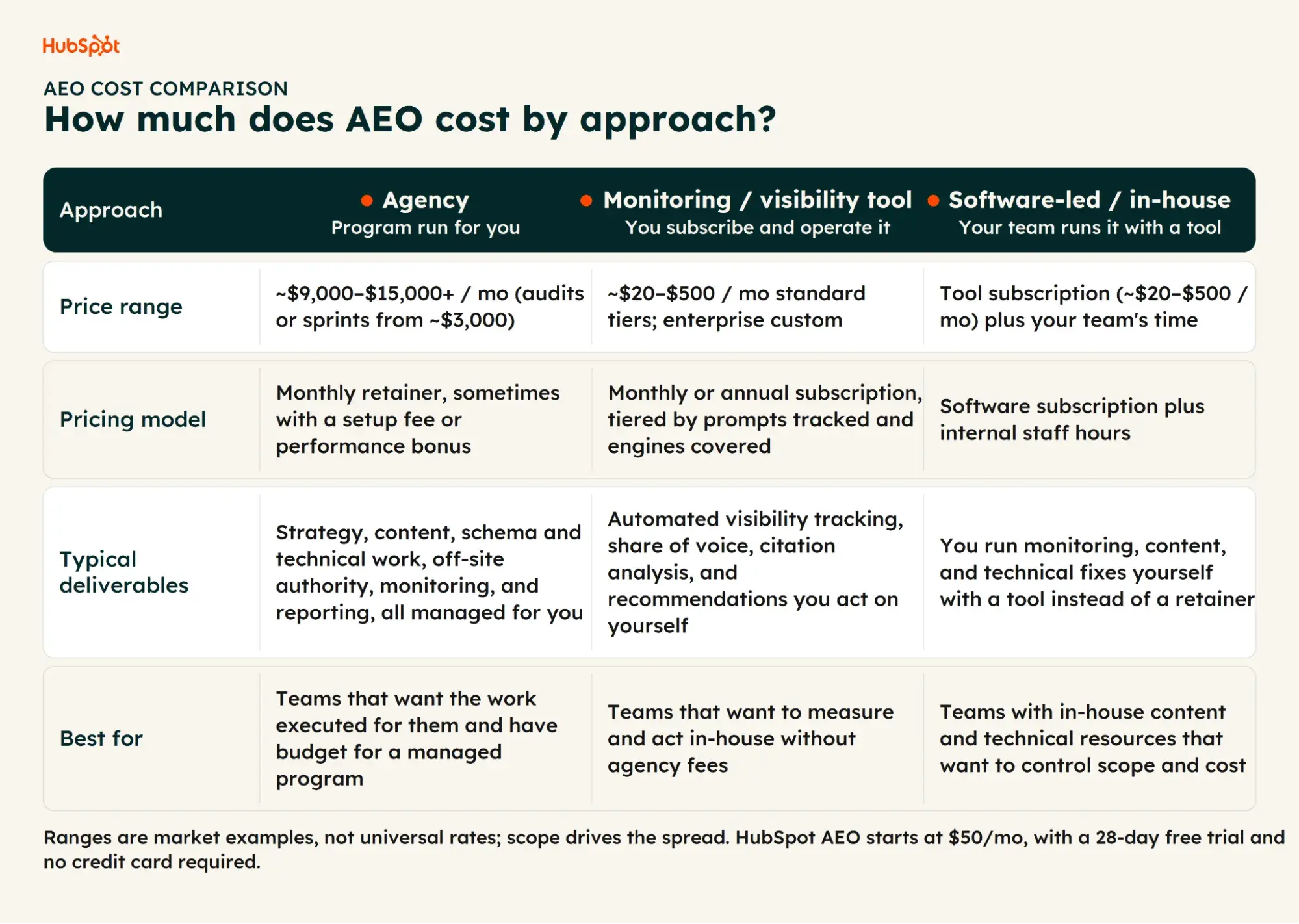
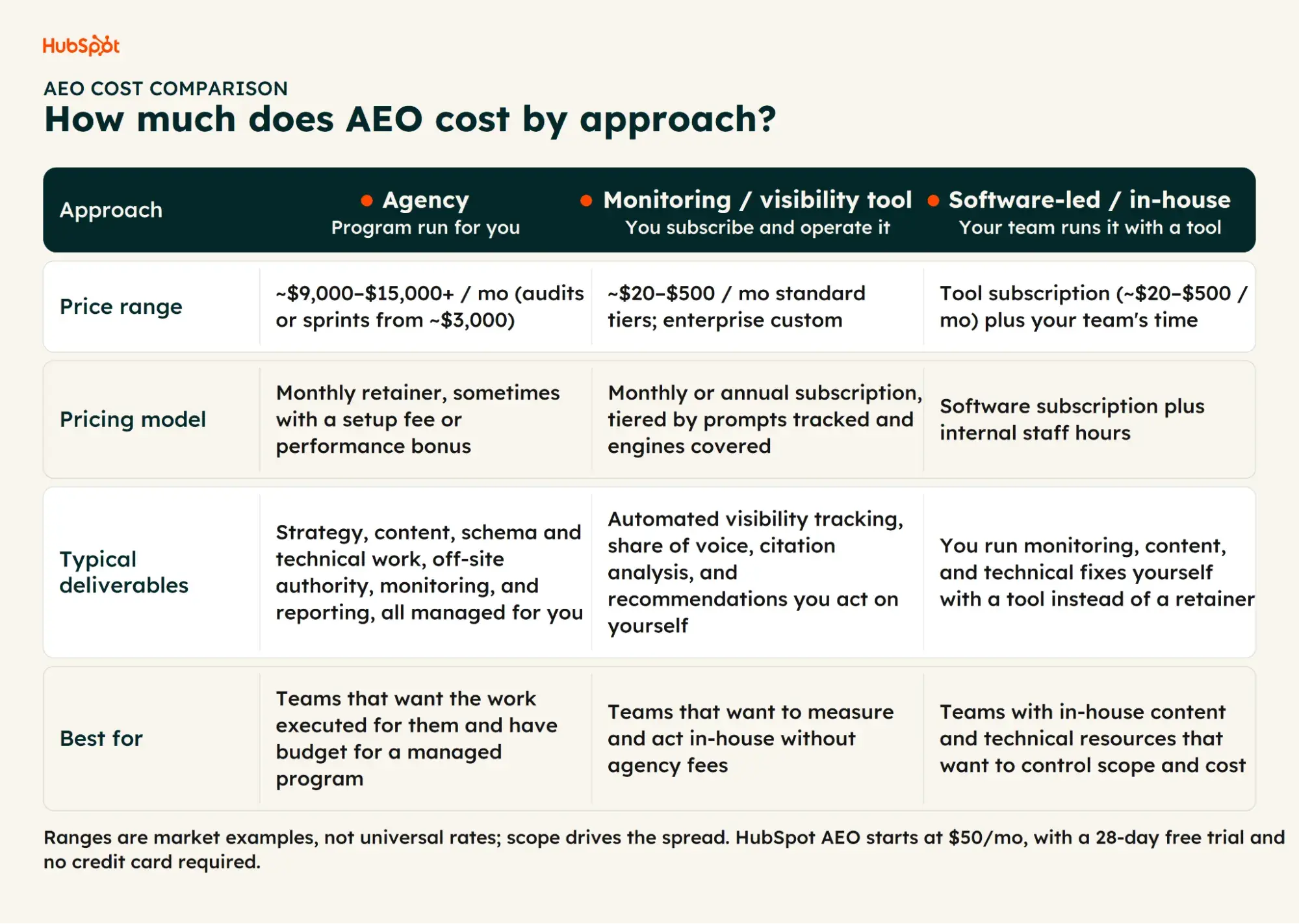
| Approach | Typical Monthly Cost | Payment Structure | Inclusions | Best Suited For |
|---|---|---|---|---|
| Agency | One-time audit or sprint from ~$3,000; ongoing ~$9,000–$15,000+ | Monthly retainer, often with a one-time audit/setup fee, or retainer-plus-performance models | Strategy development, content production, schema and technical optimization, off-site authority building, continuous monitoring, and comprehensive reporting, all managed. | Teams requiring end-to-end execution and possessing the budget for a managed AEO program. |
| Monitoring/Visibility Tool | ~$29–$489/mo for standard tiers; enterprise plans are custom | Monthly or annual subscription, tiered by prompts tracked and engines covered. | Automated tracking of brand appearance in AI answers, competitor share of voice analysis, citation tracking, and self-actionable recommendations. Examples: HubSpot AEO ($50/mo), Profound (from $99/mo), Peec AI (from $95/mo). | Teams focused on measuring and acting internally without incurring agency fees. |
| Software-Led/In-House | Tool subscription (as above) + internal team time | Software subscription plus allocated internal staff hours. | Internal management of monitoring, content creation, and technical optimizations using AEO tools. HubSpot AEO is included in Marketing Hub Professional/Enterprise or available standalone. | Teams with existing content and technical expertise seeking to control scope and cost through internal management. |
The substantial variation in AEO pricing is primarily attributable to the breadth of services included, rather than inflated vendor markups. This distinction is critical when evaluating proposals and understanding the true value proposition of different AEO solutions.
Unpacking the Drivers of AEO Pricing Variability
The significant disparities in AEO pricing can be attributed to several key factors that dictate the complexity and resource requirements of an AEO strategy. These drivers collectively shape the overall investment:

- Scope of Work: The breadth of services required, ranging from simple visibility monitoring to complex content audits, strategy development, and off-site link-building campaigns.
- Content Volume and Complexity: The number of content pieces requiring optimization, the depth of research involved, and the need for original content creation.
- Number of AI Engines and Prompts: The specific AI platforms (e.g., ChatGPT, Gemini, Perplexity) and the volume of search queries or prompts that need to be monitored and analyzed.
- Off-Site Authority Building: The extent of efforts dedicated to acquiring backlinks, building brand mentions on external platforms, and establishing domain authority, which are crucial for AEO success.
- Technical SEO and Schema Markup: The level of technical optimization required, including the implementation of structured data (schema markup) to help AI models understand and cite content effectively.
These fundamental elements explain the wide pricing range. The subsequent section delves into how these costs are structured and presented through various pricing models.
Decoding AEO Pricing Models
The AEO market has evolved with several distinct pricing models, each offering a different approach to service delivery and cost structure. Understanding these models is paramount for accurately comparing quotes and identifying the most suitable option for a given business.
- Retainer-Based Models: Common with agencies, this involves a fixed monthly fee for a defined set of services. This model offers predictability but can lead to paying for services not fully utilized.
- Subscription-Based Models: Predominantly used by software providers, this model offers access to AEO tools on a recurring basis, often tiered by features, usage limits, or the number of AI engines supported.
- Performance-Based Models: Less common in the current AEO landscape, this model ties a portion of the fee to achieving specific, measurable outcomes, such as increased citations or improved share of voice.
- Project-Based or Audits: One-time fees for specific services like initial AEO audits, strategy development, or technical assessments. These are often used as a precursor to ongoing engagements.
The choice of pricing model significantly influences the transparency and predictability of AEO investments.
Budget Tiers: What to Expect at Different Investment Levels
The various pricing models translate into distinct budget tiers, each offering a different level of AEO engagement and service delivery. The primary differentiator across these tiers is the extent to which AEO-related tasks—content optimization, off-site authority building, and reporting—are outsourced versus managed internally.
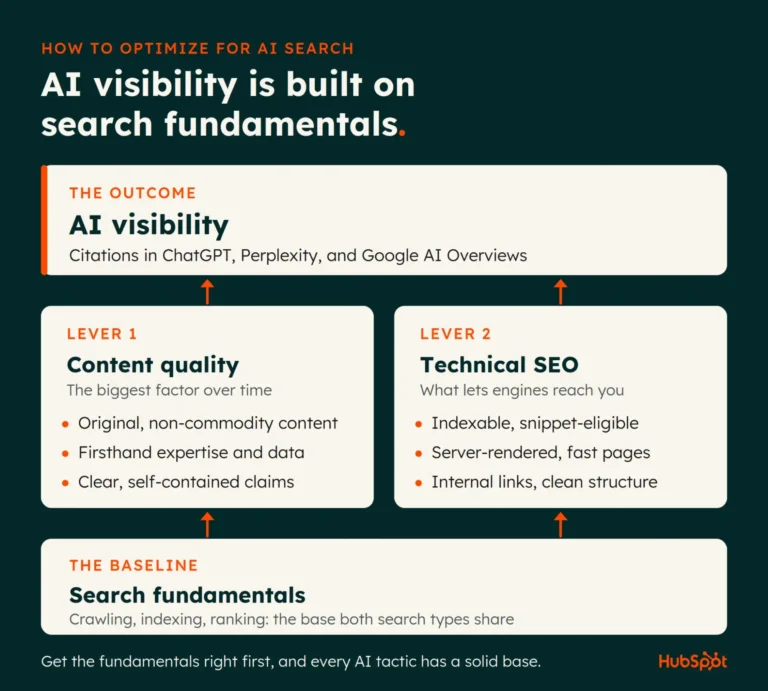
- Lean Tier (Under $500/month): This tier typically focuses on AEO monitoring tools. Businesses gain access to software that tracks brand visibility, competitor share of voice, and citation analysis. The primary output is actionable data and recommendations that the in-house team must implement. This tier is ideal for organizations with existing content and technical resources who want to measure their AEO performance and begin implementing optimizations themselves.
- Mid-Tier (Approximately $3,000 – $9,000/month): This tier often involves a combination of advanced monitoring software and potentially a focused AEO audit or a limited-scope managed service. It might include initial strategy development, content audits, and guidance on technical implementation. Some businesses might engage a consultant or a smaller agency for specific projects or ongoing advisory services. This tier offers a balance between self-management and expert guidance.
- Comprehensive Tier (Over $9,000/month): This tier represents full-service AEO management, typically through an agency. It encompasses end-to-end strategy, content creation and optimization, technical SEO, schema markup implementation, and extensive off-site authority building efforts. These programs are designed for businesses that want a fully managed solution and have the budget to invest in a holistic AEO strategy.
It is crucial to note that AEO should complement, rather than replace, traditional Search Engine Optimization (SEO). The effectiveness of AEO strategies is often amplified by a strong existing SEO foundation. Therefore, budgeting for AEO should occur alongside, and in consideration of, existing SEO investments. Understanding the nuances of SEO pricing can provide valuable context for AEO budget allocation.
AEO vs. SEO: A Symbiotic Relationship
The distinction between AI-Generated Optimization (AEO) and traditional Search Engine Optimization (SEO) is a critical one for businesses to grasp, as their budgets and strategies are intertwined yet distinct. While both disciplines aim to enhance a brand’s visibility and drive organic traffic, they operate through different mechanisms and target different outcomes.
SEO primarily focuses on optimizing web pages to rank higher in traditional search engine results pages (SERPs), thereby increasing organic clicks and traffic. Its success is measured by metrics such as keyword rankings, click-through rates (CTR), and impressions. SEO content is crafted for human readability and engagement, anticipating user interaction with linked content.
AEO, conversely, aims to secure a brand’s presence and citations within AI-generated answers, which are increasingly becoming a primary source of information for users. The success of AEO is gauged by brand mentions, share of voice within AI responses, and the frequency of citations. AEO requires content to not only satisfy user intent but also to be readily understandable and citable by AI models. This involves factors like factual accuracy, clear attribution, and structured data.
The relationship between AEO and SEO is symbiotic. Pages that achieve high rankings in traditional search engines often become authoritative sources that AI models cite in their answers. Consequently, diminishing SEO efforts to fund AEO can inadvertently weaken the very foundation that supports AI citations.

The necessity of both disciplines is underscored by evolving user behavior. While AI-driven referral traffic has seen significant growth—reportedly tripling between January and December 2025, according to Search Engine Land’s research—it still represents a small fraction of overall referral traffic. This overlap in user engagement highlights the importance of maintaining a robust presence across both traditional search and AI-driven information retrieval. It also cautions against conflating standard SEO services with AEO, a practice that can be a red flag in vendor proposals.
Navigating AEO Pricing Red Flags
The novelty of AEO has led to a degree of standardization in pricing and service offerings, creating potential pitfalls for businesses entering the market. Vigilance is key to avoiding misleading practices and ensuring a sound investment. Several patterns should prompt caution before committing to an AEO vendor:
- Vague Deliverables: Proposals that promise "full optimization" or "guaranteed results" without clearly defining specific deliverables, such as the number of prompts monitored, content pieces to be optimized, or the scope of off-site efforts.
- Lack of Transparency in Engine Coverage: Failing to specify which AI engines (e.g., ChatGPT, Gemini, Perplexity) are included in the monitoring and optimization efforts, or attempting to charge extra for essential platforms.
- Bundling SEO as AEO: Presenting standard SEO services as specialized AEO, often at a premium price, without a clear differentiation in methodology or expected outcomes for AI-specific optimizations.
- Absence of a Pilot Program Recommendation: Pushing for long-term commitments without suggesting an initial pilot phase to validate AEO’s effectiveness for the specific brand.
- Unrealistic Timelines for Results: Promising immediate or rapid results, which is often uncharacteristic of the compounding nature of content and authority building in AEO.
A more productive approach is to focus on what a small, well-defined engagement should entail, particularly for initial explorations into AEO.
Budgeting for a 60-90 Day AEO Pilot Program
A pilot program is an indispensable tool for validating the efficacy of AEO for a specific brand before committing substantial resources. A well-structured 60-90 day pilot should be designed to answer a single, critical question: Can AEO demonstrably impact a brand’s visibility and performance? This approach is essential for building a compelling business case for AEO among stakeholders.
The core principle for a pilot is to maintain a lean, focused scope. This typically involves a monitoring subscription, often in the low tens to $50 range, potentially augmented by a one-time diagnostic audit. Critical to the pilot’s success is the deliberate exclusion of extensive content production and off-site authority building. These are inherently long-term investments that require more than a two-to-three-month window to yield meaningful, testable results.
For teams with limited resources, a prioritized approach to pilot execution is recommended:
- Establish a Baseline: Conduct an initial audit to understand current brand visibility and citation metrics across key AI engines.
- Implement Monitoring: Deploy a tool to continuously track brand mentions, competitor share of voice, and citation patterns.
- Analyze and Prioritize: Regularly review the monitoring data to identify high-value opportunities and areas for immediate improvement.
- Address Low-Hanging Fruit: Focus on quick wins, such as optimizing existing content for clarity and structure, or ensuring essential schema markup is in place.
The measurement of AEO success should focus on core metrics: brand mentions within AI answers, share of voice relative to competitors, and the number of citations. Establishing a baseline in the first week of the pilot and comparing it against performance at the 60 and 90-day marks is crucial. Given the non-deterministic nature of AI answer engines, tracking trends over time is more informative than relying on isolated snapshots.
For small teams, leveraging free trials can significantly reduce the financial risk of a pilot. HubSpot AEO, for instance, offers a 28-day free trial that monitors 25 prompts across ChatGPT, Gemini, and Perplexity without requiring a credit card. This trial can effectively cover a substantial portion of the monitoring needs for a short pilot at no cost. A comprehensive, three-month pilot using HubSpot AEO, at its standard $50 monthly rate (or $45 if billed annually), could cost as little as $100 out-of-pocket, providing continuous visibility into brand mentions and citation trends without the burden of enterprise-level pricing. Upon successful validation, AEO initiatives can be integrated into recurring SEO budget planning rather than operating as isolated experiments.
Integrating HubSpot AEO into the Cost Conversation
Once a pilot program demonstrates the value of AEO, the ongoing challenge shifts to effective measurement and scaling. This includes tracking visibility, identifying competitive advantages in AI citations, and ultimately linking AEO performance to tangible marketing ROI. This is where a software-led approach, such as HubSpot AEO, plays a crucial role.
HubSpot AEO provides comprehensive visibility into a brand’s presence across ChatGPT, Gemini, and Perplexity. It identifies instances where competitors are cited and the brand is not, and analyzes which domains and content types are favored by AI engines within a specific industry. This analysis generates a prioritized list of actionable recommendations for optimization. This measurement-first methodology mirrors HubSpot’s own internal AEO strategy, the details of which are documented in a comprehensive CRM AI-search case study.
HubSpot AEO is available as a standalone product for $50 per month, encompassing visibility tracking, citation analysis, competitor benchmarking, and recommendation generation. For existing users of HubSpot Marketing Hub Professional or Enterprise, AEO is included at no additional cost. This integration allows for seamless connection of AEO recommendations with CRM data and content management tools, fostering a more unified and data-driven marketing approach.
Frequently Asked Questions About AEO Costs
Is AEO different from SEO and do I need both?
Yes, AEO is distinct from SEO. While SEO focuses on ranking web pages in traditional search results, AEO aims to get brands cited within AI-generated answers. Both rely on credible, well-structured content and a technically sound website. Because highly ranked SEO content often serves as a source for AI citations, many organizations find they need both AEO and SEO to maintain a comprehensive digital presence. Reducing investment in one can negatively impact the other.
Can I perform AEO myself with just monitoring tools?
Partially. Monitoring tools are essential for understanding where your brand appears in AI answers and identifying areas for improvement. However, they do not execute the necessary fixes. Your team will still be responsible for content optimization, schema implementation, and off-site efforts. Tools like HubSpot AEO can analyze citations and provide prioritized recommendations, but the execution will either be handled in-house or outsourced to an agency.
How long does it take to see results from AEO?
Early indicators of AEO success can typically be observed within the first 60 to 90 days of a focused pilot program. This initial period may show movement in visibility metrics and share of voice. However, significant and compounding results from content and off-site authority building efforts typically take longer to materialize. Due to the variability of AI answer engines, it is advisable to track trends over time rather than relying on single data points.
What should be included in an AEO statement of work (SOW)?
A robust SOW should clearly define specific deliverables rather than making vague promises of "full optimization." Key elements to look for include the number of AI engines and prompts to be tracked, the volume of content to be produced or revised, details on schema and entity work, any off-site activities, and the reporting cadence. Many agencies require a minimum commitment of three months, so it is important to confirm the contract term length.
How can a small team budget for AEO?
For small teams, starting lean is the most prudent approach. AEO monitoring subscriptions can range from under $50 per month. Consider pairing this with a one-time audit. It is advisable to postpone high-volume content creation and off-site link building until initial AEO efforts show positive signals. Prioritize fixing low-cost, high-impact gaps first. Tools like HubSpot AEO offer free trials that can facilitate initial testing without upfront costs.
About the Author