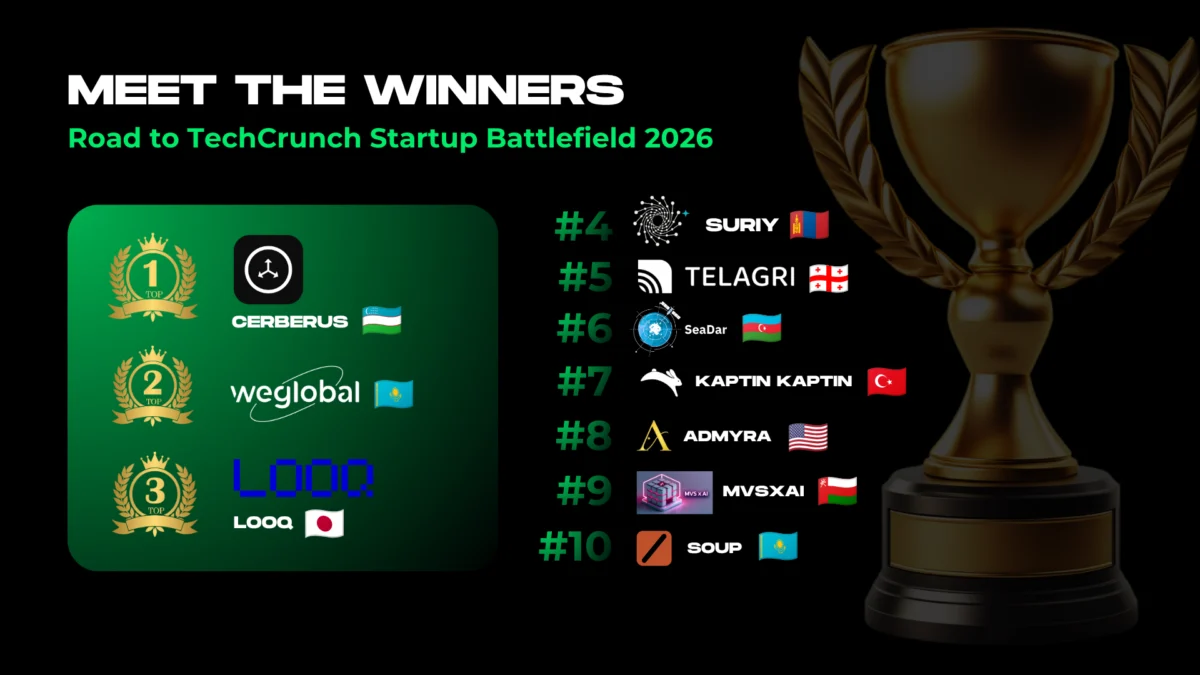
Three groundbreaking startups, Cerberus, WeGlobal AI, and LOOQ, have emerged victorious from the highly competitive regional final of the Road to TechCrunch Startup Battlefield 2026, securing their spots to represent Central Eurasia at the prestigious Startup Battlefield 200 during TechCrunch Disrupt 2026. This global technology summit, scheduled for October 13-15 in San Francisco, will host over 10,000 tech leaders, offering an unparalleled platform for these innovators. The trio triumphed over a formidable field of 22 finalists, who themselves were whittled down from a record-breaking 726 applications spanning 39 countries, underscoring the burgeoning entrepreneurial spirit and technological prowess emanating from the Central Eurasian region.
The Road to Global Recognition: An Overview of Road to TechCrunch Startup Battlefield 2026
The Road to TechCrunch Startup Battlefield program, a pivotal initiative designed to unearth and propel regional talent onto the international stage, has cemented its status as a critical accelerator for startups in Central Eurasia. Orchestrated by the Silkroad Innovation Hub in close collaboration with TechCrunch, Freedom Holding, Astana Hub, and IT Park Uzbekistan, the 2026 edition witnessed an unprecedented surge in interest and participation. This year’s competition drew nearly 50% more applications than its 2025 debut, which saw 485 startups from 27 countries vying for recognition. This significant increase in both application volume and geographical representation—from 27 countries in 2025 to 39 in 2026—serves as a clear indicator of the expanding and maturing startup ecosystems across the region and beyond. The program’s core mission is to provide talented founders with a platform for visibility, mentorship, and connections to opportunities far exceeding regional boundaries.
A Deep Dive into the Selection Process and Unprecedented Engagement
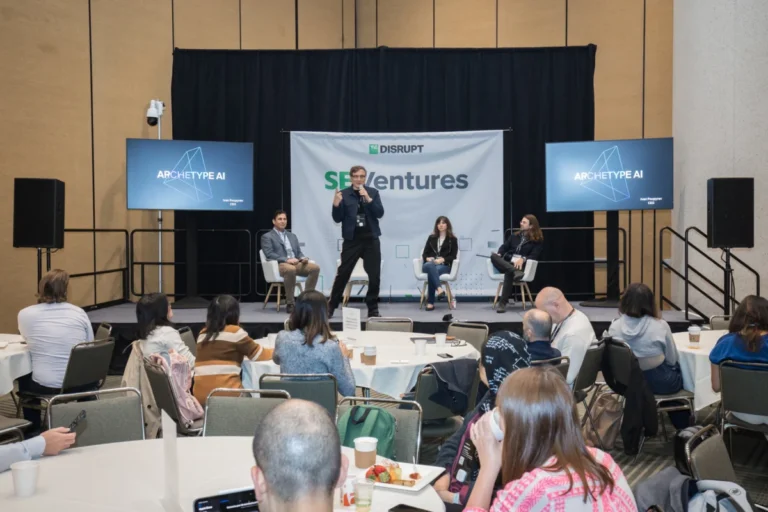
The rigorous selection process for the Road to TechCrunch Startup Battlefield 2026 began with national rounds, meticulously sifting through hundreds of applications to identify the most promising ventures. This initial phase culminated in the selection of 22 exceptional finalists, each prepared to present their innovations live at the Regional Final. The stakes were high, as these entrepreneurs pitched before a distinguished panel of 47 jurors hailing from eight different countries, bringing a diverse range of expertise and perspectives to the evaluation process. For the second consecutive year, AI-Dana, an artificial intelligence judge, provided an independent and objective assessment, highlighting the event’s embrace of cutting-edge technology even within its judging framework.
Isabelle Johannessen, Head of the Startup Battlefield program at TechCrunch, articulated the profound impact of the event, stating, “Road to Battlefield 2026 had record applications and representation from more countries than ever. The companies pitching across health tech, education, productivity, enterprise, and cyber were cutting-edge and impressive. These founders are getting global visibility at TechCrunch Disrupt, and that sends a message to the next generation: You can build locally and scale globally. That visibility is a catalyst. Road to Battlefield proves this ecosystem is thriving and that there’s a real pathway for founders here to compete on a world stage.” Her remarks underscore the program’s success in fostering a vibrant ecosystem where local innovation can transcend geographical limitations and achieve global recognition.
The AI Revolution: Dominance in Startup Innovation
A striking trend observed throughout the 2026 competition was the overwhelming dominance of Artificial Intelligence (AI) in startup innovation. Of the 726 applications received, a staggering 84% were dedicated to building AI-powered products. This statistic not only reflects a global shift towards AI-centric solutions but also demonstrates the Central Eurasian region’s rapid adoption and integration of AI into diverse sectors. All three winning startups – Cerberus, WeGlobal AI, and LOOQ – perfectly embody this AI-first approach, showcasing the breadth of AI applications from cybersecurity to mental health and advertising analytics.
Asset Abdualiyev, founder and CEO of Silkroad Innovation Hub, echoed the sentiment regarding the high caliber of participants. “We had a very strong applicant pool this year, which made the final selection genuinely difficult,” he remarked. Abdualiyev emphasized the foundational principle of the Road to Battlefield: to empower talented founders with visibility and connectivity. “Throughout the competition, we invited experienced VCs and tech leaders from different countries, giving founders the opportunity to pitch their companies, receive feedback, and build relationships with the global startup community. The strongest teams made it through to the final, and we are proud to have TechCrunch as a partner in creating this global pathway for founders from Central Eurasia.” This dedication to mentorship and networking is crucial for nurturing nascent startups and preparing them for the global stage.
The Champions of Central Eurasia: Introducing the Top Three Innovators
The three winning startups distinguished themselves through their innovative solutions, strong teams, and potential for significant market impact.
Cerberus (Uzbekistan): Leading the Cybersecurity Frontier with AI
Securing the first-place position was Cerberus, an AI-powered cybersecurity startup from Uzbekistan. Cerberus addresses a critical and growing challenge: the proliferation of security vulnerabilities in corporate IT systems, exacerbated by the rapid adoption of AI in software development. The company’s unique value proposition lies in its specialized AI agent that automatically hunts for these vulnerabilities, moving beyond the limitations of general-purpose language models that can be prone to "hallucinations" and potential missteps when granted access to sensitive corporate infrastructure. Cerberus’s approach ensures a more reliable and secure method for identifying and mitigating risks. Their journey has already seen them through the prestigious 500 Global Eurasia accelerator, and they have been accepted into the Alchemist Silkroad – Silicon Valley Residency program, further validating their innovative model.
Aziz Akhmedkhodjaev, founder and CEO of Cerberus, expressed both gratitude and a sense of responsibility. “We were simply glad to be part of Road to Battlefield. Competing against 726 applications from 39 countries is valuable in itself, whatever the outcome,” he stated. Akhmedkhodjaev elaborated on Cerberus’s distinctiveness: “What made our pitch unique is that we’re solving a problem the market is already feeling. Everyone is writing code with AI now, vulnerabilities are appearing faster than teams can find them, and there’s no established way to let an AI agent test real infrastructure safely. We believe the judges recognized that, and we’ll do our best, treating it as a serious responsibility. We don’t intend to let our region down.” This victory also marks a significant milestone for Uzbekistan, as Cerberus becomes the country’s first Road to TechCrunch Startup Battlefield champion, signaling its emergence as a hub for sophisticated technology. Sherzod Shermatov, Minister of Digital Technology of Uzbekistan, affirmed this progress: “Uzbekistan’s startup ecosystem has changed significantly in the past few years. We are seeing more founders building sophisticated technology products and thinking about international markets from the beginning. Cerberus taking first place and advancing to TechCrunch Startup Battlefield 200 is a strong example of that progress, and an important opportunity to show the global technology community what founders from Uzbekistan can build.”
WeGlobal AI (Kazakhstan): Revolutionizing Student Mental Health and Career Guidance
Taking second place was WeGlobal AI from Kazakhstan, a startup tackling a pressing social issue: the shortage of school psychologists. Their platform leverages AI tools to empower schools in tracking student mental health and providing personalized career guidance at an unprecedented scale. This solution offers a vital support system that conventional hiring efforts simply cannot match, ensuring that more students receive the attention and resources they need.
Bolat Ashim, co-founder and CEO of WeGlobal AI, shared his team’s enthusiasm. “Road to Startup Battlefield was an incredible experience for our team. Going through the National and Regional rounds gave us the opportunity to challenge our thinking, sharpen our story, and meet some amazing founders along the way. Finishing second and earning the opportunity to join TechCrunch Startup Battlefield 200 in San Francisco is a huge milestone for us. We’re excited to represent Kazakhstan on a global stage and introduce what we’re building at WeGlobal AI to the wider tech community.” WeGlobal AI’s achievement aligns perfectly with Kazakhstan’s national digital development agenda, which places AI at its core. Zhaslan Madiyev, Deputy Prime Minister and Minister of Artificial Intelligence and Digital Development of Kazakhstan, underscored this synergy: “AI is creating an opportunity for countries like Kazakhstan to compete globally in ways that were not possible a decade ago. Our task is to make sure talented founders have the infrastructure, skills, and international connections to take advantage of that opportunity. Road to Battlefield is one of those bridges, connecting entrepreneurs from Kazakhstan and across Central Eurasia directly with the global technology ecosystem.”
LOOQ (Japan): Measuring Real-World Attention for Out-of-Home Advertising
The third-place spot was claimed by LOOQ, a visionary startup founded by Ayan Sakenov and Yudai Ishida, based in Japan. LOOQ is pioneering a new standard in advertising analytics for the physical world. Their innovation comprises camera-based hardware coupled with an "attention API" designed to precisely measure how many people genuinely observe billboards and other out-of-home (OOH) advertisements. This technology provides advertisers with an unprecedentedly clear and data-driven metric of real-world engagement, moving beyond traditional, often speculative, OOH audience measurements.
Ayan Sakenov, founder and CEO of LOOQ, articulated the driving force behind their innovation: “LOOQ started with a simple but ambitious idea: If we can measure every click online, why can’t we measure what happens in the physical world? Since then, we’ve taken that idea from a prototype to real-world deployments, customers, and now third place at Road to Battlefield. Earning our way to San Francisco is a huge milestone, but for us, it’s really just the beginning. Startup life is basically building, testing, learning, and occasionally sleeping — and now we’re excited to bring LOOQ to the U.S. and show what Google Analytics for the physical world can become.”
Beyond the Podium: The Investment and Support Ecosystem
The success of these startups is further bolstered by substantial financial and developmental support. The three winners will share a significant $100,000 investment pool, jointly funded by Astana Hub Ventures, IT Park Ventures, and Silkroad Innovation Hub. This investment is structured on standard market terms in exchange for equity, with Cerberus receiving $50,000, WeGlobal AI $30,000, and LOOQ $20,000. This capital infusion is crucial for their continued growth and expansion.
In a testament to the competition’s commitment to fostering AI innovation, OpenAI awarded a total of $280,000 in API credits across all 22 finalists. The three winning teams collectively received $100,000 of this total, mirroring the investment prize structure, while each of the remaining 19 finalists was granted $10,000 in API credits. This generous support from OpenAI provides these emerging companies with invaluable resources to further develop and scale their AI products. Thomas Jeng, Head of Startups APAC at OpenAI, praised the regional talent: “Founders across Central Eurasia showed real ambition, a clear focus on solving real problems, and strong technical skill in building with AI. It’s great to see competitions like this connecting them with the global networks they need to turn their ideas into products that reach people far beyond the region.”
The competition also highlighted a broader spectrum of talent, with other notable startups making it into the top 10 finalists. These included Suriy (Mongolia), TelAgri (Georgia), SeaDar (Azerbaijan), Kaptın Kaptın (Türkiye), Admyra (United States), MVSxAI (Qatar), and Soup (Kazakhstan), showcasing the diverse geographical and technological landscape of innovation represented at the event.
The Broader Impact: Central Eurasia’s Ascendancy on the Global Tech Stage
The Road to TechCrunch Startup Battlefield 2026 is more than just a competition; it is a powerful catalyst for the entire Central Eurasian startup ecosystem. The record-breaking participation and the quality of the ventures presented underscore a burgeoning environment ripe for technological innovation and entrepreneurship. Events like this are instrumental in building critical bridges between regional talent and global opportunities, attracting international investment, and fostering a culture of innovation. By providing a clear pathway for founders to gain global visibility and compete on a world stage, the program inspires future generations of entrepreneurs to "build locally and scale globally." The success of Cerberus, WeGlobal AI, and LOOQ sends a clear message that Central Eurasia is rapidly emerging as a significant player in the global technology landscape, capable of producing cutting-edge solutions that address universal challenges.
The Road Ahead: TechCrunch Disrupt 2026 in San Francisco
For Cerberus, WeGlobal AI, and LOOQ, the regional final marks the triumphant conclusion of one journey and the exhilarating commencement of another. Their next challenge awaits at TechCrunch Disrupt 2026 in San Francisco, where they will participate in Startup Battlefield 200. This highly exclusive segment of Disrupt brings together 200 of the world’s most promising early-stage startups to pitch before an audience of leading investors, tech executives, and media. This exposure offers an unparalleled opportunity for these Central Eurasian champions to showcase their innovations, forge critical partnerships, and potentially secure further funding on a global platform. The journey from a regional competition to the heart of Silicon Valley exemplifies the transformative power of the Road to TechCrunch Startup Battlefield program.
For those interested in witnessing the future of technology and meeting these visionary founders, tickets for TechCrunch Disrupt 2026, taking place from October 13-15, are available for registration. The broadcast of the final round of the Road to TechCrunch Startup Battlefield 2026 can be viewed at the following link: [YouTube Embed Link: https://www.youtube.com/embed/DuPwwu6f5Jg?feature=oembed]. The event continues to serve as a beacon, guiding exceptional talent from emerging markets towards global recognition and impact.
About the Author