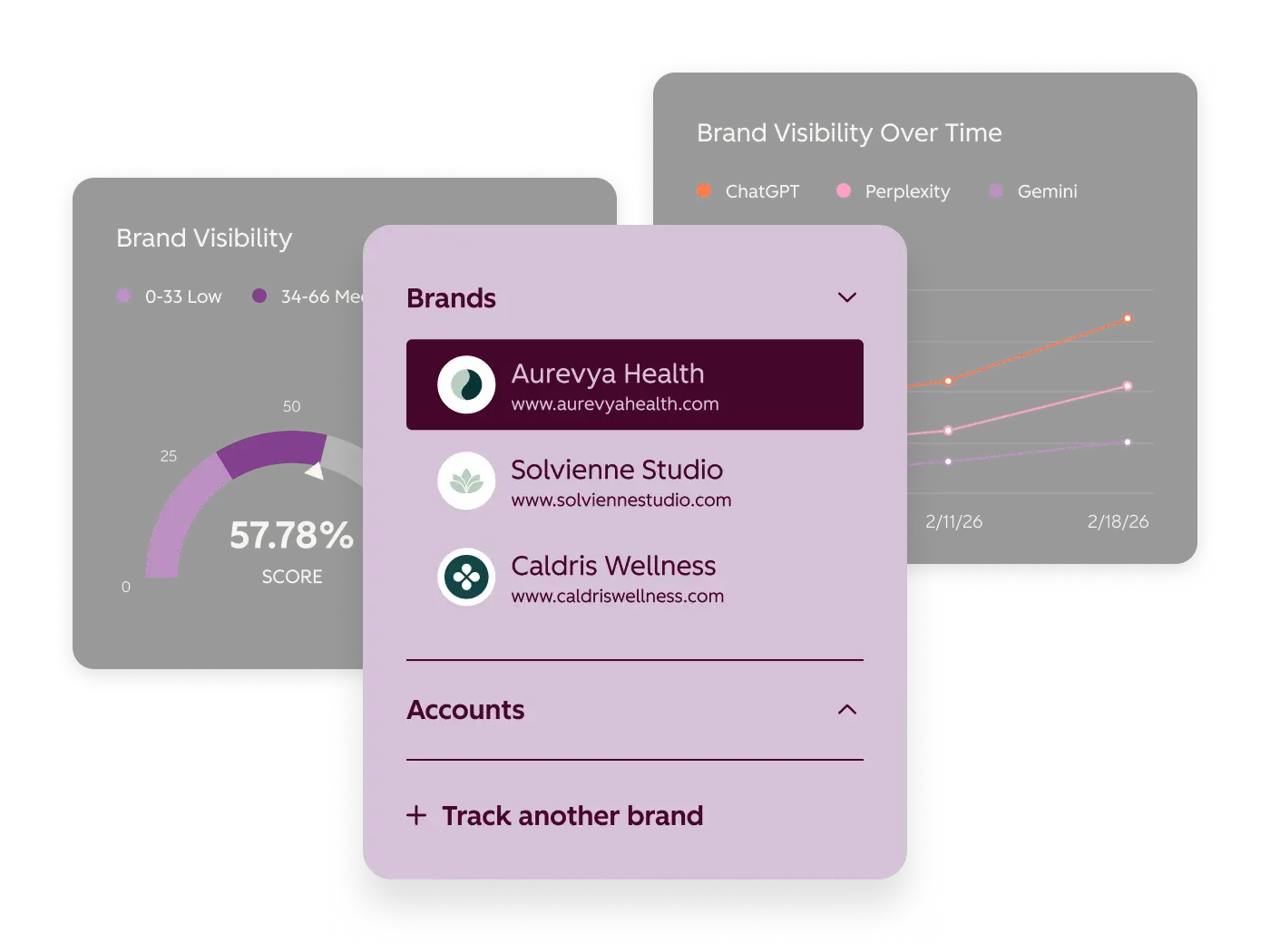
The way consumers discover products and information online is undergoing a profound transformation. Instead of navigating traditional search engine results pages (SERPs), a growing number of buyers are turning to AI-powered chatbots and conversational search engines like ChatGPT, Gemini, and Perplexity for recommendations and answers. This shift presents a critical challenge for marketers: how to ensure their brand appears prominently and favorably within these AI-generated responses. This evolving demand has brought tools like Profound and Semrush into sharp focus for Answer Engine Optimization (AEO) strategies, making their comparison a crucial decision point for marketing teams.
This comprehensive analysis delves into the capabilities of Profound and Semrush, two leading software solutions designed to help marketing teams track and optimize their brand’s visibility within AI-generated answers. We will also examine HubSpot AEO as a complementary option for teams seeking integrated solutions. The comparison will cover key aspects including engine coverage, prompt intelligence, crawler analytics, workflow automation, pricing structures, and overall team fit, ultimately providing conditional verdicts to guide marketers in selecting the most suitable tool for their specific needs. The current search paradigm is not merely evolving; it is entering a new era, and the selection of an appropriate measurement tool is paramount to avoid overpaying for unused features or, conversely, missing critical data.
A New Frontier: Understanding Answer Engine Optimization (AEO)
Answer Engine Optimization (AEO) is the practice of securing accurate and advantageous mentions and citations within AI-generated responses. While it shares many tactical overlaps with traditional Search Engine Optimization (SEO), AEO diverges in its measurement methodologies, specialized tooling, and the very definition of success. Many forward-thinking organizations are integrating AEO into a broader generative engine optimization strategy, recognizing the interconnectedness of these emerging digital landscapes.
The fundamental difference between Profound and Semrush for AEO lies in their core focus. Profound operates as a specialist AEO platform, purpose-built for answer engine optimization, server-log crawler analytics, detailed SKU-level AI shopping data, and no-code content automation. In contrast, Semrush incorporates AEO visibility features within its expansive SEO suite, linking AI visibility to its established keyword database, technical site audit capabilities, and backlink profile analysis. This distinction shapes the user experience and daily operational impact in four key areas: the depth of AI-specific data, the breadth of integrated marketing capabilities, the extensiveness of automation, and the granularity of technical insights.
The urgency for adopting AEO strategies is underscored by compelling data. Research from the Pew Research Center indicates a significant drop in click-through rates to traditional links when an AI summary is present. In instances where Google AI summaries appeared, users clicked on a traditional result link only 8% of the time, compared to 15% of visits without an AI summary. Furthermore, Gartner forecasted a 25% decline in traditional search engine volume by 2026, driven by the increasing adoption of AI chatbots and virtual agents for query fulfillment. While this figure represents a forecast, it highlights a clear trajectory toward AI-centric information retrieval.
Methodology: A Rigorous Comparison Framework
Our evaluation of Profound and Semrush was conducted across six critical criteria: engine and LLM coverage, prompt intelligence and research capabilities, technical and AI crawler analytics, dashboard and workflow functionalities, pricing models, and overall team fit. Data for this analysis was sourced from vendor-published pricing pages, product documentation, and a comprehensive compilation of each tool’s features. Claims attributed to vendors are explicitly noted, as is editorial judgment where applicable.
It is important to note that HubSpot offers its own AEO solution, which is presented later in this article after the neutral comparison of Profound and Semrush, allowing readers to first assess these two platforms on their own merits.
Furthermore, it is crucial to distinguish between different signal measurements. Visibility in AI answers, citations, referral traffic, and ultimately, closed deals represent distinct metrics. Improvement in one area does not automatically prove a causal impact on revenue, and no single tool currently provides complete revenue attribution across the entire customer journey.
Engine and LLM Coverage: Mapping the AI Landscape
The selection of an AEO tool is heavily influenced by its engine coverage, as a tool that monitors only a limited number of AI platforms leaves marketers blind to crucial segments of the AI-powered search ecosystem.
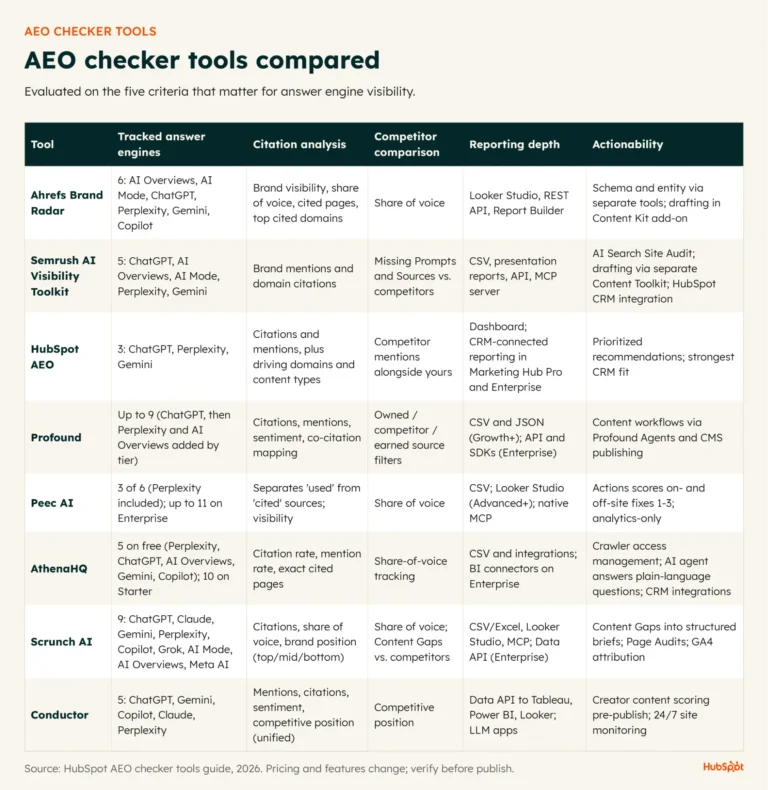
Profound offers tiered engine coverage. Its "Starter" plan focuses exclusively on ChatGPT. The "Growth" plan expands to three engines: ChatGPT, Perplexity, and Google AI Overviews. The "Enterprise" plan offers comprehensive coverage, tracking up to 10 engines, including prominent platforms like Gemini, Claude, Copilot, Meta AI, Grok, and DeepSeek. Profound captures AI answers through browser-based runs that accurately mirror consumer-facing interfaces, operating on a daily cadence. For a serious AEO program, the "Growth" plan is generally considered the realistic starting point, as the "Starter" plan omits significant coverage of Perplexity and Google AI Overviews.
Semrush, on the other hand, begins with broader coverage in its base plans, monitoring five key engines: ChatGPT, Perplexity, Gemini, Google AI Overviews, and Google AI Mode. Enterprise plans further enhance this by adding models such as Grok and Claude.
When comparing engine coverage, it is more effective to move beyond raw engine counts and ask three critical questions:
- Which specific AI engines are most relevant to your target audience? Understanding where your customers are seeking information is paramount.
- Does the tool offer insights into the type of AI interaction (e.g., conversational, generative, direct answer)? Different AI models produce different types of outputs.
- What is the frequency and accuracy of the data collection for each engine? Real-time or near real-time data is crucial for timely optimization.
Prompt Intelligence and Research: Unlocking AI Conversations
Prompt research serves as the foundational element for content planning in AEO, akin to keyword research in traditional SEO. The quality and relevance of a team’s prompt list directly dictate the quality of their visibility data. Profound and Semrush approach this crucial aspect with distinct methodologies.
Profound leverages double-opt-in consumer panel data to identify AI queries. This data allows for the classification of buyer intent into categories such as informational, commercial, conversational, or generative. Furthermore, it breaks down prompt volume by demographic factors like age, income bracket, and geographic region. For each tracked prompt, users can review the captured AI answer, providing a more direct representation of what a buyer would encounter than aggregated or sampled data.
Semrush draws upon an extensive database of over 239 million LLM prompts, augmented by its broader dataset of 26.8 billion keywords and 808 million domain profiles. This vast repository aids teams starting from scratch in discovering prompts that are already generating answers within their specific industry. Both platforms also provide the capability to track custom prompts, allowing for tailored research.
Neither approach is universally superior. Panel data offers a direct window into how real individuals phrase their questions, which is invaluable for demographic targeting. A search-derived index, like Semrush’s, scales effectively across diverse categories and integrates seamlessly with existing keyword research workflows. Manually curated prompts offer a high degree of control but are susceptible to the assumptions of the user, necessitating validation against one of the other two data sources.
To effectively translate prompt research into actionable content briefs, consider these steps:

- Identify high-intent prompts: Focus on queries that indicate a strong desire to learn, compare, or purchase.
- Analyze competitor presence: Understand who is already appearing in AI answers for your target prompts and what their content strategies are.
- Map prompt intent to content formats: Determine whether a prompt requires a blog post, FAQ section, product page update, or other content type.
- Iterate and refine: Continuously monitor prompt performance and update your research based on new trends and AI model updates.
A proactive tip before investing heavily in content development around a specific prompt: manually run the prompt in ChatGPT, Gemini, and Perplexity. If a tool indicates your absence while manual checks reveal your presence, investigate the tracking discrepancy before allocating content budget.
Technical Analytics and AI Crawlers: Ensuring Accessibility
This is an area where Profound demonstrates a significant advantage. Its Agent Analytics feature reads server logs from providers such as Cloudflare, Vercel, Akamai, AWS, and Fastly. This allows for tracking AI crawler visits, differentiating between legitimate AI bots and spoofed ones, measuring human referral traffic originating from AI, and submitting new content directly to AI crawlers. For e-commerce businesses, Profound’s ChatGPT Shopping module offers granular insights into product recommendations, attribute accuracy, and shopper sentiment at the SKU level.
Semrush adopts a site-audit approach. Its AI-Ready Site Audit assesses site health for AI crawlers, identifying technical blockages and errors. E-commerce tracking is integrated within its broader Traffic and Market Insights and SERP tools, providing valuable context without the SKU-level specificity of Profound.
Server logs reveal what bots are requesting, while site audits highlight potential barriers to access. These two functionalities address different, albeit complementary, questions. Neither guarantees inclusion or citation in AI answers, as access is a prerequisite, not a guarantee. For those building their measurement framework from scratch, a thorough understanding of AI web analytics, including how AI-driven visits are reflected in reporting, is essential.
Key elements to scrutinize in robots.txt files and structured data for AEO include:
- Robots.txt directives: Ensure that AI crawlers are not being unintentionally blocked from accessing relevant content.
- Structured data markup: Implement schema markup to help AI models understand the context and relevance of your content.
- Crawl budget optimization: Prioritize the indexing of your most important pages for AI crawlers.
- Server response times: Optimize website performance to ensure fast loading times for AI bots.
A valuable pro tip before purchasing any AEO tool: examine your existing server logs for AI bot traffic. Identifying which pages GPTBot or PerplexityBot are already requesting can provide a strategic starting point for your optimization efforts.
Dashboards, Workflows, and Reporting: From Measurement to Action
Measurement provides insights into current standing, while workflow automation translates those insights into actionable strategies. Profound and Semrush offer distinct approaches in this domain.
Profound tracks mentions, share of voice, sentiment (positive, neutral, or negative), and citation domains. Its Profound Agents feature provides a no-code, drag-and-drop workflow builder. Profound Sheets functions as a spreadsheet environment where each column acts as an automated agent, capable of generating AEO briefs, FAQs, and content. This includes human-in-the-loop approvals and direct publishing capabilities to Content Management Systems (CMS) like WordPress, Contentful, Framer, and Sanity. Higher-tier plans incorporate CSV and JSON exports, API access, and Single Sign-On (SSO)/Security Assertion Markup Language (SAML) for enhanced enterprise integration.
Semrush tracks brand visibility, AI share of voice, sentiment, audience query intent, and narrative drivers (branded versus non-branded citations). Its Content Toolkit is designed to generate SEO and AEO briefs, align brand voice, and facilitate multichannel publishing. A Machine Conversation Protocol (MCP) server allows for conversational querying of live Semrush data within platforms like Claude, ChatGPT, Cursor, or VS Code. Add-on toolkits extend functionality to local SEO, social media, advertising, and AI PR, targeting media outlets frequently cited by LLMs. Reporting capabilities are extended through integration with Looker Studio on its SEO Pro+ plan and API access on the SEO Advanced plan.
Semrush’s strength lies in its ability to consolidate AEO data alongside traditional rank tracking and backlink audits, enabling a single report to encompass both classic and AI visibility, as well as paid search efforts if your team engages in search engine marketing. Profound’s primary advantage is the extensive reach of its automation, extending deep into the content production pipeline. Regardless of the tool chosen, a dashboard alone is insufficient; it requires human action to drive tangible results.
To effectively operationalize AEO within your weekly rituals:
- Schedule regular AEO review meetings: Dedicate time each week to analyze performance data and identify optimization opportunities.
- Integrate AEO tasks into content calendars: Ensure that AEO recommendations are incorporated into the content creation and publishing schedule.
- Foster cross-functional collaboration: Encourage communication between AEO specialists, content creators, and SEO teams.
- Set clear KPIs and track progress: Define measurable goals for AEO performance and monitor progress against them consistently.
- Conduct regular prompt audits: Periodically review and update your prompt list to reflect evolving search behavior and AI model capabilities.
Pricing and Total Cost of Operation: Strategic Investment
Pricing and capabilities were verified as of October 20, 2026. List prices are subject to change, and it is advisable to confirm current offerings directly on each vendor’s pricing page.
Profound’s pricing structure typically involves monthly subscriptions, with discounts offered for annual billing.
- Starter: Priced at $99 per month, this plan includes 100 Agents credits, Profound Sheets, one seat, one region, and one language.
- Growth: Priced at $399 per month, this tier adds 400 Agents credits, CSV/JSON exports, and three seats.
Profound’s public pricing page may also list a free trial option, often covering a limited number of prompts run daily for a set period, and custom Enterprise plans. It is crucial to verify the current availability of the Starter and Growth tiers at the time of signup.
Semrush offers AI Visibility as a standalone feature or as part of the comprehensive Semrush One suite. Pricing for Semrush One typically starts at:
- Semrush One Starter: Approximately $199 per month, offering a broad range of SEO and AEO features, including monitoring five AI engines.
- Semrush One Grow: Priced around $399 per month, this plan scales up features and capacity.
- Semrush One Business: For larger enterprises, custom pricing is available.
HubSpot AEO is priced at $50 per month ($45 if paid annually) and includes 25 prompts across ChatGPT, Gemini, and Perplexity, with additional prompts available for purchase. A free trial is available, covering the same 25 prompts and requiring no credit card.
To accurately estimate the real cost for your team, consider the following factors:
- Number of prompts needed: This is often a primary driver of cost, especially for tools with usage-based pricing.
- Number of users/seats: Determine how many team members require access to the platform.
- Required features: Assess which advanced features, such as advanced analytics, automation, or API access, are essential for your operations.
- Integration costs: Factor in any costs associated with integrating the AEO tool with your existing marketing technology stack.
- Training and support: Evaluate the availability and cost of training resources and ongoing customer support.
Team Fit: Matching Tools to Organizational Needs
The choice between Profound and Semrush ultimately depends on the specific needs and priorities of your marketing team.

Profound is the recommended choice for:
- AI-first marketing teams or e-commerce brands requiring deep SKU-level shopping insights.
- Organizations needing server-log verification of AI bots for enhanced technical understanding.
- Teams focused on demographic prompt research to tailor their AI presence.
- Businesses prioritizing no-code content automation to streamline content production.
Semrush is the optimal solution for:
- Marketers who prefer to have AI visibility integrated alongside their existing SEO tools, such as rank tracking, technical audits, and backlink analysis, within a single subscription.
- Teams looking for a comprehensive suite that covers a wide range of digital marketing disciplines, including local SEO and social media management.
Solo and Early-Stage Teams:
For individuals or nascent teams that also require traditional SEO tools, Semrush’s AI Visibility plan or a lower-tier Semrush One subscription offers a cost-effective starting point, covering keywords and five AI engines from the outset. Profound’s Starter plan, while similarly priced at $99 per month, covers only one engine. HubSpot AEO presents a more budget-friendly entry point for those prioritizing fewer features initially. A strategic pro tip for these teams: begin with a focused set of 25 to 50 prompts that align with your highest-intent buyer questions. A curated, high-quality prompt set is more valuable than an extensive, unmanaged one.
In-house SaaS, E-commerce, and Regulated Industries:
Profound emerges as the stronger contender for these sectors, particularly for e-commerce businesses and organizations with strict compliance requirements. Its server-log analytics and SKU-level shopping data offer unique capabilities not found in Semrush. Enterprise-level offerings from Profound also include SOC 2 Type II compliance and SSO, crucial for regulated environments. Regulated teams should prioritize building human review into all AI-generated content and carefully scrutinize the privacy terms associated with panel and log data.
For teams already deeply integrated with Semrush for their SEO efforts, conducting a short, side-by-side comparison using 50 shared prompts before committing to a separate AEO tool can provide valuable empirical data for decision-making.
Agencies and Multi-Brand Teams:
Semrush is well-suited for agencies managing numerous domains under a single umbrella, as its plans scale effectively based on website count (e.g., 5, 15, then 40 websites). Profound becomes the preferred choice when clients demand log-level proof of AI bot interaction or when its workflow automation capabilities can standardize deliverables across multiple accounts. HubSpot AEO also offers a flexible model, allowing for one instance per brand at $50 per month. When evaluating pricing for agencies, it is more practical to price per client rather than per account, as domain and seat limits can significantly alter the overall cost structure.
The HubSpot-Connected Option: Seamless Integration
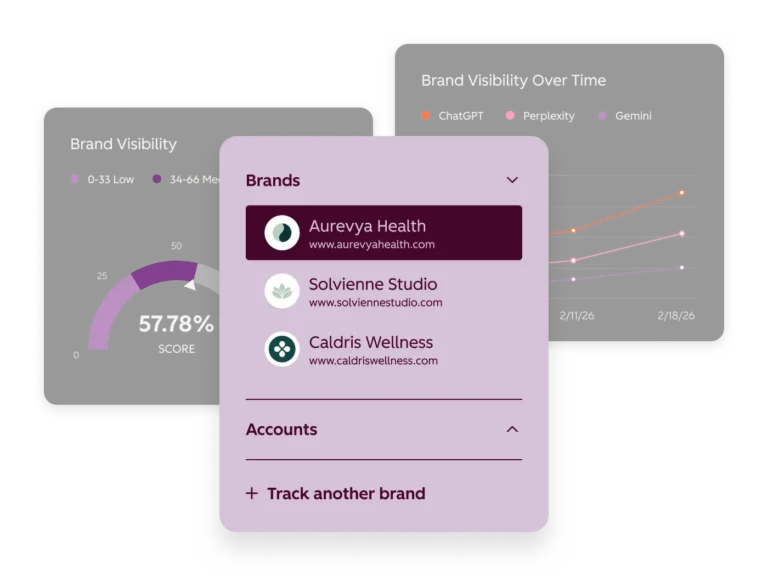
HubSpot AEO offers a streamlined solution for brands already operating within the HubSpot ecosystem. This tool tracks brand visibility across ChatGPT, Gemini, and Perplexity. Currently in beta, it covers essential AEO loop components: a brand visibility score, prompt tracking, citation analysis, competitor share of voice, and prioritized recommendations for content creation, updates, or fixes. The pricing is set at $50 per month ($45 annually) and includes 25 prompts, with options to purchase more. A free trial is readily available.
Within Marketing Hub, AEO is integrated as a related option, included with Marketing Hub Pro and Enterprise. This version leverages CRM data to inform prompt suggestions and enables users to act on recommendations directly within HubSpot’s content and social media management tools. While CRM data enhances prompt suggestion relevance, it does not replicate the literal queries customers pose. Therefore, suggested prompts should always be reviewed critically.
The trade-offs are clear: HubSpot AEO covers three primary engines, whereas Semrush covers five on its base plans, and Profound’s Enterprise tier extends to 10 engines. It also lacks server-log crawler analytics, a SKU-level shopping module, and backlink data. However, it offers the lowest entry price among the compared tools, rapid setup, and recommendations that integrate seamlessly with existing content, contact, and campaign management within HubSpot. For inbound marketing teams already invested in HubSpot, this inherent connectivity can often outweigh the advantage of additional engine coverage.
To initiate AEO measurement without introducing unnecessary tooling complexity:
- Leverage existing HubSpot tools: If you use HubSpot, explore its AEO capabilities first to see if it meets your core needs.
- Focus on key engines: Prioritize tracking the AI platforms most relevant to your audience.
- Start with a manageable prompt set: Begin with a small, well-defined list of high-intent prompts.
- Integrate with CRM data: Utilize your CRM to inform prompt selection and analyze AEO’s impact on customer engagement.
AEO Execution Best Practices: Driving Tangible Results
The effectiveness of any AEO tool hinges on execution. The following practices are crucial, irrespective of the chosen platform:
- Regularly monitor AI visibility: Track your brand’s presence and performance across key AI engines on a consistent basis.
- Analyze competitor AI strategies: Understand what your competitors are doing well and identify opportunities for differentiation.
- Optimize content for AI inclusion: Ensure your content is structured, comprehensive, and uses relevant language that AI models can easily process.
- Build brand authority and credibility: Focus on creating high-quality, trustworthy content that AI models will favor.
- Track AI referral traffic: Monitor traffic originating from AI sources and analyze its impact on conversions and customer journeys.
Research conducted by the GEO paper (published at KDD 2024 by Princeton and collaborators) found that tactics such as incorporating citations, quoting relevant sources, and presenting statistics can elevate a source’s visibility in generative engine responses by up to 40% in their experimental benchmarks. While this represents a ceiling from a research context and results can vary by domain, the practical implication is clear:
- Cite your sources: Attribute information to credible origins.
- Use direct quotes: Incorporate verbatim excerpts from authoritative content.
- Present data and statistics: Quantifiable information adds weight and credibility.
- Ensure content is structured and clear: AI models favor well-organized and easily digestible information.
Integrating AI answer performance into existing reporting structures is vital. Weekly tracking should encompass brand visibility scores by engine, share of voice against key competitors, citation rates by content type, and traffic from AI referral sources.
It is important to acknowledge that some AI referrals may arrive without referrer data, potentially being categorized under direct traffic. Creating a dedicated segment for known AI sources (e.g., chatgpt.com, perplexity.ai, gemini.google.com) and linking these sessions to CRM contacts and deals can provide valuable insights. While this offers trackable referral traffic and associated deals, it does not constitute complete revenue attribution, as many buyers may interact with an AI answer and subsequently visit your site through a different channel.
Frequently Asked Questions About Profound vs. Semrush AEO
- Can I run Semrush for SEO and add Profound for AEO? Yes, many organizations opt to maintain an SEO suite for keyword research, audits, and backlinks while supplementing with Profound for log analytics, shopping data, or advanced content automation. This dual-tool approach incurs the cost of a second platform and requires managing two distinct systems. At list prices, combining Profound Growth ($399/month) with Semrush One Starter ($199/month) can become substantial, underscoring the need to ensure the added depth is fully utilized.
- When should you switch from an SEO suite layer to a specialist AEO tool? The transition typically occurs when the AEO capabilities within an existing SEO suite prove insufficient for critical decision-making. Common triggers include the need for server-log verification of AI bots, in-depth SKU-level shopping analytics, demographic prompt research, or coverage of a wider array of AI engines than currently offered. If your team is still in the exploratory phase of understanding which prompts are most impactful, an integrated suite layer is often adequate.
- How do I evaluate whether multi-engine coverage is necessary for my market? Assess where your target buyers conduct their research. Engage with sales teams and customers to identify the AI tools they frequently use. Review your existing AI referral traffic by source. Conduct comparative analyses of two or three key engines using the same prompt set. If the resulting answers and citations are largely consistent, additional engine coverage may offer marginal benefits. However, if significant divergence is observed, broader coverage is likely to justify its cost.
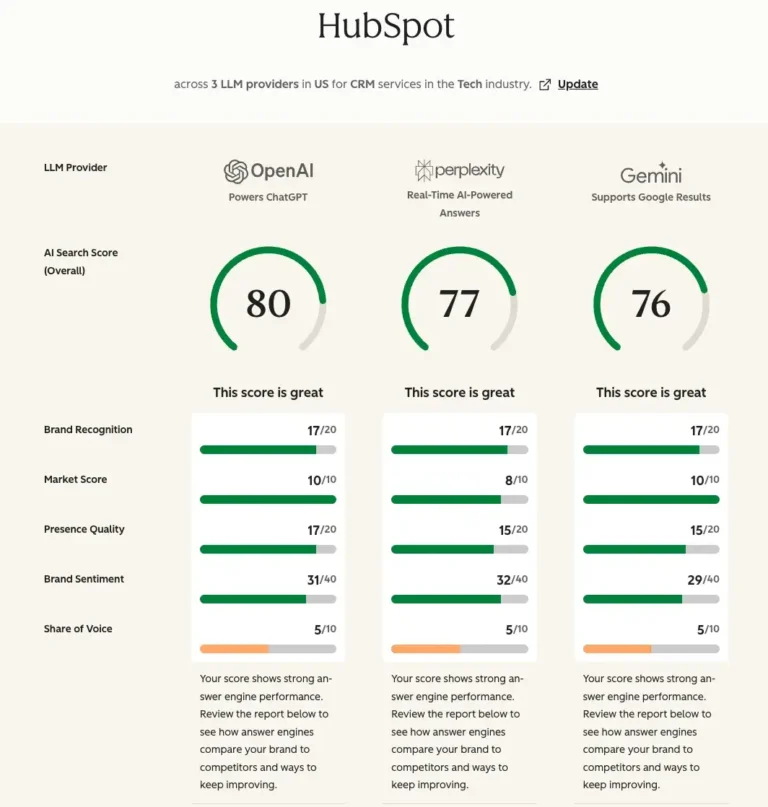
- What is the fastest way to start measuring AI visibility today? For a one-time snapshot of visibility, sentiment, and competitive positioning across ChatGPT, Perplexity, and Gemini, the free AI Search Grader offers a quick assessment. This tool captures a single moment in time and does not provide ongoing monitoring. For continuous tracking of the same prompts, HubSpot AEO offers daily updates to your brand’s score and actionable recommendations.
The Verdict: Navigating Your AEO Path
Profound stands out as the superior choice for organizations with specialized requirements, including advanced log analytics, SKU-level shopping data, and scalable workflow automation. Semrush is the more pragmatic option when AEO objectives need to be seamlessly integrated with existing SEO workflows and toolsets. For teams operating within the HubSpot ecosystem and prioritizing continuous visibility tracking alongside their content and CRM data, HubSpot AEO warrants a thorough trial before considering more complex or costly solutions. The evolving landscape of AI-powered search demands a strategic approach to optimization, and the right tool can be a significant differentiator in capturing audience attention and driving business outcomes.
About the Author