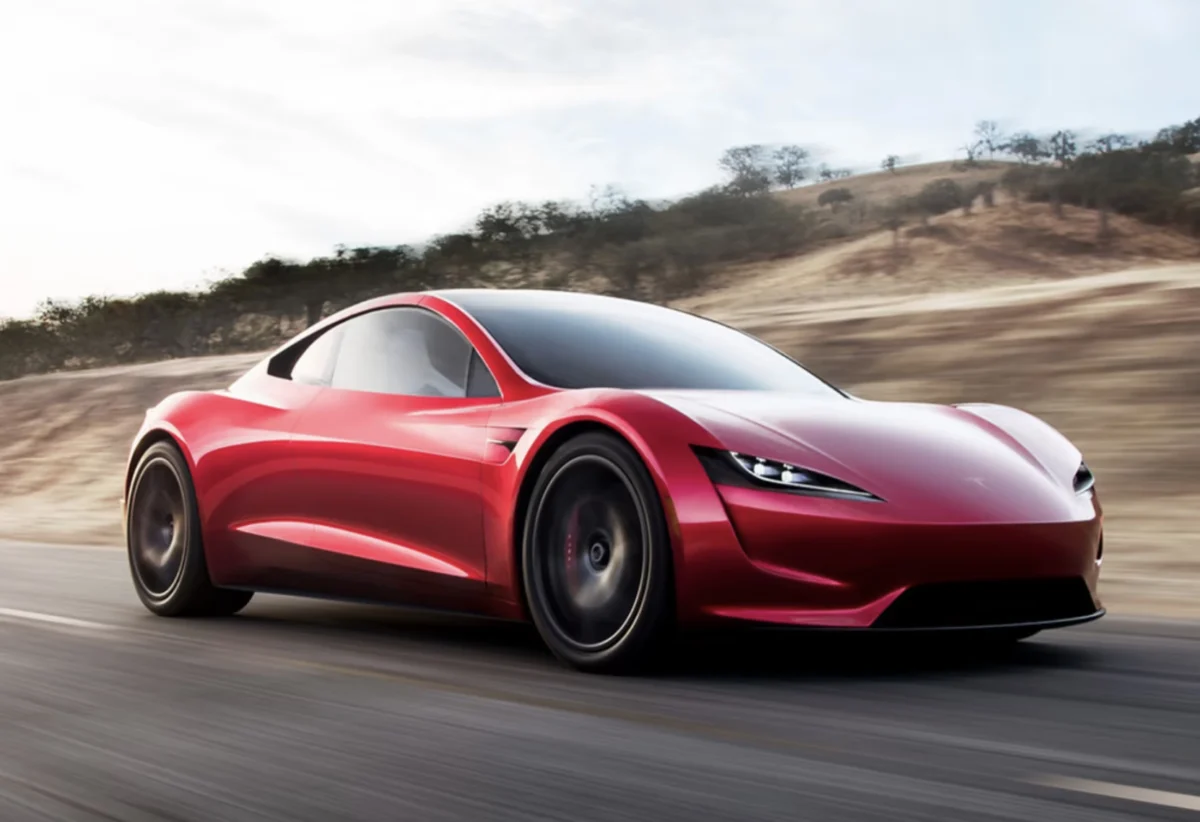
The electric vehicle titan, Tesla, has officially signaled a pivotal moment in its long-anticipated product roadmap: the unveiling of the second-generation Tesla Roadster is slated for October 1st. This announcement, disseminated through a cryptic yet potent post on the social media platform X, has reignited widespread excitement and speculation surrounding what is arguably one of the most elusive and ambitious vehicles in automotive history. The terse message, "Go for launch," accompanied by a graphic clearly indicating "10.01," suggests that the veil will finally be lifted on this revolutionary supercar, promising to redefine performance and potentially even the very concept of driving.
The accompanying imagery in Tesla’s announcement has also fueled considerable intrigue, particularly its apparent reference to cold gas thrusters. This feature, a concept previously articulated by Tesla CEO Elon Musk and intrinsically linked to his aerospace venture, SpaceX, has been touted as an optional upgrade that could imbue the Roadster with unprecedented capabilities, including the theoretical ability to "fly" in certain controlled scenarios. This ambitious proposition blurs the lines between automotive engineering and aerospace innovation, positioning the Roadster not merely as a high-performance electric vehicle but as a harbinger of a new era of personal transportation.
The road to this October unveiling has been a protracted and often scrutinized journey. First introduced to the public in November 2017, the second-generation Roadster was initially hailed as a technological marvel, promising blistering acceleration and a range that would shatter existing electric vehicle benchmarks. However, production timelines have been repeatedly deferred, leading to growing impatience among reservation holders and observers alike. The vehicle’s protracted development cycle became a subject of public discourse last year when it was embroiled in a notable social media exchange between Elon Musk and OpenAI CEO Sam Altman. Altman publicly expressed his frustration with the extended wait, citing a seven-and-a-half-year period since placing a $50,000 reservation fee. Musk’s counterpoint, asserting that Altman had received a refund, highlighted the internal complexities and potential shifts in Tesla’s strategy concerning the Roadster.
Further compounding the narrative of evolution and reinvention, a recent report from The Information suggested that the original 2017 design concept for the Roadster had been entirely superseded. According to the publication, Tesla had embarked on developing a completely new, radically different iteration of the vehicle, which would be the one presented imminently. This indicates a significant pivot in design and engineering philosophy, aiming to deliver a product that not only meets but exceeds the elevated expectations built over years of anticipation.
Elon Musk himself has previously acknowledged that even following a grand reveal, the actual commencement of production for the Roadster would likely be an additional 12 to 18 months away. This staggered approach, common in complex manufacturing projects of this magnitude, underscores the intricate nature of bringing such an advanced vehicle to market. The timeline suggests that the October unveiling will serve as a definitive presentation of the final design and specifications, followed by a period of intensive testing, validation, and manufacturing ramp-up.
A Legacy of Innovation and a Future of Uncharted Territory
The original Tesla Roadster, launched in 2008, was a groundbreaking vehicle that demonstrated the viability and potential of all-electric sports cars. Built on a Lotus Elise chassis, it proved that electric vehicles could offer exhilarating performance, achieving 0-60 mph in under four seconds and boasting a respectable range for its time. This initial success laid the foundation for Tesla’s subsequent expansion into mass-market electric sedans and SUVs. The second-generation Roadster, however, represents a quantum leap, aiming to transcend the performance envelope of its predecessor and set entirely new benchmarks for the automotive industry.

The promised specifications for the new Roadster have consistently been the subject of fervent discussion. Initial projections suggested a 0-60 mph time of an astonishing 1.9 seconds, a quarter-mile time of 8.8 seconds, and a top speed exceeding 200 mph. These figures, if realized, would place the Roadster in a performance category previously reserved for hypercars with internal combustion engines, achieved purely through electric power. Furthermore, Tesla has hinted at a range exceeding 600 miles on a single charge, a significant improvement that addresses one of the primary concerns for electric vehicle adoption – range anxiety.
The SpaceX Connection: Pushing the Boundaries of Automotive Engineering
The integration of SpaceX technology, particularly the proposed cold gas thruster system, is perhaps the most audacious element of the new Roadster’s design. This optional package, dubbed the "SpaceX Package," has been theorized to involve small, compressed gas jets strategically placed around the vehicle. While the exact functionality remains somewhat speculative, the implications are profound. Such a system could potentially be used for enhanced acceleration, braking, and even a form of controlled "flight" or significant aerodynamic lift, enabling the car to overcome gravitational forces in ways previously confined to science fiction.
The technical feasibility and practical application of such a system are subject to rigorous engineering challenges and regulatory scrutiny. However, the mere contemplation of such capabilities underscores Tesla’s commitment to pushing the boundaries of what is considered possible in automotive design. It signals a departure from conventional automotive engineering, embracing principles more akin to aerospace propulsion. This integration is a testament to the synergistic relationship between Tesla and SpaceX, leveraging the expertise and innovative spirit of both organizations to create a truly unique product.
A Chronology of Anticipation and Evolving Expectations
The journey of the second-generation Tesla Roadster can be broadly segmented into distinct phases, each marked by announcements, delays, and evolving design concepts:
- November 2017: Tesla unveils the concept for the second-generation Roadster at a special event. Initial specifications and projected performance figures generate immense excitement. Reservations open with a $50,000 deposit.
- 2018-2020: Tesla provides intermittent updates, focusing on ongoing development and the ambitious performance targets. Production is initially slated for 2020.
- 2021-2022: Production timelines begin to slip. Elon Musk attributes delays to prioritizing other Tesla models and supply chain challenges. The concept of the "SpaceX Package" with thrusters is first publicly discussed.
- 2023: Further delays are announced. The vehicle’s production is pushed back to an unspecified date, leading to increased skepticism among some observers.
- Late 2023 / Early 2024: Reports emerge suggesting significant redesigns and a potential overhaul of the original concept. The social media exchange between Musk and Altman brings renewed public attention to the Roadster’s delayed debut.
- November 2024: The Information reports that the 2017 design has been abandoned for a new, imminent design. This report foreshadows the recent announcement.
- September 12, 2026: Tesla posts "Go for launch" on X, with a graphic indicating an October 1st unveiling date.
This timeline illustrates a development process that has been anything but linear. It reflects Tesla’s characteristic agility in adapting to technological advancements and market dynamics, albeit at the cost of predictable product launch schedules.
Industry Analysis and Broader Implications
The impending launch of the Tesla Roadster carries significant implications beyond the realm of high-performance electric vehicles.
- Validation of Advanced Electric Powertrains: If the Roadster delivers on its promised performance metrics, it will serve as a powerful testament to the continued evolution and potential of electric powertrains. It will challenge the perception that electric vehicles are inherently less capable than their internal combustion engine counterparts in terms of raw speed and acceleration.
- Innovation in Vehicle Dynamics: The potential integration of SpaceX technology could usher in a new paradigm for vehicle control and dynamic capabilities. While the "flying" aspect remains aspirational, the application of advanced propulsion and aerodynamic systems could lead to significant advancements in vehicle stability, maneuverability, and safety.
- Market Segmentation and Niche Dominance: The Roadster aims to occupy a hyper-performance niche within the burgeoning EV market. Its success could encourage other automakers to invest more heavily in ultra-performance electric vehicles, further diversifying the EV landscape.
- Brand Enhancement and Technological Leadership: A successful launch and subsequent production of the Roadster would further solidify Tesla’s image as an innovation leader and a company that consistently pushes technological boundaries. This can have a halo effect on its entire product lineup, reinforcing brand loyalty and attracting new customers.
- Regulatory and Safety Considerations: The unique capabilities hinted at by the SpaceX Package will undoubtedly attract scrutiny from automotive safety regulators. The practical implementation and certification of such systems will be a critical hurdle.
As October 1st approaches, the automotive world will be watching with bated breath. The Tesla Roadster, after years of anticipation and evolving promises, stands on the precipice of its public debut, poised to once again redefine expectations and potentially chart a new course for the future of personal transportation. The question remains not just whether it will arrive, but how spectacularly it will redefine what a car can be.
About the Author