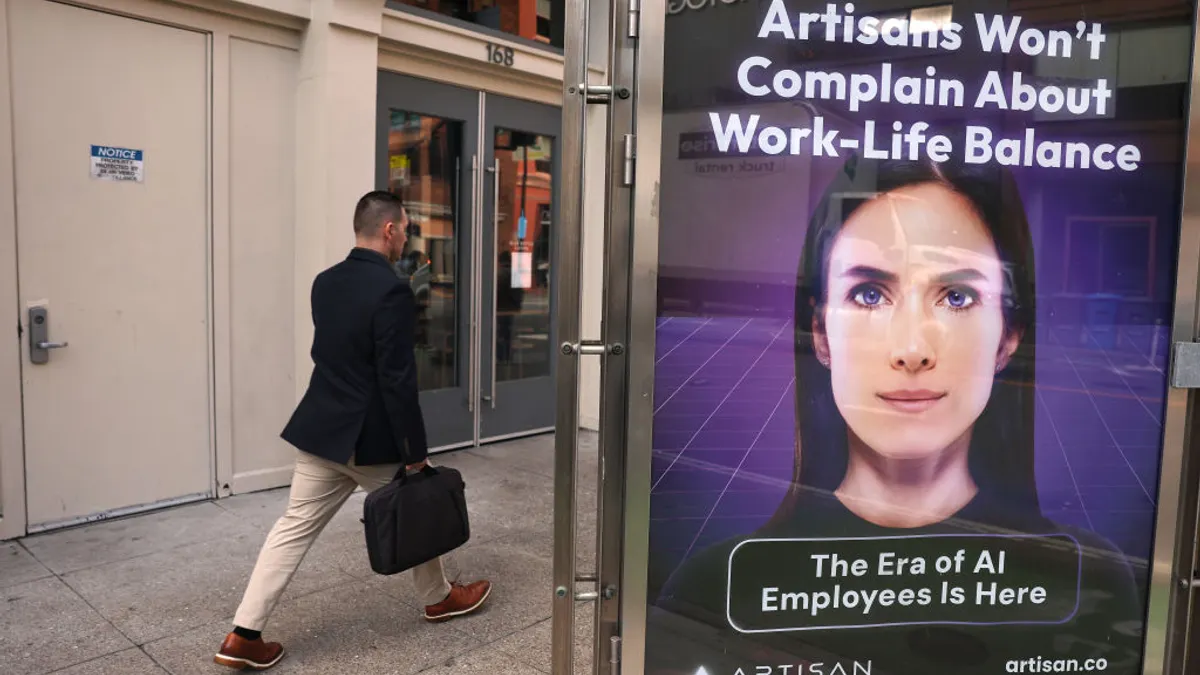
The rapid integration of artificial intelligence tools into the modern workplace, while often lauded for its potential to boost efficiency and innovation, is increasingly raising concerns about its detrimental effects on fundamental employee cognitive abilities. Emerging survey data and expert analyses suggest that the pervasive use of AI, sometimes mandated by employers seeking to leverage its capabilities, may be actively eroding critical thinking, impairing judgment, and even diminishing perceived intelligence among the workforce. This trend presents a complex challenge for organizations navigating the future of work, as the pursuit of immediate gains through AI could inadvertently lead to a significant long-term deficit in human capital.
The core of the issue lies in the way employees are interacting with these powerful technologies. Rather than serving as mere assistants to augment human capabilities, AI tools are, in some instances, becoming crutches that bypass the need for deep cognitive engagement. This reliance can foster a passive approach to problem-solving and information processing, where the output of the AI is accepted without sufficient scrutiny or independent verification. The potential for "workslop"—AI-generated content riddled with errors or lacking nuance—further exacerbates this problem, as it not only compromises the quality of output but also risks becoming the standard against which employee contributions are measured, thereby lowering overall expectations for cognitive rigor.
The Emergence of "Learning Debt"
A significant report from TalentLMS, a prominent learning management system provider, has illuminated a critical consequence of this AI dependency: the accumulation of "learning debt." This phenomenon occurs when employees, often under pressure to meet demanding workloads or cover perceived skill gaps, turn to AI tools not to enhance their understanding or develop their capabilities, but simply to generate content they cannot fully explain or produce independently. In essence, AI is used to mask deficiencies rather than to address them.
The implications of this "learning debt" are far-reaching. Over time, it can lead to a tangible weakening of individual worker performance and organizational productivity. As employees become less adept at critical analysis, independent problem-solving, and nuanced decision-making, their ability to adapt to new challenges, innovate, or contribute meaningfully to complex projects diminishes. This creates a vicious cycle where the very tools intended to drive progress inadvertently undermine the foundational human skills necessary for sustained growth and resilience in a rapidly evolving professional landscape.
Survey Data Reveals Widespread Concerns
The findings from TalentLMS are not isolated incidents. A growing body of anecdotal evidence and survey data from various sources corroborates the concerns regarding AI’s impact on cognitive skills. Employees across diverse industries and roles have voiced their apprehension, with many reporting a decline in their ability to think critically. This is particularly concerning given that critical thinking is widely recognized as a cornerstone of effective problem-solving, strategic planning, and informed decision-making in any professional setting.
Furthermore, reports indicate that AI tool usage has begun to affect employees’ judgment. When individuals rely heavily on AI for insights or recommendations, they may develop a tendency to outsource their decision-making processes. This can lead to a diminished capacity for independent evaluation, a reduced ability to weigh competing factors, and an increased susceptibility to biases embedded within AI algorithms. The subtle erosion of judgment can have significant repercussions, potentially leading to suboptimal business outcomes and ethical quandaries.
Perhaps most alarmingly, some employees have expressed a feeling of becoming "less intelligent" due to their increased reliance on AI. This sentiment, while subjective, points to a deeper concern about the potential for cognitive atrophy. When the mental heavy lifting of analysis, synthesis, and creative ideation is consistently offloaded to machines, the neural pathways responsible for these functions may weaken, leading to a perceived or actual decline in cognitive sharpness. This is a significant societal and economic concern, as a workforce that is intellectually disengaged or demonstrably less capable poses a threat to long-term innovation and competitiveness.
The Chronology of AI Integration and its Cognitive Fallout
The widespread adoption of AI tools in the workplace has accelerated significantly over the past decade, with particularly rapid advancements in generative AI in recent years. While early AI applications focused on automating routine tasks and data analysis, the advent of sophisticated language models and predictive algorithms has brought AI into more creative and decision-oriented domains.
Early 2010s: AI primarily used for automation of repetitive tasks, data processing, and basic analytics. Focus on efficiency gains and cost reduction.
Mid-to-Late 2010s: Advancements in machine learning and natural language processing lead to AI-powered chatbots for customer service and more sophisticated data interpretation tools. Early discussions begin about AI’s impact on jobs.
Early 2020s: The explosion of generative AI, capable of creating text, images, and code. This marks a paradigm shift, bringing AI into direct interaction with creative and cognitive workflows.
2024-2026: Increased mandated use of AI tools by employers to enhance productivity and maintain competitiveness. Concurrently, emerging survey data and reports begin to highlight the negative impacts on employee cognitive skills and the concept of "learning debt." This period is characterized by a growing awareness of the double-edged nature of AI integration.

The current period, from late 2025 into 2026, represents a critical juncture. Organizations are grappling with the immediate benefits of AI adoption while simultaneously facing the emerging evidence of its potential long-term negative consequences on their most valuable asset: their human workforce. The proactive measures employers are taking to train staff on AI use, as noted by HR Dive, are now being met with the sobering reality that this training may be inadvertently encouraging reliance rather than skill development.
Expert Analysis and Broader Implications
The implications of this "learning debt" extend beyond individual employee performance. For organizations, it signals a potential future where a significant portion of the workforce lacks the foundational cognitive skills necessary to adapt to unforeseen challenges, drive innovation, or lead effectively. This could lead to a decline in organizational agility, a reduced capacity for strategic foresight, and an increased vulnerability to market disruptions.
Data-Driven Concerns:
- Talent Gap Widening: Reports suggest that while AI can automate tasks, it cannot replicate complex human skills like empathy, strategic thinking, and ethical reasoning. If core cognitive skills atrophy due to AI reliance, the gap between what AI can do and what humans can do effectively will narrow, but not in a way that benefits human workers.
- Productivity Paradox: While AI promises productivity gains, the accumulation of "learning debt" could lead to a long-term productivity paradox, where initial gains are offset by a decline in the quality of human contribution and the ability to tackle novel problems.
- Innovation Stagnation: A workforce less adept at critical thinking and independent ideation is less likely to generate groundbreaking ideas or drive genuine innovation, potentially leading to economic stagnation.
The situation also raises broader societal questions about the future of education and workforce development. Educational institutions and training programs may need to re-evaluate curricula to emphasize the development of critical thinking, problem-solving, and metacognitive skills that are resistant to AI-driven shortcuts. The focus needs to shift from simply teaching how to use AI tools to cultivating the human intellect that can effectively direct, critique, and leverage these tools for genuine advancement.
Navigating the Path Forward: A Call for Balanced Integration
The challenge for employers and policymakers is to foster an environment where AI serves as a genuine augmentative force, enhancing human capabilities rather than supplanting them. This requires a strategic and mindful approach to AI integration, prioritizing the development of human skills alongside technological adoption.

Potential Strategies and Considerations:
- Promoting "AI Literacy" with a Critical Lens: Training should not only focus on the mechanics of using AI tools but also on developing a critical understanding of their limitations, potential biases, and the importance of independent verification. Employees need to be taught why and how to question AI outputs.
- Redefining Performance Metrics: Organizations may need to shift performance evaluations to emphasize skills that AI cannot replicate, such as creativity, complex problem-solving, ethical judgment, and collaborative intelligence.
- Encouraging Deliberate Practice: Creating opportunities for employees to engage in tasks that require deep cognitive effort, even when AI tools are available, is crucial for maintaining and developing critical thinking skills. This could involve setting aside specific "no-AI" work periods or focusing on complex projects that demand human ingenuity.
- Investing in Continuous Learning: A culture of continuous learning that prioritizes the development of higher-order cognitive skills will be essential. This includes upskilling and reskilling initiatives that focus on adaptability, critical analysis, and strategic thinking.
- Ethical AI Deployment Frameworks: Companies should develop and adhere to ethical frameworks for AI deployment that consider the potential impact on employee well-being and cognitive development. This includes transparency about AI usage and its intended purpose.
The integration of AI into the workplace is an irreversible trend, promising transformative benefits. However, the emerging evidence of its potential to degrade crucial employee cognitive skills cannot be ignored. By understanding the concept of "learning debt" and actively implementing strategies to promote balanced AI integration, organizations can harness the power of artificial intelligence without sacrificing the intellectual capital that is fundamental to their long-term success and the advancement of society. The future of work hinges on finding this delicate equilibrium, ensuring that technology serves humanity’s growth, not its diminishment.
About the Author